



The Greenest building is the one that is already built — made intelligent.
As we face an unprecedented environmental crisis, the need for sustainable solutions has never been more urgent. This series seeks to spotlight the innovative minds and passionate advocates who are leading the charge in environmental conservation and sustainable practices. We aim to explore the most effective strategies, breakthrough technologies, and transformative policies that are shaping a more sustainable future for our planet.
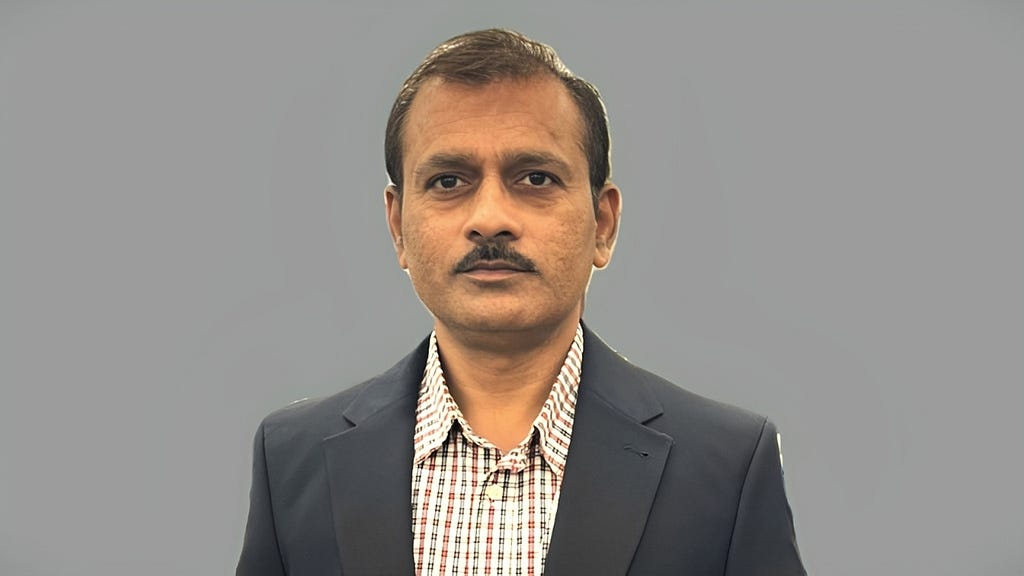
As a part of this series, we had the pleasure to interview Pradip Thorat.
He is a Mechanical Engineer, with Master of Engineering in Mechanical design from Pune University, India, and a Bachelor of Mechanical Engineering from Dr. BATU Lonere, India and is an expert in Building Automation and Sustainable Energy. As a LEED Green Associate, he is passionate about sustainable built environments. At NRG Controls in Harrisburg, he has successfully implemented state-of-the-art designs in a variety of commercial, healthcare, education and government facilities. His numerous research and engineering contributions have been presented at international conferences, including using AI tools to detect faults, cybersecurity in Building Automation Systems, and net-zero energy retrofits, earning him prestigious authorship and industry awards.
Thank you so much for joining us in this interview series! Before we dive in, our readers would love to “get to know you” a bit better. Can you tell us a bit about your ‘backstory’?
I grew up in a rural part of Maharashtra, India. My path into the world of Building Automation Systems was never linear, it was formed by curiosity, circumstance and the development of the purpose over the years. I always liked to learn how machines and systems work, and what the philosophy behind every day processes. Due to this eagerness, I was admitted to study for B. Tech in Mechanical Engineering and later a M. Tech (Mechanical Design). In my early career, I worked on rural biomass energy systems and gained experience in designing refrigeration components that facilitated a mechanical foundation as well as valuable real-world engineering experience.
Subsequently, I started working with multinational controls company in the field of building automation energy management. A discipline associating mechanical systems, controlling logic, energy efficiency and real, tangible impact within one building. When I first got on board the BAS training for my first project, and saw a complex space reacting to the environment, I knew where I belonged.
Working on every BMS project, uplifting my courage in what smart buildings can do. Whether I was designing an energy management system for the Medical and Research Centre in Qatar to Airport in Mumbai or handling complex sequencing for a chiller plant in the USA to the Retail giant Walmart. I was impressed by learning the potential in smart buildings.
Later, I moved to California and worked in the Bay Area with a controls company. A few months ago, I was a Senior Controls Engineer at another controls company in Los Angeles, delivering projects such as the Quantum lab HVAC controls and several retrofits for the state’s courts. Currently working with NRG Controls, I play a role in continually pushing the building envelope into what a smart, sustainable building can accomplish today. I feel every day that I am directly responsible for energy efficiency as well as the sustainability of the ways people live and work because of the systems that I design. For me, this is the crucial point.
Can you share with us the most interesting story from your career? Can you tell us what lessons or ‘takeaways’ you learned from that?
I did it once, designed a control system for an aquarium in the USA — one of the most memorable projects I had in my life. When you look at it, it may seem simple; HVAC controls are HVAC controls, after all? However, an aquarium is a whole world outside our human world! They are demanding environmental conditions that are crucial for marine life. In such zones, office building humidity could be disastrous. Regular control panels and field devices are attacked by the relentless corrosive nature of salt air.
Working with NEMA ratings, UL and ASHRAE requirements, I had to source corrosion-resistant field devices, design and build custom control panels and make sure they were completely compliant with NEMA ratings, UL standards, and ASHRAE standards for that harsh field environment. Each decision was significant and beyond the scope of typical project tasks.
The best controls engineer is one who thoroughly grasps the human, environmental and operational parameters of unique projects and tailors a solutions approach to them. This has been my aim since then, as philosophy initiated to shape the engagement that I had undertaken.
You are a successful leader. Which three character traits do you think were most instrumental to your success? Can you please share a story or example for each?
- Logical Thinking: I can’t just settle for doing things as they’ve always been done to me. The job involved a major technological leap from a legacy programming platform to the advanced programming framework and was the first time that they had encountered such a challenge while working with a retail client. I analyzed it like it’s a new commissioning project. I investigated legacy as well as new platform capabilities and designed a strategy to make the best use of it for the client. But I can say that this curiosity inspired me to receive a Bronze Award, and most of all to provide an amazing and outstanding result for the client.
- Unwavering Ownership: As a Lead designer of an existing courthouse BMS retrofit project, I was challenged to replace an existing (legacy) control system with only replacement devices that can be integrated with the existing system, as well as keep the cost within budget and remain LEED Material and Resource compliant. I would have been tempted to say outright, ripping and replacing it. Rather, I was held responsible for the client’s financial commitments and their sustainability. I discovered the sweet spot between performance and budget in providing an upgraded and efficient building control solution on schedule and on scope. Trust is built through accountability, and trust is the basis of every client relationship that I cherish.
- Passionate About Upskilling: Building automation is a fast-moving industry as things like cybersecurity, AI, IoT & Net Zero are always changing. In response, I have worked towards acquiring my LEED green associate credential and published work on everything you could imagine, from using artificial intelligence to consistently detect faults in air handling units to introducing a ventilation control system that optimizes ventilation during the COVID era, to BACnet/SC security protocols. In 2026, I presented my paper on retrofitting building automation systems in cold climate elementary school, towards net-zero energy at Kolkata, India, at an international conference. My commitment to growth is rooted in daily experience and real-world outcomes, rather than academic theory.
Are you working on any exciting new projects now? How do you think that might help people?
The most interesting projects that are ongoing at NRG Controls right now are a couple of building automation upgrades projects in the Mid-Atlantic region. The school is a very interesting, very enriching place to be, and frankly the consequences of our work are highly personal. You are creating systems that seriously impact children’s ability to focus, inhale and learn every minute of the day, and you’re creating them because you want to. Failure to provide adequate ventilation, improve indoor air quality, treat temperature inconsistencies, don’t impact only the comfort in the school setting, they impact learning.
The significance of this is that many such facilities are buildings-built years or decades ago, where control systems and machines were not designed for today’s air quality expectations or standards for energy use. I have decided to retrofit intelligently; reuse, wherever feasible, compatible wiring, field devices and enclosures to make it realistically priced for any institution with a fixed public budget, and bring the building up to current, high performing standards.
The work is directly related to a research project I presented to an international conference on retrofitting school buildings towards net-zero energy in cold climate environments, held earlier this year. In other words, better classrooms mean improved learning for children when they are regularly and adequately comfortable and ventilated within the classroom. This is a rewarding result that no project could achieve more.
Ok, thank you for all that. Now let’s shift to the main focus of our interview. What pivotal moment led you to dedicate your career to sustainability, and how has that shaped your approach to environmental challenges?
My breakthrough to this job occurred in my first few years working for Multinational Controls company when I started to work on large-scale HVAC systems for hospitals and convention centers in the Middle East. I started to see energy usage staggering; buildings running for 24 hours per day at full load, with no intelligence in the way those systems were used. One of my recollections is standing in a mechanical room in Doha and wondering whether this building is using a lot of energy, and lots of energy it consumed had been wasted in an unnecessary manner.
This will stick with me for all my projects. But I don’t see sustainability as a checkbox in the specifications — it is the observer’s glass I use to look at all decisions made. Whenever I choose a control algorithm, select a sensor, and/or establish a network architecture, I normally ask myself this question: how does this save energy? What is this doing for those who occupy the building and for the planet? The certificate, LEED Green Associate, was awarded to me because that was a dedication that had been established long before, in a mechanical room in Qatar.
Could you describe a groundbreaking project or initiative you’ve been involved in that significantly contributed to sustainability?
A project that I still think truly contributed towards sustainability was a control system design I was involved in for the Medical and Research Centre in Doha, Qatar. This is one of the most advanced hospitals in the world; environmental precision is not a choice but a clinical need.
Engineering control strategies that combined energy efficiency and patient safety in that environment were a matter of design. That was the kind of precision and discipline that required the optimization of ventilation, temperature and humidity while using energy efficiently in a complex healthcare facility — the challenges pushed my work as an engineer well out of the comfort zone for me.
How it hit hard was that it was so widespread and consistent. There’s a hospital of that scale running around all day, every day. The savings in energy use over the life of the building are huge when the strategies are well-designed. If energy use is high as in the Middle East, important environmental benefits are seen over time. The project really helped me to understand that sustainability in the critical infrastructure sector is not only possible, but it’s crucial.
How do you navigate the balance between economic growth and environmental preservation in your sustainability strategies?
Achieving a balance between economic growth and environmental growth begins with a shift in mindset. We must see sustainability as a strategic investment rather than an operational cost. Throughout my career in HVAC system design and development of building automation solutions for commercial, healthcare and educational buildings, I’ve consistently proven that there are tangible benefits to energy-saving technologies.
When energy efficiency measures like variable air volume systems, demand response control, economizer cycles and night setback are implemented, energy is used at great and significant levels without sacrificing operational requirements. Intelligent BMS designs were directly translated to a lower carbon footprint and reduced operational costs, at places such as research sites or the Convention Center.
I focus more on the real cost of a building over the long-term than on the upfront budget, to educate clients on the real cost behind a sustainable design. When the decision makers recognize that sustainability is a profitable business movement, then environmental protection move than it will become a business thing rather than a regulatory burden.
What emerging technologies or innovations do you believe hold the most promise for advancing sustainability and why?
Based on my engineering background, designing intelligent building systems around the world, there are several key innovations that stand out as truly transformative technologies.
First on the list is AI-driven fault detection and energy optimization in the HVAC system. My published research paper on optimizing Air Handling Units (AHUs) with BMS data through AI and machine learning illustrated how significant energy savings are rendered through machine learning. Which is a direct pathway towards the concept of a net-zero sustainable building.
Similarly, it’s important to have Cybersecure, interoperable BAS platforms, such as BACnet/SC. In my published BACnet/SC paper, I pointed to the strength of the secure and seamlessly integrated building system as a catalyst for achieving energy optimization throughout the facility with simultaneous HVAC, lighting and metering optimization.
The retrofit of building-to-net-zero is likely to be the biggest opportunity in the present climate. I have a conference paper which directly targets the tremendous, unfulfilled potential in aged building stock, specifically retrofitting stories of cold-climate elementary schools towards becoming a Net Zero energy house.
Last but not least, based on the initial project work I carried out at the Research Institute, where I was developing biomass gasification and biofuel technologies, I have a strong sense of a lack of exploitation of decentralized clean energy solutions for the service and rural communities of the world.
All these technologies represent advancement and a positive impact on the environment.
Based on your research or experience, can you please share your “5 Top Strategies for a Cleaner Planet”?
1. Transform Buildings into Active Energy Participants Through Intelligent Automation
Buildings account for nearly 40% of global energy consumption, making smart building automation our most immediate lever for change. I designed a BMS solution for laboratory and office environments where precision environmental control was critical. Implementing intelligent HVAC automation ensured that energy-intensive lab conditioning systems operated only at the y required capacity, rather than continuously at peak output turning a traditionally high-consumption research facility into a more responsibly managed energy environment. I implemented advanced demand-response controls and predictive optimization strategies. The precision required for quantum research environments demanded exceptional energy discipline proving that even the most technically demanding facilities can operate sustainably when intelligent automation is thoughtfully designed. Every building can become an active participant in energy conservation rather than a passive consumer.
2. Prioritise retrofit over replacement — maximise existing infrastructure
The least polluting building that can be constructed is already built. The costs of demolition and new buildings are very high with huge, embodied carbon costs. In retrofit applications from college building to Courthouse to the City Office, I have been able to show amazing energy savings with re-use of existing wiring, field wiring panel enclosures and compatible field devices, as well as adding control intelligence upgrades. In my published conference paper entitled, “Retrofitting Cold-climate Primary or Elementary Schools for a Net Zero” there was a further focus on this strategy, as it was determined that the single largest untapped opportunity, for carbon reduction globally, is related to the ageing of the built environment.
3. Use AI and Data-Driven Fault Detection to Identify and Remove Unseen Energy Waste
The leakage of energy in most buildings is unnoticed and occurs in the form of malfunctions in energy control systems, lack of proper set points and or undetected equipment faults. In my published research paper, the use of AI for continuous monitoring of Air Handling Units system behavior, identification of anomalies and corrective actions before energy waste starts to build up, I showed how integrating these technologies with BMS uses can minimize the energy cost of waste. Intelligent control was one of the key factors that brought about an efficiency advantage in the facility where chiller sequencing was optimized, such as the Chiller Plant. I would say that data is considered as a new valuable resource, and AI is the tool that converts concentrated resources into cost saving aspects.
4. Designing for Interoperability and Cybersecurity to Drive Whole-Building Sustainability
Sustainability cannot be achieved in isolation. It requires seamless communication to optimize the performance of the HVAC, lighting, energy metering, fire safety and renewable energy systems throughout the entire building. I and my published work on BACnet/SC emphasized the core importance of cyber secure, interoperable protocols to this integration. Projects such as the Commercial Facilities and tech company Headquarters, for instance, permit high-level integration networks that encompass several different building systems, where energy optimization possibilities exist that are impossible within separate systems.
5. The promotion and development of decentralized, clean energy in underserved areas
Sustainability can be stated as a shared responsibility rather than being an individual’s duty to be done. My foundational engineering experience involved developing wood gasifier prototypes and processing agricultural waste, including sugarcane residue, into biomass briquettes, which is a cleaner cooking fuel. This work transformed my approach to sustainability; therefore, effective solutions don’t always need to be complex or high-tech. Economical, decentralized clean energy like solar power is essential for reducing dependability on polluting fuels and enhancing public health. Furthermore, this model elevates crucial dimensions of sustainability that are often marginalized in mainstream discourse, specifically environmental justice.
In your view, what are the key steps individuals, communities, and governments need to take to achieve a more sustainable future?
At the individual level, the biggest impactful action people can take is to become an informed advocate for the buildings that they occupy and daily use. Help develop performance criteria for buildings in your community. Municipalities and school districts at the community level should focus on energy performance criteria and BMS retrofits for public properties. Retrofitting with a net-zero building technique for cold climate elementary schools is not only technically viable but also good value for money in my experience. What tends to be lacking is simply the institutional directive and technical support to start.
On the policymaker’s side, it is necessary to update and implement building energy codes with greater force by the government. Boosting incentives for BMS retrofits, demand-controlled ventilation, and AC based on artificial intelligence for energy optimization should be increased. Cybersecurity requirements for building automation must be in regulations before vulnerabilities are a threat to the nation’s security.
You are a person of enormous influence. If you could start a movement that would bring the most amount of good to the most amount of people, what would that be? You never know what your idea can trigger. 🙂
It would be my campaign: “Intelligent Buildings, Healthier Planet”.
Nearly 40% of the global energy use and a large fraction of the worldwide carbon emissions are due to buildings. But the answer is not always new buildings, it’s creating the existing buildings we have smarter, cleaner and more efficient!
With more than 400 building automation projects successfully designed for Hospitals, Universities, Courts, and commercial buildings using systems from the leaders in the controls field, I have witnessed first-hand the major energy savings and enhanced health and comfort of all people within the systems I built. My published research regarding retrofitting building automation systems in cold climate schools for a greener planet confirms that retrofit should be considered as the most scalable route to a greener planet rather than replacement.
This movement will change the face of smart building automation, so that it will blend into most building standards and no longer be limited to high quality buildings. If the same types of HVAC controls and real-time and AI-driven energy monitoring and optimization are applied to all the existing building stock, they can collectively remove billions of tons of unnecessary carbon emissions each year. The Greenest building is the one that is already built — made intelligent.
What is the best way for our readers to continue to follow your work online?
My published research papers, covering topics such as AI for building optimization, BACnet/SC cyber security, and ventilation strategies during COVID can be found in journals like the Journal of Building Automation, International Journal of Science and Research (IJSR), and International Journal of Drug Delivery Technology for readers interested in following my work.
I’m also a member of IEEE and BACnet International where I participate with the building automation and smart buildings community worldwide. Members of the profession or those interested in my continuous research and project activities are best served by using LinkedIn to reach me; I am always pleased to connect with other engineers, sustainability professionals, or anyone with an interest in the future of intelligent and efficient buildings.
Thank you for sharing these insights!
The Future Is Green: Pradip Thorat of NRG Controls On Their Top Strategies for a Cleaner Planet was originally published in Authority Magazine on Medium, where people are continuing the conversation by highlighting and responding to this story.