

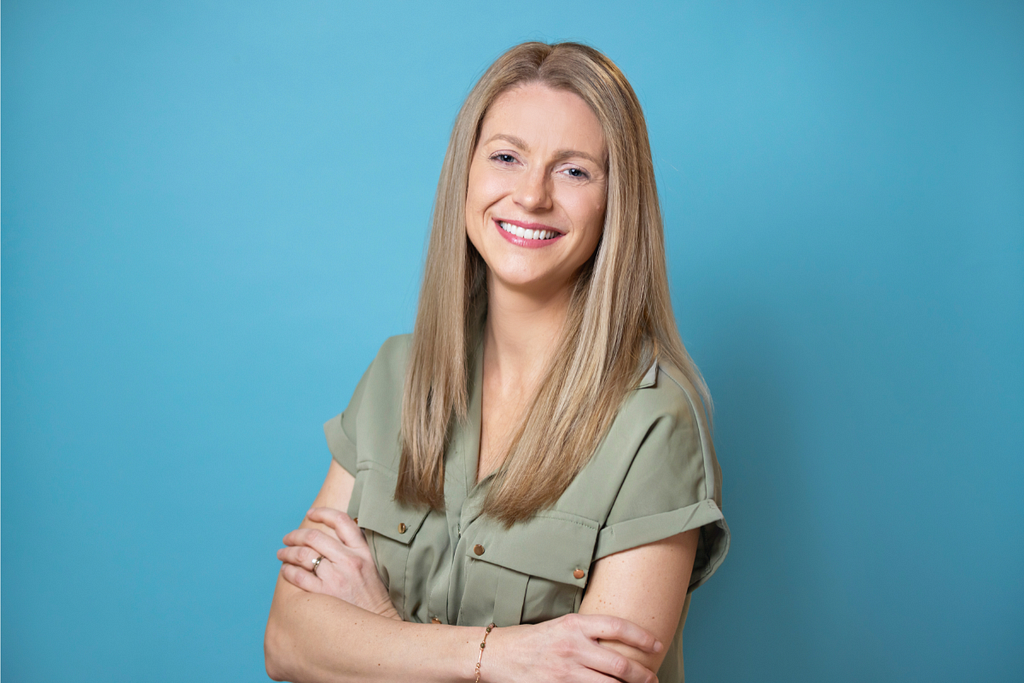
How Laura McDearis of Marine Stewardship Council Is Helping to Promote Sustainability and Climate Justice
An Interview With Rachel Kline
Sustainability isn’t an either-or thing. Sustaining fishing is critical to protecting fish populations and ocean habitats while meaningfully contributing to international seafood trade, and global food security. Now more than ever, we must protect the ocean and the planet for our kids, and their kids.
According to the University of Colorado, “Those who are most affected and have the fewest resources to adapt to climate change are also the least responsible for the greenhouse gas emissions — both globally and within the United States.” Promoting climate justice is an incredibly important environmental responsibility that is slowly becoming more and more recognized. In this interview series, we are talking to leaders who are helping to promote sustainability and climate justice. As part of this series, we had the pleasure of interviewing Laura McDearis.
Laura McDearis has always felt connected to the ocean. Trained as a biologist and rescue diver, she has led tours in Alaska, conducted research onboard fishing vessels in the Bering Sea, advised spiny lobster fishery managers in Ecuador, and co-founded a seafood company in California. Her varied experience in and on the water, paired with her passion for marine ecosystems, make her a natural leader as U.S. Program Director at Marine Stewardship Council (MSC).
Thank you so much for joining us in this interview series! Before we dig in, our readers would like to get to know you a bit. Can you tell us a bit about how you grew up?
I grew up on the water, which was instrumental in fostering my passion for aquatic ecosystems and blue foods. Growing up in the Midwest, I spent summers paddling on the lake and sportfishing in Northern Wisconsin with my grandparents. As tiny kids, my brothers and I made our own lures and proudly caught and cooked our own fish. That’s what we did in our free time. Back home outside of Chicago, I loved to visit our local aquarium and watched underwater documentaries instead of cartoons. I wanted to explore the ocean and dreamed of becoming a dolphin trainer. I got my scuba certification at age 12, first diving in Wisconsin’s cold and murky quarries. After my mom and brothers became interested in diving, we made our first trip to the Cayman Islands to dive in the ocean. I loved the brine, feel, and smell of the sea and was hooked. Trained as a biologist and expert diver, I have led tours in Alaska, conducted research onboard fishing vessels in the Bering Sea, advised spiny lobster fisheries in Ecuador, and co-founded a seafood company in California. When I was younger, I didn’t realize a career could be built by combining a love for the ocean, fishing and seafood, but here I am!
Everyone has a cataclysmic moment or marker in their life which propels them to take certain actions, a “why”. What is your why?
We must protect our ocean for future generations — sustainability is about the planet AND people. There are many moments in my life and career that have propelled me to take action. Two specific moments come to mind.
The first moment was aboard a commercial fishing vessel in the Bering Sea. I was the first to be deployed and the only woman aboard for our snow crab fishery research. We left at 11:30pm on New Year’s Eve and sailed into the pitch-black harbor, entering 30-foot seas shortly thereafter. I had admired and studied the ocean all my life, but this was a whole different and dramatic experience to see and feel the ocean’s beauty, mystery, power. For me, that appreciation isn’t just about conservation. The ocean produces food. I was part of a real industry harvesting seafood for the population. It was exhilarating and I knew I had found my place.
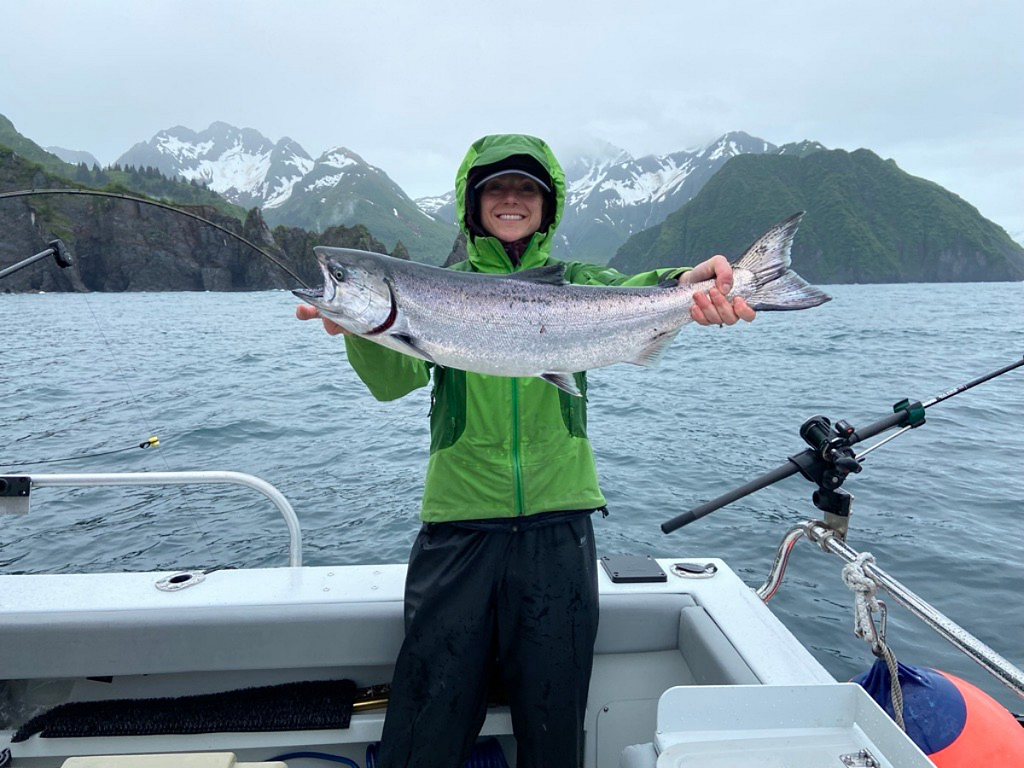
The second moment would have to be fishing with my daughter. She recently caught her first fish this summer. It was as big as she is. I have a similar photo that my grandmother took of me when I was about four. These are the moments that validate my work. Sustainability isn’t an either-or thing. Sustaining fishing is critical to protecting fish populations and ocean habitats while meaningfully contributing to international seafood trade, and global food security. Now more than ever, we must protect the ocean and the planet for our kids, and their kids.
You are currently leading an organization that is making a difference for our planet. Can you tell us a bit about what you and your organization are trying to change?
The health of our oceans is of extreme importance to people and the planet. 71% of the Earth is made up of the ocean, and 80% of biodiversity is contained in the ocean. Our oceans play a key role in mitigating the impacts of climate change and also provide a critical source of food, contributing to international trade, global food security, and livelihoods of many around the planet.
In June, the UN’s Food and Agriculture Organization (FAO) launched its latest State of World Fisheries and Aquaculture report at the Our Ocean Conference, in Mombasa, Kenya, at an event co-organized by the Marine Stewardship Council. The report uses new methodology to analyze fish stocks and provide an update on the state of global fisheries resources. Results show that overfishing persists as a serious problem. The share of stocks classified as biologically sustainable in this report declined to 62.4 percent compared to 64.5 percent in the previous report two years ago. This global figure masks a stark gap between fisheries that are under effective management which tend to have healthy stocks and those that aren’t, with wide differences evident across regions and species groups.
Aquatic foods (wild caught and aquaculture) now provide at least one-fifth of the animal protein consumption for a third of our population and at $184 billion, the trade in aquatic animal products now rivals terrestrial meat trade in value. So, protecting aquatic food resources is vital, both for the oceans and for the humans that depend on them.
The Marine Stewardship Council (MSC) is an international non-profit organization dedicated to ensuring healthy oceans and seafood supply for the future. We set environmental standards that ensure fish populations are healthy, impacts on ocean ecosystems are minimal, and fishery management is effective. Sustainable fishing means leaving enough fish in the ocean to minimize impact on habitats and ecosystems. Our theory of change is built upon the idea that positive, proactive measures taken for the environment by fisheries will be celebrated and rewarded through market access to businesses and consumer demand. We use our global certification and ecolabel to achieve this.
Can you share the most interesting story that happened to you since you began leading your company or organization?
It’s been incredibly rewarding to fortify the U.S.’s role in sustainable seafood. The Marine Stewardship Council ended 2025 with impressive year-end data showing that 90% of U.S. fisheries by volume are MSC-certified and meet rigorous requirements for environmentally sustainable fishing practices. MSC-certified fisheries in the U.S. include Alaska salmon, Pacific tuna, Louisiana blue crab, Atlantic scallops, and lesser-known, lower-on the food chain fisheries such as Atlantic Menhaden, brine shrimp, and even oysters in the Gulf of Mexico. Through collaboration with fisheries and partners, we made the U.S. the largest country in global supply and demand for certified sustainable seafood. The U.S. is also now the largest market for MSC certified seafood as well — with sales over $2.2B USD in 2025/26, representing roughly 15% of MSC labeled products sold globally. I love sharing these success stories with my colleagues and partners, and particularly my children. They love to hear about how their mom is helping make sure we have a clean and healthy planet (and sustainable seafood!) for their future.
None of us can be successful without some help along the way. Did you have mentors or cheerleaders who helped you to succeed? Can you tell us a story about their influence?
There have been so many mentors and influential individuals in my life, it’s really hard to pick one. So I’ll go with one that’s often overlooked — my mom. My mom has always been a rock in my life, maintaining optimism and challenging me to think differently. She helped foster my brothers’ and my love of the outdoors and also wouldn’t let us succumb to modern day conveniences, like watching TV. We all played music, had ‘innovation time’ where we sat to think about new inventions that could benefit the world, and practiced practical skills like building forts or cooking meals. Her drive to push my brothers and me to continually grow and challenge ourselves is something I’ve taken forward into my adult life.
Science is telling us that we have 7–10 years to make critical decisions about climate change. What are three things you or your organization are doing to help?
The MSC program includes 1) the MSC Fisheries Standard, the world’s most widely used standard for environmentally sustainable wild-caught seafood; 2) the Chain of Custody Standard for accountable supply chains; and the 3) MSC blue fish ecolabel, which helps consumers identify seafood products that are independently verified for their sustainability claims.
Globally, 20.6% of marine wild catch is engaged with the MSC program. 738 fisheries are engaged in the MSC program and 2,625 improvements made by MSC certified fisheries.
Many fisheries are starting to, or are concretely experiencing, the effects of climate change. The future is becoming less about prevention and more about preparation. We need strong, robust management of our fisheries to ensure that they can adapt to changing conditions — either from fishing effort or from climate change. MSC certification ensures that management can be both adaptive and reflexive to changing conditions to continue to manage a fishery sustainably. Furthermore, MSC is also looking into quantifying Scope 3 GHG emissions from fishing efforts — one of the hardest challenges for measuring emissions in seafood supply chains.
Are there three things the community, society, or politicians can do to help you in your mission?
Consumers can choose products with the MSC blue fish label to enjoy eating seafood with the knowledge they have made a positive choice to support well-managed, sustainable fisheries. These fisheries are pioneering new ways to conserve the marine environment. There are over 1,750 MSC-certified products in the U.S. and Canada, so there’s a good chance sustainable options can be found where people already shop. In the U.S., consumers can look here to find out if their favorite retailer, restaurant, or seafood brand carries MSC-certified products. Consumers might not realize, but you can find the MSC label on your seafood products, supplements, and pet food.
Retailers can support consumer demand by offering a wide variety of MSC-certified products that carry the blue fish ecolabel — either in the brands that they offer or their own private label.
Teachers and parents can teach (and learn more themselves) about ocean sustainability with MSC’s learning resources. From lesson plans and films to games, everyone can play a role in keeping our oceans healthy for generations to come.
How would you articulate how a business can become more profitable by being more sustainable and more environmentally conscious? Can you share a story or example?
MSC certification covers both fisheries and supply chain companies. Fisheries will earn recognition for their hard work using sustainable fishing practices by pursuing MSC certification. Seafood brands and companies can also get their entire supply chain certified and use the MSC ecolabel. Our program is built on the idea of market drivers to reward sustainability practices and it takes all of us — consumers, businesses, and fisheries to become part of a collective effort to ensure a healthy ocean for future generations.
There are many proof points of how sustainability can lead to financial benefit. MSC collaborators published a scientific article in 2021 on the positive increase in shareholder price of companies following MSC Chain of Custody certification. Our recent work in capital markets has been focused on leveraging large financial institutions and investors and demonstrating that sustainability efforts like MSC certification can significantly de-risk investments in the long term. As an example, we’ve partnered with Clarmondial on a loan guarantee facility. The first deployment was issued in the last year to an eel fishery in Peru. They were able to secure loans at an interest rate with a full percentage point reduction due to their MSC commitment. In the U.S., we partner with a retail sales data provider called SPINs. This allows us to track sales of MSC labeled products in our market and see how they perform in comparison to non-certified items. In the last year, we were able to see positive market signals from U.S. seafood consumers. We found that MSC labeled refrigerated seafood sales were up 11.9%, compared to only 7% for non-labeled products. In shelf stable seafood, MSC labeled canned tuna sales were up 3.7% whereas non-labeled products declined 2.5%. Furthermore, MSC labeled canned tuna had an average retail price of $2.14, a 7-cent price premium over non-labeled products. While price premiums aren’t a guarantee, these are really positive signs that the market and consumers are rewarding companies with sustainability commitments in seafood.
What are your “5 things I wish someone told me when I first started promoting sustainability and climate justice” and why? Please share a story or example for each.
1. Believe in the future of sustainability as a career. At the beginning of my career, I wish someone had been able to tell me that in 10–20 years it would get easier, sustainability would enter the mainstream. Back then, sustainability was idealistic, esoteric and niche. No one thought you could make a “real” career out of sustainability — there were very few classes or majors you could take to study this. I often wasn’t sure how my career would shake out, especially when the naysayers got in my ear. Today, education and experience in sustainability is widely accepted as an important component of business and an in-demand career path. Colleges and graduate schools dedicate courses and degrees to sustainability. Sustainability professionals lead all the way from entry level to the C-Suite. Persistence, grit, and trusting my gut were important to sticking with what I truly believed would come in the future.
2. Celebrate the small wins. I wish someone had told me to hurry up and take my time, ha. It’s so easy to want things to happen quickly once you’ve decided on an action. Sustainability often doesn’t work that way. There will be good days or weeks, and rough patches where it seems like progress has stalled. Staying motivated in the long term can be a real challenge, so you have to be able to celebrate the small wins just as much as the big ones.
3. Never stop being curious. Being constantly curious will serve you well. No one, no matter how they portray themselves, knows everything. Be open to new things, conversations with others, and learning about different perspectives than your own. I can’t tell you how many times I’ve learned something new or my eyes have been opened by simple conversation.
4. You don’t have to wait for permission to challenge the status quo. When I was younger, I had this perception that adults and the world had everything figured out and businesses and life operated seamlessly. That is obviously not true! There is opportunity everywhere for improvements and to challenge the status quo, especially in a field as new as sustainability. Over time and experience in my career, I’ve grown my confidence in expressing my ideas and being a part of the conversation. Part of this comes with age and experience, but if I had understood this earlier I would have spoken up more early on in my career.
5. Embrace resilience and view failure as a teacher. My favorite piece of advice is do not to be afraid to fail. We have a tendency to want to highlight only our wins and not to discuss our failures, which is natural. However, we tend to learn the most from things that didn’t go well and where we are challenged to adapt, pivot, and remain resilient. Resilience is a much-undervalued skill that is gained over time and experience. Those that have it and practice it regularly learn quicker, respond to stress better, and often are better problem solvers.
Is there a person in the world, or in the US with whom you would like to have a private breakfast or lunch with, and why?
If I could have breakfast or lunch with anyone, it would have been the late Dr Jane Goodall. I’ve always admired her unwavering integrity and her lifelong commitment to conservation, not just through groundbreaking scientific work but also through her ability to inspire people around the world to care about our planet.
What stands out to me most is that she never lost sight of the connection between people and nature. Her leadership showed that meaningful conservation requires collaboration, compassion, and hope — qualities that are just as important today as they were when she began her career.
I would have loved the opportunity to hear her perspective on how we continue building a global conservation movement that brings together scientists, businesses, governments, and local communities to create lasting change. I also think it would be fascinating to learn how she remained optimistic and resilient through decades of environmental challenges. Her career came at a time when conservation — particularly for women — was unheard of. Despite this, she persisted and paved the way for many others — especially young people who gave her hope for the future and in turn, continued her vision forward. I’ll be thinking of her legacy–and how I can carry it on–for a long time.
How can our readers continue to follow your work online?
Fisheries, commercial partners, and businesses interested in the MSC and the work we’re doing with sustainable seafood can sign up for our newsletter and receive the latest updates.
Seafood enthusiasts looking to learn more about the MSC, find sustainable seafood recipe inspiration, and get updates on our impact on healthy oceans, connect with us on social media @MSCbluefish on Instagram, Facebook, and YouTube.
Thank you so much for the time you spent sharing these insights with our readers. We wish you continued success and impact!
How Laura McDearis of Marine Stewardship Council Is Helping to Promote Sustainability and Climate… was originally published in Authority Magazine on Medium, where people are continuing the conversation by highlighting and responding to this story.