


An Interview With Martita Mestey
There are no “successful professions,” only successful people. Even if you start small, your passion and excellence can create a whole new path.
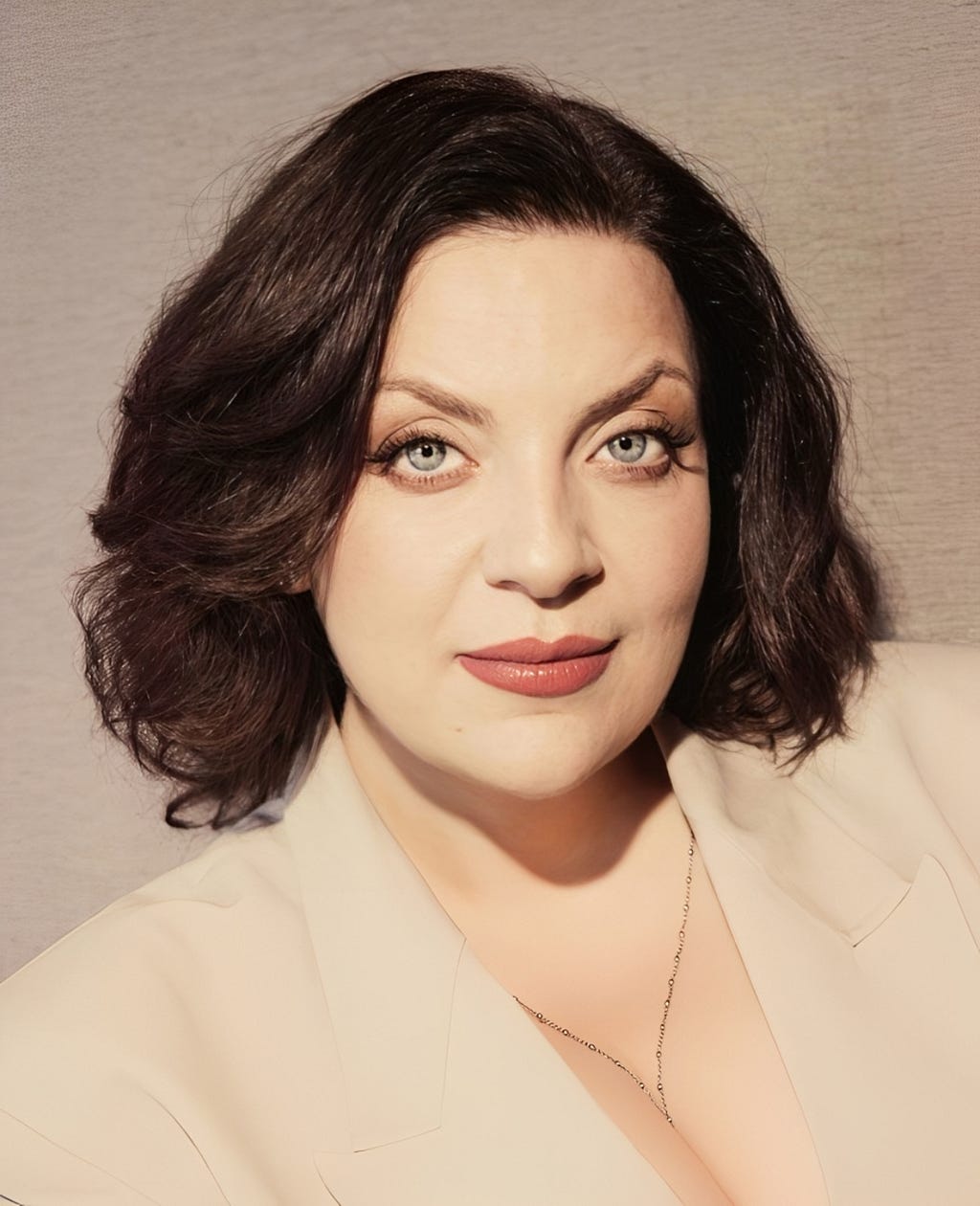
As part of my series about “individuals and organizations making an important social impact”, I had the pleasure of interviewing Natalia Kholodenko, Trauma Expert and Motivational Speaker
Natalia Kholodenko is a Ukrainian psychologist, motivational speaker and former prime-time TV host whose life changed forever when war broke out in Kyiv in 2022. Now based in France, she leads mental-health initiatives for displaced Ukrainians, including the All-Ukrainian Psychological Marathon 2025, which empowers women and mothers to rebuild their lives. With a therapeutic style rooted in clinical rigor and creative expression, Natalia helps trauma survivors transform pain into purpose.
Thank you so much for joining us in this interview series! Can you tell us a story about what brought you to this specific career path?
I was born in a small rural village in Ukraine, a place where psychologists didn’t really exist. When I was 14 years old, I visited relatives in the city and met a school psychologist named Alina. She wasn’t just a professional; she genuinely wanted to help others and became a mentor and later, a dear friend.
By the time I finished school, Alina encouraged me to apply to study psychology. I had already been drawn to the subject, devouring books and feeling this would be my lifelong path, even if I wasn’t sure yet how I’d practice it.
Applying to university was challenging because psychology was a relatively unknown and unconventional major at the time. Coming from a rural school, many people doubted my choice, unsure what kind of future it could offer. My whole family hoped I would succeed, but my father didn’t understand it. He was worried that I was chasing a “mysterious” profession where I would just talk to people and call it “work.” Back then, few people understood how psychologists could make a living or how society would accept the kind of help they offered. It felt uncertain, but I was determined to show its value.
Alina told me, “If there’s no demand for psychologists, you’ll create it. It’s your mission to show the world the value of what you do.” That stayed with me, and it proved true. By 2009, if you said my name “Natalia Kholodenko” in Ukraine, people immediately thought “psychologist.” Through television and my work, we helped change the idea that seeking psychological support is shameful into one that’s instead smart, helpful and healing.
What was the funniest mistake you made when you were just starting out? What did you learn from it?
Early in my career, I was invited to speak at a large, prestigious educational conference. I happily assumed it would be a cozy school auditorium gathering with maybe a few dozen people. I didn’t actually read the invitation carefully. I showed up in jeans and a casual sweater, carrying some scattered notes.
As I stepped onto the stage, I suddenly realized that it wasn’t a small hall at all but a massive conference room filled with thousands of attendees. My cheeks flushed, and I blurted out, “Note to self: next time, actually read the invitation before attending an event.”
The audience laughed, the tension eased, and I spoke for an hour and received a standing ovation.
I learned that being genuine and embracing your imperfections creates connection. When you stop trying to be perfect, people open their hearts and that’s when real conversations happen.
How do you define leadership? Can you give an example?
Leadership isn’t about titles or charisma; it’s about the courage to act when it’s the hardest, and the ability to lift others up through your own growth.
One of the most powerful examples of this that I’ve witnessed was a woman named Olena, a mother of three who fled eastern Ukraine with nothing but a backpack. She arrived in a foreign country where she didn’t speak the language and didn’t know a single person. At first, she was terrified of failing her children, of being dependent and of losing herself completely.
But she made a decision: every day, she would do one small thing to move forward. She enrolled in language classes. She started attending my free online sessions. She wrote down goals, even when they felt impossible.
Over time, she transformed — not just her life, but the lives of others. She began volunteering to help new refugees, translating documents and comforting strangers at the train station. She organized a children’s play group to give exhausted parents a break. And without realizing it, she became a leader, not because she tried to lead, but because she chose to keep going and help others do the same.
That’s leadership: quiet courage, consistent action and the humility to grow in public. When people see that kind of strength, it gives them permission to believe in themselves again.
How has your work evolved in response to the refugee crisis, and how have you continued supporting your community?
When the war forced me to flee Ukraine, I felt a deep responsibility to offer support to not just my followers but to all displaced people. I began offering free online seminars, reaching over two million people. In those sessions, I spoke not just as a psychologist but as someone who understands the trauma, fear and uncertainty that refugees face.
One of the most important realizations I share is this: your purpose is bigger than your trauma. No matter how deep the pain or loss, your future holds more possibility than the past holds suffering. This message has brought hope and strength to many who felt lost.
My goal is to help them find resilience and hope, to show that even in exile, we can heal and rebuild. The feedback is powerful. Women tell me they’ve stopped feeling alone, parents share that they’re learning to break harmful cycles, and many find the strength to move forward.
What do you wish the community or politicians understood better to help refugees and displaced persons?
Too often, refugees are met not with support, but with fear, confusion, or silence. Many of the women I work with live in constant anxiety, terrified that the laws will suddenly change, that their benefits will be cut off, or that they’ll be sent back to war zones. This fear doesn’t motivate; it paralyzes. It keeps people from integrating, from learning, from building a future.
What they need is clarity and dignity. Language classes. Job pathways. Emotional support. And most of all, recognition. A Ukrainian doctor who treated patients for 20 years shouldn’t be dismissed as unqualified: he should be shown what steps are needed to practice again. These are not helpless people. They are skilled, ambitious, and resilient. If we invest in their futures, they will not only rebuild their own lives, they will strengthen the countries that welcome them.
What are your “5 things I wish someone told me when I first started”?
- There are no “successful professions,” only successful people. Even if you start small, your passion and excellence can create a whole new path.
- You don’t need to start with money or connections. What matters most is showing up as your authentic self. People are drawn to honesty, drive and heart. The right relationships and opportunities will come when you focus on building trust and adding value.
- Learn foreign languages. It opens worlds that you never expected and connects you to people and ideas that are beyond your home.
- Be ambitious. Ambition fuels growth, creativity and the courage to dream bigger than you ever imagined.
- Discipline is the foundation. Without it, even the best ideas fall apart. Discipline helps you show up every day, even when it’s hard.
If you could inspire a movement that would bring the most good to the most people, what would it be?
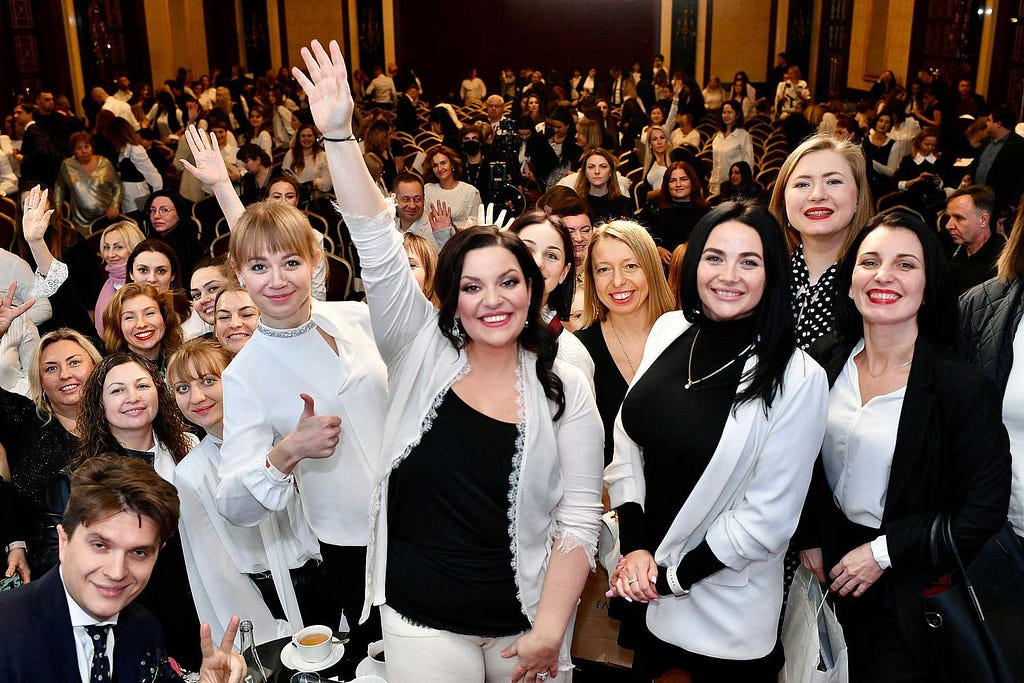
In many ways, I’ve already started this movement and I’m humbled by how far it has reached. With a community of over two million people and videos that have been viewed more than 30 million times, I’ve seen firsthand how powerful it is when women feel seen, supported and inspired to rebuild.
The heart of this movement is emotional and creative empowerment, especially for women rediscovering themselves after trauma, war or personal loss. Too often, women silence their own dreams while caring for everyone else. And then, they wonder why they feel invisible or empty.
I believe that when mothers are healthy mentally, emotionally and physically, they raise strong, resilient children. And when we teach families how to connect through presence and play, we give children a deep sense of being loved and valued. That’s where true healing begins.
This isn’t just about recovery. It’s about transformation. Investing in women today means shaping a future rooted in empathy, strength and emotional wisdom. That’s the world I want to help build one healed mother, one brave child and one restored family at a time.
Investing in mothers today means raising generations equipped to build a better tomorrow
Do you have a favorite life lesson quote? How has it shaped your life?
One quote by Sigmund Freud means everything to me. When his book The Interpretation of Dreams was harshly criticized and people burned copies in the streets, Freud said: “What progress we have made! In the Middle Ages they would have burned me, now they only burn my books.”
That quote stayed with me because it speaks to resilience. To me, it means: don’t be afraid if the world isn’t ready for your ideas. It doesn’t mean you’re wrong, it means you’re ahead of your time. Freud had Carl Jung, one person who believed in him, and that was enough to keep him going. I’ve learned the same is true in life; sometimes, just one voice of support is all you need to not give up.
Freud’s courage helped shape my own. I’ve faced skepticism, criticism, even fear and war, but I kept speaking, writing and showing up for others. That belief in purpose led me to what I now share with millions of others, especially those healing from trauma.
Your purpose is bigger than your trauma.
That’s the lesson I live by. Pain can shape you, but it doesn’t have to define you. If you hold on to your purpose, it becomes stronger than any wound, and it can carry not just you, but others, forward.
Is there someone in the world, or in the U.S., you’d like to have breakfast or lunch with? Why?
I would love to have a meal with Oprah Winfrey. Watching her show as a young woman opened my eyes to a different way of seeing the world. She created a space where even the most painful stories could bring healing instead of shame. Oprah taught me that every conversation has value and that through sharing our truth, we not only heal ourselves, but help others heal too.
Years later, I saved up and flew to Los Angeles to see her speak live. Sitting in that audience didn’t change my mission; it reaffirmed it. I had already devoted myself to helping Ukrainians recover from the trauma of war, but in that moment, I came to a deeper realization. The tools I was sharing, such as hope, emotional resilience and the process of rebuilding identity, were not just for Ukrainians. They were universal. Oprah helped me see that healing speaks a language everyone can understand, and that the work I was doing could support anyone, anywhere, who is trying to rebuild a life after loss.
How can our readers further follow your work online?
Readers can stay connected with me through my website (https://nataliia.kholodenko.net/) and Instagram (https://www.instagram.com/kholodenko_english/?hl=en).
This was very meaningful, thank you so much. We wish you only continued success in your great work!
Social Impact Heroes: Why & How Natalia Kholodenko Is Helping To Change Our World was originally published in Authority Magazine on Medium, where people are continuing the conversation by highlighting and responding to this story.