


The World Food Programme assists over 86 million people each year and many people do not know that we are not only delivering emergency assistance but also working with communities to make them more resilient to shocks — conflict, disasters, climate change — and to ensure they are able to feed themselves without depending on external help. We provide school meals to over 16 million kids, for example. These can truly change a child’s life — keeping them in school and opening prospects, especially for girls, while at the same time providing them with the vital nutrients they need to grow and develop to their full potential. We buy food from local smallholder farmers wherever possible, so there is a positive impact on local economies as well.
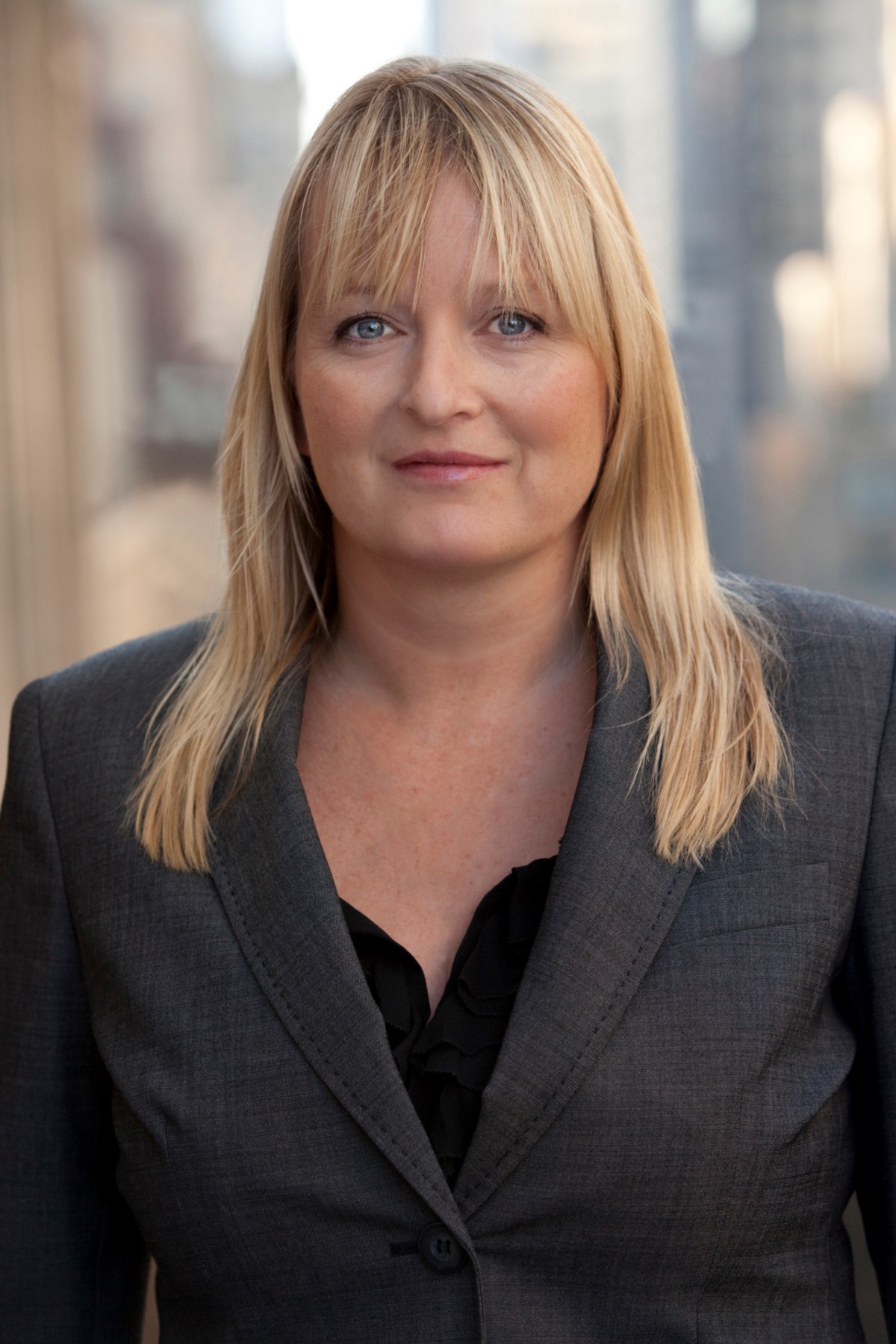
I had the distinct pleasure of interviewing Corinne Woods, Chief Marketing Officer for the World Food Programme.
Thank you so much for doing this with us Corinne! Can you tell us a story about what brought you to this specific career path?
My passions have always combined art, music, design, literature, philosophy and politics. As a philosophy student in the 80s, I balanced focused academic rigour with social activism and promoting some of the best brands.
My path led me through agency work on domestic social change campaigns, on issues as diverse as HIV/AIDS awareness and anti-smoking legislation, and a few commercial clients.
Taking a significant pay cut to work for Save the Children was the best move I ever made. When I moved to UNICEF, I knew I had found my calling. I worked with Nelson Mandela, Bill Gates and Queen Rania, mobilizing 93 million voices for children, and partnered to build brand awareness with FC Barcelona.
Since then, I have sat within the team that nurtured the Sustainable Development Goals from a single line in a UN Secretary-General’s speech, through to a plan for the planet — designed by the people for the people. And I worked with some pretty cool and amazing people to boot.
The UN World Food Programme is a diamond — an incredible, innovative organization that delivers again and again for the world’s poorest and most vulnerable people — more than 86 million of them. It is my challenge to make this unknown jewel loved and supported.
Can you share the most interesting story that happened to you since you began your leadership role at the World Food Programme?
In 2016, the Syrian town of Deir Ezzor was under siege. Caught between warring forces, civilians had been cut off from the world and we had been unable to reach them for two years. We knew that things were so bad that families were selling cars for small bags of rice.
So, WFP was asked to find a way to reach them. We do airdrops of food around the world, but here the security concerns were immense — we were worried that our planes would be shot down. The situation forced us to do our first ever high-altitude airdrops, with parachutes attached to the pallets containing the food. In the first attempt, some pallets missed the drop zone but after that we were able to get it right and got the food to the people in need.
Can you share a story about the funniest mistake you made when you were first starting? Can you tell us what lesson you learned from that?
My very first day at work at a small, six-person film company, I was assigned to the slightly grumpy editor. He just about put up with me watching as he edited using an old-fashioned tungsten edit suite with the big rolls of film. At some point he stood up, looked at me and said: “You can put the film back in can”, and swept out. So I gingerly picked up the spool and thought: “Hmm… do I push the inner spool out? Oh well, why not.”
And I did … and the film fell out, falling crumpled to the floor. The roar of anger from grumpy Rog could be heard throughout the building
The lesson is simple: don’t assume you know or understand — ask, clarify, ask, understand, check!
Can you describe how you or the World Food Programme is making a significant social impact?
The World Food Programme assists over 86 million people each year and many people do not know that we are not only delivering emergency assistance but also working with communities to make them more resilient to shocks — conflict, disasters, climate change — and to ensure they are able to feed themselves without depending on external help.
We provide school meals to over 16 million kids, for example. These can truly change a child’s life — keeping them in school and opening prospects, especially for girls, while at the same time providing them with the vital nutrients they need to grow and develop to their full potential. We buy food from local smallholder farmers wherever possible, so there is a positive impact on local economies as well.
Can you tell me a story about a particular individual who was impacted by your cause?
A few months ago, in Jordan, I visited a young woman, Sabreen. Her parents had died. She and her brother were struggling to run their farm, keeping the goats strong and healthy. The area where she lives is dry and arid, with very little water. The soil is salty and not really suitable for agriculture. This is why WFP has launched a hydroponics project there, which enables people to grow vegetables with very little water resources. An agricultural engineer herself, Sabreen saw the potential of the project and registered. WFP gave her technical training and she installed a hydroponic unit at her home, growing barley fodder for her cattle. As her well-fed goats produce more and better-quality milk, the family uses it to make various dairy products and sell to neighbours. As I sat with her eating her fresh honey and drinking small glasses of tea what I saw was how our work had helped her realize her dreams to not just keep her family farm going but build a new vision and a new role for herself.
Are there three things the community/society/politicians can do help you address the root of the problem you are trying to solve?
It is time to move from apathy to action. Talking is good, but acting is smart — and listening, really listening to the people whose lives you want to improve. They know best.
And it is not just the politicians that can do something. Little things can make a difference: plant a tree, don’t throw away your uneaten food — instead turn it into some great, creative meal. We all can be the change.
How do you define “Leadership”? Can you explain what you mean or give an example?
Leadership is about giving people the ability and opportunity to do what they do best. It’s about building trust and empathy amongst a team so that they can deliver collectively in a way they couldn’t imagine doing individually. It’s not about what you do as the head of a team, but what you build within the team.
For example, in 2013, I was tasked to deliver the most ambitious, inclusive global conversation ever accomplished to craft the world’s new development agenda — what ultimately became the 2030 Agenda and the Sustainable Development Goals. We needed data scientists, millennial marketers, activists, UN bureaucrats and statisticians to quickly find a way of working together to design an unprecedented global process on intense timescales. The leadership challenge here wasn’t giving direction but creating the collective capacity to find a path together. It required building trust and empathy with a group of people that I barely knew at the time, and who didn’t know each other. Being open about the challenge was key — trusting the team to see this as a life-defining opportunity that they could only grasp together and giving them the space and support to reach for it. The team we built in those days is still connected across the world, and we look back on that experience as a touchpoint for our lives and careers.
What are your “5 things I wish someone told me when I first started” and why.
1. Don’t assume the people above you have all the answers. We’re all figuring things out as we go along.
2. Build a network of support and trust. It’s important to find people you genuinely enjoy working with.
3. Build a life that you value. Family, friends and priorities beyond work. Your job doesn’t define you.
4. People play politics. And sometimes those people win. But in the long run you’re better off sticking to your values.
5. You are defined by the things you say no to, more than when you say yes.
You are a person of enormous influence. If you could inspire a movement that would bring the most amount of good to the most amount of people, what would that be? You never know what your idea can trigger. 🙂
Nobody in the world should go to bed hungry — especially children. For the first time in human history, we have the resources and creativity to end hunger and feed our future, the young generations. Imagine what that would mean for human civilization. How this would unite us all, how it would prevent the loss of potential and transcend the divisions we live with. Why not do this one thing?
Can you please give us your favourite “Life Lesson Quote”? Can you share how that was relevant to you in your life?
“It is what it is.” It doesn’t matter what happened. What matters is what you do next. That insight has helped me navigate many bumps along the amazing road I’ve travelled.
Is there a person in the world, or in the US whom you would love to have a private breakfast or lunch with, and why? He or she might just see this, especially if we tag them. 🙂
I’ve followed Ronan Farrow in the headlines for the past couple of years and recently picked up his book “Catch and Kill”. It’s not easy to speak your mind and do what you think is right in the face of scrutiny; I have a lot of respect for that. He’s definitely someone I’d like to meet.
How can our readers follow you on social media?
They can follow me on Twitter at @corinnewoods, and find out more about our work through WFP’s twitter (@wfp) and Facebook page (https://www.facebook.com/WorldFoodProgramme/).
Thank you for all of these great insights!