

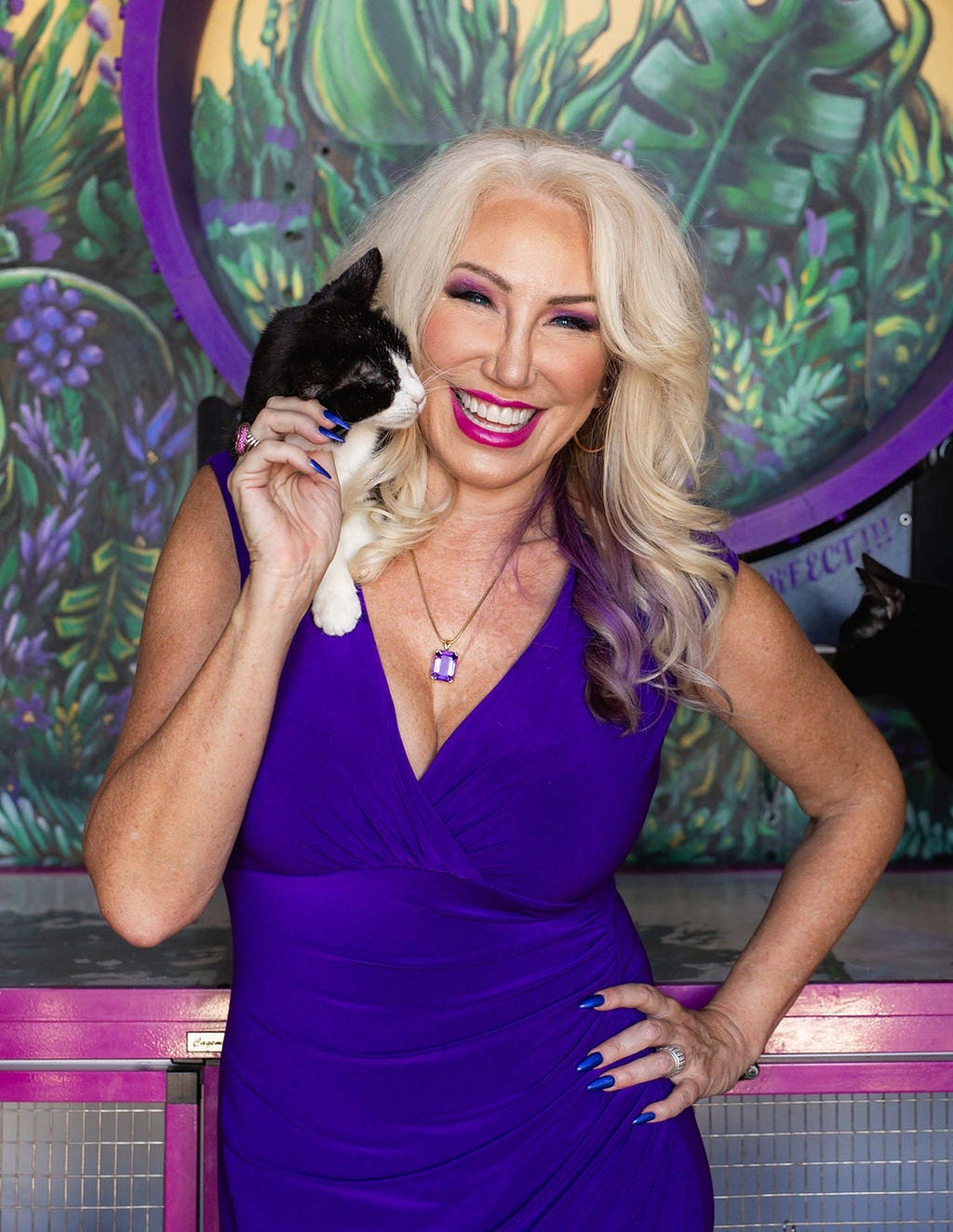
High Impact Philanthropy: Tanya Lynn Heller of PURRR Adoption + Sanctuary On How To Leave A Lasting Legacy With A Successful & Effective Nonprofit Organization
The most important thing I have learned is that simply removing cats is not the answer. What actually changes a cat community is sterilization, not removal.
As a part of this series, we had the pleasure to interview Tanya Lynn Heller.
Tanya Lynn Heller is the founder of PURRR Adoption + Sanctuary, a South Florida feline-welfare organization built around high-volume spay/neuter, trap-neuter-vaccinate-return (TNVR), and lifelong sanctuary care. What began as one woman trapping and rehoming feral cats on a Fort Lauderdale finger isle grew into a charity dedicated to creating a better life for the cats of South Florida and the people who love them. Today, the organization is in the middle of its Unite in CatPassion campaign and is building an affordable veterinary clinic, with a grand opening targeted for 2027.
Thank you so much for joining us in this interview series! Can you please tell us about one or two life experiences that most shaped who you are today?
I grew up in a divorced household where both of my parents worked all the time, which meant I spent much of my childhood at home alone with our family pets. I cared for them devotedly — but the truth is they cared for me just as much. Those wonderful souls gave me the companionship and love I needed and wanted so badly during a hard stretch of growing up. That bond taught me early what an animal can be for a person, and I have never forgotten it.
Years later, while we were renovating a new home in a sequestered, island-like community in Fort Lauderdale, we were inundated with feral cats. We were on the water, and between the rats, iguanas, and tropical birds, South Florida is a year-round smorgasbord for cats — there is no hard freeze to slow them down, and they have litters three to four times a year. It was an ocean of kitties across our whole finger isle. I started trapping, sterilizing, and finding homes for what felt like an endless sea of felines. It was overwhelming for one woman, and somewhere in the middle of it, I decided I had to build something bigger than myself: a charity dedicated to a better life for the cats of South Florida.
You are a successful leader. Which three character traits do you think were most instrumental to your success? We would love to hear a few stories or examples.
Persistence, a refusal to accept that “this is just how it is,” and pragmatism.
Persistence came first. I trapped cats all over my little neighborhood for eleven years — removing them, finding them homes, and watching more show up the very next week. You do not keep doing that for over a decade without a stubborn streak.
The refusal to accept the status quo is really about feral cats. For a long time, the accepted wisdom was that nothing could meaningfully be done for them. I never believed that, and the work has proven me right.
And pragmatism. The day I realized I was one woman trying to empty an ocean with a bucket, I stopped trying to do it all myself and started building an organization, a team, and the partnerships that could actually move the numbers.
What’s the most interesting discovery you’ve made since you started leading your organization?
The most important thing I have learned is that simply removing cats is not the answer. I spent eleven years pulling cats out of my neighborhood and rehoming them, and they just kept showing up, and showing up, and showing up. What actually changes a cat community is sterilization, not removal. I saw it firsthand when a neighbor hired me to TNVR the cats around her warehouse in Sawgrass — a multi-year project that kept me busy straight through COVID. The first six months felt endless, but once we reached about sixty percent sterilized, you could see the difference: the colony was healthier, the cats that came to eat were calmer and more accepting of us. Years later, it is still a well-fed, stable group with very few newcomers, and my friend and her staff happily have lunch out there alongside them. That is the lesson behind everything we do now — the lever that changes feline overpopulation is not how many cats you can remove, it is how much affordable surgical capacity a community can offer.
Can you please tell our readers more about how you or your organization intends to make a significant social impact?
We originally planned to build a cat café next to our clinic and adoption center. But when we evaluated what our community needs, the answer was clear: South Florida has an overpopulation disaster and an extreme shortage of affordable veterinary care. We chose to expand our clinic services instead of building the café — to put our resources where they would create real change rather than where they would simply be charming.
The single most powerful tool we have to tackle this is working together — with partner rescues and with the community trappers who are already out there night after night. Organizing and supporting the trapping community strengthens every one of our missions, so that we all succeed together rather than separately.
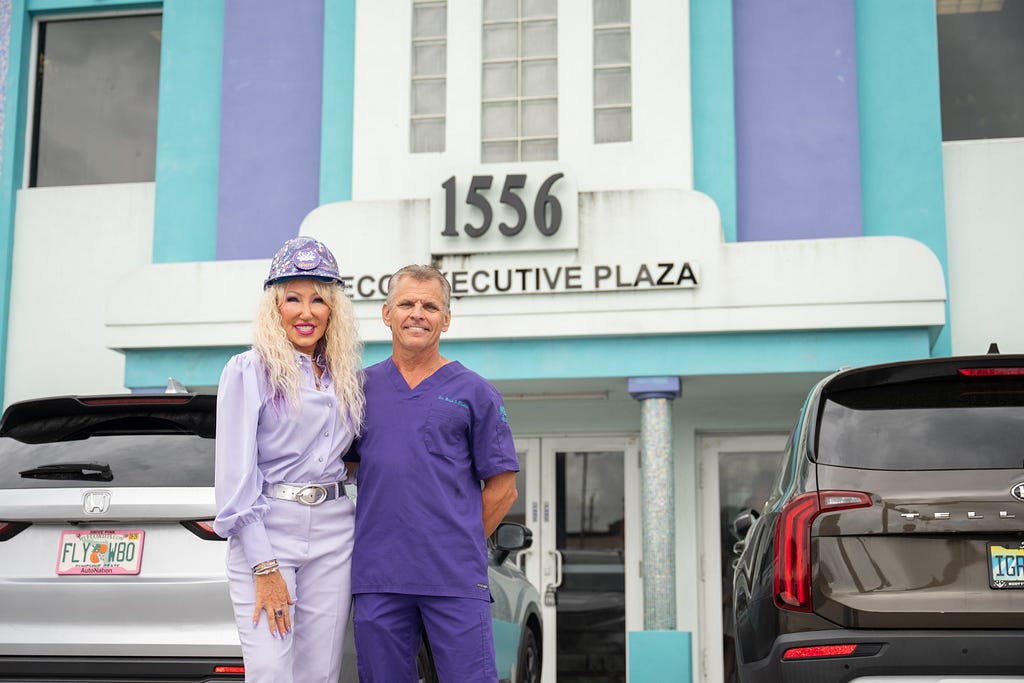
Getting here has not been simple. We bought our building on Commercial Blvd., expecting to house cats with little resistance — we are literally next door to a veterinary hospital, with eleven other practices and three rescues within three miles. Permitting turned out to be far more complicated than we anticipated, and clearance took eleven months. But we are full speed ahead on construction now, and we could not be more excited about what this clinic will make possible.
What makes you feel passionate about this cause more than any other?
Cats are the animals most likely to be written off — as someone else’s problem, or as no one’s. They are underserved compared to dogs in funding and in attention, and community and feral cats fall through every safety net we have. In South Florida, the scale is staggering with no real winter to slow reproduction and food everywhere, the population simply compounds. Once you have stood on your own property and watched an ocean of kitties that no one else is coming to help, you cannot unsee it. That is what keeps me in this fight. The need is enormous, and the field is thin, which means focused, well-run work can make an outsized difference here.
Without naming names, could you share a story about an individual who benefitted from your initiatives?
An elderly gentleman came to us not long after losing his wife of forty-two years. He was searching for companionship, and he was so sad and so lonely. One of our sanctuary’s favorites — a big, buff-colored furry angel who had come to us when his own owner passed away unexpectedly — chose him immediately. This cat is a huge character, always demanding attention, and he bonded with this gentleman on the spot. The honest way to put it is that they saved each other. We still get regular updates on their adventures together, and it never stops being the reason we do this work.
We all want to help and to live a life of purpose. What are three actions anyone could take to help address the root cause of the problem you’re trying to solve?
Three things, and every one of them is within reach for an ordinary person:
- Spay and neuter your own animals and support the low-cost clinics that make it affordable for everyone else. This is the single highest-impact thing anyone can do — it prevents the next generation of unhomed cats before they are born.
- Support trap-neuter-vaccinate-return rather than only feeding or relocating community cats. Feeding alone grows a colony; TNVR stabilizes and shrinks it humanely. Volunteer with a local group or help fund the trapping and surgeries.
- Adopt — and consider the cats who wait the longest: adult cats, bonded pairs, and special-needs animals. They are the hardest to place and often the most rewarding to bring home.
Based on your experience, what are the “5 Things You Need To Create A Successful & Effective Nonprofit That Leaves A Lasting Legacy?” Please share a story or example for each.
1. Solve at the root, not the symptom. For eleven years, I removed cats, and they kept coming back. The breakthrough was realizing that sterilization — TNVR and an affordable clinic — is what actually shrinks the problem. We chose to build surgical capacity instead of a cat café for exactly that reason.
2. Build infrastructure, not heroics. I learned the hard way that one woman with a trap cannot empty an ocean. The work only became durable when I stopped relying on my own effort and started building an organization, a team, and a facility that will outlast any one of us.
3. Be honest about money. Compassion does not pay for anesthesia. When our funding was suddenly pulled out from under us, we survived only because we got honest and creative about money — Kitten Yoga, a thrift store called The Thrifty Kitty, and a community that gave in a thousand different ways. A serious nonprofit needs a real plan for staying solvent.
4. Put governance and succession in place. A board, clear roles, financial discipline, and people who will serve the mission over themselves are what let an organization continue past its founder — our own Executive Director took the role without compensation. Legacy is, by definition, the part that keeps going after you, so you have to build for it on purpose.
5. Partner instead of going it alone. No single organization solves animal welfare in a region. Veterinarians, other rescues, municipal partners, donors, and community trappers each hold a piece. The work goes much further when you treat it as a shared effort rather than a competition for the same cats and the same dollars.
How has the pandemic changed your definition of success?
The pandemic moved my definition of success from growth to resilience. Before, success looked like more — more surgeries, more adoptions, more programs. After living through a stretch when nothing was guaranteed, success came to mean continuity of care: keeping the animals safe and the doors open no matter what hits us. Some of our most important work carried on right through COVID precisely because patient, steady effort does not depend on perfect conditions. A program that can survive a bad year is worth more than one that only thrives in a good one.
How do you get inspired after an inevitable setback?
I was blindsided by a divorce. My husband, who had helped start this charity, suddenly pulled all of our funding and threatened to put us out of the very building that had been purchased for this purpose. We could have folded. Instead, we got creative — Kitten Yoga, our Thrifty Kitty thrift store, and every kind of small fundraiser you can imagine — and our community rallied in ways that still move me. Zola Keller herself donated more than a hundred formal gowns to the thrift store. Past adopters called with gifts that, frankly, restarted my heart. A dedicated trapping partner recommended us to an extraordinarily generous feline philanthropist. We were expected to fail, and instead we survived. That generosity — of treasure and of spirit — reignited my faith in people. Surviving was one goal; making this charity truly thrive is the next one.
Is there a person in the world who you would like to talk to, to share the idea behind your non-profit?
There are a few. I would be thrilled to speak with Taylor Swift — she is a devoted cat lover with one of the largest platforms in the world, and if she lent her voice to promoting TNVR, the impact would not just reach South Florida; it would reach around the globe. I would also love to talk with Ken Griffin about philanthropy and finance and about building funds and foundations that can really move the needle on a problem like this one. And we would gladly welcome an introduction through anyone in their circles.
You’re doing important work. How can our readers follow your progress online?
Readers can follow PURRR Adoption + Sanctuary at www.purrr.org and across our social channels: https://www.instagram.com/purrr.family/ https://www.facebook.com/purrr.family/ We share our adoptable cats, clinic and campaign updates, and every way to get involved — whether that is adopting, volunteering, or supporting the Unite in CatPassion campaign.
Thank you so much for the time you spent sharing these wonderful insights! We wish you continued success with your mission.
High Impact Philanthropy: Tanya Lynn Heller of PURRR Adoption + Sanctuary On How To Leave A Lasting… was originally published in Authority Magazine on Medium, where people are continuing the conversation by highlighting and responding to this story.