

Our customer’s feedback does more for our strategy than any board meeting. It reframed what we’re really selling. It isn’t a recipe, and it isn’t a clever shopping list. It’s the ability to feed the people you love without the mental load that usually comes with it and affords you the time to do what you really love.
As a part of our series about “individuals and organizations making an important social impact”, we had the pleasure to interview Conor Boyle.
Conor Boyle is the co-founder of Plate Up, the UK meal planning and smart grocery app that turns recipes into a one-tap food shop and gives the average household back roughly 60 hours a year. He is on a mission to make scratch cooking the easiest option in every kitchen — cutting household food waste, helping families eat more healthily at home, and removing the mental load from the weekly food shop. Building the startup from scratch Conor has onboarded top UK chefs, partnered with leading UK supermarkets and attracted high profile investors and industry experts to join him on the ride as he sets out to disrupt the home cooking market.
Thank you so much for joining us in this interview series! Can you tell us a story about what brought you to this specific career path?
Plate Up started as the very small, very personal problem of trying to follow a meal plan as a busy lawyer in London. I’d find recipes I liked, scribble a shopping list, get to the supermarket, realise I’d already bought half of those ingredients the week before, forget the one thing I actually needed, and come home with a fridge full of half-used herbs and good intentions. Admin following a meal plan was harder than cooking the meals themselves.
We started sketching what it would look like if a recipe could just become your shopping basket, automatically, in your supermarket of choice, with the things you already have at home taken out. The more people we talked to, the clearer it became that this wasn’t a niche annoyance. It was almost everyone’s weekly story.
About twelve months later, we welcomed Cillian, my first born to the world and the meal planning problem became even more tangible. As if having a newborn during lockdown wasn’t enough, I was confronted with a major crossroads moment. I was offered a promotion and a substantial pay raise to move with my existing team to another law firm staying in private practice — or I could jump fully into a start-up that paid me nothing. I jumped. I’d be lying if I said I didn’t miss a healthy pay cheque landing in my account each month, but I haven’t regretted the decision for a single day. Noting that this decision would not have been possible without the most supportive and understanding partner.
Can you share the most interesting story that happened to you since you began leading your company or organization?
A cold email in 2021 lead to a full circle moment 🥂
When I left the legal world back in 2021, I had the vision of creating the best recipe delivery app in the world with celebrity chefs at the forefront.
How hard can that be?
So I cold emailed Tom Kerridge’s agent saying, hey fancy a chat. We would love Tom to be one of our celebrity chefs.
The response: ….Ah, who are you, and no.
At this point, we didn’t have a recipe content creation team, we didn’t have a marketing team and we didn’t have a tech team…. I fully understood the “no”.
Fast forward five years, not only do we have a world class team in all those areas, we have an amazing roster of 18 celebrity chefs including the wonderful Tom Kerridge! We are now very fortunate to call the aforementioned agent a good friend who took the time to understand our vision.
It has been said that our mistakes can be our greatest teachers. Can you share a story about the funniest mistake you made when you were first starting? Can you tell us what lesson you learned from that?
Coming from law, I arrived at Plate Up with a very specific bad habit: I thought I could think my way to the right product. The funniest version of that was the first time I sat down to “design” the app’s onboarding. I produced a beautifully ordered set of screens, fourteen of them, that I was deeply proud of. It felt thorough. It felt rigorous. It felt extremely lawyerly.
We then put it in front of real users. Most of them gave up by screen three. One politely told us she’d “rather just go to Tesco.” It was a genuinely funny moment in hindsight — me sitting there with my carefully drafted onboarding contract while real humans voted with their thumbs.
The lesson was simple: users don’t owe your product their attention. Everything they don’t immediately need is friction, and friction is the enemy of impact. I now start every product conversation with “what can we remove?” rather than “what can we add?”
The funniest mistake came while trying to fool Laoise Casey, our head of food. I made a delicious smash burger using her recipe in the app and sent a picture to the teams’ group chat. Instantly, Laoise called out the fact that I didn’t make the burger sauce from scratch — I didn’t, I had some left over from a BBQ. I learnt my lesson that day.
Can you describe how you or your organization is making a significant social impact?
The UK throws away roughly 6.6 million tonnes of household food waste every year, and the vast majority of it is food that was perfectly edible when it was bought. Households are the single biggest contributor — bigger than supermarkets, bigger than hospitality. People over-buy because shopping lists don’t know what’s in their cupboards. They bin half a bunch of coriander because the recipe asked for two leaves. They default to a takeaway on a Thursday because the meal plan they made on Sunday has collapsed under the weight of real life.
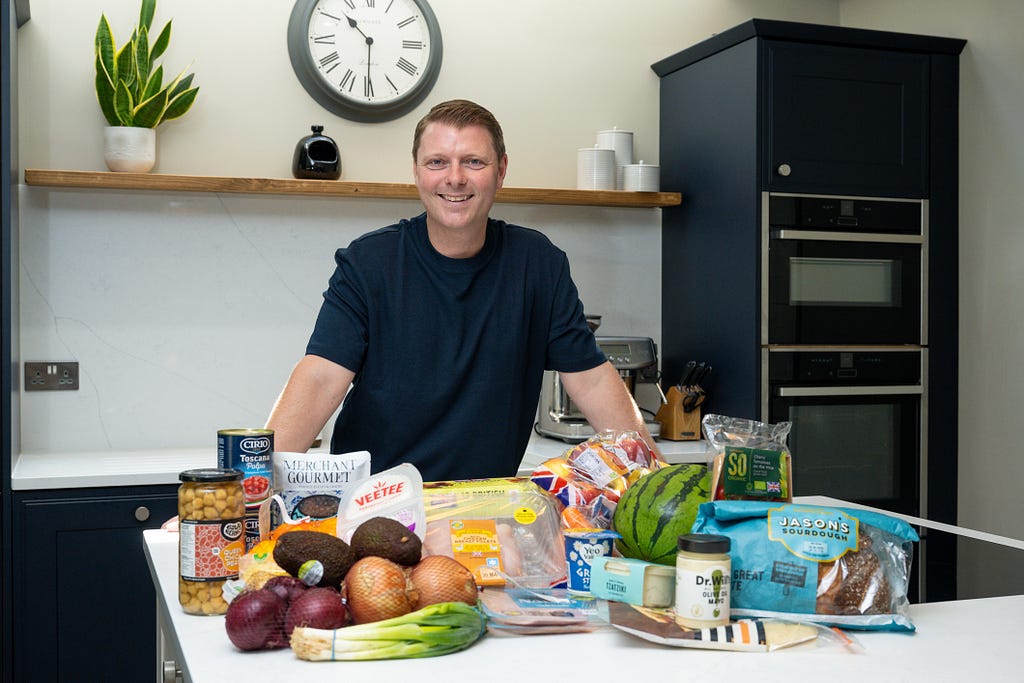
Plate Up is built to remove those failure points. You pick recipes from chefs you trust, including Martyn Odell AKA Lagom chef whose book is entitled eat the food you buy, the app turns them into a single, costed shop in your chosen supermarket, lets you remove anything you already have at home in one tap so you don’t double-buy, supermarket discounted and loyalty card prices apply — no mark ups ever, and walks you through cooking when it arrives.
The aggregate effect is striking: our users save around 60 hours a year on their food shop, spend meaningfully less, waste less, and cook more meals from scratch. Those four outcomes — time, money, waste, health — usually trade off against each other in food. The whole point of Plate Up is that they don’t have to.
Can you tell us a story about a particular individual who was impacted or helped by your cause?
We speak with our customers all the time and the biggest feedback is not in relation to the recipes (although they are rateable in the app) but what Plate Up enables families to do — spend more time together, cook together, go to the gym, get rid of the parent guilt of not cooking healthy food etc.
However, two sets of customer feedback stand out more than any other, real goosebump moments:
From a single mum, being able to feed her kids:
“I just wanted to express my gratitude. This is such a fabulous app! I have just received my first shop from Tesco and am currently baking the chicken tikka tray bake. Smells amazing and so fresh! My kids are going to love it! Thanks for the app being free for the consumer! With our food prices skyrocketing its finally nice as a single mum like me to benefit me and the kids”
To a mum with cancer being able to spend more time with her children with the 45 minutes saved each week.
“I genuinely love this concept, it saves me so much time. I have been on a cancer journey and time is so precious, this literally allows me to spend at least an extra 45 mins each week being directly present with my children.”
Our customer’s feedback does more for our strategy than any board meeting. It reframed what we’re really selling. It isn’t a recipe, and it isn’t a clever shopping list. It’s the ability to feed the people you love without the mental load that usually comes with it and affords you the time to do what you really love.
Are there three things the community/society/politicians can do to help you address the root of the problem you are trying to solve?
- First, treat household food waste as the climate issue it actually is. Mandatory food-waste reporting for major retailers, and meaningful, time-bound household reduction targets, would shift the entire industry. We’ve done it for plastic bags and carbon; we can do it for food.
- Second — and this is the one I’m most excited about right now — keep building on the genuine progress we’ve finally seen in school food, and extend it into the home and the supermarket basket. The expansion of free school meals to every child in a Universal Credit household from the 2026/27 academic year is the most meaningful change to UK school food policy in a generation. Scrapping high-sugar foods from menus, and scaling breakfast clubs to thousands more schools, is real progress. None of that happens without two decades of patient, relentless campaigning by people like Jamie Oliver, alongside Bite Back 2030, Chefs in Schools, The Food Foundation and others. Jamie’s Ministry of Food “10 Skills” curriculum, which is teaching a generation of children to cook a handful of meals from scratch with confidence, is exactly the kind of foundational work this country has needed for years. But school is roughly 190 days, and usually only one meal a day. The other 5,000-plus meals a year happen at home — and that’s where good food education either takes root or quietly fades. This is exactly the gap Plate Up was built to close. When a child learns to cook a tomato pasta or a stir-fry at school, Plate Up can put the same recipe — and the smart, costed shop for it — into the family’s hands that evening, on a budget, without the planning friction that usually defeats good intentions. That same mechanism is also one of the cleanest tools retailers have to actually improve the health of what’s in the average shopping basket — which matters enormously now that the Food Data Transparency Partnership is moving large food businesses toward mandatory reporting on the healthiness of their sales, with a Spring 2026 consultation already on the horizon and the Nutrient Profiling Model at the heart of the proposed metrics. Tesco has publicly set itself a 65% healthy-basket target. Sainsbury’s, Waitrose, Iceland, Co-op, Morrisons and others are lined up behind the same direction of travel. The honest challenge is that reporting alone risks being gamed — relabelling rather than reshaping. Plate Up offers retailers an incremental, demonstrable shift in basket composition: shoppers following chef-curated, scratch-cook recipes don’t replace HFSS ready meals with healthier ready meals; they replace them with fresh produce, whole grains, lean proteins, herbs and spices. That’s the kind of shift the FDTP framework is actually trying to measure. We’d love to be a partner in any school-to-home or retailer-to-household programme that wants to use that loop deliberately, and we already work with chefs and nutritionists who’d help build it.
- Third, let consumers see real, comparable supermarket data. The single biggest barrier to cutting waste and cost at home is that shoppers can’t easily compare what a basket actually costs across retailers, or where the best-value, lowest-impact options live. Open, standardised retail data- done in a way that protects competition — would unlock an enormous amount of innovation, and it would mostly benefit the households that need it most.
How do you define “Leadership”? Can you explain what you mean or give an example?
For me, leadership is providing the vision to achieve a mission, and then creating the conditions in which the people around you can do the best work of their lives in pursuit of it. A leader’s job isn’t to do everything; it’s to give the team the clarity, the flexibility and the motivation to move toward a shared goal — and to make absolutely sure they know that failure is part of the process, not the opposite of it.
Throughout my legal career I was lucky to have some excellent role models, but I’m not sure I ever worked under a true leader. I think that’s a quietly common pattern in law firms: the traits that get someone promoted, billable hours, technical brilliance, longevity aren’t always the same traits that make someone a leader. The two are too often assumed to be the same thing.
The penny dropped for me during a round of internal 360 reviews at Plate Up. Most of my team described me as a “leader,” whereas they had instinctively used the word “manager” to describe some of our other senior people. You need both in any healthy business, and there’s no hierarchy between them. However, for someone whose early career had given them very few natural leaders to learn from, that feedback (secretly, until now) genuinely made my day. It also reminded me that leadership isn’t a title you’re handed. It’s a description other people give you when you’ve earned it.
A bit of an aside but an insight into how we work together at Plate Up stems from when my dad was very sick and ultimately passed away from cancer. My boss, who I locked heads with (my fault being too big for my boots junior associate), told me to take as much time as I needed to be with my family. He didn’t need a timeframe, an update — family comes first. We have implemented that rule at Plate Up — if you need time off for a family appointment, sports day, nativity etc. you don’t “ask for time off” you “let the team know you are OOO”. Small but a big difference.
What are your “5 things I wish someone told me when I first started” and why. Please share a story or example for each.
1. The personal cost is real — own it, don’t romanticise it
Founders are sold an inspirational story about leaving the corporate ladder. The truer story is that it’s hard. When I left private practice I missed the salary, the structure and, frankly, the certainty. The honest version of the founder’s origin story is more useful to the next person than the polished one. If you don’t romanticise the cost, you make better, longer-lasting decisions. There have been times that I’ve not taken a salary, not taken my kids out for a treat or gone to dinner with my wife as I simply couldn’t afford it, in the darkest days there was a point where we have a combined household income of zero.
2. Talk to users before you write a single line of code
We spent our first few months in love with the elegance of the idea, we built a recipe delivery app with a calorie tracker built in, and a whole range of gamification. Nobody wanted it — a waste of time and money. Customers wanted to meal plan and get the ingredients they needed delivered simply and easily — no faff.
3. Free can be a strategy, not a weakness
We were told often that we’d never build a real business without a paywall. But the people we most wanted to help were exactly the people a paywall would lock out. Choosing to stay free forced us to build a smarter commercial model around retail and partnerships — and it’s what makes the social impact possible.
4. It’s OK to say I don’t know
I was a project finance expert. I was not a grocery expert — I’m getting there after 5 years :). So we built a table full of industry experts that became de facto advisors: Roger Burnley, the former CEO of Asda, shared his wisdom in relation to the UK retail landscape; Borra Garson, the founder of DML talent agency, taught us how engage with top chef talent like Dean Edwards, Levi Roots and many more; Menashy Cohen, the former FD of the Spiced Taylor, shared his accounting wisdom with us and Michael Hughes, the CEO of OCU Group, provides negotiation and strategy insights. Founders often under-ask for help from senior operators — most are far more willing than you’d think. Thankfully, I’m never the smartest person in the room.
5. Being honest with yourself and the team
Early on we were happy with small improvements or blamed not having certain partnerships in place for not achieving targets. We now own our shortfalls — even if they can be vastly improved by additional partnership — we ask what is in our control, how can we improve it, own the mistakes which will all ultimately lead to that elusive partnership becoming more likely.
Can you please give us your favorite “Life Lesson Quote”? Can you share how that was relevant to you in your life?
“Dreams without goals are just dreams, and ultimately they fuel disappointment. On the road to achieving your dreams, you must apply discipline and consistency. Because without commitment, you’ll never start, and without consistency, you’ll never finish.” Denzel Washington
Although I was an award winning lawyer, I had a great career, financially well rewarded, I was not happy. Dreaming about owning my own business was always there from when I made money as a 13 year old stringing tennis rackets. Finally, I had the courage and conviction to set goals to achieve my dreams — and we, as a team, are fully committed.
Is there a person in the world, or in the US with whom you would like to have a private breakfast or lunch with, and why? He or she might just see this, especially if we tag them. 🙂
Oh lots — I would say Denzel but hopefully he has already been tagged.
I would have an early breakfast with Mark Cuban, the owner of Cost Plus Drugs and famous for his time on Shark Tank. I’d speak with to him about expanding Plate Up across America, creating healthier eating habits reducing the need for some Cost Plus Drugs — fixing the problem not treating the cure; and, as I understand that Mark hates golf, I’d skip lunch and play a round with:
- Andy Murray (“I played tennis” — massive advocate of health and well being) — I’d love to talk to him about his tennis career and how we could educate young athletes to eat better — LTA recipe app;
- Tom Holland and/or Sam Holland (famous actor and famous chef) — would love to talk to them about raising awareness of healthy eating in the UK and use the Plate Up platform to raise money for their Brother Trust charities; and
- Rory McIlroy (best European golfer ever and a fellow Co.Down man) — he already does so much for the people of Northern Ireland, it would be great to work with him to promote healthy eating at home too!
You are a person of enormous influence. If you could inspire a movement that would bring the most amount of good to the most amount of people, what would that be? You never know what your idea can trigger. 🙂
If this influence came with unlimited patience and energy, I would replicate Jamie Oliver’s crusade to make school meals healthy and advocate this across the world.
How can our readers further follow your work online?
You can find Plate Up at plateup.app, on the App Store and Google Play as “Plate Up: Smart Grocery Shops,” and on Instagram https://www.instagram.com/plate_up_/ I’m on LinkedIn as Conor Boyle https://www.linkedin.com/in/conor-b-boyle/ I write fairly openly there about the realities of building a consumer food-tech business, including the harder bits, and I always reply to messages from people thinking about starting something themselves.
This was very meaningful, thank you so much. We wish you only continued success in your great work!
Social Impact Heroes: How Conor Boyle Of Plate Up Is Helping To Change Our World was originally published in Authority Magazine on Medium, where people are continuing the conversation by highlighting and responding to this story.