


“Accessible maps are not just about navigation; they’re about participation in society. Without access to maps, I am unable to contribute to civic engagement projects, which is my right as an American citizen.”
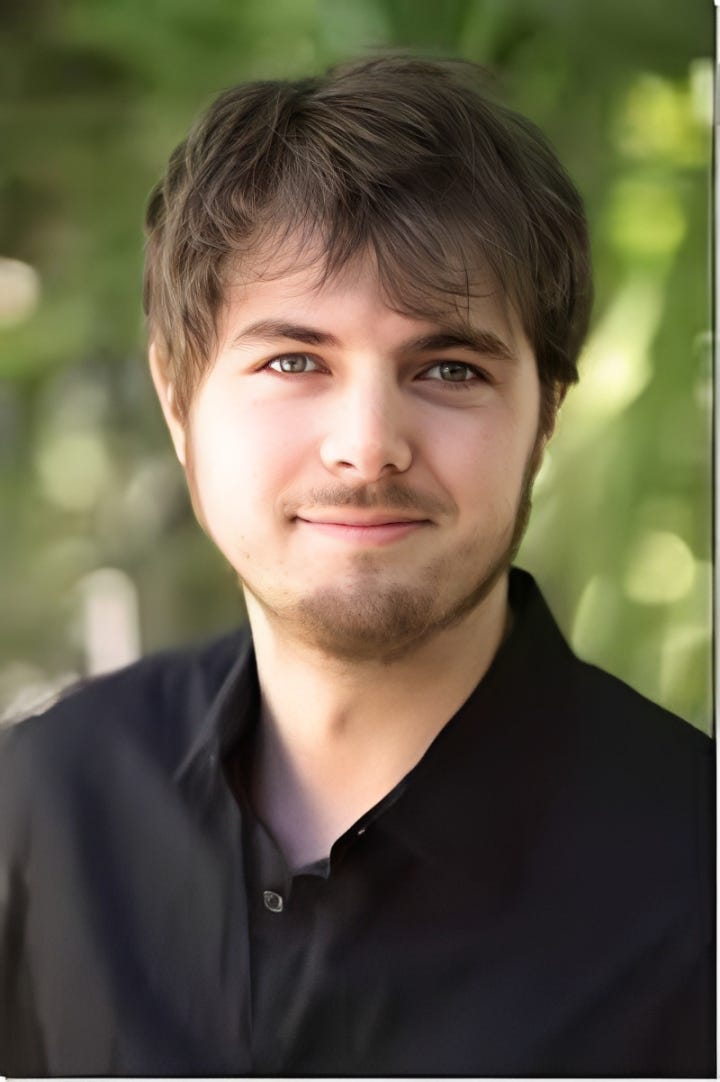
As a part of our series about “individuals and organizations making an important social impact”, we had the pleasure of interviewing Brandon Biggs.
Brandon Biggs is the founder and CEO of XR Navigation, the company behind Audiom, an accessible mapping platform transforming how blind and low-vision users experience digital maps. As someone who is legally blind himself, Brandon founded the company after firsthand experiencing how inaccessible maps limit independence, civic participation, and access to essential services. Today, his work sits at the intersection of accessibility, emerging technology, and public infrastructure, helping governments and organizations create map experiences that are usable by everyone.
Thank you so much for joining us in this interview series! Can you tell us a story about what brought you to this specific career path?
Growing up, maps were almost never a part of my life. I had access to maybe a tactile globe or a puzzle map of the United States from the American Printing House for the Blind, but outside of that, I would maybe encounter a tactile map once every four or five years. It wasn’t until I started my master’s degree in Inclusive Design at OCAD University at the age of 26 that I realized maps are absolutely everywhere, and blind people largely don’t have access to them at all.
One of my advisors challenged me to make a famous historical visualization accessible: Napoleon’s March of 1812. It combined geography, temperature, troop counts, and timelines all layered together. While working on that project, I realized geographic information was one of the biggest gaps in accessibility research.
At the same time, I was playing an audio-based zombie survival game where I navigated fictional environments using sound. I suddenly realized: this is a map. Why can’t we use the same idea of hearing your surroundings for maps in the real world? That became the foundation for Audiom.
Since then, I’ve learned sighted people view over 300 maps a year on average, while blind people view fewer than one map a year on average. That gap is what motivated me to build XR Navigation.
Can you share the most interesting story that happened to you since you began leading your company or organization?
One story that really changed my perspective involved a redesign project for a local park my wife and I walk through almost every day. The city held a public feedback session where they displayed multiple large maps showing different redesign concepts and asked residents walking through the park which version they preferred.
That experience was astonishing for me because, in more than 30 years of life, I had never realized how much civic engagement revolves around maps. I contacted the organizers and asked if they could describe the maps to me. They genuinely tried, but it highlighted how difficult it is to communicate spatial information without accessible tools. Try to describe a somewhat complex shape, like Idaho, in enough detail so someone else can redraw it, and you will quickly realize what I am talking about.
That moment pushed me deeper into civic accessibility work. Today, we’re actively researching and developing guidance around accessible map descriptions while also advancing Audiom as a scalable solution for governments and organizations. It reinforced something important to me: accessible maps are not just about navigation, they’re about participation in society. Without access to maps, I am unable to contribute to civic engagement projects, which is my right as an American citizen.
It has been said that our mistakes can be our greatest teachers. Can you share a story about the funniest mistake you made when you were first starting? Can you tell us what lesson you learned from that?
One of the funniest mistakes happened during one of the first public demonstrations of Audiom back in 2019. I had users navigating a map using keyboard controls, but I started everyone in the bottom corner of the map. A surprising number of people would immediately press the down arrow, hit the boundary wall, hear a ‘thud’, and then continue repeatedly walking into the wall for a full minute, ‘thud, thud, thud,’ over and over again.
They would then turn to me and say, “Wow, this is really cool,” even though they had never actually explored the map.
Blind users immediately understood what the sound meant, but many sighted users didn’t connect the audio cue with hitting a wall. That taught me a really important lesson about multimodal feedback. Even if something seems obvious to the designer, users need clear text or visual cues explaining what’s happening. Accessibility isn’t just about making something functional, it’s about making interactions understandable and intuitive.
Can you describe how you or your organization is making a significant social impact?
Sighted people view around 300 maps a year on average. Blind people and many others with disabilities often interact with fewer than one map a year. That’s an enormous gap because maps are truly foundational to modern society.
Without usable maps, people are excluded from civic engagement, education, transportation, careers, and decision-making. Our goal with Audiom is to close that gap by making geographic information accessible to everyone.
We work with governments, universities, conferences, and organizations to transform inaccessible visual maps into interactive visual, audio, and textual experiences that communicate shape, size, orientation, distance, and spatial relationships. Ultimately, we’re trying to ensure that people with disabilities can independently access the same spatial information everyone else relies on every day.
Can you tell us a story about a particular individual who was impacted or helped by your cause?
One example that stands out involved the Vision Rehabilitation and Assistive Technology Conference (VRATE). Before working with us, the organizers of the conference exhibit hall had never actually been able to independently review the floorplan layout before the event itself.
They would receive booth numbers and rely heavily on contractors to handle the physical layout because there wasn’t an accessible way to understand the map.
We converted their exhibit hall floorplan into an Audiom experience, allowing the organizers to independently explore the space before the conference even started. For the first time, they could give informed feedback about booth placement, traffic flow, and exhibitor organization. They also distributed the map to attendees, and over 2,000 people used it during the conference.
It was meaningful because it wasn’t just about navigation; it allowed someone to fully participate in their professional role independently.
Are there three things the community/society/politicians can do to help you address the root of the problem you are trying to solve?
- First, governments and public agencies need to recognize that roughly 20% of the population is excluded from many current digital map experiences. Cities, counties, universities, and organizations should prioritize implementing accessible map solutions as part of their digital accessibility efforts. It is possible to provide equal access to maps, they just need to do it.
- Second, the blind community needs to continue advocating for usable maps. One of the most common things I hear from governments is, “You’re the first person who has ever asked for this.” Many people don’t request accessible maps because they don’t realize accessible maps are even possible.
- Third, society as a whole needs to treat digital accessibility as essential infrastructure. If platforms are inaccessible, people are excluded from work, services, and civic participation. Early on, I couldn’t even independently complete my own business license application because the website wasn’t accessible. Accessibility directly impacts whether people can fully participate in society. A fair society counts on everyone’s participation.
How do you define “Leadership”? Can you explain what you mean or give an example?
To me, leadership is about modeling the behavior you want your team to follow and helping people find answers, even when you don’t immediately know them yourself.
I try to approach leadership by saying: if someone asks me a question, I’ll do everything I can to help find the answer. And if I don’t know, I’ll be honest about that while still helping move things forward.
I also believe leaders should hold themselves to the same standards they expect from their teams. I don’t think leadership is about having all the answers, it’s about consistency, humility, and helping people succeed.
What are your “5 things I wish someone told me when I first started” and why. Please share a story or example for each.
1. Examples are everything
In a new market, people want proof before they commit. Early on, potential customers often told us, “This sounds great, but nobody else is doing it.” Once we started building real-world examples and case studies, momentum increased significantly.
2. Implementation speed matters more than you think
One of my mentors told me early on that reducing implementation time would dramatically increase adoption. At the time, I didn’t fully appreciate how important that was. As we’ve reduced setup time for maps, we’ve seen much stronger traction because organizations can immediately see value.
3. Reseller partnerships can completely change your business
One of the biggest breakthroughs for us has been working with companies that already serve governments and GIS customers. Those implementation partners understand the ecosystem and help integrate our technology into larger projects. When looking for customers and resellers, your first instinct is to target the big companies, but they are not the ones able to move fast and quickly incorporate your product into their offering.
4. Persistence matters more than immediate success
We applied multiple times for grant funding and faced repeated rejection. Eventually, a previously rejected application unexpectedly received funding years later, which became transformational for our company. That taught me to keep going even when progress feels uncertain.
5. Accessibility problems are often invisible until you experience them yourself
A lot of organizations genuinely don’t realize inaccessible maps are excluding people because they’ve never had to think about it before. Education and awareness are just as important as the technology itself.
Can you please give us your favorite “Life Lesson Quote”? Can you share how that was relevant to you in your life?
One idea that has stayed with me comes from the podcast How I Built This. The host often asks entrepreneurs how much of their success comes from luck versus hard work, and many answer “50% luck and 50% hard work.”
That perspective really resonates with me. I believe you have to work incredibly hard and stay persistent, but you also have to recognize and embrace opportunities when luck appears. Sometimes we’ve had terrible luck, and sometimes we’ve had incredible luck that changed the trajectory of the company. Both matter.
Is there a person in the world, or in the US with whom you would like to have a private breakfast or lunch with, and why? He or she might just see this, especially if we tag them. 🙂
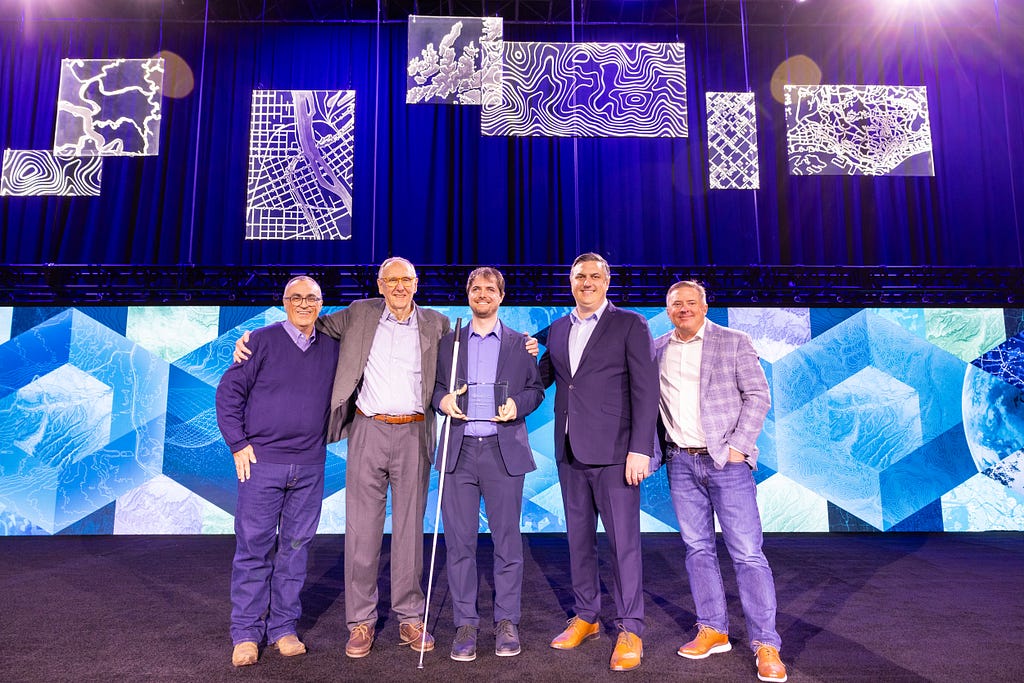
I’d love to have lunch with Jack Dangermond, the founder of ESRI. I met him briefly after receiving an award at the ESRI Partner Conference, and he was incredibly kind. I’d really love the opportunity to sit down with him, let him “hear” a map firsthand, and discuss the future of geographic accessibility.
You are a person of enormous influence. If you could inspire a movement that would bring the most amount of good to the most amount of people, what would that be? You never know what your idea can trigger. 🙂
I would inspire a movement where digital accessibility becomes non-negotiable. Ideally, every web browser would strongly enforce accessibility standards so inaccessible websites simply wouldn’t load. Something similar happened with SSL in 2017 when Chrome and Firefox flagged websites that did not have an SSL certificate. Automated accessibility checkers are common and could be made to easily run when the page loads, or when it is newly indexed. This would cost browser manufacturers relatively little, and dramatically increase the number of accessible websites.
Accessibility shouldn’t be treated as optional or secondary. It directly impacts whether people can participate in education, employment, civic life, and everyday activities.
How can our readers further follow your work online?
Readers can learn more about XR Navigation and Audiom at the XR Navigation website and can follow both XR Navigation and me on LinkedIn for updates on accessible maps, digital accessibility, and usable technology.
This was very meaningful, thank you so much. We wish you only continued success in your great work!
Social Impact Heroes: How Brandon Biggs Of XR Navigation Is Helping To Change Our World was originally published in Authority Magazine on Medium, where people are continuing the conversation by highlighting and responding to this story.