

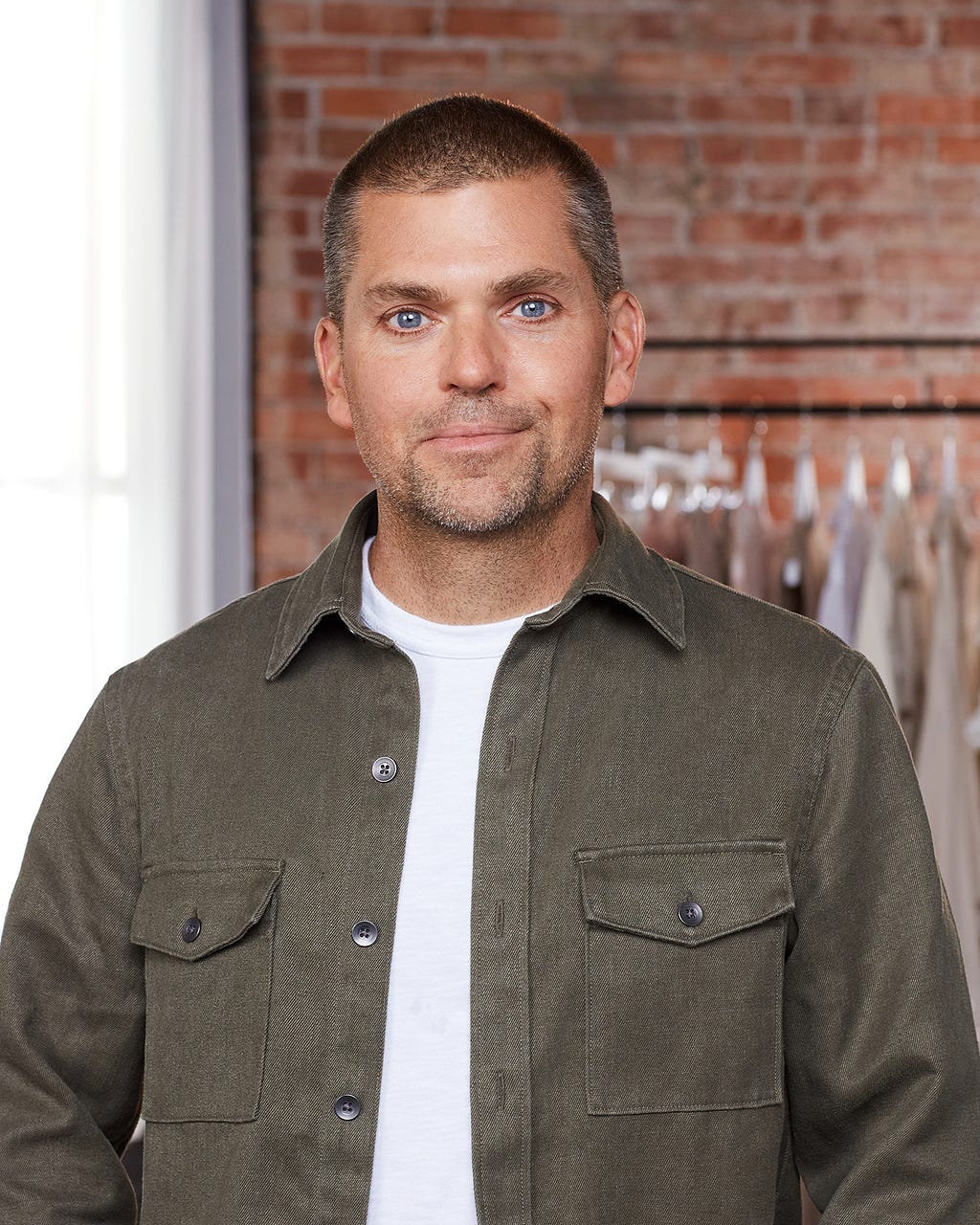

Jamie Schisler Of UpWest: Five Strategies Our Company Is Using To Tackle Climate Change & Become More Sustainable
An Interview With Martita Mestey
I think it would be that the best form of talking is listening. As leaders, we oftentimes feel we need to jump into solution mode and I have come to recognize that while people look to me for answers, often the best solutions come from me just being curious and listening, whether it is to our customers, our team, etc.
As a part of our series about how companies are becoming more sustainable, we had the pleasure of interviewing Jamie Schisler.
Jamie Schisler is the Chief Comfort Officer of UpWest, a nationally recognized men’s and women’s lifestyle brand that emerged in 2019 with the singular mission to deliver comfort to individuals and the planet.
Thank you so much for doing this with us! Can you tell us a story about what brought you to this specific career path?
I graduated from Miami University with a marketing degree. I have worked in retail my entire career, starting as a Merchandising trainee at Abercrombie and Fitch. I was part of the original team to help launch the Hollister brand and now I’m proud to be the brand Creator and Chief Comfort Officer of UpWest. Along the way, I have completed five marathons, got married, have two teenage daughters, and earned my MBA from The Ohio State University.
What is the mission of your company? What problems are you aiming to solve?
Our brand purpose is to provide comfort for people and the planet, and we are on a mission to create quality clothing that supports a better quality of life for our customers, our communities, and our planet. We aim to be solution-oriented as a brand, whether the solution is the need for a high-quality garment that lasts the test of time or the solution is providing a resource to take back old clothing to keep them from landfills. We recognize we can’t do it all but want to continue to try to do our part.
Can you tell our readers about the initiatives that you or your company are taking to address climate change or sustainability? Can you give an example for each?
From a sustainability perspective, we aim to do our part starting with the fabrics we choose to use in our garments. Producing with natural fibers such as cotton and hemp as well as utilizing recycled materials when we use synthetics are the core foundations of our raw materials strategy. Additionally, we have supported terrific organizations over the years like One Tree Planted and the Ocean Blue Project whose work directly goes to supporting the climate. Additionally, we have set up a garment take-back program in our stores where customers can bring any old piece of clothing. We have a partnership with a terrific organization called Scrap NYC that recycles any of the cotton garments we take back into new fabric. So not only are we able to keep garments out of landfills, but we are also partnering to re-purpose them into new material.
How would you articulate how a business can become more profitable by being more sustainable and more environmentally conscious? Can you share a story or example?
I can’t speak to every industry, but in the clothing industry, when a company chooses to be a player in fast fashion, not only is it not environmentally friendly to create disposable products but it can put pressure on the profitability of the business having to constantly cycle through all of that inventory.
The youth led climate strikes of September 2019 showed an impressive degree of activism and initiative by young people on behalf of climate change. This was great, and there is still plenty that needs to be done. In your opinion what are a few things parents should do to inspire the next generation to become engaged in sustainability and the environmental movement? Please give a story or an example for each.
Beyond activism, I think for everyday families it is just taking small steps. Start with discussing the importance of recycling, make sure you are finding the right resources for unwanted clothing and shoes that will responsibly harvest them, and explore composting. I think the more we all do the little things, they multiply to be big things that can make a difference.
What are your “5 Things I Wish Someone Told Me Before I Started” and why?
I don’t know about five, but I think it would be that the best form of talking is listening. As leaders, we oftentimes feel we need to jump into solution mode and I have come to recognize that while people look to me for answers, often the best solutions come from me just being curious and listening, whether it is to our customers, our team, etc.
None of us are able to achieve success without some help along the way. Is there a particular person who you are grateful towards who helped get you to where you are? Can you share a story about that?
Michael Weiss was the Founder and original CEO of Express and someone I learned a great deal from in terms of business and leadership. Michael always would say “Fall forward” because in life and business, inevitably you are going to make mistakes. Just make sure they are new ones, and you continue to move forward.
You are a person of great influence and doing some great things for the world! If you could inspire a movement that would bring the greatest amount of good to the greatest amount of people, what would that be? You never know what your idea can trigger. 🙂
It would be a national day of community service. There is such a need in all of our backyards, and I would love to see a dedicated holiday where we get to serve our communities and those most vulnerable.
Do you have a favorite life lesson quote? Can you tell us how that was relevant to you in your own life?
I love the quote “Today’s peacock is tomorrow’s feather duster”. This notion has always inspired me to stay grounded and humble. We should celebrate the wins when we achieve them but recognize that we can only live in that so long and need to keep moving forward with humility and consistency.
What is the best way for our readers to continue to follow your work online?
Visit www.upwest.com!
This was so inspiring. Thank you so much for joining us!
Jamie Schisler Of UpWest: Five Strategies Our Company Is Using To Tackle Climate Change & Become… was originally published in Authority Magazine on Medium, where people are continuing the conversation by highlighting and responding to this story.