

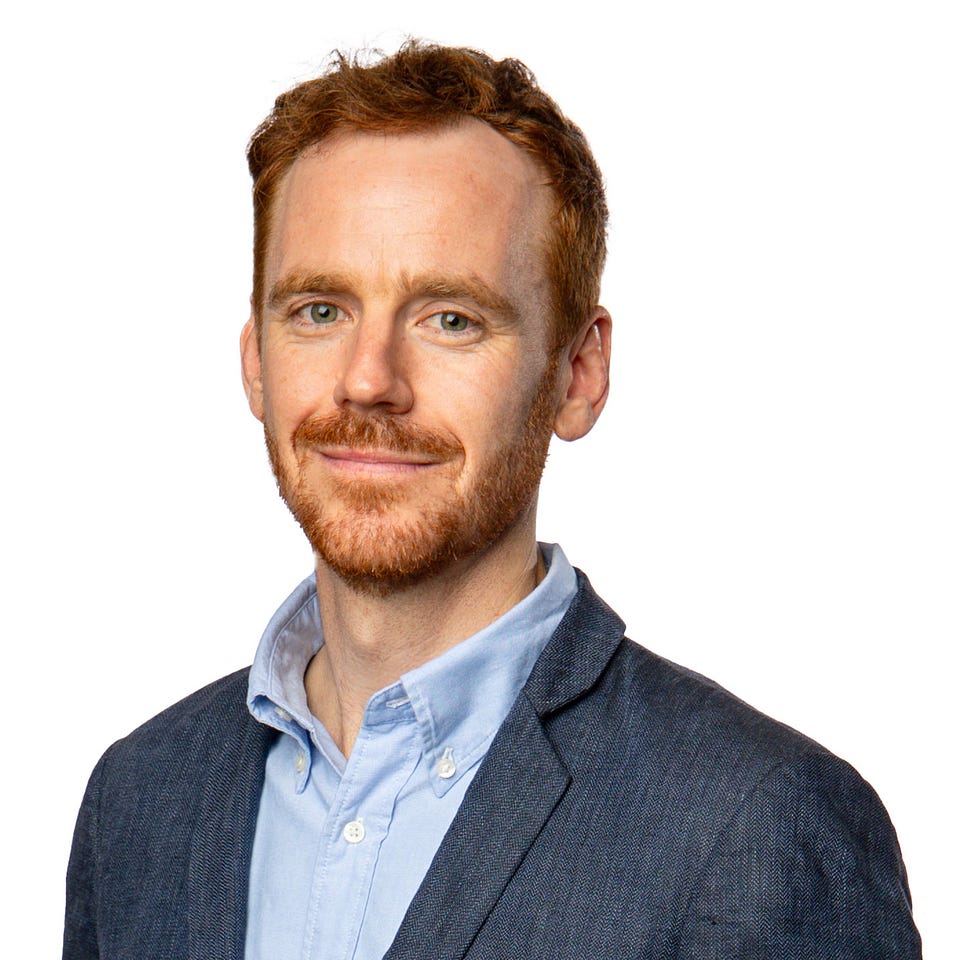
How Tech Pioneer Geoffrey Smith Is Dismantling ‘Archaic’ Hiring Practices to Unleash an Untapped Neurodivergent Workforce
“My challenge to every organization in the world is to make neurodiversity fit by tweaking a few things, because you are missing out on an amazing talent pool.”
I had the pleasure of talking with Geoffrey Smith. Long before he was named the 2025 Queensland Australian of the Year, Smith was a data analyst moving through the ranks at global corporations, spending his days looking for ways to make them run more efficiently. Eventually, the corporate grind lost its shine. He packed his bags, spent a year traveling across Asia, and returned with a fresh perspective. He took an executive role at a disability employment services company, hoping to make a meaningful impact. Instead, he found himself face-to-face with a broken system.
That frustration became the fuel for a massive career pivot. Smith saw a glaring disconnect in the modern economy. Corporate tech teams were drowning in data, desperately needing people who could process complex information. Meanwhile, thousands of highly capable autistic adults were locked out of the workforce. To Smith, it was obvious that many autistic people possess a natural affinity for data, mathematics, and the precise pattern recognition required to create excellent outcomes. So, in 2020, right as the global pandemic hit, he took a massive gamble. He co-founded Australian Spatial Analytics (ASA). This non-profit social enterprise was designed specifically to bridge the gap between the tech industry’s skills deficit and an untapped pool of neurodivergent talent.
The systemic problem Smith is tackling is severe. The autistic unemployment rate in Australia currently sits at a staggering 34 percent. That is eight times the national average and three times higher than the rate for people with other disabilities — a direct consequence of outdated recruitment practices that shut them out of the employment market, rather than a lack of ability.
At ASA, the model is straightforward and highly effective. The organization hires long-term unemployed autistic individuals and trains them on the job. They learn highly technical skills in a supportive environment, working in the geographic information systems and digital engineering fields. After upskilling them, ASA helps transition these analysts into mainstream roles with government departments, major engineering firms and geospatial consultancies. Then, they backfill those empty positions and start the process all over again.
To make this work, Smith completely remodeled the modern office environment so it became neuro-affirming, while helping manage sensory sensitivities and executive functioning. The changes are surprisingly simple and the results speak for themselves. Over the past six years, ASA, with its 80% neurodivergent workforce, has supported more than 250 big data careers and facilitated over 100 successful employment transitions.
While winning honors like being named one of Australia’s Most Innovative Companies and recognition at the World Sustainability Awards are impressive milestones, Smith remains focused on the groundwork. His ultimate ambition goes much further than his own company’s walls. He wants mainstream corporations to replicate his model because he knows it is entirely achievable.
Diane: Thank you so much for joining me, Geoff Smith from Australian Spatial Analytics. I think this is going to be a great conversation because we have a lot of synergy here, as I work in the neurodiverse space as well. I am excited to hear about your company, your journey to launching this nonprofit, and how you are serving in this aspect.
Geoff: My name is Geoff Smith, and I am the CEO and co-founder of Australian Spatial Analytics. To explain how Australian Spatial Analytics — or ASA — came to be: I am a data analyst by trade. After finishing university, I worked for corporate enterprises at the big end of town, focusing on how to make things more efficient. Eventually, I grew tired of that environment, decided to travel around Asia for a year, and later ended up working as an executive at a disability employment services company.
While I was there, one thing that really frustrated me was how they placed autistic candidates into any available job, whether they were interested in it or not. I call that a “place and pray” approach. If you put people into positions where they have no interest, you are setting them up to fail. I decided to establish ASA because I saw how many autistic individuals have a natural affinity for data, mathematics, and recognizing patterns to create excellent outcomes.
It was obviously a gamble, but six years later — we launched in 2020 right when COVID hit — and 250 big data careers later, we know that this model works. We are still here advocating for young autistic adults. To provide some context, the autistic unemployment rate in Australia is a staggering 34%. The reason for this is a consequence of archaic and outdated recruitment practices that shut them out of the employment market, rather than a lack of ability.
We all know that when you go for a job, you rarely get it based solely on whether you can do the work; you gain a position based on how you present yourself. If you are autistic, get nervous, and do not perform well in a traditional interview, HR often decides you are not a cultural fit. My challenge to every organization in the world is to make neurodiversity fit by tweaking a few things, because you are missing out on an amazing talent pool.
Our model focuses on hiring long-term unemployed autistic individuals, training them on the job with in-demand tech programs, and then transitioning after upskilling to other inclusive employers. This allows them to further their careers, while we backfill those positions to start the process all over again. That is how we create social impact.
Diane: I love that. Can you talk a little bit about some of the successes that the organization has achieved?
Geoff: As I mentioned, we have supported over 250 careers. Many individuals have moved up within ASA itself, and we have facilitated over 100 employment transitions. What is most satisfying is when they gain the confidence to make those transitions themselves. These placements are with major Tier 1 contractors, engineering firms, and geospatial consultancies.
One of the best stories involves a man named Ben. He was out of work for six years before joining us. He was placed on a project to clean up road and address data alongside nine other individuals who were also long-term unemployed. They successfully completed that large project with less than a 1% error rate, and he ended up becoming one of our star performers. Today, he works at a top geospatial consultancy, excels in his role, and speaks with clients every day. It is amazing what happens when you give someone a chance.
There are countless similar stories. The vast majority of our autistic employees have never held a job before; for many, this is their first office environment. Some join us from retail backgrounds or similar sectors. We provide personal and professional support, including soft skills development, to help them adjust to the office.
As a neurotypical person, I can tell you it is not difficult to implement these changes. For example, during recruitment, it helps to use inclusive language in the job advertisement. We found that if an autistic person sees a posting and feels they only meet 80% of the criteria, they will not apply at all. Including phrases like “no experience necessary” makes a big difference. We also provide interview questions 48 hours in advance so candidates can prepare, which minimizes anxiety. Providing clear directions to the office, including maps and photographs, ensures they can arrive without feeling stressed. We also ensure neurodivergent representation on our interview panels so candidates know exactly who they are meeting.
When an offer is extended, we ask candidates directly about their required accommodations. This might include structured start and finish times, set workdays, dimmed lighting, or wearing noise-canceling headphones. Our communication style is explicitly direct. We use the phrase “directness is kindness” because it removes ambiguity. We have found that when provided with a clear list of tasks and explicit instructions, our autistic team members excel.
Diane: That is wonderful. As you have built this model in Australia, have you seen a ripple effect with the rest of the world jumping on board?
Geoff: We are trying to change the world one organization at a time. For example, several companies that hired our analysts have since updated their own recruitment practices and begun asking candidates for accommodations. It is important to ask everyone what they need, not just neurodivergent individuals, because practices that benefit neurodivergent people generally benefit everyone. You will not know unless you ask. Employees might benefit from hybrid work arrangements or other specific adjustments, and it is valuable to check in on these needs regularly.
We won a World Sustainability Award in 2024 for social impact. While we are a compact organization, we are creating ripples globally. Ultimately, we want other organizations to replicate our model because it is entirely achievable. Large corporations have the capacity to employ far more neurodivergent individuals than we can. While awareness surrounding neurodiversity has grown significantly over the last ten to fifteen years, there is still a long way to go, which is exactly why organizations like ours exist.
Diane: I want to congratulate you on being named a finalist for the Authority Magazine DigiFest Super Impact Hero Award. When you hear that title, what does it truly mean to you to be a Super Impact Hero?
Geoff: It is wonderful to receive recognition both within Australia and globally. We highly value this exposure to spread our message about enabling neurodiversity in the workplace. This issue impacts a significant portion of the population; neurodivergent individuals (e.g.autism, dyslexia, and ADHD) represent roughly 20% of the global population,making them the world’s largest minority group. This equates to approximately 1.6 billion people worldwide.
Many are currently suffering in silence at work due to the stigma surrounding disclosure or the hesitation to request minor accommodations, most of which are low-cost or entirely free. Receiving recognition for our work is fantastic, and we encourage every organization worldwide to replicate these practices to make the workplace more accessible for everyone.
Diane: I love that. Thank you. As you speak to the Authority Magazine community, what can they do to support your mission?
Geoff: Please share this article with everyone you know, as it is inevitable that you know someone who is neurodivergent — whether that is yourself, a relative, or a friend. Building that groundswell creates the opportunity for real change.
We are seeing progress here in Australia; for instance, a National Autism Strategy has been in place for two years, but it takes time for high-level policies to translate into changes on the ground in everyday workplaces. Sharing our story helps let everyone know that integrating neurodiversity into the workplace is highly achievable.
Diane: Great. And where can people find you online?
Geoff: You can visit our website at asanalytics.com.au.
Diane: Authority Magazine always concludes with our signature five questions. What are five things you wish you knew before stepping into your role as a Super Impact Hero?
Geoff: That certainly puts me on the spot! Here are the five things:
- First, always remain persistent. When you introduce something novel that challenges existing paradigms, shifting perspectives is incredibly difficult.
- Second, if you are looking to change the world, avoid just talking about what you can do — focus on executing and demonstrating results, as that holds immense power. The initial step is always the most challenging.
- Third, ensure you build a strong network of allies. You cannot accomplish this alone; your allies will serve as vital advocates to help champion your cause.
- Fourth, if you operate as a social impact entrepreneur, your ultimate goal is essentially to put yourself out of business. The objective is to solve a deep-seated problem, rather than to sustain the entity indefinitely.
- Fifth, remain enthusiastic about your core messaging. Even if it is the thousandth time you have explained your mission, it is always the very first time the person on the receiving end is hearing it.
Diane: That is excellent insight. Coming from the nonprofit neurodiverse space myself, I truly appreciate everything you shared. This has been a wonderful conversation, and I greatly appreciate your time. Congratulations once again on being named a Super Impact Hero. I look forward to helping your voice and business be seen and heard. Thank you.
Geoff: Thank you very much for the opportunity. I am incredibly grateful for the award.
Diane: Thank you.
How Tech Pioneer Geoffrey Smith Is Dismantling ‘Archaic’ Hiring Practices to Unleash an Untapped… was originally published in Authority Magazine on Medium, where people are continuing the conversation by highlighting and responding to this story.