

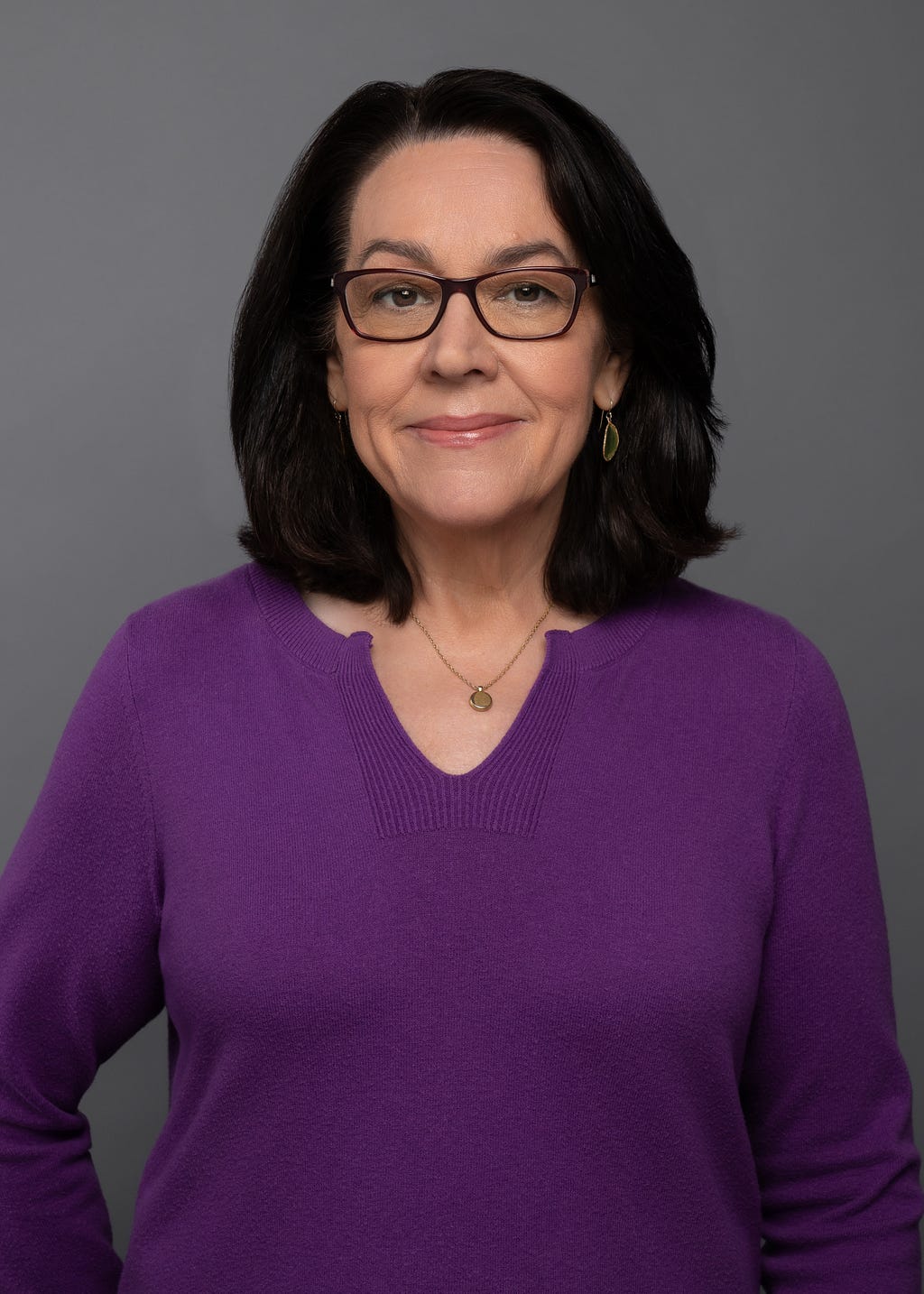

Disability Inclusion In The Workplace: Ramona Schindelheim Of WorkingNation On How Businesses Make Accommodations For Customers and Employees Who Have a Disability
An Interview With Eric Pines
Ask questions of everyone. People are often afraid of not knowing, but it’s actually a sign of strength to be inquisitive.
As we all know, over the past several years there has been a great deal of discussion about inclusion and diversity in the workplace. One aspect of inclusion that is not discussed enough, is how businesses can be inclusive of people with disabilities. We know that the Americans With Disabilities Act (ADA) requires businesses to make reasonable accommodations for people with disabilities. What exactly does this look like in practice? What exactly are reasonable accommodations? Aside from what is legally required, what are some best practices that can make a business place feel more welcoming and inclusive of people with disabilities? To address these questions, we are talking to successful business leaders who can share stories and insights from their experience about the “How Businesses Make Accommodations For Customers and Employees Who Are Disabled “.
As a part of this series, we had the pleasure of interviewing Ramona Schindelheim, editor-in-chief at WorkingNation.
Ramona oversees the editorial content for WorkingNation and hosts the Work in Progress podcast. She is a veteran financial journalist who has worked for CNBC, ABC News, and The Wall Street Journal. As an executive producer with CNBC, Ramona guided three daily business news shows, managed special initiatives, produced numerous documentaries, and launched the talk show Conversations with Michael Eisner.
Thank you so much for joining us in this interview series! Before we dive in, our readers would love to “get to know you” a bit better. Can you tell us a bit about your ‘backstory’ and how you ended up where you are?
Absolutely — I am the editor-in-chief of WorkingNation, a nonprofit journalism and storytelling organization focused on the current and future state of work across the United States. We’re all about highlighting solutions to the challenges facing the workforce of today and preparing workers for quality jobs and careers. I drive the development of our editorial content and host our podcast, Work in Progress.
Previously, I worked at CNBC, ABC News, The Wall Street Journal, and in local news in Chicago, Los Angeles, and New York. My first job in journalism was answering phones in the CBS radio newsroom in Chicago, and I haven’t stopped since. I’m a storyteller at heart and am passionate about uplifting solutions that have a positive impact and improve the quality of people’s lives.
You are a successful leader. Which three character traits do you think were most instrumental to your success? Can you please share a story or example for each?
Throughout my career, I have found it immensely helpful to be aware of what I don’t know. None of us knows everything, and we should always be mindful of that, always be curious, always ask questions. For me, my career path has been a learning journey, asking plenty of questions along the way.
Secondly, embracing mentorship has been pivotal to getting me where I am today. Coming into the workforce, from a lower-middle class background, I didn’t have much access to mentors. In my first job at the radio station, I was lucky to have a news director who served as a mentor to me from the start. He took a chance on me and helped me learn what I needed to know to succeed in the industry. Going forward, I have always tried to live by his example and serve as a mentor for those pursuing a career in journalism, particularly for women and those who, like me, might not have had exposure to clear pathways to good career opportunities.
I have also found it extremely important throughout my career to have a clear vision of the approach I want to take in achieving my work goals, but also be willing to be adaptable. If someone else comes in with a new idea or strategy, I believe it is important to be open to listening to that person, which can sometimes mean taking a chance on an idea that feels unfamiliar to you. It comes down to not being too set in your ways that you impede progress.
Can you share a story about one of your greatest work-related struggles? Can you share what you did to overcome it?
Being a woman in a position of leadership in any business, you can face an array of challenges. Learning to navigate these complexities throughout my career hasn’t always been easy. For me, the solution has been to manage myself, my work, and my teams with both authority and authenticity in who I am and what I believe in. Now, I’m immensely grateful to be at WorkingNation, an organization filled with impressive women and a leader who appreciates each and every one of us.
What are some of the most interesting or exciting projects you are working on now?
At WorkingNation, we are focused on telling stories about the challenges workers face in keeping up with the way work continues to change across all industries. We also look at the barriers specific groups are facing in accessing quality, good-paying jobs in today’s workforce. One area that has been important to me for a long time is looking at how we make sure midcareer and older workers are being included in the workforce and are being considered for these jobs and for promotions. WorkingNation recently partnered with Scripps News to tell stories about what is being done to ensure these workers aren’t being overlooked through our joint “Age in America” week — an effort that has been particularly meaningful to me and is just one way that we serve as a resource to other media organizations.
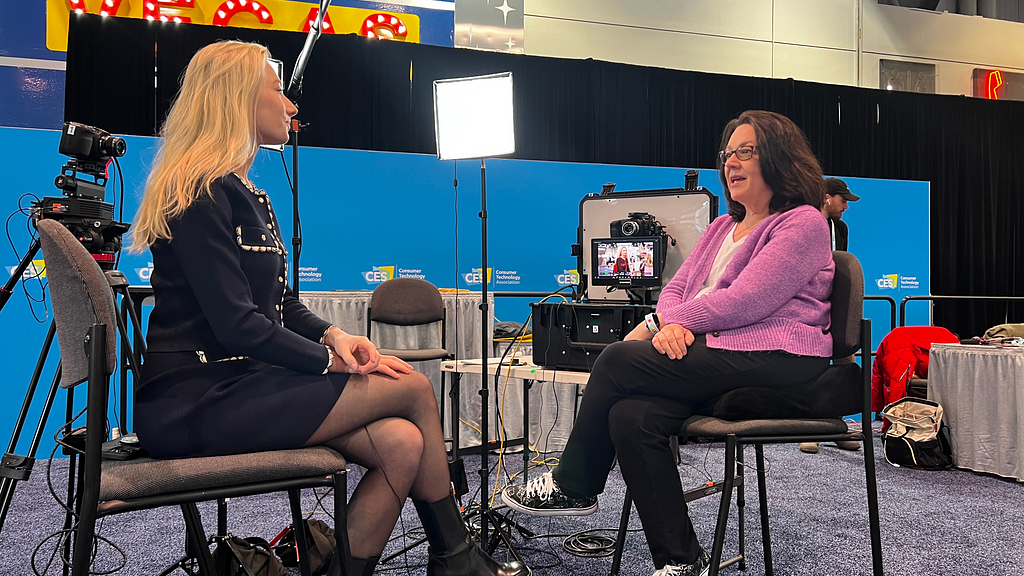
I love that WorkingNation is a solutions-oriented media organization; we aren’t just talking about these issues but sharing insights from leading thinkers about how to address them in holistic ways. This is a theme that runs across all our work, including my podcast, Work in Progress. On the show, I cover everything from the potential impact of AI on the way we do our jobs, to employer-provided education benefits, to getting a new generation of young women interested in the skilled trades. Recently, I had the chance to sit down with Gov. Wes Moore of Maryland to discuss creating economic mobility and job opportunity for all, one of the many conversations I’ve been proud to share over the past four years. The podcast is really a passion project of mine that I hope our listeners enjoy as much as I do.
Fantastic. Let’s now shift to our discussion about inclusion. Can you tell our readers a bit about your experience working with initiatives to promote Diversity and Inclusion? Can you share a story with us?
Across any business, access is a fundamental issue. It’s often how employers bring new talent into the organization and can be tied to who you know, where you went to school, or other similar factors. Given my own background as someone who did not complete college, I have always strived to look beyond that immediate sphere. In every role I have been in, I have sought to not only bring in and include a diverse array of people and perspectives but also learn from them. What do I not know? What does it mean for them to have the access and tools they need to succeed? It’s ultimately about the whole person and the skills they bring in.
At WorkingNation, specifically, we are deeply invested in promoting conversations about solutions that can lead to economic mobility for all. Fostering diverse and inclusive workplaces is a key component of that aim and a throughline across the content my colleagues and I develop.
This may be obvious to you, but it will be helpful to spell this out. Can you articulate to our readers a few reasons why it is so important for a business or organization to have an inclusive work culture?
Countless studies have shown that the more diverse thinking that an organization has and the more inclusive it is, the better it will be. A more diverse workforce leads to a more productive and profitable organization.
Further, the more inclusive our workplaces are, the more successful we will all be in empowering positive social, economic, and wellbeing impacts for people, families, employers, and communities.
The Americans With Disabilities Act (ADA) requires businesses to make reasonable accommodations for people with disabilities. For the benefit of our readers, can you help explain what this looks like in practice? What exactly are reasonable accommodations? Can you please share a few examples?
A reasonable accommodation ensures that a workplace is accessible to anyone, whether or not they have a disability. Asking your employer for a reasonable accommodation is completely within the law, and current or prospective employees should feel comfortable doing so. For instance, installing curb cuts at sidewalk corners can ensure that a sidewalk is more accessible to employees with mobility challenges. For low- or no-vision employees, a reasonable accommodation could be a larger monitor or a screen reader.
As another example, I once interviewed a woman who had not disclosed to her colleagues that she was deaf in one ear. As a result, she was having a difficult time contributing to group discussions. Once she told her managers that she would benefit from an ASL interpreter, her employer hired one to support her. After that shift, the woman became an even more valued contributor to the team and has been promoted many times. That commitment by her employer showed her that it was a good company to work for, and she has remained at that company to this day.
Aside from what is legally required, what are some best practices that can make a business place feel more welcoming and inclusive of people with disabilities? If you can, please share a few examples.
It is crucial for employers to instill a culture of acceptance of colleagues of all abilities across the workplace. Employees need to understand that the employer doesn’t just value this ethos of inclusivity but also expects team members to live up to it.
Can you share a few examples of ideas that were implemented at your workplace to help promote disability inclusion? Can you share with us how the work culture was impacted as a result?
Through my role at WorkingNation, I am constantly speaking with employers about steps they’re taking to make their workplaces more inclusive for people of all abilities. One great example is a conversation I had with IBM Global Neurodiversity Advancement Lead Nat Lyckowski for my podcast, Work in Progress. Nat, who identifies as neurodiverse, spearheads the company’s Neurodivergent-Out Executive Program, which encourages company leaders who feel comfortable to share their neurodivergent status with their team members. One of the company’s vice presidents revealed he is bipolar, which encouraged others in the organization to share their own experiences and also better understand one another. It completely changed the dynamic.
Another wonderful example is from EY. I spoke with the global head of the company’s Center for Neuro-Diverse Excellence, Hiren Shukla, for another episode of Work In Progress. Under Hiren’s leadership, EY changed its interview process to allow for candidates who self-identify as neurodiverse to receive the interview questions ahead of time. This practice allowed these candidates to prepare for the conversation and enter the interview on a more even playing field with others. It’s yet another great way companies are being proactive in ensuring they are accessible to all candidates.
This is of course a topic that is top-of-mind for us at WorkingNation across our own operations. We strive to ensure our organization fosters an inclusive environment for all, including people with visible and invisible disabilities. For instance, we recently revamped our website to ensure it is more accessible to our visually-impaired users. It’s just a small example of how we’re not only talking and writing about inclusion but putting these ideas into practice as well.
What are your “5 Things I Wish Someone Told Me When I First Started My Career”?
- Ask questions of everyone. People are often afraid of not knowing, but it’s actually a sign of strength to be inquisitive.
- Remain true to yourself. You will meet all different types of people at the places you work and have to navigate sometimes challenging situations. Remaining true to yourself should be your North Star throughout.
- At the same time, embrace flexibility. We are all better off when we learn from and collaborate with others. Stick to who you are but be willing to accept others’ opinions and insights.
- Embrace mentorship. My mentor made all the difference to me when I was first starting out in my career, and I can only hope that I have done the same to others in the years since.
- Follow what drives you. I’m a very solutions-oriented person, and WorkingNation is a solutions-oriented organization. Finding work that aligns with your values and drives you to succeed is key to finding fulfillment.
Can you please give us your favorite “Life Lesson Quote”? Can you share a story about how that was relevant in your own life?
Shout out your accomplishments, because no one else will do it for you. Don’t be afraid to do so. You have worked hard to achieve them, so embrace them. This is especially important for women leaders — never be embarrassed by what you have achieved. Personally, I keep the awards I have received throughout my career on a shelf in my office, in view of my camera on video calls. They’re a reminder to me of where I’ve been and what I still hope to achieve.
If you could inspire a movement that would bring the most amount of good to the most amount of people, what would that be?
If I could inspire a movement of people who embrace the good and the value in themselves, I absolutely would. It would make the world a better place. We are all better off when we consider what we have to give as a person, a coworker, a contributor to the world around us, sharing what we know but not talking down to people. It’s all about doing so in a very positive way.
How can our readers further follow your work online?
You can find all of our content at https://www.workingnation.org/, where you can also sign up for our newsletter, as well as on our LinkedIn page and YouTube channel. Our podcast, Work in Progress, is available on our website and wherever you get your podcasts, including YouTube.
This was very inspiring. Thank you so much for the time you spent with this. We wish you continued success and good health!
About the Interviewer: Eric L. Pines is a nationally recognized federal employment lawyer, mediator, and attorney business coach. He represents federal employees and acts as in-house counsel for over fifty thousand federal employees through his work as a federal employee labor union representative. A formal federal employee himself, Mr. Pines began his federal employment law career as in-house counsel for AFGE Local 1923 which is in Social Security Administration’s headquarters and is the largest federal union local in the world. He presently serves as AFGE 1923’s Chief Counsel as well as in-house counsel for all FEMA bargaining unit employees and numerous Department of Defense and Veteran Affairs unions.
While he and his firm specialize in representing federal employees from all federal agencies and in reference to virtually all federal employee matters, his firm has placed special attention on representing Veteran Affairs doctors and nurses hired under the authority of Title. He and his firm have a particular passion in representing disabled federal employees with their requests for medical and religious reasonable accommodations when those accommodations are warranted under the Rehabilitation Act of 1973 (ADA). He also represents them with their requests for Federal Employee Disability Retirement (OPM) when an accommodation would not be possible.
Mr. Pines has also served as a mediator for numerous federal agencies including serving a year as the Library of Congress’ in-house EEO Mediator. He has also served as an expert witness in federal court for federal employee matters. He has also worked as an EEO technical writer drafting hundreds of Final Agency Decisions for the federal sector.
Mr. Pines’ firm is headquartered in Houston, Texas and has offices in Baltimore, Maryland and Atlanta, Georgia. His first passion is his wife and five children. He plays classical and rock guitar and enjoys playing ice hockey, running, and biking. Please visit his websites at www.pinesfederal.com and www.toughinjurylawyers.com. He can also be reached at eric@pinesfederal.com.
Disability Inclusion In The Workplace: Ramona Schindelheim Of WorkingNation On How Businesses Make… was originally published in Authority Magazine on Medium, where people are continuing the conversation by highlighting and responding to this story.