


Creating Powerful, Thriving Digital Communities: Tyler Davey of ClearGov On How To Cultivate Connection & Community In A Click-to-Connect World
An Interview With Karen Mangia
The real power comes when they create direct, meaningful connection points between people who need help and people who can actually help solve something.
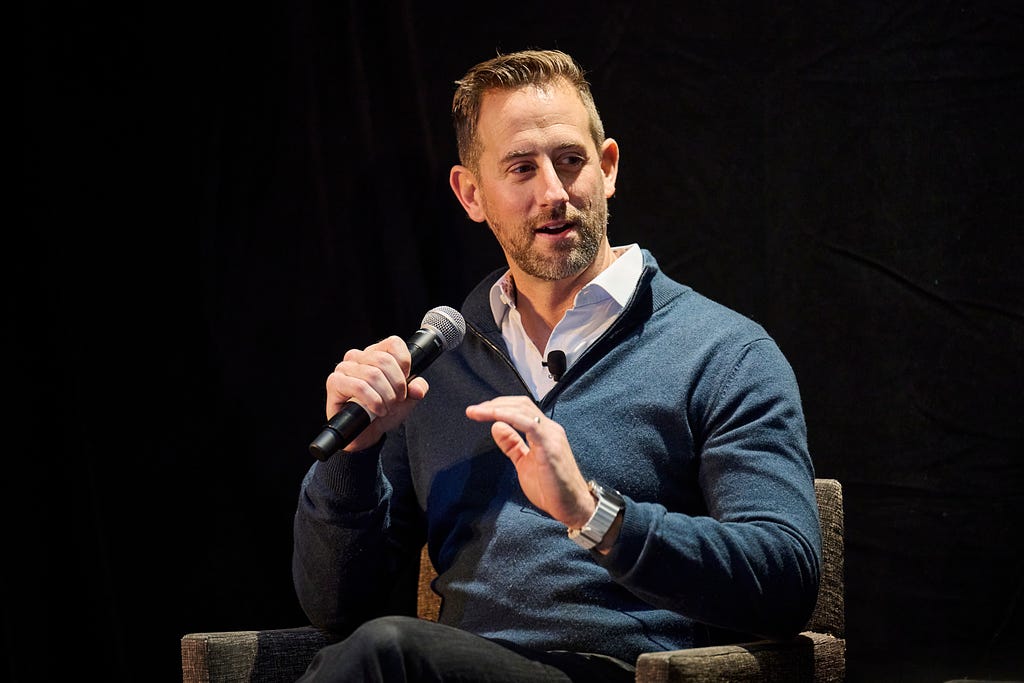
As a part of this series, we had the pleasure to interview Tyler Davey.
Tyler Davey is the CEO of ClearGov, a cloud-based platform used by nearly 2000 local governments, school districts, and state agencies to manage the complete finance cycle, from planning and budgeting to reporting and community engagement.
Thank you so much for joining us in this interview series! Our readers would love to get to know you a bit better. Can you tell us a bit about your background and how you grew up?
I’m a developer by background. I grew up loving code and building things. I remember writing my first operating system when I was 14 years old on an old Tandy 1000 computer. I was fascinated by the idea that software could shape the future.
Early in my career, I joined a technology consulting company that exposed me to a wide range of industries, complex systems, and large-scale software challenges. I grew up professionally in that environment and eventually built several divisions within the business.
From there, I had the opportunity to work with companies like Amazon and Microsoft before moving into health and safety software, where I helped build and scale a company called Alcumus, which later merged with EcoOnline.
Today, I’m the CEO of ClearGov, continuing that same compliance and technology journey, but this time focused on financial management and civic engagement. I get to work with close to 2000 local governments, school districts, and state agencies across the US to help them manage the complete finance cycle, from planning and budgeting to reporting and relevant to this conversation, community engagement. It’s been a really rewarding evolution.
What inspired you to get involved in building digital communities?
What fascinated me when I joined ClearGov was realizing just how disconnected the average citizen is from understanding what local government is actually doing. Most people only experience government through the small slice that directly impacts them. Maybe it’s the park across the street, a road project, property taxes, or a local school issue. But they don’t really see the bigger picture behind how decisions get made or how budgets are allocated.
At the same time, governments are producing these incredibly detailed financial documents that can run 300 or 400 pages long. The information exists, but the average citizen simply doesn’t have the time or ability to digest it all. And if they do have a question, their only real option is often to show up to a town hall meeting or send an email and wait for a reply.
That’s where the idea started for us. Myself, our Chief Product Officer Harish Pandian, and several members of the team started asking: how do we use technology to solve this problem? How do we take all of this important information governments already have and make it easier for citizens to actually consume, understand, and engage with? We instinctively felt that if we could better connect what governments are trying to communicate with how citizens naturally engage with information, we could create a much tighter relationship between communities and local governments. And there’s really no better place to solve that problem than at the local level, because that’s where people feel the impact most personally.
Was there a moment when you realized the power of authentic online connection? Can you share that story?
A few years ago, when I was CEO of a health and safety software company, I had a customer reach out to me directly on LinkedIn because they couldn’t get through our normal channels. I think a spam filter somewhere along the way probably blocked earlier attempts to contact us. They were frustrated and dealing with a real operational issue that was impacting their business. But because they reached out directly through LinkedIn, I was immediately able to connect what the customer was experiencing to the resources inside our company that could actually solve the problem. And we solved it quickly.
What stuck with me afterward was realizing that without that social connection point, that customer probably would have continued struggling unnecessarily. That changed the way I thought about online communities and platforms. They shouldn’t just be one-way dialogue broadcast out into the ether. The real power comes when they create direct, meaningful connection points between people who need help and people who can actually help solve something. That realization has stayed with me ever since.
What’s the most important lesson you’ve learned along the way that influences how you operate now?
It may sound cliché, but it really comes down to hiring the right people and empowering them. I’ve always believed that when you find people who genuinely share the same vision and values, incredible things happen. You create an environment where people trust each other, challenge each other, and collectively build something bigger than any individual could accomplish alone. One of the best parts of leadership is stepping back and watching talented people create magic together. That’s probably the single biggest lesson I’ve learned throughout my career.
In your opinion, what defines a thriving digital community?
A thriving digital community isn’t just a place where people post constantly for the sake of posting. It’s a place where people feel connected around a very specific shared interest or purpose. The best communities tend to be highly focused. In the case of local government, that could mean a city, a neighborhood, a library system, or even a single issue people care deeply about. What makes those communities thrive is relevance. People are sharing stories, asking questions, learning from each other, and engaging around topics that directly affect them. Broad platforms often create noise but focused communities create connections. Even the silent participants matter. A healthy community isn’t measured only by who speaks the loudest. It’s measured by whether people feel invested enough to keep showing up.
What are some common mistakes people make when trying to build digital communities?
The biggest mistake is trying to solve everything for everyone. The strongest communities stay incredibly focused on a clear purpose. I’m part of a local dads group in my hometown, and the entire community revolves around one simple idea: how can dads help other dads? That’s it. Some posts are practical and funny, like someone asking to borrow a belt sander. Others are deeply personal, like helping a dad who lost his job and is struggling to support his family.
But because the mission is so focused, the community works exceptionally well. If I logged in right now, there would probably be dozens of new posts, comments, private messages, and people jumping in to help each other. What’s fascinating is how it’s grown beyond the platform itself. You now see dads around town wearing swag from the group. Local media has picked it up. Real friendships and support systems have formed because the community never drifted away from its original purpose. That’s the lesson: communities become powerful when people immediately understand why they exist and feel like they genuinely belong there.
I’m going to try a few of your tips, and I’m hopeful our readers will, too. What are your “Five strategies to cultivate a powerful, thriving digital community?” Please share a story or example for each.
1. Solve one clear problem. Communities thrive when people immediately understand why they exist.
2. Make sure the audience is large enough to sustain meaningful engagement. A community with too narrow a base can quickly become an echo chamber.
3. Moderation matters. Great moderators understand the difference between disagreement and toxicity. Healthy debate should be encouraged if it helps move the conversation forward.
4. Meet people where they are. If your audience primarily uses mobile devices, optimize for mobile. If they rely heavily on search, your search functionality needs to be excellent. Communities fail when the experience doesn’t match user behavior.
5. Use analytics to continuously improve. The worst thing you can do is launch a community and never evolve it. You need to understand how people are engaging so you can adapt and improve over time.
How important is meeting offline, in real life? What is the best way to make that happen? Can you share a story?
I think it’s incredibly important because humans are social creatures by nature. We naturally form tribes, communities, and groups. It’s part of who we are. In today’s world, especially in distributed companies like ours, we spend so much time communicating through Zoom, Slack, email, and messaging platforms. Those tools are great for efficiency, but they don’t always create genuine human connection.
What happens when people meet face-to-face, grab coffee, share a meal, or just spend time together outside the context of work is that they start understanding the person behind the screen. You realize, “Oh, this is actually a good human.” That matters because when disagreements happen later, and they always do, you approach those conversations differently. You better understand where someone is coming from, how they think, and what motivates them. A lot of barriers get broken down simply by spending time together in person. I genuinely believe online communities become much healthier and more productive when people occasionally step offline and connect in the real world. Breaking bread together still matters.
How do you handle negativity, trolling, or disengagement in a digital space?
I think it’s really important not to confuse negativity with toxicity, because those are two completely different things. There’s negativity that says, “I don’t agree with you,” and then there’s negativity that turns into toxicity, hate or personal attacks. The second one should absolutely be shut down immediately. There’s no room for that.
But disagreement? Especially in our world of government and public finance? That should be welcomed with open arms. If citizens disagree with how money is being spent or what priorities are being funded, that’s valuable insight. Governments should want to hear that feedback because it helps them understand what matters most to the community they serve. You can’t confuse criticism with toxicity. Trolling is usually easier to solve than people think. In healthy communities, the community itself often corrects for it. If someone is constantly off-topic or intentionally disruptive, people recognize it quickly and typically self-regulate the behavior without heavy moderation. Disengagement is the harder challenge, and usually it’s a content problem. But before assuming people are disengaged, you need to ask whether they’re actually disengaged or simply quiet. Silent readers are completely normal. A silent reader is okay. A disengaged community is not. If nobody is reading, reacting, or finding value in what’s being posted, then you need to rethink the relevance and usefulness of your content.
What are some practical strategies for encouraging real interaction, beyond likes and emojis?
Ask better questions. It sounds simple, but it works. The more specific and relevant your questions are, the more likely people are to engage. Sometimes even directly referencing community members or topics people care deeply about can spark meaningful conversation. Recognition also matters. People naturally respond when they or others are acknowledged publicly. Highlighting contributors, celebrating wins, or simply making people feel seen goes a long way in building engagement.
What platforms or tools have you found most effective for cultivating meaningful digital engagement?
I think Reddit does an exceptional job building focused micro-communities. You can find almost any topic imaginable there, and people genuinely engage because the communities are built around very specific shared interests. Discord has done a really impressive job as well, especially around real-time interaction and niche groups. Professionally, I think LinkedIn works extremely well because it still maintains a level of professional accountability in how people interact. On the flip side, some broader social platforms can become environments where the loudest voice dominates the conversation. That creates noise more than community. What I appreciate about platforms like Reddit is that they’ve figured out how to build focused digital communities where people can ask questions, contribute knowledge, challenge ideas, and engage around very specific topics in meaningful ways. That focus is what creates real engagement.
Are there certain types of content or activities that tend to spark stronger connection in online spaces?
The strongest engagement almost always comes from content that’s highly relevant to the purpose of the community. Short-form videos work extremely well. Concise text with clear, direct questions also performs strongly. People generally don’t want long, overly polished narratives anymore. They want useful, actionable, relevant information. The best content helps people do something, understand something, or solve something. The more value you provide, the stronger the engagement tends to become.
Success is often a matter of perspective. I’ve always resonated with Henry David Thoreau’s quote, “It’s not what you look at that matters, it’s what you see.” How do you see success — or define success — for yourself now?
I think success evolves as you evolve. If you had asked me this question 10 or 20 years ago, I probably would have answered very differently. Earlier in my career, success was more tied to personal achievement and professional milestones. Today, success is much more about impact. I genuinely get a tremendous amount of fulfillment from watching other people succeed, especially people I’ve had the opportunity to help mentor, guide, or support in some small way along the way. There’s nothing better than seeing someone achieve goals they once thought were out of reach or watching them realize their own potential. Those moments are incredibly rewarding. So for me now, success is less about individual accomplishments and much more about how many people I have the opportunity to positively impact each year.
We are very blessed that some of the biggest names in Business, VC funding, Sports, and Entertainment read this column. Is there a person in the world with whom you’d like to have a private breakfast or lunch with, and why? He, she or they might just see this. 🙂
I’d love to sit down with Jim Balsillie. What he and the team at BlackBerry built fundamentally changed how the world communicates. Long before smartphones became what they are today, they transformed mobile productivity and communication at a global scale. What I find especially fascinating now is how deeply he thinks about innovation, intellectual property, startups, and long-term economic competitiveness. He’s experienced the full lifecycle, from building something revolutionary to watching markets evolve and change. I think there would be an incredible amount to learn from that perspective.
What is the best way for our readers to further follow your work online?
I’m fairly active on LinkedIn, so that’s probably the best place to connect, follow what I’m thinking about, and join the conversation around technology, leadership, and the future of government finance. You can find me here: Tyler Davey on LinkedIn. You can also learn more about what we’re building at ClearGov and how we’re helping governments better plan, manage, and engage with their communities at: ClearGov. I always enjoy connecting with people who are passionate about technology, innovation, and creating better outcomes for the communities we serve.
Thank you for these thought-provoking insights. Here’s to your continued success!
About The Interviewer: Karen Mangia is one of the most sought-after keynote speakers in the world, sharing her thought leadership with over 10,000 organizations during the course of her career. As Vice President of Customer and Market Insights at Salesforce, she helps individuals and organizations define, design and deliver the future. Discover her proven strategies to access your own success in her fourth book Success from Anywhere and by connecting with her on LinkedIn and Twitter.
Creating Powerful, Thriving Digital Communities: Tyler Davey of ClearGov On How To Cultivate… was originally published in Authority Magazine on Medium, where people are continuing the conversation by highlighting and responding to this story.