

Chosen Families: Christy Moulin of The Home for Little Wanderers On Why Adoption and Foster Parenting Matter More Than Ever
I became a foster parent to temporarily care for other mothers’ children, not become a mom. I am very happy being a Teetee not a mother. My longer-term-babies showed me how I was meant to mother.
The definition of family keeps evolving, and adoption and foster parenting play an increasingly vital role in providing stability, love, and opportunity for children in need. Countless young people are waiting for safe, supportive homes, while many adults feel called to step into caregiving roles in meaningful ways. But the journey of building a chosen family — through adoption or foster care — comes with both profound rewards and real challenges. What motivates individuals and families to take this path? What systemic barriers still exist, and how can they be addressed? How can communities do a better job supporting both children and caregivers? In this interview series, we are talking to adoptive parents, foster parents, child welfare advocates, social workers, policymakers, and anyone who is an authority about “Chosen Families: Leaders On Why Adoption and Foster Parenting Matter More Than Ever.”
As a part of this series, we had the pleasure to interview Christy Moulin.
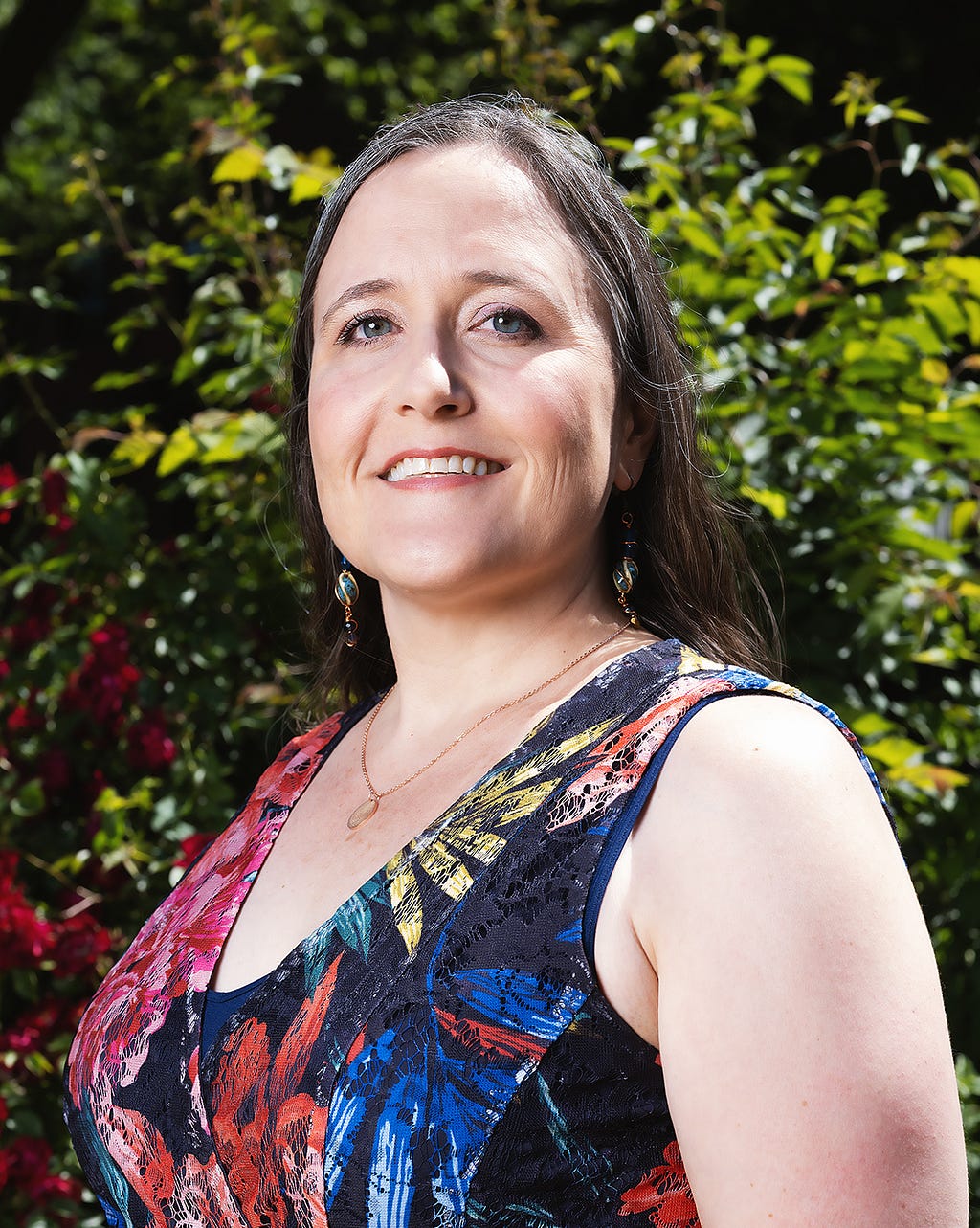
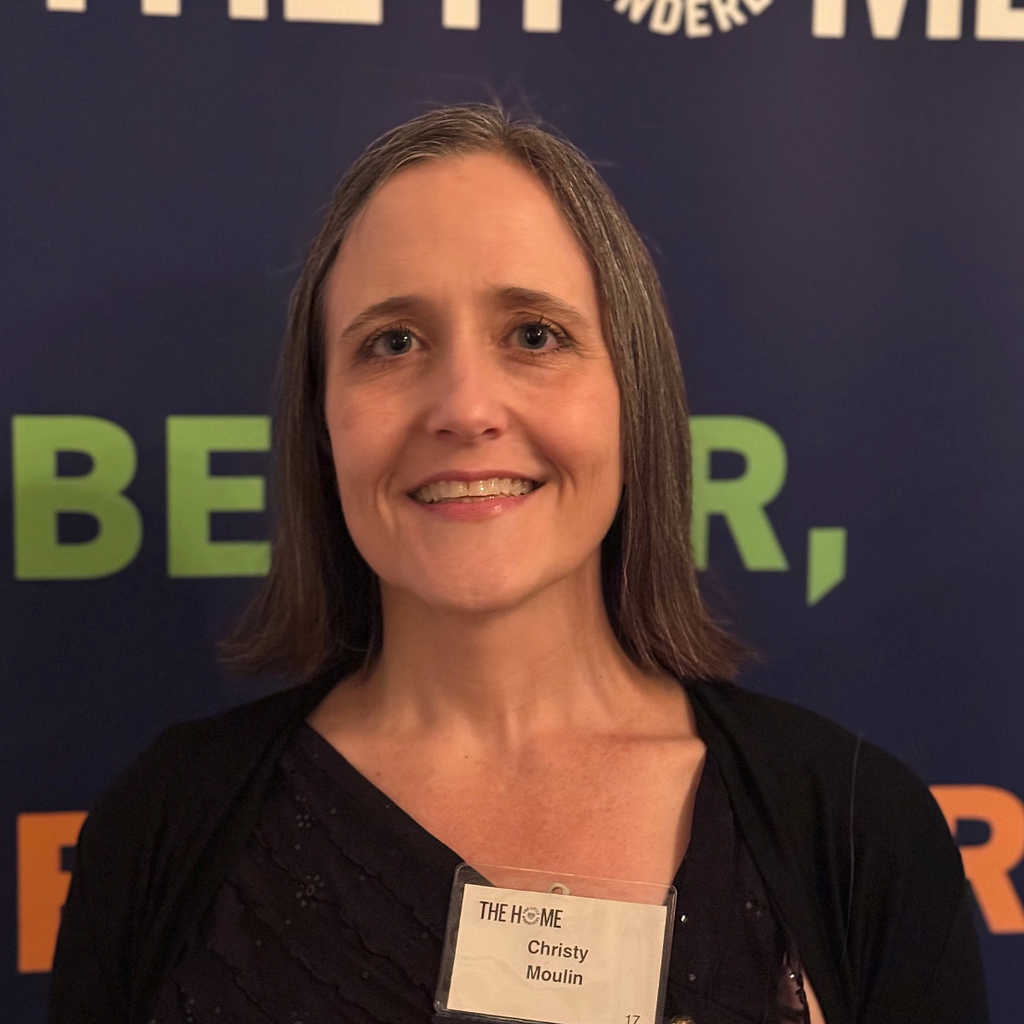
Christy Moulin is the Program Director for the Center for Early Childhood at the Home for Little Wanderers. Moulin has over 20 years of childhood development and mental health experience. Prior to The Home for Little Wanderers Moulin spent 12 years at the Boston Public Health Commission. She has a master’s degree in child development and urban development from Tufts University. Moulin is also a foster parent who has fostered nearly 50 babies.
Thank you so much for joining us in this interview series! Our readers would love to get to know you a bit better. Can you tell us your “Origin Story”? How did you grow up?
I like to say I’m very middle. I am a middle child, from a middle-income family, who grew up in the Midwest (Missouri), in the middle of nowhere. We went to a Methodist church but weren’t super religious. We lived in the country with a lot of pets but weren’t farmers. My mom leans left and my dad leans right but were never particularly political. And I loved it. I feel very blessed to have had the childhood I did. My nieces are now growing up in a similar way and I get to watch them thrive in the middle of copious nurturance.
What’s a moment from your childhood that you didn’t realize mattered until much later?
I work in infant and early childhood mental health. We do a lot of self-reflection, so this question is not new to me. But this story is one that I haven’t connected to my identity development until this interview. I was around 8-years-old at a backyard pool party. Now this is the way my childhood self remembers the event. I found a baby under the water. I pulled the baby up sputtering and the child’s mother realized what was happening. She snatched the baby from me and went along with her conversation with another mom. I remember thinking, “Wait, did I just help a baby not drowned?” I went inside to the bathroom and cried. That was it. No one else noticed. Looking at it now, that might have been the first time I experienced the feeling of contributing to the health and safety of someone else’s baby.
Great. Let’s now shift to the main part of our discussion about adoption and foster parenting. Please tell us a bit about your foster parenting or adoption journey.
My mother worked in the newborn nursery at the hospital. She’d come home and talk about babies who couldn’t go home with their families. That’s how I learned about child welfare policies. Then in the third grade we moved to a town with a community of foster homes. I had friends who lived there both as children-in-care and whose parents worked there. I was fascinated by the idea of children being unable to live safely with their families even when their families loved them like my parents loved me.
Fast forward to 30-year-old-me sitting with a 5-year-old at Children’s Hospital in Boston. They were the child of someone I knew from work. The child had very bad asthma, which was exacerbated by poor housing conditions, so bad she had a near fatal asthma attack. I was sitting with the child while the mother tried to navigate the housing system. She knew she couldn’t take her child back to the apartment where the environment was literally stealing her ability to breathe. The nurses came in and talked to me about the child being discharged. They said discharge would only happen if mom could prove there was a safe place for the child to go. Then they threatened to call child welfare. I knew it was against policy to remove a child for lack of housing when the parent was willing and trying to access safe shelter. And I knew the hospital staff held the upper hand, however misguided I found their approach. I called another work friend in state government. They helped. The family was able to access housing supports and stay together.
A week later I was telling the story to a DCF administrator and quipped that if I had been approved to foster children I would have taken the child myself. And that’s how I learned about emergency and child-specific foster care, which is when you can start fostering a specific child when the family identifies you as a willing and safe home. I realized emergency or hotline foster care for infants was something I wanted to do. I talked to my partner at the time and he was on board. It took us about a year to jump through all the hoops and get our home licensed. And then the faucet turned on.
What inspired you to adopt or become a foster parent?
In my day job, I am on the struggle bus to improve systems and provide innovative services so children never need foster care. At the end of day, I know we aren’t there yet. So “today Christy” is a foster parent. Because today there is a family who cannot keep their child safe without foster care. Today I am needed to nurture a child who can’t wait for the system to be better. I am inspired by the families who need help and have nowhere to turn. I think about my nieces and how I would want someone to step-in if they needed me and I wasn’t there. When DCF brings me a newborn straight from the hospital, I think about that devastated mother as my sister or cousin. I’m stepping in as if she came to me herself for help keeping her precious child safe.
Can you share a story about the most meaningful moment for you so far in this journey?
I can. This is easy. Here goes.
“No Teetee, I go with you!” she bleated.
I’m Teetee. I call myself Teetee to my foster babies. I want them to associate the role of mother with the woman who gave them life. I am not that.
We had driven 6 hours so she could meet the family who wanted to keep her safe forever. Kin on her mother’s side. Her mother had passed away when she was an infant. She’d lived with us just 10 months; about 1/3 of her life. We were the 6th set of primary caregivers she had known. We were going to leave her with her pre-adoptive family and drive back to Boston.
After checking into a hotel, she and I went to a playground to meet her aunt and cousin. I made eye contact with every person strolling by until someone sparked recognition. The child played with her big cousin. Her 2-year-old mind happy to be out of the car seat playing and being showered with kindness. Auntie and I made plans for the rest of the weekend. We talked a bit about her likes and dislikes. I shared a document with her routine in case they wanted to mimic some things to ease her transition. We spent less than an hour together.
The next day we went to their house for dinner. They invited me into their home for a tour. They didn’t have to do that, my opinion had no weight. They prepared a comforting family meal; meat, chicken, fish, rice, more rice. I realized it was a welcome home party. Little cousins, around the same age, ran about in a large yard. My little one stayed close. She was not adventurous by nature and her earliest months had nurtured her to be cautious, unnoticeable. As the sun went down, my anxiety went up. None of us had done this before. When the mosquito bites started to chase people inside, I brought her bags out of the car. She cuddled her giant Elmo doll, a Christmas gift from my sister.
At the time this is all happening, I have a masters degree in Child Development. I’ve been working in early childhood mental health for 8 years. Academically, I know there is no way for a 2-year-old to make sense of what’s coming. But I try to explain in an age-appropriate way. I know there is no amount of comfort to make this painless. But I wrap her in hugs and whisper love into her ear. I know that 10 months of safety and nurturance has built neuro pathways she’ll carry for life. But I am filled with an emotion I cannot name. And then I hand her to Auntie and walk down the driveway.
Her plea follows me.
“No Teetee, I go with you!” becomes indelible to my identity.
This isn’t the last time we see each other. There are several more miles in our journey, both joyous and bleak. I cannot tell you if her ending is happy. I tell myself she is thriving and loved, just as she was in my home.
Can you describe how the experience of foster parenting or adoption has made you a better person and a better leader?
As the Director of the Center for Early Childhood, my lived experiences as a foster parent matter. When I write a grant, design a program, change a practice, hire a new staff member, the me who does these things and makes these decisions is influenced by the realities I only know because I foster. When I review a case with a clinician, and DCF is involved, I wonder about things I only know to wonder about because I foster. When I rage against inequity, I am raging on behalf of children and families I know because I foster.
How else has fostering or adoption changed you as a person? Please explain.
Fostering completely changed my perspective on motherhood. I absolutely grew-up thinking I would be a mommy who carried babies in her belly. I would put Cabbage Patch dolls under my shirt and pretend to be giving birth. I mentioned earlier my mother worked in a newborn hospital unit. Several times a year we would visit her job. I loved standing in front of the big windows, watching all the babies — pretending one was mine. The discussion was always “when” not “if” I’d have my own babies.
Several life experiences in my 20s and early 30s shifted this narrative. Nothing sad, dramatic or negative, just life. When I started fostering in my mid-thirties, I already knew I didn’t need to have my own baby to be fulfilled. My intention when I began fostering was to stay with short term and emergency placements. People who know me will be rolling their eyes right now thinking of all the short-term babies who stayed more than a few days. But truly, the majority of my placements lasted days or weeks not months and years. I have had 4 last 6+ months and only 1 last 2 years, so far. The point is, I became a foster parent to temporarily care for other mothers’ children, not become a mom. I am very happy being a Teetee not a mother. My longer-term-babies showed me how I was meant to mother. They changed my understanding of motherhood and showed me a purpose I couldn’t even imagine in my own childhood. When I stood in front of the big windows staring at the newborns, I didn’t yet know about the role of those who mother in the voids, the space between other mothers.
What do you think are the biggest misconceptions about fostering and adoption that you would like to dispel? Can you share a story that helps challenge or reframe those assumptions?
If I could change one misconception, it would be that fostering is too hard. People regularly tell me: “I don’t know how you do it. I’d get too attached.” Or, “I’d never be able to let them go.” Or, “I don’t know how you can do it. I’m not that strong.” Fostering may not be for everyone, but I know a lot of people who could do this and don’t. Maybe you are reading this thinking, “I. Could. Never.” I challenge you to reconsider. Is it that you cannot? Is it that you choose not to? Be honest about your capacity. Most of us can do hard things.
Can you describe a particularly challenging moment you faced in this journey? How did you navigate it, and what did you learn that could help others in similar situations?
Early on in my fostering journey, I thought I could manage more than one child at a time. I had been a classroom teacher, a nanny, a watcher of 6 children 6 and under. I was confident in my child-minding skills. I fancied myself quite capable of hosting multiple babies at once. In a particularly challenging moment, I realized I was incorrect in this assumption.
I had a brother and sister in my care. They arrived late on a Friday, 3-year-old boy and 3-month-old girl. The first overnight went well. I remember feeling snazzy rolling out my double jogging stroller for the first time. We were heading to the playground. Baby Girl fell asleep and I parked her under a shade tree. Big Brother and I shared the play structure with another child and adult who soon left. I realized the gate did not get latched as they left. Casually I went to close it, but somehow Big Brother read my intention and bolted through the gate. This playground is along a fairly busy street with cars parked along both sides. I have never been known for my wind sprint speeds, and he had been about 20 feet closer to the gate. He darted into traffic and I lumbered after him without a glance at oncoming cars. The drivers were paying attention, thank goodness, and I snatched him into my arms as they slammed on their brakes. It felt like a TV show when I stood breathless in the middle of the street. I remember making eye contact with a driver who looked as terrified as I felt.
As I walked back into the playground, it occurred to me that had we been struck nobody would have known the baby was in the stroller under the shade tree. It wasn’t visible from where the ambulance would have been. I plopped Big Brother next to Baby Girl, still snoozing, walked back home, and we played inside the rest of the weekend. Monday I called my social worker and asked them to move one of the children because I could not keep 2 children safe. I felt defeated. My vision of fostering had included multiple babies in my home together. To this day, Big Brother is one of the most traumatized children I ever had in my home. He taught me, beyond any course or training I had ever had, how children in foster care need a different level of parenting. They have experienced trauma and disrupted attachment. Their needs are different. And to be the foster parent I want to be, means I can only care for 1 at a time.
Please share your “Five Things I Wish Everyone Knew About Adoption and Foster Parenting.” If possible, please include a story or example for each.
1. Even When Everything Goes to Plan, Foster Care Hurts
There is no way around it. It hurts children, parents, foster parents, and social workers. You cannot avoid being hurt. You need a plan for navigating the hurt. For the vast majority of us, doing hard things-facing down adversity-is something we can survive and often something that helps us thrive. You grieve; you grow; and you get ready for the next child needing your love.
2. Even When Things Go To ^&*#, Fostering Brings Unbelievable Love and Light Into Your Life
Looking back on my most heartbreaking experiences, I gained more than I gave. And regardless of my presence, the children still had to endure those situations. My hurt contributes to their mental health for the rest of their lives. That shines a lot of light on my darker days.
3. As a Foster or Adoptive Parent, You Retain Autonomy
You can choose to stop. You can change the ages of children you care for. You can limit yourself to 1 child at a time. The choices may be hard, or near impossible, but they are your choices to make. Set yourself up for success by setting realistic boundaries. The system will push you as far as you let it, so don’t let it.
4. Lucky Children Do Not Need Foster Care
I bristle every time I hear, “they’re so lucky,” in response to learning I am a child’s foster parent. I understand the intention. There may be foster parents who love to hear this. We’re certainly not all the same.
5. Choosing to Pour Your Heart Out for One Foster Child Makes a Lifelong Difference to That Child
If everyone could find a time in their life when they could foster, even just once, imagine the difference that would make.
What are some small first steps someone can take if they are curious but unsure?
I always tell people to start the process. It takes so long to be approved. When people wait to start until they’re ready to welcome a child, they’ll be frustrated and disappointed due to the bureaucracy. If people are hesitant about making a lifelong commitment, I suggest starting with respite or emergency (short term) placements. In some communities there may be volunteer opportunities. Or talk about your interest with a foster parent. I love talking to potential foster parents.
How can communities, not just individuals, better support children and families in the system?
For some reason, I am struggling with this one. Perhaps because the ways communities can better support children and families in the system is the same way they can better support all children and families. We don’t need to make a special place for foster children when every place is optimized for healthy child development. The support I need as a foster parent is the same support any parent needs.
What kind of support made the biggest difference for you? Can you share the best support resources, organizations, or educational tools that have helped you most in your adoption and foster parenting journey?
Every state is different and every situation is different, so I say this with caution that someone else may have a very different experience. In my current situation, in Massachusetts, I can balance my budget using WIC, Masshealth/Medicaid, and childcare subsidies for financial support. These public benefits make a big difference for me. I am also very fortunate to have worked for agencies with paid time off and flexible scheduling. I find most of the equipment I need on neighborhood social media platforms for free. But the best support I have is natural support. I am only able to foster because of my friends, family, neighbors, coworkers, therapists, and early educators. I wish I could shout-out each one by name. Their supports are both tangible (holding a baby, passing along supplies, spending a day at my house, etc.) and less so (giving up their privacy to undergo background checks, including a baby in the family photoshoot, making space for my tears, etc.).
And I have to give credit to my Pinterest board. Children 0–3 change so quickly. Remembering developmental milestones, feeding schedules, sleep expectations, teething timelines, and the like is impossible. Every time I get a call for a new placement, I have to consult my trusted resources kept organized on Pinterest. When it is 2 a.m. and I’m reminding myself how often a 3-month-old needs to eat, I always wonder how we did this before the internet.
What gives you hope when you think about the future of adoption and foster care?
There are so many beautiful stories about individuals who make it through the system. Their success always gives me hope for the children still to come. When I’m feeling less hopeful, I remember the real people I know in this work. There is a family I know, mom, dad, and 4 siblings kept together through adoption. Four children who spent their most critical years for healthy development in a foster home full of nurturance and emotional safety. This family gives me hope. I know a newborn in a NICU who has a foster family waiting to meet her if her birth mother cannot take her home safely. It gives me hope to know she already has a place in a foster mother’s heart.
You are a person of great influence. If you could inspire a movement that would bring the most good to the greatest number of people, what would that be? You never know what your idea might spark.
Without hesitation, I want to inspire a movement to fully fund universal infant and early childhood mental health promotion, prevention, and treatment. People are always on board to say it matters but saying and funding are 2 very different movements. Brain science backs this up. Economics backs it up. Retrospective studies of adverse childhood experiences back me up. If policy and practice ensured optimal social and emotional wellness for children prenatal to six, inclusive of the wellbeing of parenting and professional caregivers, with attention to racial equity and cultural wisdom, every other sector would benefit.
How can our readers follow your work online?
Readers can learn more about Christy and her work at The Home for Little Wanderers, adoption, foster care and our work by visiting thehome.org.
Thank you for sharing these insights!
Chosen Families: Christy Moulin of The Home for Little Wanderers On Why Adoption and Foster… was originally published in Authority Magazine on Medium, where people are continuing the conversation by highlighting and responding to this story.