


Creating Powerful, Thriving Digital Communities: Cyndi Steele Of G&B Digital Management On How To Cultivate Connection & Community In A Click-to-Connect World
Sometimes the best content comes from taking creative risks, having fun, and making something people haven’t seen before.
In our digital age, it’s easier than ever to click “connect” — but much harder to create real connection. As more of our social and professional lives move online, the challenge becomes building meaningful communities that go beyond likes, follows, and shares. What does it take to cultivate thriving digital communities where people feel seen, heard, and supported? In this interview series, we are talking to community builders, digital strategists, tech founders, social media experts, and anyone who is creating powerful, thriving online spaces, and digital communities. We want to explore how to cultivate connection and community in a click-to-connect world, and what it really takes to build digital spaces where people can truly thrive. As a part of this series I had the pleasure of interviewing Cyndi Steele.
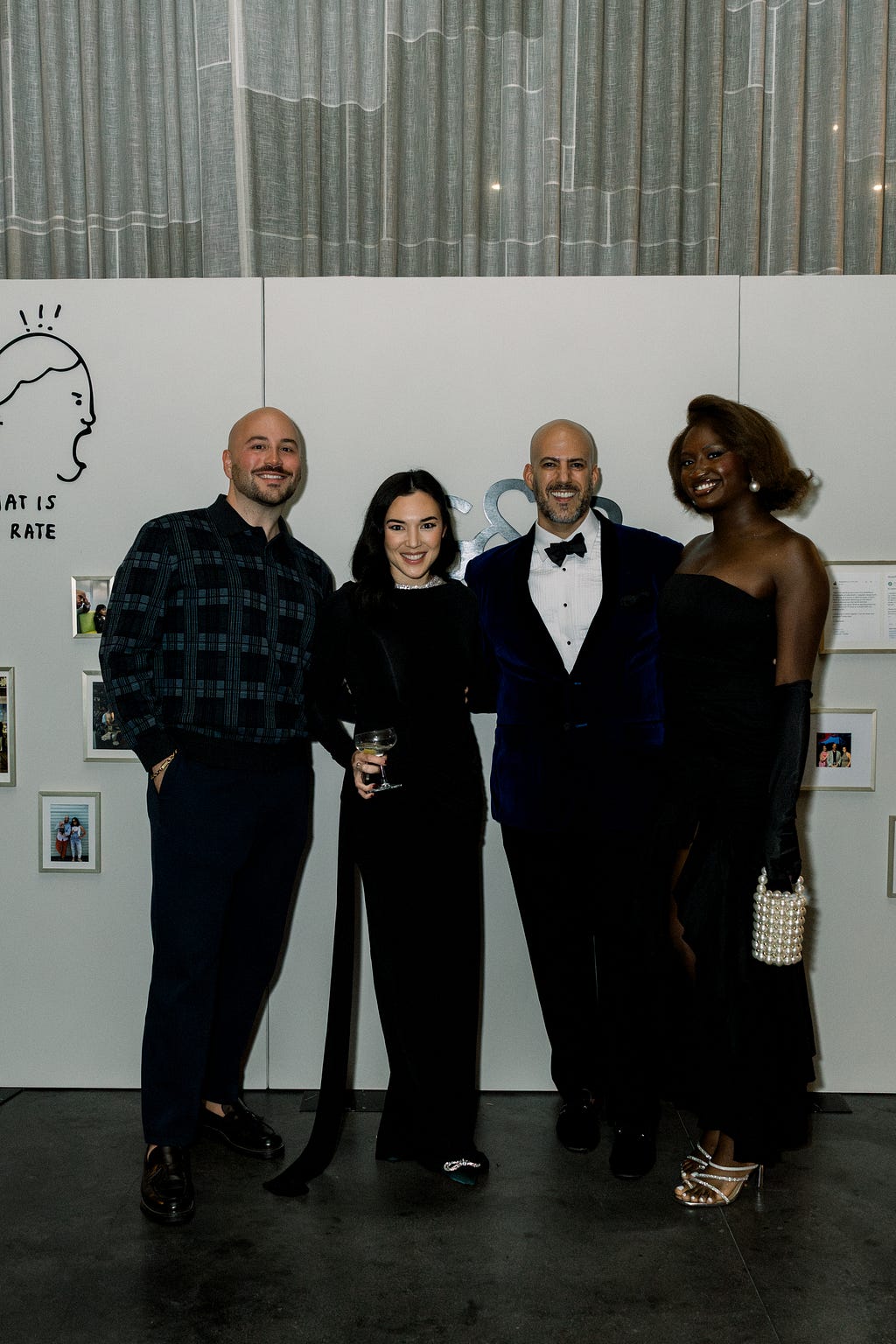
Cyndi Steele is a partner at G&B Digital Management, Inc. With a background as an Executive Producer in traditional television, she has pivoted to the digital space, focusing on building studios, fostering authentic connections, and producing content that resonates in today’s click-to-connect world.
Thank you so much for joining us in this interview series! Can you tell us a bit about your background and how you grew up?
I grew up in upstate New York in a small suburb outside of Albany called Bethlehem, NY. Growing up, I was a competitive gymnast from age 3 until I broke my ankle in gym class at 14 and had to stop. I was the youngest of four, so you could say I’ve been competitive from a very young age, and now, 33 years later, that competitiveness hasn’t gone away. I spent a lot of my childhood in the gym alongside my three older siblings (two sisters and a brother), who were all gymnasts as well. After I stopped doing gymnastics, I poured that energy into just about everything else. In high school, I was captain of our varsity tennis team, a pole vaulter (and held our school record for, I want to say, almost 20 years!), I loved singing and dancing in our school musicals, played the clarinet, and spent time with friends who are still some of my closest friends today.
That all sounds wonderful, but on a more real level, I also struggled a lot behind the scenes. I faced some difficulties (stories for another time) which were difficult to navigate, especially when so many of my friends seemed to have these picture-perfect families. Looking back, I think growing up in the environment that I did taught me resilience more than anything. I learned early that life isn’t always neat or predictable, or easy from a young age and I think that gave me a lot of strength. Whether it was sports, television, or now building a studio from the ground up with Kyle, I’ve always been a fighter. (Oh, and I quite literally am a fighter now, too! I have my first official Muay Thai fight/tournament in August, shoutout to MK Muay Thai. Just another fun fact about me.)
What inspired you to get involved in building digital communities?
I spent the first 11 years of my career in television, eventually as an Executive Producer. What I loved most was the people, the stories, and taking an idea and turning it into something real. Building a show always felt like putting together a 10,000-piece puzzle, and seeing all those pieces come together never got old. What did get old, though, was the lack of forward thinking and risk-taking in traditional television that I started to see in the last few years. Frankly, I got bored and frustrated and wanted the freedom to experiment, push boundaries, and create in a more immediate and creative way, and that’s what led me into the digital space.
Was there a moment when you realized the power of authentic online connection? Can you share that story?
Honestly, it was because of my dogs’ Instagram! I’m definitely not a creator, but I am obsessed with my Shih Tzus. I’ve posted these silly little videos over the years, and several have gone viral. One hit half a million views in less than two days. What amazed me wasn’t just the reach it was that a simple, unedited, relatable moment connected with more people than some of the highly produced television episodes I’d spent months creating for major networks. (I won’t mention names … ) That’s when it REALLY clicked for me. These incredible communities and niches that are on social truly have more power than we could ever imagine.
What’s the most important lesson you’ve learned along the way that influences how you operate now?
This may be controversial, but I’ve realized that no one really has it all figured out. Even the people I look up to, admire, or think they know it all … more people than we think are making it up a little bit as they go. Once I realized that, I stopped waiting for permission and just started building. My advice? Do the damn thing. You’ll learn more by taking action than by waiting until you feel “ready.”
In your opinion, what defines a thriving digital community?
True engagement. It’s not JUST about follower count. It’s about having a community that genuinely cares about what you’re building and wants to be part of the journey. The best digital communities make you feel like you actually know the person on the other side of the screen. They don’t feel like an audience; they feel like people you’re building something alongside.
What are some common mistakes people make when trying to build digital communities?
I’m sure I’ll make plenty of mistakes myself, but I think one of the biggest is trying to be someone you’re not. It’s so easy to look at what’s working for someone else and try to copy it, but your audience isn’t looking for another version of someone they already follow, they’re looking for you. As we are producing content for/with talent we really try to keep it true to their style, voice, and values.
What are your “Five strategies to cultivate a powerful, thriving digital community?’ Please share a story or example for each.
1. Push the boundaries
My creative producer Lucie Pottecher (shoutout Lucie you’re the best) said something on set recently that has stuck with me: “If you think you’re doing something wrong, you’re probably doing something right.” We were filming our new series, The Candid Club: NYC, and our hosts had just lost a bet that ended with them getting tattoos of a milk carton and a chili pepper. I remember looking at her and saying, “I feel like we’re going to get in trouble for this.” She laughed and said that line. Coming from traditional television, where almost everything required endless approvals, that mindset was refreshing. Sometimes the best content comes from taking creative risks, having fun, and making something people haven’t seen before.
2. Don’t try to be something we’re not
Yes … in other words … . Be authentic. I know “authenticity” is the buzzword of the decade, but it’s also true. One of the biggest mistakes brands and creators make is trying to force someone into a version of themselves they think will perform better. We take the opposite approach. We want creators to stay true to who they already are because that’s exactly why their audience showed up in the first place. Why change what’s already working?
3. Be Patient!
A real thriving digital community takes time, persistence, effort and care to create. A viral video is not the same nor is it as powerful as a truly thriving community. In any relationship, it takes time to build that relationship and build trust and it’s the same for digital communities. I tell my team now with our newest series that we are about to drop with a duo called The Candid Club- they don’t have the biggest following (yet) but I truly believe in them and the content we’re creating so I tell my team- don’t get discouraged if right away you don’t see something go viral or see the results right away. We’re building and it takes time.
4. Play the long game
A viral video isn’t the same thing as a thriving community. Building trust takes time, just like any relationship. I tell my team this all the time with our newest series, The Candid Club. They don’t have the biggest audience (yet), but I genuinely believe in the creators and the content we’re making. Success doesn’t always happen overnight, and that’s okay. We’re not chasing one viral moment we’re building something people want to come back to.
5. Create a WORLD that people want to be a part of
People want to feel like they’re part of something bigger than a social feed. If your audience feels like they’re along for the ride instead of just watching from the sidelines, you’ve built something really special. As an example, The Candid Club is a new series but it also lives around a real in person supper club series that has tickets that sell out in minutes. Why? Because people want to be a part of Jack/Kit’s world- it’s cheeky, hot, fun, funny, luxurious, cool, and aspirational world.
How important is meeting offline, in real life? What is the best way to make that happen? Can you share a story?
It is SOOOOO important. Now more than ever. A lot of our strategy isn’t just about producing a series it’s about creating an entire ecosystem around it. We think about every touchpoint our creators can have with their audience, and meeting in real life is one of the most meaningful. Almost every project we produce includes a live event component. Not only does it generate great content, but more importantly, it gives people the chance to build genuine relationships. At the end of the day, we’re all just people behind these screens, and nothing replaces meeting face-to-face.
How do you handle negativity, trolling, or disengagement in a digital space?
Well we got our first trolling comment yesterday on one of our new shows and I have to laugh a bit. It comes with the territory and it would be unrealistic to think there won’t be negative comments or trolling. You can’t create something meaningful without accepting that not everyone is going to love it and that’s okay. People are 100% entitled to their thoughts and opinions. If we made content that appealed to everyone, it probably wouldn’t resonate deeply with anyone. Of course we pay attention to feedback, even the negative kind. Sometimes it’s just noise, but sometimes it’s valuable information that helps us improve. Either way, I don’t think fear of criticism should ever stop you from creating. Maybe we’ll do a live reading of any and all hate comments at the end of each season as part of our post mortems. haha!
What are some practical strategies for encouraging real interaction, beyond likes and emojis?
We like to get people involved in the conversation. It really depends on the type of content we’re creating, but there are always opportunities to invite your audience in whether that’s asking questions, bringing up topics that spark discussion, or just talking with your audience instead of at them. The biggest thing is actually listening. We genuinely want feedback because our audience helps shape where we go next. The best communities don’t feel like a broadcast, they feel like an ongoing conversation.
What platforms or tools have you found most effective for cultivating meaningful digital engagement?
Right now, I think collaborations are one of the most effective tools. They allow you to introduce your content to entirely new communities in a way that feels organic and mutually beneficial. I think our team is also still learning a lot myself included.
Success is often a matter of perspective. I’ve always resonated with Henry David Thoreau’s quote, “It’s not what you look at that matters, it’s what you see.” How do you see success — or define success — for yourself now?
Look, I have a roof over my head, I’ll never starve, I have my health, I have my family, and I have a job I absolutely love with wonderful people. I’d also like to think I’m not a shitty person. So, in the grand scheme of life, I’d say I’ve achieved success. But this is a question I think about almost daily, and it’s something that drives me in a deeper way than I can really put into words. I am incredibly grateful for the success I’ve had. I’m 32 years old, I’ve been an Executive Producer on major network television shows, and I’ve helped build and now run a studio division from the ground up. But I’m also a perfectionist, and if I’m being honest, I don’t feel like I’ve achieved the success I know I’m capable of… yet. Success still feels like something I’m working toward. It’s what motivates me to show up every day and give 110%, because I truly believe we can build more, do more, and create something that’s genuinely meaningful and impactful. To me, success is achieving goals, providing for myself and my family, inspiring others through the work we’re doing, and staying happy and balanced along the way. And hey… making a lot of money while doing it doesn’t hurt either.
If I had to boil success down to three words, they’d be: impact, happiness, and growth.
We are very blessed that some of the biggest names in Business, VC funding, Sports, and Entertainment read this column. Is there a person in the world with whom you’d like to have a private breakfast or lunch with, and why? He, she or they might just see this. 🙂
Oh man there are a few!!! Top people: Emma Grede or Serena Williams
What is the best way for our readers to further follow your work online?
Follow @cynhardersteele @gnbinfluence and our new studio Instagram @gb.andbeyond and our youtube
Thank you so much for the time. We wish you continued success!
Creating Powerful, Thriving Digital Communities: Cyndi Steele Of G&B Digital Management On How To… was originally published in Authority Magazine on Medium, where people are continuing the conversation by highlighting and responding to this story.