

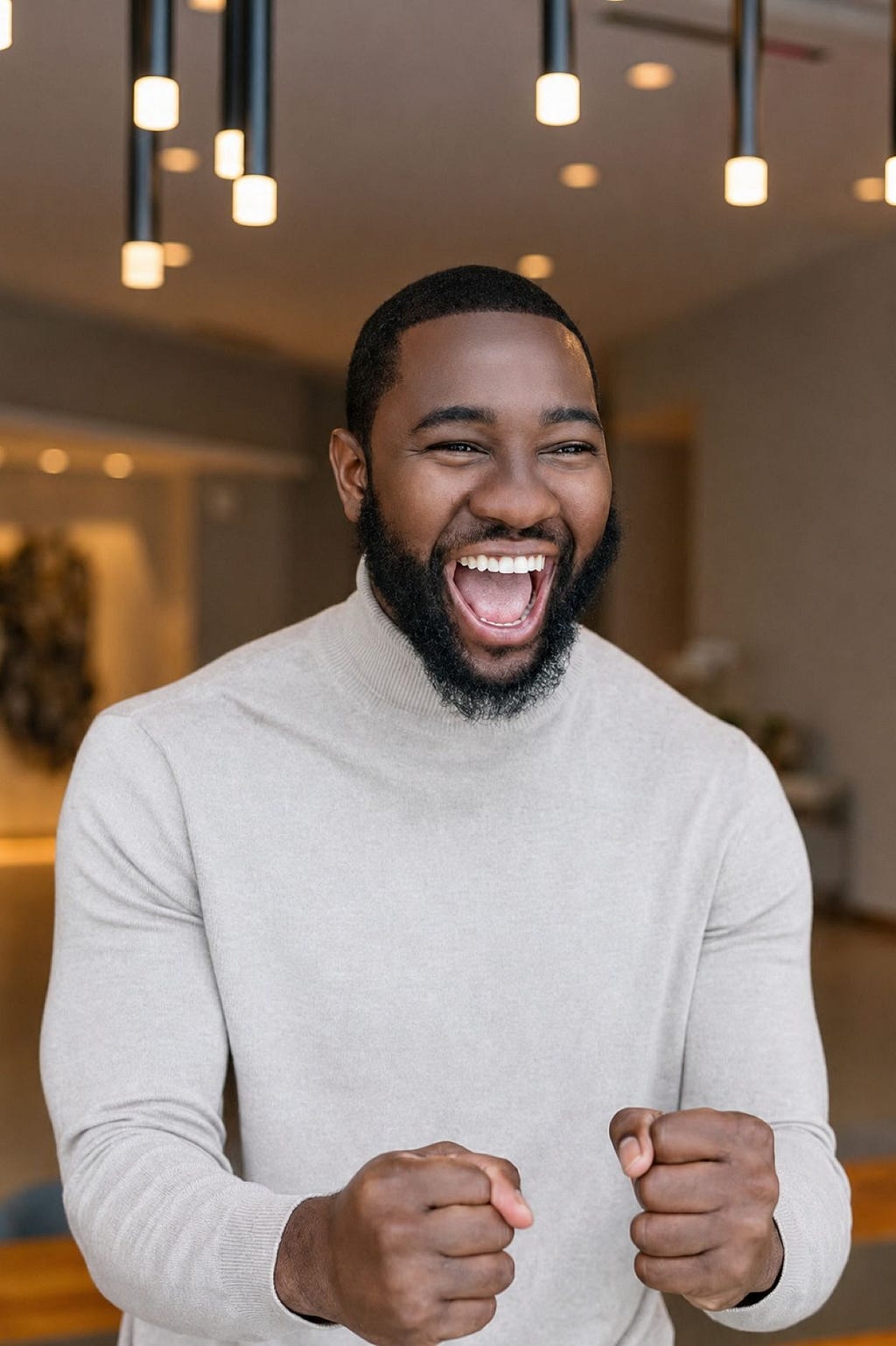
Super Impact Hero: Barbershop Speaks Founder Jefferson Noël on Reclaiming His Voice and Taking His Civic Movement Global
“I am someone with immeasurable worth and value. I am someone destined to rule, be in command of my life, impact the community, and help the people around me.”
I had the pleasure of talking with Jefferson Noel. Jefferson’s first plan was to walk into a Starbucks, put up a sign that read, “Intelligent conversations here, let’s talk,” and wait for strangers to join him. He laughs about it now because he knew how it might look. The impulse was sincere, but the setting was wrong. He wanted dialogue, connection, and a way to meet people after moving back to Miami from Orlando, where he had finished at Valencia College. What he found instead was the barbershop.
One day in 2016, while getting a haircut, Noël listened as the room erupted into a debate over LeBron James and Stephen Curry. He still insists the argument was flawed from the beginning because, in his view, “LeBron James is the greatest basketball player of all time.” But the subject mattered less than the temperature in the room. People were animated. They were funny, stubborn, loud, invested. Sitting in the chair, Noël wondered what would happen if that same “energy, passion, and vigor” could be directed toward topics with deeper consequences.
The idea came quickly: Barbershop Speaks. He asked his barber what he thought about bringing people into the shop after closing for a conversation about something important. The barber liked it. The owner agreed. Noël picked a date, made a flyer, and began what would become a community dialogue organization rooted in a deceptively simple belief: people already gather in barbershops for more than haircuts.
Only later did Noël recognize that the origin story reached further back than 2016. His father was a barber. As a child, Noël spent long stretches in shops where men argued about religion, politics, sports, and who was more attractive, Halle Berry or Beyoncé. His father eventually converted part of the family garage into a barbershop they called “The Office.” Noël had been raised around clippers, conversation, and male community before he ever had language for what he was building. “I’m starting to think that’s the real origin story,” he says.
That delayed realization gives Noël’s work its central tension. Barbershop Speaks looks like a civic innovation, and it is. But it is also a return to a familiar room, reimagined as a place where everyday talk can become public good. Noël did not set out to create an organization with chapters, donations, school-supply drives, disaster relief, and international ambitions. He started with conversation. Then the conversations began asking more of him.
During an early discussion on informal versus formal education, Noël decided to buy backpacks, pencils, notebooks, crayons, glue, and other supplies so parents could leave the event with something useful for their children. People donated without being chased. The lesson stayed with him. “Barbershop Speaks is more than an organization for having conversations,” he realized. “We can create a tangible difference in people’s lives.”
The same thinking later shaped a relief effort after a natural disaster in the Caribbean, which Noël believes was in Haiti. By then, Barbershop Speaks had relationships with shops across Miami-Dade County. Rather than ask people to travel downtown to a central donation site, Noël saw the barbershop itself as infrastructure. People were already buying groceries. People were already going for haircuts. Why not ask them to pick up something extra and drop it off at a place they already trusted?
That idea, too, widened his understanding of the shop. It was not only a business, a gathering spot, or a stage for debate. It could become a civic node, a familiar doorway into service.
Noël’s confidence in that vision is striking because he describes his own path into communication as anything but inevitable. He is a full-time public speaking professor at Florida International University, a role that might seem almost designed to contradict the insecurities of his childhood. He grew up with severe eczema, which he describes not as ordinary dry skin but as black, flaky, and visible across much of his body. He was also self-conscious about English, grammar, accent, and stuttering, insecurities shaped partly by being the son of Haitian immigrants and partly by watching his father struggle with stuttering as well.
“I find it fascinating that despite all those insecurities, my career is in communications,” he says. Noël speaks of himself now as “a king,” not in the sense of superiority, but as a declaration of worth after years of feeling exposed. “I am someone with immeasurable worth and value,” he says. “I am someone destined to rule, be in command of my life, impact the community, and help the people around me.” The language is grand, but in his telling it is also corrective. He is naming the person he had to become.
Barbershop Speaks now reflects that same philosophy of local dignity. Noël wants chapters in major cities around the country and eventually around the world, but he has moved away from the idea that every community needs the same conversation. One neighborhood may need financial literacy. Another may need to talk about youth purpose, school dropout rates, or gang involvement. The vision is not a centralized script. It is a network of semi-autonomous chapters united by a method: let the community decide what matters, then bring the right people into the room.
Recently, that vision reached Nigeria, where Noël says he helped arrange for a barber to cut the hair of students at a school where he was speaking. The moment clarified something for him. Barbershop Speaks could travel, but only if it stayed grounded in local needs.
Noël is still building the machinery to support that future, including fundraising, city leaders, host shops, and people with enough heart to guide difficult conversations. He is also expanding the idea through Brunch with Kings, an event that honors fathers and young men whose efforts often go unseen. The categories are telling: courageous fathers, guiding lights, educators, scholars trying their best. Noël is drawn to people who might not otherwise be celebrated.
His work begins with a chair, a mirror, and a room where people already know how to talk. The question he keeps asking is what else can happen there once the haircut is no longer the main event.
Diane: Well, I want to officially get started, and I want to thank you, Jefferson, for coming and meeting with me and talking a little bit about being a “Super Impact Hero.” You do some amazing things. Why don’t you take us back a little bit and share your journey with us that led you to where you are today?
The answer to that question is twofold. What I’m about to explain right now started in 2016, little did I realize that it really started probably at the age of six.
Barbershop Speaks started based on the idea that people go to barbershops for more than just haircuts; they go for conversations, community, and to engage and network with other folks.
I started it because I was moving back to Miami from Orlando after finishing school. I had just graduated from Valencia College and was coming back to Miami. I have an entrepreneurial spirit, and I was thinking that I wanted to start something centered around conversations, networking, and meeting new people.
I asked myself what I could do. The initial idea was to go inside a Starbucks and put up a sign that says, “Intelligent conversations here, let’s talk.” (Laughs) I was going to do that, and then I realized I didn’t want to look weird or have people think I’m weird.
I was going through ideas, and one day I was in the barbershop getting a haircut. There was a spirited debate in the shop, and they were arguing about who is better: LeBron James or Stephen Curry.
Now, that’s a silly argument because LeBron James is the greatest basketball player of all time. It’s not even close, with all due respect. Stephen Curry is not even in the top ten. I don’t know what the argument was about, although it was full of energy, as it typically is in barbershops.
While getting a haircut, I asked myself what would happen if we had conversations with the same energy, passion, and vigor about topics that actually matter.
That’s when the thought “Barbershop Speaks” came to my mind. Because I’m someone who takes action, I immediately looked up at my barber and said, “I have an idea called Barbershop Speaks. What do you think if one day after the shop closes, I gather people inside the shop and we have a conversation about something important?” The barber thought it was a cool idea and suggested we ask the owner. We asked the owner after the cut, and he agreed to do it. I came up with a date, put out a flyer, and that was the inception of Barbershop Speaks.
That was in 2016. We had a lot of amazing conversations on financial literacy, mental health awareness, education, and criminal justice. For the criminal justice panel, we brought in a sitting judge, an attorney, a police officer, and someone formerly convicted. That was one of my favorite conversations, and it was amazing.
Years went by, and I started to reflect on Barbershop Speaks and how far we had come since then. Then I remembered that my dad was a barber.
It didn’t occur to me until many years after Barbershop Speaks started that my dad was a barber and I spent a lot of time in the barbershop growing up. I used to see men argue all the time about religion, politics, sports, and who the most attractive woman on the planet is — it was always between Halle Berry and Beyoncé. (Laughs)
My dad actually left the barbershop to open his own shop in our garage. We had a large garage, so he cut it in half and created a barbershop we called “The Office.” I used to watch my dad cut hair every day at our house. Can you imagine my realization that part of the reason I started Barbershop Speaks is because I was essentially raised in the barbershop? I’m starting to think that’s the real origin story of how it came to be.
Diane: I love that. There’s a great quote by Steve Jobs: “You cannot connect your dots looking forward; you have to look back and trust that they will connect.” Those would be the dots that you start connecting that lead you forward. How has this mission grown and evolved organically from conversations to impact?
Jefferson: I sincerely believe in the power and importance of conversation, or else I wouldn’t be doing it. During our second or third conversation, we decided to talk about informal versus formal education. It was around the time the school year was starting. I had the idea to buy backpacks, pencils, composition notebooks, crayons, glue, and other supplies to create backpacks for kids. This way, when parents came to the barbershop for the dialogue, they could leave with school supplies to lessen the burden of sending their kids to school.
When we executed the idea, people donated to make it happen. I’m really grateful for that because I didn’t proactively seek donations; people were just excited about it. After that event, I realized Barbershop Speaks is more than an organization for having conversations; we can create a tangible difference in people’s lives.
Sometime later, a natural disaster took place in a Caribbean nation — I believe it was Haiti — where they were impacted heavily by a hurricane. At that point, I already had a bunch of barbershops throughout Miami-Dade County where we hosted conversations. I asked myself what would happen if we activated these barbershops as donation drop-off sites.
People go to the barbershop anyway. The storm was all over the news, people were affected, and others wanted to give back although they might not want to drive all the way downtown to the main donation site. I realized people buy groceries every week and go to the barbershop regularly. That’s when I started promoting the idea to pick up something extra and drop it off at the barbershop next time they go.
The community responded really well to that. I started to realize that the barbershop is a multi-use facility. It serves not only for haircuts and conversations, additionally functioning as a gathering spot and a place of familiarity where people can make a real impact.
Diane: That’s great. As you think about the impact you’ve made and how you have organically gone from conversations to raising money and providing resources in disasters, what is the grand vision? Where do you see the organization continuing, and how does the legacy go on?
Jefferson: We are in the process of reimagining how we are going to achieve that vision. Long story short, the vision is to have chapters in every major city around the country and eventually around the world. What I’ve realized with Barbershop Speaks is that there are very few issues that absolutely everyone has; every community and neighborhood has a unique problem.
I can’t say that the community I live in right now is struggling specifically with financial literacy. Granted, that is an issue many communities face. However, if I go up to Broward County, they might say financial literacy is a problem, while emphasizing they have a bigger issue with kids not understanding their purpose in life, which causes them to drop out of school or get involved in gangs. That might be a more pressing topic for them.
It is important for communities to decide what dialogues they will have. I have abandoned the one-size-fits-all idea where every community has the same conversation. Instead, we want our dialogues to be specific to the county, city, and neighborhood we are in.
I envision a world with chapters around the country and the world. I don’t want to say they are entirely autonomous because there has to be a unifying thread between all of us. However, I could see semi-autonomous chapters deciding to do donations one month, or something for mothers and children the next, focusing on their particular issues.
The part that has expanded my vision is that, while we have had conversations across the United States, there is a demand for it in different countries, such as Nigeria. I just came back from Nigeria two weeks ago, and instead of having a conversation, we paid for a barber to come in and cut the hair of all the kids at a school where I was speaking.
My grand vision is for Barbershop Speaks to be an international organization that focuses on the needs of specific communities.
Diane: That is a beautiful vision. Let’s get to know you a little bit. You mentioned growing up with your dad and realizing he was a barber. Tell us about your journey, some of your work history, and who Jefferson Noel is.
Jefferson: Who is Jefferson Noel? When I hear that question, people normally think of their career or profession; conversely, I think of myself beyond my career. The way I think of it is, I’m a king. That is who I am. I am someone with immeasurable worth and value. I am someone destined to rule, be in command of my life, impact the community, and help the people around me.
That is who I am, and I came to that revelation in part because I didn’t always feel that way about myself. Growing up, I had a lot of insecurities. Granted, most kids do. While many kids experience internal insecurities, mine were more public-facing.
One of those insecurities was having severe eczema for most of my life. When I say eczema, people just think of dry skin and often say they had it too. Imagine burnt food that is black and flaky — that is what my skin looked like. It was all over my feet, knees, calves, arms, neck, and hands. I was insecure about my eczema for most of my life.
On top of that, being the son of Haitian immigrants, I was always insecure about my English and my grammar. To some degree, I still am. Sometimes an accent pops out of nowhere, even though I was born and raised in the United States! (Laughs) People often ask where I am from, and when I say Miami, they ask where I am really from. Sometimes I just give in and say I came from Haiti. When they ask when I got here, I explain that I was born here. (Laughs)
I was always insecure about how I communicate and speak. I was insecure about stuttering because I wasn’t always the most fluent speaker. My dad also struggled with stuttering his entire life.
I find it fascinating that despite all those insecurities, my career is in communications. I am a full-time public speaking professor at a preeminent research institution, Florida International University.
I am an overcomer. I haven’t always been an overachiever, yet that is what I am now. At this point in life, all I see are green lights.
Diane: I love that. That’s amazing. How can readers support or cheer you on, or get involved?
Jefferson: I am always open to learning about different shops in communities around the country. We have hosted conversations in Miami, Orlando, Atlanta, New York, Philadelphia, and Washington DC. We have a network of shops up the East Coast, and I am very curious to venture westward to see what other shops might be open to hosting conversations. Identifying those shops would be good.
Ultimately, finding shops is not the difficult part. Finding people with a similar passion and heart who are interested in leading conversations in their city would be an incredible help to our work.
Beyond that, like most non-profit founders would say, we want to raise more money. I have never run an active fundraising campaign. Most of the funding has come from people offering to buy things for our events, or it has come from my own pocket. We have had sponsors over the years, though we never had real fundraising. Frankly, I don’t really like fundraising.
However, we recently developed a section on our website where people can make a one-time or monthly donation to contribute to our work in the US and internationally. Seeing the kids get haircuts in Nigeria and witnessing the joy and fulfillment in the barbers’ eyes made me realize we could do this more frequently, and that costs money.
We always try our best to provide food at the events for the barbers and attendees, which also costs money. We also try to capture all our events with high-quality content. Donating to Barbershop Speaks would be a gigantic help.
Lastly, I am not sure if you are familiar with LeBron James. He has a show called “The Shop.” Have you heard of it?
He has a podcast called “The Shop” where celebrities sit inside barbershops. They frankly don’t talk about anything that matters deeply; they speak about celebrity topics. It is interesting to people because they like the lives of celebrities. I say that respectfully, of course, because LeBron is the greatest basketball player of all time.
Our conversations mostly center around the community and feature experts whose day-to-day lives revolve around the topic. If I’m talking about financial literacy, I’m not going to bring in a rapper. It might draw a larger crowd, although the attendees won’t get the same value.
While I believe our approach is more beneficial to attendees because they are actually learning, I also recognize that we live in a world where there has to be some form of draw to get people interested. Instead of attracting people with plain carrots so they eat healthy, you wrap the carrots in a candy wrapper. It would be incredibly helpful to get involvement from people with celebrity influence who genuinely support the causes we speak about to amplify our message.
Diane: Share with us how people can find you or where they can look up more information.
Jefferson: People can find Barbershop Speaks on our Instagram page @barbershopspeaks and on our website, barbershopspeaks.com. Those are the two primary ways. We have an email address, aa@barbershopspeaks.com. My personal email doesn’t have any clutter, so I try not to put it out publicly. The aa@barbershopspeaks.com address is the best place to reach out.
Diane: Great. This has been a true pleasure. Listening to you talk, I know exactly why you are the “Super Impact Hero.” It is a great mission and a wonderful idea to start with a conversation and see how it brings resources to help others. You are doing amazing things. Thank you for everything that you do.
Jefferson: Thank you very much, Diane. I do want to share one more thing. This might be outdated by the time your story comes out, yet it highlights more of the impact we are making. I mentioned “Brunch with Kings” in our email. On Saturday, June 6th, we are having our second annual Brunch with Kings.
The goal is to celebrate fathers and scholars. Many men are doing great work in our community and often do not get recognized. We are hosting an event to celebrate fathers with their families and give them awards. For example, “The Courageous Father Award” goes to a father who has served in law enforcement, the military, or as a first responder. We are presenting “The Guiding Light Award” to a father who is also a pastor helping his flock achieve in life. Another award is “The Educator Extraordinaire Award” for a father who is a teacher, because teachers do not always get a lot of recognition.
We are rewarding people who otherwise would not be seen by society. The “scholars” part of Brunch with Kings celebrates young men in school who are trying to achieve something in life. This isn’t strictly for those with 4.0 GPAs going to Harvard. It is for any young man who is trying his best to finish school while working and maintaining a social life. It is a way to recognize their efforts in making their lives better. Last year was absolutely incredible, and I am extremely excited about this year as well.
Diane: Thank you for sharing that. Thank you for all that you do, and I’m excited to see what’s next for you.
Jefferson: Yes, thank you.
Super Impact Hero: Barbershop Speaks Founder Jefferson Noël on Reclaiming His Voice and Taking His… was originally published in Authority Magazine on Medium, where people are continuing the conversation by highlighting and responding to this story.