


Small businesses, there is a solution for you too — One of the biggest barriers to action is the belief that you need a perfect plan before you begin. You don’t. ClimeCo created our EcoCommitted program for exactly this reason. Many small businesses want to reduce their footprint but don’t know how to take that first step. EcoCommitted empowers small businesses to commit creating momentum while they build longer-term decarbonization strategies.
As we face an unprecedented environmental crisis, the need for sustainable solutions has never been more urgent. This series seeks to spotlight the innovative minds and passionate advocates who are leading the charge in environmental conservation and sustainable practices. We aim to explore the most effective strategies, breakthrough technologies, and transformative policies that are shaping a more sustainable future for our planet. As a part of this series, I had the distinct pleasure of interviewing, Linda Kelly, Senior Vice President of Certification Programs at ClimeCo.
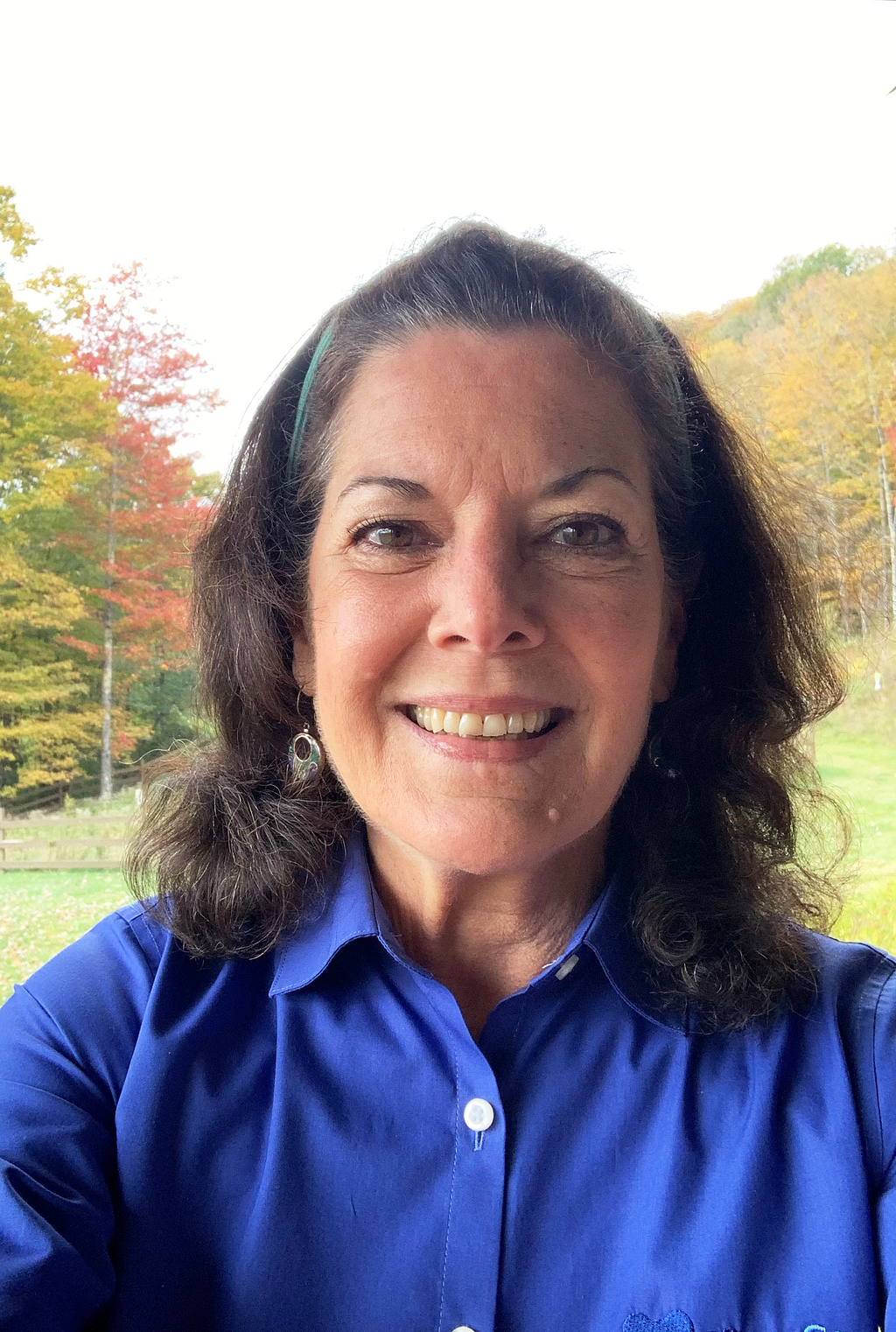
Linda is a business development and client solutions professional with over 40 years of experience developing and growing client partnerships resulting in long-term relationships and expanded revenue results. At ClimeCo, Linda serves as Senior Vice President of Certification Programs, where she oversees and expands ClimeCo’s suite of sustainability and decarbonization certification offerings, including the ClimeCo Certified Product™ Program, part of the Amazon Climate Pledge Friendly sustainably certified products badging program. A native of Austin, Texas, where she was raised by “an original environmentalist,” Linda now splits time between central Vermont and central Colorado, reveling in the beauty of the natural environment in both states and delighting in introducing her young grandchildren to the treasure and importance of the natural world.
Thank you so much for joining us! Before we dive in, our readers would love to “get to know you” a bit better. Can you tell us a bit about your ‘backstory’?
Thank you so much for having me, I’m grateful for the opportunity to share more about sustainability opportunities that are not only attainable but easy to action. Before I get ahead of myself, a bit about me: the better part of my career has been working with organizations to achieve their business objectives, and I double-downed on sustainability when I was 50 years old by getting my Masters in Environmental Law and Policy from Vermont Law School. This academic program trained me in the fundamentals of making sustainability a true and achievable business case for organizations. I was able to turn my passion for environmental volunteerism and love of the natural world into my dream career! I refused to believe that sustainability had to be expensive or difficult for businesses to implement. I’ve been able to prove this each day with the work I’ve been honored to achieve with companies around the world: helping to make it easy and affordable for them to integrate sustainability into their business and their products and to leverage sustainability as an important and valuable business driver.
Can you share with us the most interesting story from your career? Can you tell us what lessons or ‘takeaways’ you learned from that?
One of the most rewarding experiences in my career began in 2019 when I was contacted by the incredible Road Scholar organization. Once again, my mom is woven into this story as she’s been a Road Scholar traveler since she retired from teaching high school biology in 1992. Road Scholar is a non-profit organization with a mission “to inspire adults to learn, discover, and travel through engaging educational adventures that foster lifelong learning and community.” As an experiential travel and education organization, the Road Scholar team was very aware of the, at times, unavoidable negative environmental impact that travel has and wanted to take action. Due to my very direct experience with Road Scholar and their programs and services, I was — and am — so thrilled to be serving Road Scholar as a partner in their operational sustainability initiatives. It has been nearly eight years working together with Road Scholar, we’re still partnering and collaborating on ways that Road Scholar can reduce its operational emissions, educate its program participants regarding environmental impacts of travel and on-location study, and work toward the overall sustainability goals of this remarkable and environmentally-dedicated organization. Every person I’ve ever known at Road Scholar is a true, honest and dedicated soul; I just love working with them.
My takeaways from this collaboration is rooted in the belief that we are so fortunate to work in an industry where, across the board, the people you meet and with whom you have the honor to serve and collaborate are wonderful people who care far beyond themselves and their own organization. They care about the future of our natural world and doing their individual — and collective — part to conserve it. We’re so privileged to be part of this sustainability focused and determined community!
You are a successful leader. Which three character traits do you think were most instrumental to your success? Can you please share a story or example for each?
1. Courage to step into the unknown — I walked into my career in environmental services and sustainability with 30 years of business experience and client relationships management, but that first week on the job in my new environmental services role, I picked up the phone and called clients to ask about their sustainability program needs thinking “I have no idea what I’m doing!” Every one of those early client engagements was a journey, and I quickly learned that the most important thing I could do was to listen to my clients’ needs, their issues, their priorities, their aspirations, their budgets, and their challenges. This is a very collaborative industry, and we offer very customized and flexible services and solutions. After the first couple of weeks, I became more comfortable and confident that I could have honest and straight-forward conversations, admitting when I didn’t know how to answer their questions but with the commitment to find the resources and answers they needed. This may sound like basic career advice for newcomers — perhaps it is — but we all benefit by remembering this — — listen, research, determine solutions and provide answers!
2. Client First, Client Focus — Above all, I care about what our client partners (our customers) need and want. The lens or mantra, you could say, that I like to keep in mind: Client first, client focus. The only way I am successful is to directly contribute to their success. I want them to know they can depend on me and that they call me first when they have a need. I’m incredibly proud that at ClimeCo — and affirmed — that our company culture always is to ask “…and what will our client partners think about and how will they benefit by that decision?”
3. Relentless Accountability — There is not a day that passes at ClimeCo where I’m not reminded how grateful I am to work alongside colleagues and client partners where it’s vividly clear that the work is making a true positive impact. Our clients are making commitments that support the climate, their stakeholders, and their reputation. Accountability is central to the impact being made. It has to be more than a value, it should be operational, and a personal commitment.
My top priority is to ensure that my client partners and colleagues know that I always will follow through, that I always will be honest and fully accountable, and that they can depend upon me 100%.
A humbling example of this took place while I was working in finance. The company I was working for at the time had misalignment with our clients’ expectations. I was not directly involved, but I had a number of those client relationships. Regardless of how little I was involved in the misalignment, I had a personal commitment to being accountable to my clients. So, I got on a plane and visited three clients, apologized for our failures in person. Each client expressed their sheer disappointment and frustration first, then commended me for directly facing them regarding our failures. Relentless accountability means sitting with the discomfort alongside the wins.
Are you working on any exciting new projects now? How do you think that might help people?
I’m so glad you asked me this as there is a project I’m incredibly excited about and that I’ve had the honor of working on with some brilliant women at ClimeCo including my colleagues Preeti Shanker and Emily Damon, our brand new product certification focused on product-level “insetting,” one of the first product certification of its kind!
For those that familiar with the term, “insetting,” it is an innovative sustainability strategy through which companies make direct investments in environmental projects within their own value chains, often called their “Scope 3 emissions.” The defining feature of insetting is its direct link to a company’s operations, suppliers, and the foundational business processes that support its value chain.
So, what does that look like in reality? Let’s say a brand makes beauty products, and they have ambition to reduce their Scope 3 emissions (also known as indirect emissions) which means emissions coming from ‘indirect’ sources the brand can’t directly control. These product-related carbon emissions from the brand’s supply chain, like raw materials cultivation and extraction, packaging materials, or product distribution/transportation all need collaboration in order to reduce those emissions. Now, let’s say the beauty brand decides to invest in ‘insets’, like renewable energy to replace fossil fuel for its manufacturing facilities or low-carbon fuels for its product transportation and delivery, to help bring their suppliers along in the brand’s Scope 3 emissions reduction journey, helping everyone reduce their emissions which in turn, helps support our planet. This is where our new Product Insetting Certification comes in — ClimeCo helps the beauty brand quantify its products’ “cradle to grave” carbon footprint — through the products’ entire life cycle — then identify and implement ways to reduce product-related carbon emissions in the brand’s value chain. ClimeCo helps the brand quantify the value chain emissions reductions down to the product’s carbon footprint to demonstrate direct product carbon footprint reductions. Now the brand has ClimeCo’s third-party product certification badge to demonstrate to its customers the credible, documented and transparent product carbon footprint reductions the brand has achieved, making it easy for consumers to spot and select an environmentally responsible product through our third-party certification. Companies adopting insetting initiatives will be able to showcase to stakeholders, customers their fantastic work as well as communicate these achievements — easily — at the product level with our Product Insetting Certification.
Ok, thank you for all that. Now let’s shift to the main focus of our interview. What pivotal moment led you to dedicate your career to sustainability, and how has that shaped your approach to environmental challenges?
To start, let’s acknowledge that I’m in the 5th decade of my career, which I can hardly believe! It all started with my mom and the way she raised her six kids in the countryside outside of Austin, Texas. My now 98-year-old mom truly is an “original environmentalist,” and I am so grateful she raised us to better understand what that means. For example, we grew up in the wilderness, grew our own fruits and vegetables, and rode horses across undeveloped landscapes. I spent my childhood days wandering in the woods and swimming in Lake Austin. In the mid-1960s, my mom helped start Austin’s first volunteer recycling center. Every week, she’d take 3 or 4 of us kids to help flatten aluminum cans, bundle newspaper and sort glass bottles. For the rest of my life, I’ve devoted hundreds of hours a year to environmental causes and volunteerism, then as I mentioned, in 2010, I turned it into my career, thanks to her!
Could you describe a groundbreaking project or initiative you’ve been involved in that significantly contributed to sustainability?
This is as if you are asking me to choose a favorite grandchild! There are many I would love to highlight, however, as we are on the theme of product certification, our work with the Amazon Climate Pledge Friendly Program certainly stands out. It’s been very rewarding to work with the Amazon CPF team and be directly involved in the exponential growth of the program.
I’d like to share a stat from Harvard Business Review in a recent study that showcased how sustainability drives sales: “A comprehensive analysis of Amazon sales data reveals that sustainability labels like ‘Climate Pledge Friendly’ increase consumer demand by 13–14% for up to eight weeks after adoption.” This stat is so powerful, in my opinion, because it proves that brands that prioritize sustainability can drive sales, in this case through a program such as Amazon’s Climate Pledge Friendly. We are proud to be an approved product certifier for Amazon’s Climate Pledge Friendly program, which highlights products with certifications that meet established sustainability standards. Through our ClimeCo Certified Product™ Program, brands can qualify their products for the CPF badge, which helps shoppers easily identify more sustainable products.
How do you navigate the balance between economic growth and environmental preservation in your sustainability strategies?
Such a good question and one that we proactively showcase to our client partners as we don’t see economic growth and environmental preservation as opposing forces, we see them as closely intertwined. The most resilient companies of the future will be those that understand sustainability is not a cost center, but a growth strategy. If your brand is not already thinking that way, you need to be.
Navigating that balance starts with reframing the conversation. Instead of asking, “What will this cost?” we ask, “What value can this create?” I take personal pride in identifying strategies that reduce risk, unlock operational efficiencies, strengthen supply chains, and enhance brand equity, all while delivering measurable environmental impact.
I also want to emphasize practicality and scalability. Sustainability strategies must be economically viable, technically sound, and built to last. The results are astounding, especially in recent years as we see quite clearly that environmental preservation supports economic resilience.
What emerging technologies or innovations do you believe hold the most promise for advancing sustainability and why?
I have to begin by admitting that at the age of 66, I’ve always been a “late adopter.” In the interest of modern reality, I’d like to flip this question on its head a bit and phone a friend, my esteemed colleague, Stephen Bay, who leads our AI & Innovation work.
According to Stephen (and I agree), one of the most promising areas is the intersection of digital platforms, data, and AI to embed sustainability into everyday business transactions.
For a long time, climate action has been treated as something separate from core operations, like a report you produce once a year or a program that sits off to the side. What’s exciting now is the ability to integrate sustainability directly into the systems, user journey, and purchase path that we all already use.
At ClimeCo, we’re seeing this through platforms like our Digital Carbon Solutions, which allow companies to embed carbon mitigation directly into things like product purchases, event bookings, or services. When sustainability becomes part of the normal workflow, like a simple carbon offset option at checkout, participation increases dramatically.
We’re also leveraging AI data mining into the heretofore labor, cost and time intensive Product Life Cycle Assessments (LCAs) we depend upon for our product-level certification programs. At last, thanks to AI data aggregation, Product LCAs are becoming simpler, quicker and less expensive to create, while maintaining the data integrity and human review and assessment required to ensure accuracy.
Technology is making climate action scalable. The real promise isn’t just better data or smarter algorithms — it’s the ability to make sustainable choices easier and more accessible for businesses and consumers alike.
Here is our main question. Based on your research or experience, can you please share your “5 Top Strategies for a Cleaner Planet”? (Please share a story or an example for each)
1.Small businesses, there is a solution for you too — One of the biggest barriers to action is the belief that you need a perfect plan before you begin. You don’t. ClimeCo created our EcoCommitted program for exactly this reason. Many small businesses want to reduce their footprint but don’t know how to take that first step. EcoCommitted empowers small businesses to commit creating momentum while they build longer-term decarbonization strategies. For example, one of our EcoCommitted companies is a woman-owned Etsy shop that sells greeting cards, and for years, she’s wanted to integrate sustainability into her operations, but as a business of one, sustainability tended to be deprioritized. Within her first year of joining our EcoCommitted Business Progarm, she was able to engage a whole new audience, growing her sales with environmentally conscious consumers.
2. Start measuring what matters — You can’t manage what you don’t measure. From a comprehensive greenhouse gas inventory to a product life-cycle assessment, start measuring and believe me, the data will provide the clarity needed to make informed decisions.
Because our Certified Product Program is based on conducting a cradle-to-grave life cycle assessment to determine a product’s overall carbon footprint, we collaborate with companies every day who learn so much about their products’ entire supply chain at a very granular level, and they’re able to implement cost saving measures in product and packaging material selection, in product transportation and distribution routes and options, and in end-of-life/disposal/recycling alternatives.
3. If you associate sustainability with $$, you need a reframe — Environmental strategy must align with economic realities. The most successful sustainability programs identify emissions reduction opportunities that also create operational efficiency or reduce long-term risk.
For example, we have been working with the health and wellness brand, New Chapter, and they earned the Amazon Climate Pledge Friendly product badges through our ClimeCo Certified Product™ program back in 2022. New Chapter has increased its portfolio to more than 100 registered products in 2024, and by mid-2025, has realized year-over-year double digit registered product sales growth over the past three years. This alignment of climate action with consumer trust underscores how sustainability can deliver measurable results for both the planet and the bottom line.
4. Sustainability can help you work smarter, not harder — Real system-level change requires collaboration. Suppliers, customers, and partners all play a role in reducing environmental impact.
Insetting is a powerful example. By investing in emissions reductions within their own supply chains, companies can directly address Scope 3 emissions while strengthening supplier relationships. I mentioned my colleague, Emily Damon, she has been working with brands who, through insetting, are showcasing improvements across the supply chain such as soil health, farmer stability, and reducing carbon intensity, a win across environmental and economic dimensions.
When companies move from transactional relationships to collaborative climate partnerships, impact accelerates.
5. Communicate authentic to your brand — Transparency builds trust. In a world increasingly sensitive to greenwashing and greenhushing, regulations and global guidance, it can feel overwhelming to say anything. However, companies must communicate clearly about what they are doing in the areas of sustainability and environmental responsibility, even if it’s “just” that they are doing something.
One organization I worked with hesitated to share progress because they hadn’t reached their long-term target yet. We encouraged them to communicate milestones instead, outlining both achievements and next steps. The response from customers and employees was overwhelmingly positive. Authenticity resonates more than perfection.
In your view, what are the key steps individuals, communities, and governments need to take to achieve a more sustainable future?
Achieving a more sustainable future requires coordinated action across individuals, communities, and governments; however, we cannot let perfection get in the way of good progress. In a perfect world, these stakeholders would all be aligned and work in concert together, but let’s be absolutely honest, that’s unlikely. Alone or in some sort of collaboration, each group can make incredible progress.
Individuals play a powerful role by making informed choices, supporting responsible companies, and advocating for transparency and climate action. Cultural momentum starts with people.
Communities turn ambition into action by collaborating on local solutions, whether that’s renewable energy, sustainable infrastructure, or waste reduction. When local leaders and businesses align, sustainability becomes tangible and economically beneficial.
Governments can provide a foundation. Clear policies, long-term climate targets, and smart incentives give businesses the certainty they need to invest in innovation and scale solutions.
When these three levels move together, sustainability becomes not just possible — but practical and profitable.
You are a person of enormous influence. If you could start a movement that would bring the most amount of good to the most amount of people, what would that be? You never know what your idea can trigger. 😊
At ClimeCo, we focus primarily on the negative environmental impacts of greenhouse gas emissions that contribute to climate change. One of the huge impacts of climate change is on broad weather pattern changes, with global temperatures getting higher and most climates getting drier each year. This climate change-related impact and the continuing growth of global populations is resulting in a huge issue with the availability of water sources. If I could help start a global movement, it would be focused on water conservation — rethinking the financial responsibilities of industries that use vast quantities of water, rethinking dependence on certain agricultural products that require inordinate quantities of water, creating better collaborations regarding water access and use. Part of my hope would be that access to water is not as controversial or as politically divided as are issues directly associated with the reality of climate change and the significant human contribution. We need to start planning what we can live without so that we all have enough water to survive.
What is the best way for our readers to continue to follow your work online?
Follow us at ClimeCo.com and via our social channels (LinkedIn and Instagram), I admit, I’m not a frequent poster myself, but this old dog is learning new tricks, thanks to our remarkable ClimeCo team!
This was very inspiring. Thank you so much for the time you spent on this. We wish you only continued success.
The Future Is Green: Linda Kelly of ClimeCo on Her Top Strategies for a Sustainable Planet was originally published in Authority Magazine on Medium, where people are continuing the conversation by highlighting and responding to this story.