

Upstanders: How Andrea Putting Of Chocolate and Coffee Breaks Is Standing Up Against Antisemitism, Racism, Bigotry, and Hate
When people actually sit and listen to each other’s stories, something shifts. The barriers start to come down, and instead of seeing “difference,” they start to see a person — another human being with hopes, dreams, and loves, just like them.
An upstander is the opposite of a bystander. A bystander is someone who stands by while others are being bullied, maligned, or mistreated. An upstander is someone who stands up to protect and advocate for the victim. We are sadly seeing a surge of hate, both online and in the real world. Many vulnerable minorities feel threatened and under attack. What measures are individuals, communities, and organizations taking to stand up against Antisemitism, Racism, Bigotry, and Hate? In this interview series, we are talking to activists, community leaders, and individuals who are Upstanders against hate, to share what they are doing and to inspire others to do the same.
As a part of this series, we had the pleasure to interview Andrea Putting.
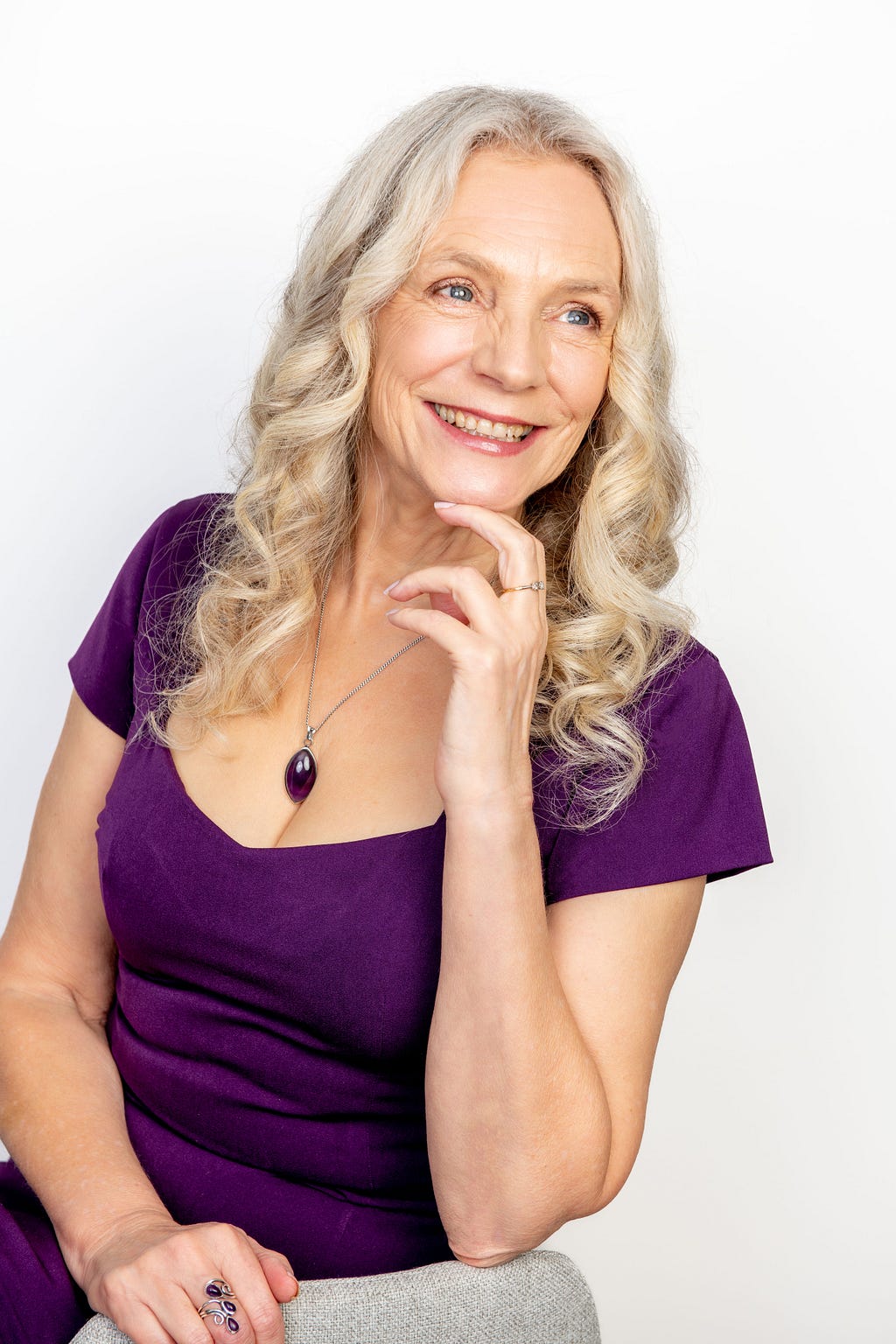
Andrea Putting is a speaker, author, and host of Chocolate and Coffee Break: A Compassionate Proposition. Through her work, she brings people together across differences to share stories, challenge assumptions, and rebuild connection. Known as the Compassion Curator, she is leading a quiet movement where belonging starts with chocolate, coffee, and conversation.
Thank you so much for joining us in this interview series! Before we dive in, our readers would love to get to know you a bit better. Can you tell us your “Origin Story”? Can you tell us the story of how you grew up?
When I was a child, the White Australia Policy was still shaping the country I was growing up in. The Australian Government had introduced immigration laws back in 1901 that made it clear — only white Europeans, preferably from Northern Europe, were given easy entry. For anyone else, it was made very difficult.
This didn’t just disappear overnight. It was gradually dismantled over time, but it wasn’t until 1975 — the year I started high school — that Australia formally brought in laws to prevent racial discrimination.
By then, more immigrants were being allowed in, but it was still mostly Europeans. Now it included those from the south — Italians and Greeks in particular.
The neighbourhood I grew up in was working class, and a lot of these families moved in there.
Living next door to me was an Italian family. I took no notice of where they came from. What I noticed was the concreted backyard and the vegetables they were growing — things I’d never seen before.
But mostly, I noticed the three little girls — Maria, Nina and Lisa. (Rita came along later.)
Here were three playmates for me.
What I learned later was that when they moved in, no one in the family spoke English. They would say that I taught them. I must have been four or five at the time.
There were so many differences between us, but none of that mattered. We were just little girls, doing all the things little girls do.
When I went to school, the classroom was filled with children from all over Europe. Some didn’t speak English when they arrived.
That was just normal.
And I think that’s what shaped me.
Because very early on, I saw that while people might look different, speak differently, or live differently — underneath all of that, we are the same.
Can you share a personal story of how you experienced or encountered antisemitism, racism, bigotry, or hate? How did that experience shape your perception and actions moving forward?
I have to be upfront and say I have never experienced any of this personally. However, I have witnessed it many times, and I have the privilege of people sharing with me their most personal journeys with it.
One story I want to share happened in 2024. I was visiting Sydney and waiting for the ferry. Also waiting were a couple of Orthodox Jewish families. The children were happily playing when I overheard a young girl, around eight years old, say to her playmates, “Antisemitism is bad.”
I was horrified.
She’s a little girl. She should never have had to hear that word, let alone understand what it means. She should be free to play, grow and become all that she can be, yet she was already aware of something like antisemitism.
Can you imagine being her parents and having to explain that to her?
And then, not long after, something unthinkable did happen. In December 2025, at Bondi Beach, a shooting during a Hanukkah gathering targeted the Jewish community, and fifteen people were killed. This should never happen.
Hearing that little girl stayed with me, but after that event, it stayed with me even more. Because this is no longer abstract. It’s real.
I want that child to grow up as free as my grandchildren, to be able to live without the fear of something so terrible happening simply because of who she is.
Whenever I think of this, I become more and more determined. Breaking down barriers of prejudice, for any reason, is what I must do.
Can you describe how you or your organization is helping to stand up against hate? What inspired you to take up this cause?
Chocolate and Coffee Break is really about creating spaces where people can connect with those who are different to them. That might be race, religion, ability, identity, or even just different views.
What I’ve found is that when people actually sit and listen to each other’s stories, something shifts. The barriers start to come down, and instead of seeing “difference,” they start to see a person — another human being with hopes, dreams, and loves, just like them.
It’s a quiet revolution. It’s not loud, it’s not forceful, but it’s very much needed. Because this is where the real work happens. This is where perspectives change, and where community actually starts to grow.
For me, it really began with what happened in Australia on the 15th of December, 2014.
A gunman stormed the Lindt Chocolate Café in Sydney and took people hostage. He held them there for 17 hours, and when it ended, two innocent people had lost their lives.
In the aftermath, there was a lot of fear. People were worried there would be retaliation, particularly towards the Muslim community. Many were afraid to even leave their homes.
But what happened next was something quite extraordinary.
Around 150,000 people took to social media using the hashtag #IWillRideWithYou, offering to travel on public transport with Muslims so they wouldn’t feel alone or unsafe.
And that really moved me. Because in that moment, Australia didn’t respond with hate — it responded with compassion.
I remember thinking, this is the Australia I want to live in. But also… why does it take a tragedy for us to show up like this?
So twelve months later, I started Chocolate and Coffee Day for Religious Harmony. It was very simple — just encouraging people to sit down with someone different from them, share chocolate and coffee, and actually listen to each other.
I kept doing that each year, but over time people started saying, “Why just one day?”
And they were right.
So it grew into Chocolate and Coffee Breaks — something that could happen any day, and that expanded beyond religion to really address prejudice of all kinds.
And now, I’ve brought that into a television format, so those conversations can reach even more people.
Can you tell us the most interesting story that happened to you since you began your work as an Upstander?
I had a day’s work as a TV extra. There are rules about being on set. You get used to them — they are part of the job.
When it came time for a dinner break, we all knew what was expected. The cast is fed first. Then we can eat.
This time they set out separate tables. Four tables over there, and one over here. Then trays of food were brought out, filling the four tables abundantly.
We knew we couldn’t eat with them. We had to stay back and wait. They were the important ones. They came first. We couldn’t talk to them, approach them, or sit at the same table. Those were the rules. And if you didn’t follow them, you risked not being asked back.
So, we waited.
Then one tray is placed on the table for our group of twelve. We gathered around and dived into the food. But there wasn’t enough. And yet, on the other tables, there was more than enough. Food to spare.
I summoned up the courage to go to the only person we were allowed to speak to, feeling a little like Oliver Twist. “Please, ma’am, can we have some more?”
The response was predictable. “If there are leftovers, you can have them.”
So we waited again, standing back in our place. And when they finished and walked away, everyone moved in quickly for what was left.
And it left me thinking… What if this wasn’t just a job? What if this was your everyday life — always being treated as less important, always being kept in your place?
In that moment, I realised I was being given a glimpse into how some people are treated every day.
Could you share an inspiring story that demonstrates the impact your efforts have had on an individual or community?
One of the moments that really showed me the impact of this work happened during a virtual Chocolate and Coffee Break.
I had reached out to a woman I was connected with online. From her social media posts, I could sense she had something she wanted to say, but she was holding back. So I invited her to have a Chocolate and Coffee Break with me over Zoom.
What unfolded in that conversation was very powerful. She began to share what was happening in her life, and more broadly, what she and other Jewish people were experiencing in the aftermath of the October 7 attacks — the fear, the tension, the things most people don’t see.
She spoke very openly. She shared her truth as she saw it, and it opened my eyes to many things. In that moment, what she needed most was a space where she could speak freely, to know that she was heard, and that someone cared.
She later expressed how important that space and support had been for her. It helped her move from fear, to feeling seen, to reclaiming her resilience and stepping back onto the stage to share her story.
And that really brought it home for me. Sometimes the impact of this work isn’t something big or visible. Sometimes it’s simply creating a space where someone feels safe enough to be themselves. Sometimes being heard is what gives someone the strength to stand again.
In your opinion, why do you think there has been such a surge of antisemitism, racism, bigotry, & hate, recently?
There is so much happening in this space that, at times, it is hard to get my head around. In some ways, I honestly don’t understand how reasonable people can turn against others so quickly.
If I have to put it down to anything, I would say it comes back to fear. Fear of losing something — identity, belonging, a sense of certainty about the world. When people feel that slipping, they can start to look for something, or someone, to hold responsible.
There is also a lot of noise. We are constantly exposed to messages that amplify division. Some political voices, in particular, benefit from that. When people are divided, it becomes easier to influence them, to rally them, and to lead them in certain directions.
When we stop seeing each other as individuals and start seeing each other as groups or labels, it becomes much easier for fear to take hold. And from there, it doesn’t take much for that fear to turn into suspicion, and sometimes into hate.
Are there three things the community/society/politicians can do to help you address the root of the problem you are trying to solve?
It is often thought that to solve a problem like this, we need to throw a lot of money at it. But I think we need to go back to the cause and start there. At the heart of it, people are feeling disconnected. There is a loss of belonging and community, and until we address that, the problem will continue to surface in different ways.
For me, it comes back to three things.
The first is creating more spaces for real conversation. Not debates. Not panels. Just genuine conversations where people can listen and be heard. When people feel heard, something shifts.
The second is leadership. We need leaders who prioritise humanity over division. What leaders choose to emphasise shapes culture, and right now that influence matters more than ever.
And the third is investing in community-level connection. Real change doesn’t start at scale. It starts in small, local interactions — people connecting in their neighbourhoods, workplaces, and everyday lives.

What are your “5 Things Everyone Can Do To Be An Upstander”? If you can, please share a story or an example for each.
1. Sit down with someone different from you, in person if possible
That one conversation can change everything. You can see this in the stories I’ve already shared. Sitting down with someone can shift how you see them, and how they see you. It says, “I see you. You matter.” It can change their day, it can change their life, and it can change how they go on to interact with others. That ripple effect goes much further than we will ever know.
2. Ask one genuine question
Sometimes we don’t connect simply because we don’t know where to start. I’ve developed a set of heart-opening questions that help people move beyond surface conversation and connect in a way that feels safe and natural. Questions like, “What’s one thing you wish more people knew about your story?” or “When did you feel like an outsider — and who helped you feel like you belonged?” open the door to something deeper. I’ve used these in all kinds of settings, and what I see time and time again is that people quickly find common ground when they are given the space to share something real.
3. Listen without preparing your response
Most of us listen to reply, not to understand. There are different levels of listening. At the surface, we are just waiting for our turn to speak. Then we move into listening to give our opinion. But when we listen to understand, something changes. We become curious. We hear not just the words, but the meaning behind them. If we can stay there — in that space of curiosity — we give someone the gift of being truly seen and heard, and we give ourselves the opportunity to learn something new.
4. Discover your own compassionate purpose
Each of us has a role to play in creating a more connected and compassionate world. It doesn’t have to be big or public. It might simply be the way you show up in your family, your workplace, or your community. When you understand what matters to you and how you want to contribute, you are far more likely to take action when it’s needed, rather than staying silent.
5. Don’t wait for a crisis to show compassion
We shouldn’t need tragedy to remind us to care. Some of the most powerful moments I’ve witnessed have come from simple, everyday acts — reaching out, checking in, or taking the time to sit with someone. When compassion becomes part of our daily lives, not just our response to crisis, we begin to create a culture where people feel safe, valued, and that they belong.
How do you handle the emotional toll that comes with being an Upstander?
There are moments when it can feel heavy, especially when you hear what people are carrying or see how divided things can be. But what keeps me grounded is also what I see on the other side of that — the connection, the openness, the shift when people feel heard. I’ve also learned the importance of stepping back when I need to. I take time to rest, to reconnect, and to come back to why I do this. Because if I don’t look after myself, I can’t hold space for others.
If you were in charge of the major social media companies, what would you do to address the hate on the platforms? Could you share specific strategies or policies that you believe would be effective in addressing hate on social media platforms?
I think we need to look at what is being rewarded. Right now, outrage and division get attention, and attention is what the platforms are built on. I would start by shifting that, reducing the amplification of content that fuels division, and elevating content that fosters understanding and meaningful interaction.
I would also invest in tools that encourage real dialogue, not just reaction. And importantly, support digital literacy so people become more aware of what they are consuming and sharing. Because it’s not just about controlling content, it’s about changing behaviour.
How would you answer someone who says: “Hate speech is permitted under the US Constitution. Why are you so worried about permitted, and legal speech?”
Legal doesn’t always mean harmless.
Something can be permitted and still have a real impact on individuals and communities. My concern isn’t about policing speech, it’s about the effect it has. When language dehumanises or divides, it shapes how people see each other and how they act.
My work is not about restricting voices, it’s about creating spaces where people can see each other differently. Because when that happens, the need for that kind of speech begins to diminish.
Are you optimistic that we can solve this problem in the United States? Can you please explain what you mean?
Yes, I am.
Because I’ve seen what happens when people sit down together and really listen. The shift is real. It may not solve everything overnight, but it changes something at a human level, and that’s where all lasting change begins.
I don’t think this is solved from the top down alone. It happens person by person, conversation by conversation. And that gives me hope.
What advice would you give to someone who wants to become an Upstander but doesn’t know where to start?
Start small.
You don’t need a platform or a program. You just need to be willing to reach out, sit down, and listen. Have one conversation. Ask one question. Be curious about someone who is different from you. That’s how it starts. That’s how Chocolate and Coffee Breaks started, one conversation at a time.
Everyone also has their own compassionate purpose. It’s worth getting curious about that. What is it that you are passionate about? What do you love to do? What is it that you would stand up for? When you start to understand that, it becomes much easier to take action in a way that feels natural to you.
I’ve written more about that in my book Compassionate Purpose, which is a good place to begin if you’re not sure where to start.
In what ways can education be leveraged to combat antisemitism, racism, bigotry, and hate?
Education needs to go beyond information. It needs to include human connection.
We can teach history and awareness, which is important, but we also need to create opportunities for people to engage with each other. To hear stories, to ask questions, to understand lived experiences.
When education includes both knowledge and connection, it becomes much more powerful.
Can you please give us your favorite “Life Lesson Quote”? Can you share how that was relevant to you in your life?
“Let love be the loudest voice.”
This has become something I live by. There is a lot of noise in the world, and much of it is driven by fear and division. It can be easy to feel like that is the dominant voice.
But I don’t believe it is.
This reminds me to speak up, to act, and to choose how I show up in the world. Because every time we lead with love, we contribute to something different.
Is there a person in the world, or in the US with whom you would like to have a private breakfast or lunch with, and why? He or she might just see this, especially if we tag them. 🙂
Oprah Winfrey
Because she has created spaces where people feel seen, heard, and understood at scale. That ability to bring humanity into conversation is something I deeply respect, and it aligns closely with the work I am doing.
How can our readers further follow your work online?
You can follow my work through Chocolate and Coffee Break: A Compassionate Proposition, available on YouTube, Roku, Fire TV, podcast platforms, and community television in Houston and Austin, Texas.
You can also connect with me through my websites, where I share stories, reflections, and ways to host your own Chocolate and Coffee Breaks:
www.chocolateandcoffeebreak.com
www.andreaputting.com.au
This was very meaningful, thank you so much. We wish you only continued success in your important work!
Upstanders: How Andrea Putting Of Chocolate and Coffee Breaks Is Standing Up Against Antisemitism… was originally published in Authority Magazine on Medium, where people are continuing the conversation by highlighting and responding to this story.