

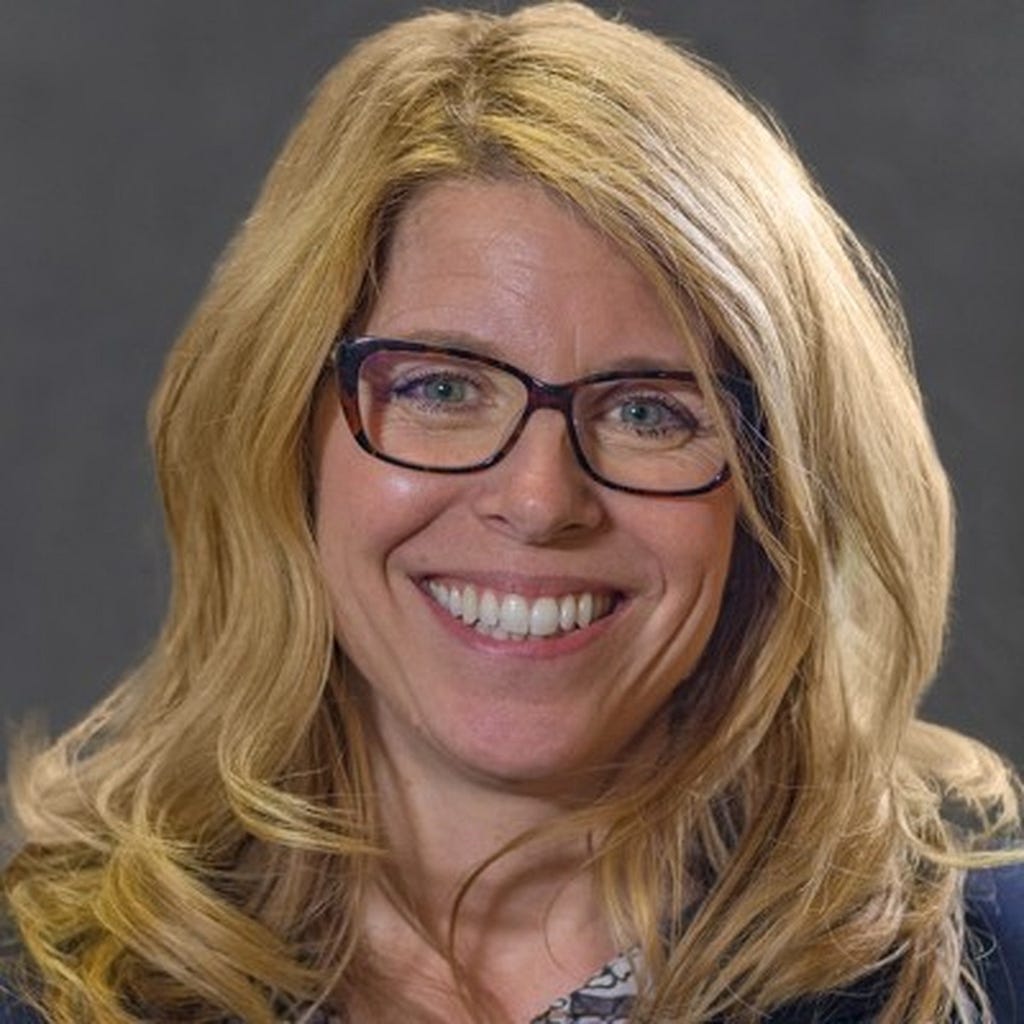
Shawn Kros of The Arc Northern Chesapeake Region (The Arc NCR) On 5 Steps We Must Take To Truly Create An Inclusive, Representative, and Equitable Society
Diversity is being invited to the party; inclusion is being asked to dance.
As a part of this series, we had the pleasure to interview Shawn Kros.
Shawn Kros is the President and CEO of The Arc Northern Chesapeake Region (The Arc NCR). With over 30 years of experience in the nonprofit sector, she is dedicated to providing people with intellectual and developmental disabilities the resources they need to live, work, and play in their communities. Under her leadership, The Arc NCR has significantly expanded its impact and advocacy efforts, fostering a culture of empowerment and inclusion for all.
Thank you so much for joining us in this interview series! Before we dig in, our readers would like to ‘get to know you’. Can you tell us a bit about how you grew up?
I grew up in a military family; my father was in the Air Force. Because of that, we moved quite often, living in various states and even overseas. This lifestyle required me to be adaptable and taught me how to find common ground with people from all walks of life. It instilled in me a deep appreciation for different cultures and perspectives, which eventually led me to a career focused on advocacy and supporting those who are often marginalized in society.
Is there a particular book that made a significant impact on you? Can you share a story or explain why it resonated with you so much?
“The Color of Water” by James McBride had a profound impact on me. It’s a beautiful memoir about identity, race, and family. It resonated with me because it explores the complexities of belonging and the strength it takes to navigate a world that often tries to categorize you. It reminded me that our stories are interconnected and that empathy is the most powerful tool we have for building bridges between different communities.
Do you have a favorite “Life Lesson Quote”? Do you have a story about how that was relevant in your life or your work?
My favorite quote is by Verna Myers: “Diversity is being invited to the party; inclusion is being asked to dance.” In my work at The Arc NCR, we often see people with disabilities being “included” in a physical space, but not truly engaged or valued. This quote serves as a constant reminder that our goal isn’t just to have people in the room; it’s to ensure they are active participants with a voice and a role. We aren’t successful until everyone is on the dance floor.
How do you define “Leadership”? Can you explain what you mean or give an example?
I define leadership as service. To lead is to empower others and provide them with the tools they need to succeed. It’s not about having all the answers; it’s about asking the right questions and creating an environment where everyone feels safe to contribute. For example, at our organization, I see leadership in our Direct Support Professionals who advocate for the individuals they support every day, ensuring their choices and rights are respected.
Ok, thank you for all that. Now let’s move to the main focus of our interview. In the summer of 2020, the United States faced a very important self-reckoning about race, diversity, equality and inclusion. This is, of course, a huge topic. But briefly, can you share your view on what made the events of 2020 different from racial reckonings in the past?
The events of 2020 felt different because of the global scale and the role of technology. For the first time, people couldn’t look away. The combination of the pandemic, which forced us to slow down and witness these injustices, and social media, which brought them directly to our screens in real-time, created a collective consciousness that we hadn’t seen before. It wasn’t just a local or national conversation; it was a global demand for systemic change that forced every institution to look inward.
Can you tell our readers a bit about your experience working with initiatives to promote Diversity and Inclusion? Can you share a story with us?
At The Arc NCR, diversity and inclusion are at the core of our mission, specifically concerning disability. We recently worked on an initiative to partner with local businesses to increase employment opportunities for people with developmental disabilities. I remember one employer who was initially hesitant, fearing that accommodations would be too difficult. After we placed a candidate and provided the necessary support, that employer told me that the individual became their most reliable and productive employee. It transformed that entire workplace’s culture, proving that inclusion isn’t a burden — it’s an asset.
This may be obvious to you, but it will be helpful to spell this out. Can you articulate to our readers a few reasons why it is so important for a business or organization to have a diverse executive team?
A diverse executive team prevents groupthink. When everyone at the top has the same background, you miss blind spots that can be detrimental to the business. Diverse teams bring a variety of problem-solving approaches and innovative ideas. Furthermore, representation matters. Employees and stakeholders need to see themselves reflected in leadership to feel that the organization truly understands and values their contributions.

Ok. Here is the main question of our discussion. You are an influential business leader. Can you please share your “5 Steps We Must Take To Truly Create An Inclusive, Representative, and Equitable Society”? Kindly share a story or example for each.
1. Acknowledge the bias within ourselves
We all carry implicit biases. The first step is to be honest about them. I recall a meeting where I realized I was making assumptions about an individual’s capability based on their communication style. Once I acknowledged that bias, I was able to adjust my approach and truly listen to their input, which was invaluable. We must actively work to unlearn these internal prejudices.
2. Educate ourselves and our teams
Awareness is the precursor to change. At The Arc NCR, we hold regular training sessions on disability etiquette and systemic inequality. One of our staff members shared that these sessions helped them realize the subtle ways they were excluding people in their personal lives. Education turns “well-meaning” intentions into impactful actions.
3. Practice intentional recruitment and retention
Diversity doesn’t happen by accident; it requires intention. We modified our hiring process to reach broader networks and ensured our interview panels were diverse. We saw a significant shift in our candidate pool. But it doesn’t stop at hiring; we must also create an environment where diverse talent wants to stay and grow.
4. Create a culture of belonging
Belonging goes deeper than inclusion. It’s the feeling that you can bring your whole self to work. We started “listening circles” where employees can share their lived experiences without judgment. This has built immense trust across the organization, making everyone feel like they are a vital part of our community.
5. Advocate for systemic change
True equity requires changing the laws and systems that created the inequality in the first place. I spend a significant amount of time meeting with legislators to advocate for better funding and rights for people with disabilities. Individual actions are great, but if the system is broken, we will always be fighting an uphill battle.
We are going through a rough period now. What makes you optimistic about the future of the US? Can you please explain?
I am optimistic because of the younger generation. They are more socially conscious and less willing to accept the status quo than any generation before them. They are demanding transparency and accountability in a way that is forcing real change. Their refusal to ignore injustice gives me great hope that the progress we are making will be lasting.
Is there a person in the world, or in the US, with whom you would like to have a private breakfast or lunch, and why? He or she might just see this, especially if we tag them. 🙂
I would love to have lunch with Melinda French Gates. Her work through Pivotal Ventures and the Gates Foundation on gender equality and social progress is incredibly inspiring. I would love to discuss how we can better integrate the needs of the disability community into broader social equity initiatives on a global scale.
How can our readers follow you online?
You can follow the work we do at The Arc NCR on our website at www.arcncr.org, or follow us on LinkedIn, Facebook, and Instagram. You can also connect with me personally on LinkedIn.
This was very meaningful, thank you so much. We wish you only continued success on your great work!
Shawn Kros of The Arc Northern Chesapeake Region (The Arc NCR) On 5 Steps We Must Take To Truly… was originally published in Authority Magazine on Medium, where people are continuing the conversation by highlighting and responding to this story.