

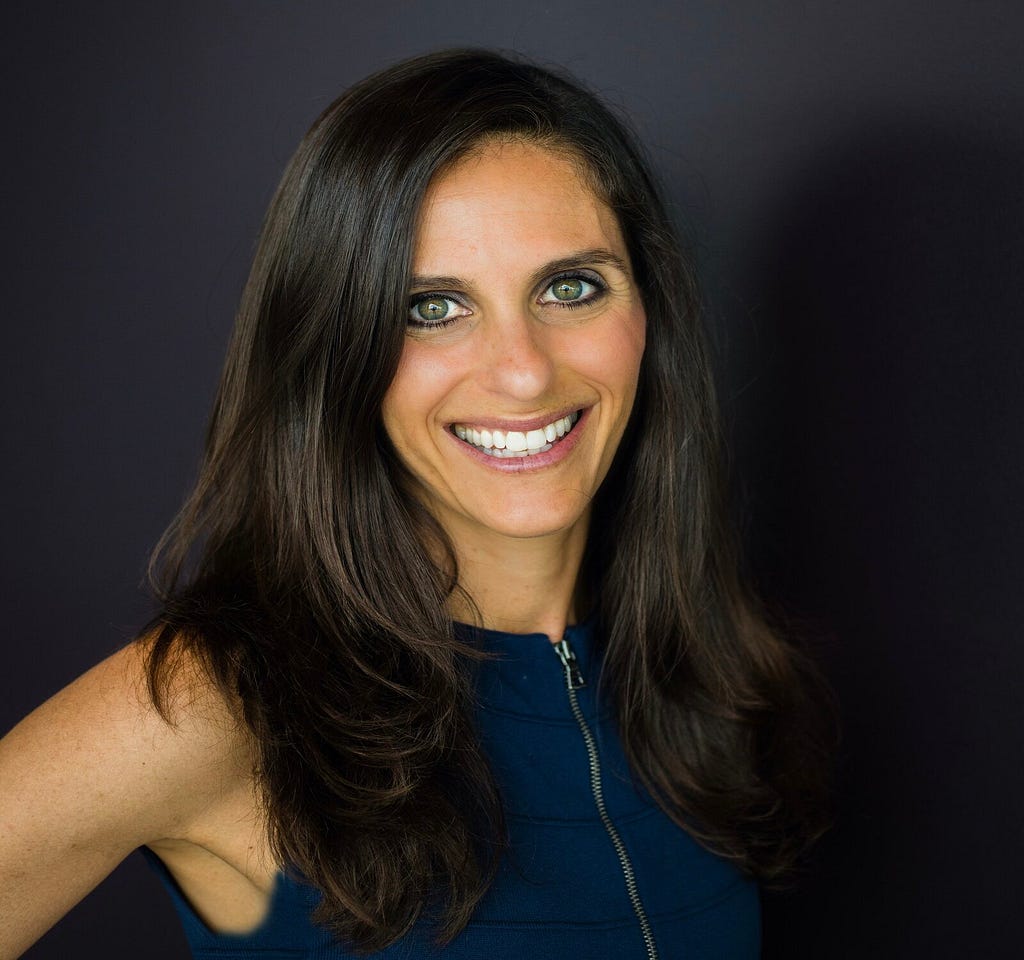

Impactful Communication: Allison Geller Of Connected Speech Pathology On 5 Essential Techniques for Becoming an Effective Communicator
An Interview With Athalia Monae
Control Tone, Pitch, and Pace
– Use varied vocal pitch to avoid sounding monotone.
– Be mindful of your tone to convey the right emotion.
– Slow down and pause to give your listener time to absorb information.
In an age dominated by digital communication, the power of articulate and effective verbal communication cannot be understated. Whether it’s delivering a keynote address, leading a team meeting, or engaging in a one-on-one conversation, impactful speaking can open doors, inspire change, and create lasting impressions. But what truly sets apart an effective communicator? What techniques and nuances elevate a speech from mundane to memorable? As part of this series, we had the pleasure of interviewing Allison Geller, M.A. CCC-SLP.
Allison Geller is a communication coach and speech-language pathologist who has spent more than two decades helping adults speak with clarity, confidence, and ease. She is the founder of Connected Speech Pathology, an international online practice that provides professional communication coaching and speech therapy. Allison began her career in medical settings, working with adults facing complex communication challenges related to head and neck cancer and neurological disorders. That experience shaped her belief that communication is not just a skill but a lifeline. Over time, her focus expanded to coaching professionals who want to communicate more effectively in interviews, presentations, team meetings, and everyday interactions. She leads a team of communication specialists who support clients across a wide range of industries, including healthcare, law, business, and technology. Her coaching combines practical strategies with thoughtful, personalized guidance to help each client sound like the most confident version of themselves.
Thank you so much for joining us in this interview series. Before we dive into our discussion about communication, our readers would love to “get to know you” a bit better. Can you share with us the backstory about what brought you to your specific career path?
I began my path into communication coaching when I was in grade school. My father was a college professor who taught public speaking. He sparked my interest in how people interact through words, and I began to focus not only on what people said but also on how they expressed it. It really hit me when I watched as my grandmother, who learned English as a second language, struggled and was often disrespected or ignored in public because she spoke differently.
After my fellowship year, I worked as a medical speech pathologist with adults with cognitive, voice, and swallowing issues. It was a fast-paced, high-pressure environment that required strong written and verbal communication skills to succeed. This experience left a lasting impression on me and served as a stepping stone into the world of professional communication.
With this base, I opened Connected Speech Pathology and started delivering professional communication coaching, accent modification services, and speech therapy online to individuals around the world.
Can you share the most interesting story that happened to you since you started your career?
One of the most unexpected things that happened to me was when I had a new client who was a high-ranking executive. His human resources team referred him to me because they noticed that he was having difficulty inspiring teamwork and productivity in the company.
During our initial meeting, I posed a straightforward question to him: “What do you hope for others to feel after their interactions with you?” He looked at me for an extended moment, laughed, and replied, “I had never considered that.” I just want them to do what they’re supposed to do.”
Over the following two weeks, we succeeded in improving his tone and making him easier to understand, as well as uncovering an unexpected backstory. His upbringing in a household that viewed emotional expression as a sign of weakness influenced his leadership style.
By the end of his training, he talked about empathy, connection, and the importance of communication for developing trust. Around the same time, he was asked to give a presentation to his entire organization. We prepared for the talk and focused on body language, eye contact, and vocal delivery. His team gave him a standing ovation after he spoke. From this experience, I learned to appreciate the strong connection between identity and communication, especially when individuals come from different backgrounds and perspectives.
You are a successful business leader. Which three character traits do you think were most instrumental to your success? Can you please share a story or example for each?
- Resilience
When I first started my business, there were moments that tested my determination. In the early days, I had to learn how to juggle building a client base, managing operations, and finding the right people to join the team. It felt like a crash course in problem-solving. Instead of getting discouraged when things didn’t go as planned, I took each challenge as an opportunity to improve. I restructured some of our processes, sought advice from mentors, and streamlined the way we worked. Looking back, those experiences were incredibly valuable because they taught me that resilience is built by leaning into challenges and adapting, not by avoiding them.
2. Curiosity
“What else is possible?” was a question I couldn’t stop asking that changed my business in a big way. That way of thinking prompted me to explore virtual services long before they became common. I began offering remote coaching and therapy when most people in the field were still using traditional methods. That interest not only helped me reach clients all over the country, but it also set the business up to grow quickly as the demand for virtual services increased during COVID.
3. Honesty
A well-known client once offered me an opportunity that would have attracted significant attention, but it also presented some ethical gray areas. To fit their story, I would have had to change how we talk about our services. I said no. It wasn’t easy, but I’ve learned that doing the right thing, even when no one is watching and it costs a lot, is what keeps the business going and the relationships strong. Being honest always pays off in the long run.
These qualities — integrity, resilience, and curiosity — aren’t just nice words. They have changed the way I lead, the way I make friends, and the way I keep getting better, both personally and professionally.
Let’s begin with a basic definition so that we are all on the same page. How would you define an “Effective Communicator?” What are the characteristics of an effective communicator?
To me, a good communicator is someone who is clear and concise but also takes the time to build a meaningful connection with their audience. Effective communicators are aware of how their words, tone, and body language work together.
Assertive communicators are also flexible and able to adjust their approach on the fly based on the situation and the people involved.
An effective communicator listens attentively, asks insightful questions, and responds with care. They blend confidence with warmth, establishing a presence that feels approachable and respectful.
At its core, effective communication is about connection. When people leave a conversation feeling understood, encouraged, or more informed, communication has fulfilled its purpose.
How can one tailor their communication style to different audiences or situations?
The first step in adapting your communication style is to be aware of your audience, your environment, and your goal. Take a moment to ask yourself who your audience is, what matters to them, and what outcome you hope to achieve.
From there, adjust your language, tone, and level of detail. A concise, results-focused message may be best for executives, while a more collaborative tone works well with clients or co-workers.
Slowing down and softening your tone in sensitive situations or using more energy and upward inflection when motivating a team is best. Nonverbal cues, such as eye contact, posture, and facial expressions, are also aligned with the message and setting.
Most importantly, stay flexible and responsive, adjusting in real time based on how your audience is reacting.
Can you provide an example of a time when you had to adapt your communication style to reach a particular audience successfully?
One moment that stands out was when I was working with a client in a highly technical field. During our first session, I could tell he was not connecting with my usual conversational style. He gave short answers, avoided reflection, and seemed eager to move on.
I realized he needed something more structured and goal-oriented.
So, I refined my approach by establishing clear steps, measurable outcomes, and tools he could apply right away. As we advanced, his engagement increased, and he even started bringing in real scenarios from work to collaboratively address problems.
That experience reminded me that effective communication isn’t about sticking to a single style. Instead, it’s about adapting to the person in front of you and making the message feel useful and relevant to them.
How do you handle difficult or sensitive conversations while maintaining open and effective communication?
To have tough or sensitive conversations, you need to be able to empathize, communicate clearly, and maintain control. My plan is to stay calm, choose my words carefully, and let the other person know that I am listening.
First, I prepare. I think about what I want to gain from the conversation and why I’m having it. I also try to take the perspective of the other person so I can understand how they feel.
I also make a point to validate the other person’s feelings, even when I disagree. Saying something like, “I can see how that would be frustrating,” opens the door to understanding without signaling agreement with every detail. I’ve learned that silence can be a powerful tool for thinking and calming down.
Finally, I discuss common goals. I try to shift the focus to what we both want to achieve moving forward, whether it’s related to performance, conflict, or change. That helps change the tone from confrontation to collaboration.
These strategies have helped me navigate challenging conversations while protecting relationships and keeping communication open and productive.
In your experience, how does storytelling play a role in impactful speaking? Why do you think stories are effective in communication?
I believe storytelling is one of the most powerful tools for impactful speaking because it connects people. Stories help people connect with you emotionally.
People remember that emotional connection. People might forget the slide with bullet points, but they will remember the story about the client who solved a problem or the time you learned something the hard way. Stories also make it easier for people to believe in each other. They show how human they are, which helps the speaker and listener connect.
Telling stories makes you more relatable and convincing. They provide your message with a beginning, middle, and end that help people understand and remember. In short, stories make your point stick.

What are your “5 Essential Techniques for Becoming an Effective Communicator”?
1. Speak Clearly and Directly
– Use short sentences and simple words.
– Avoid jargon, filler words, and vague language.
– Practice enunciating each word.
2. Control Tone, Pitch, and Pace
– Use varied vocal pitch to avoid sounding monotone.
– Be mindful of your tone to convey the right emotion.
– Slow down and pause to give your listener time to absorb information.
3. Use Body Language and Eye Contact
– Maintain eye contact to show engagement.
– Use hand gestures and facial expressions to support your words.
– Keep good posture to convey confidence.
4. Listen Actively
– Focus entirely on the speaker.
– Ask questions when things are unclear.
– Show empathy by responding thoughtfully.
5. Communicate with Confidence
– Stand tall and speak with authority.
– Avoid hedging phrases like “I think” or “maybe.”
– Repeat key points to reinforce your message.
How do you integrate non-verbal cues into your communication? Can you provide an example of its importance?
I use my facial expressions, eye contact, posture, and tone of voice on purpose to help make the space feel warm and welcoming, especially when someone is nervous or unsure.
For instance, I worked with a client who was very nervous during our first few sessions. She said she was “fine,” but her body language suggested she was holding something back. She did not make eye contact, sat up straight, and spoke very softly. I made sure to relax my face, speak slowly and calmly, and use open body language. I also used longer pauses and soft nods to get her to keep going. As time went on, she started to open up, talk more confidently, and get more involved in the work.
This experience showed me again the power of nonverbal communication. You can make the other person feel safe and understood by using strong nonverbal communication.
How has digital communication changed the way you convey your messages? Are there any specific challenges or advantages you’ve encountered?
Digital communication has completely transformed the way I interact with clients and coworkers. It has given me more options to make my job easier, but it has also made me more conscious of how I use tone, emotion, and clarity.
One of the biggest advantages is accessibility. I can help clients from all over the country and even the world, which wouldn’t have been possible in a traditional setting. With tools like video calls and shared documents, you can stay in touch and respond more easily.
There are also problems, though. When you can’t see or hear the other person in real life, it’s simple to get the wrong idea. A short email might come off as cold, or a text with good intentions might not be understood. To fix this, I’ve learned to be more careful with my words, use visual cues on video (like eye contact and nodding), and pay close attention to timing and pacing. I like to ensure that everyone knows what to do next, verify that they understand, and provide a chance to ask questions.
Public speaking is a common fear. What techniques or strategies do you recommend to manage and overcome stage fright?
Public speaking makes a lot of people nervous, even people who speak for a living. I’ve found that the key isn’t getting rid of the nerves entirely but learning how to work with them.
First, preparation really does make a difference. When you know your material inside and out, it takes a lot of the pressure off. I always recommend practicing out loud, not just in your head. Even better if you can record yourself or run through it with someone who will give honest feedback.
Second, focus on connecting instead of performing. The goal isn’t to be perfect. It’s to help your audience understand or feel something. When you shift your mindset from “I hope I don’t mess up” to “How can I be helpful or relatable?” it changes everything.
Breathing helps too. Before I speak, I take a few slow breaths to settle myself. Nothing fancy, just a moment to ground myself. And if I’m still feeling that jittery energy, I remind myself that it’s a sign I care, and I try to channel it into enthusiasm instead of fear.
It also helps to warm up your voice and body. Shake out your hands, roll your shoulders, even hum a little. It gets rid of the stiffness that can creep in when you’re nervous.
And here’s one more thing I always tell people: if you stumble, keep going. Everyone does it. The audience usually doesn’t notice nearly as much as you think they do. What they’ll remember is your energy, your message, and how you made them feel.
With practice, public speaking gets easier. You might still feel butterflies, but they stop running the show.
What additional resources do you recommend for individuals looking to improve communication skills?
I suggest reading, listening, or watching people who are great communicators. It does not have to be a book or a course. It could be a podcast, a TED talk, a conversation you overhear, or a speaker who really resonates with you. When something clicks, ask yourself why it worked and how you might try something similar in your own way.
Practicing also helps. I suggest talking things through out loud when planning for a meeting or working through something complicated. It provides feedback on your tone and helps you define what you want to say. Recording yourself and playing it back can be eye-opening.
Try to receive feedback from someone you trust. Even a small comment like “you rush through the important part” or “you sound really confident when you slow down” can make a big difference.
Strong communication takes time and intention. Small changes can lead to meaningful improvements in how you engage with others and how your message is received.
You are a person of great influence. If you could start a movement that would bring the most amount of good to the most amount of people, what would that be? You never know what your idea can trigger. 🙂
If I were to start a movement, it would be to add communication as a course that would be taught in schools worldwide, beginning in grade school.
So many of our problems, whether personal, professional, or global, stem from failing to take the time to listen, understand, and connect. If we all learned to communicate clearly as a fundamental skill, people would learn to ask thoughtful questions, think before they act, and pay closer attention to how their words, tone, and body language influence others.
It would encourage us to seek understanding before making judgments and to prioritize connection over control. People would see that communication is just as important as math, science, or any other job skill.
That kind of change could make a big difference.
How can our readers further follow you online?
I would love to stay connected. You can learn more about my work and explore resources on communication, confidence, and connection by visiting my website. You can also follow along on Instagram or connect with me on LinkedIn, where we share tips, insights, and a behind-the-scenes look at the work we do with clients around the world.
Thank you for the time you spent sharing these fantastic insights. We wish you only continued success in your great work!
Impactful Communication: Allison Geller Of Connected Speech Pathology On 5 Essential Techniques for… was originally published in Authority Magazine on Medium, where people are continuing the conversation by highlighting and responding to this story.