


Don’t wait for someone to show up to recognize your gifts and validate you. I used to put off projects because I didn’t have the confidence to do them on my own, or I thought I needed social permission or an invitation to do something. You can choose to be the leader that the world desperately needs at any moment.
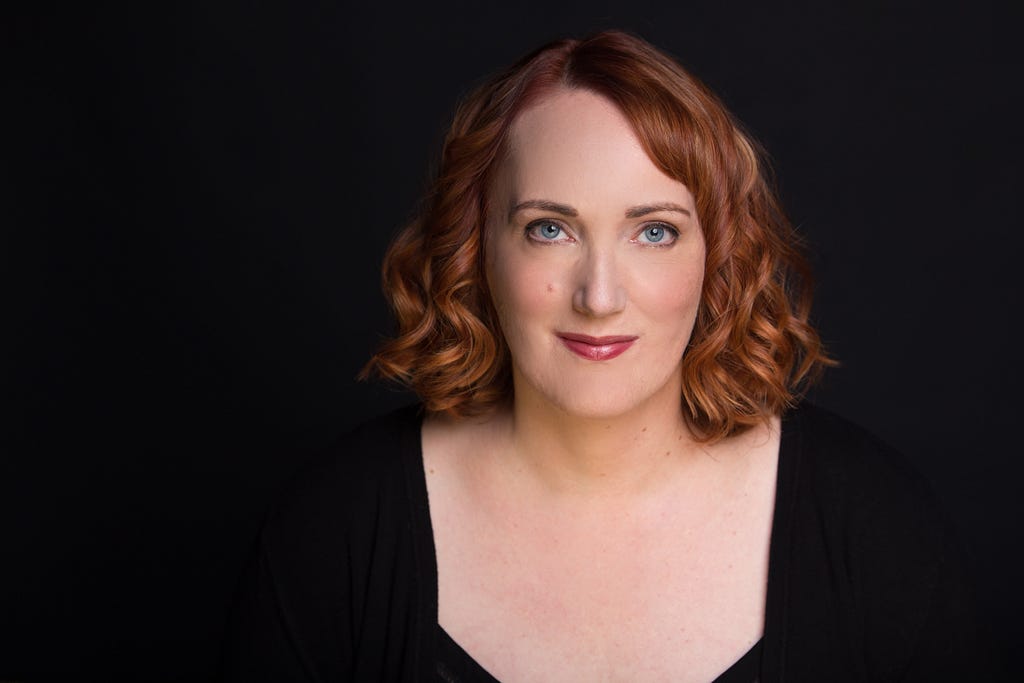
As part of my series about “authors who are making an important social impact”, I had the pleasure of interviewing Jessica Aviva.
Jessica Aviva, Ph.D. is a writer, teacher, facilitator, and entrepreneur who is passionate about passionate about: liberating possibilities for progressive social change through education, writing, and research; creating flourishing spaces for gender-inclusive, intersectional feminist leaders to learn, connect, and mobilize; and helping feminist leaders and nonprofit organizations recognize and realize their unique creative brilliance. She is the founding director of The Fruition Coalition, editor and publisher of Fruition Journal, convener and facilitator of Club Fruition, and the author of 17 books. You can learn more about Jessica at jessaviva.com.
Thank you so much for joining us in this interview series! Before we dive into the main focus of our interview, our readers would love to “get to know you” a bit better. Can you tell us a bit about your childhood backstory?
I grew up in Allentown, Pennsylvania. It was a great place to grow up. It was like a microcosm of the world’s diversity with a small town feel. I learned so much there! I’ve always been curious about how people get to know each other and for friendships and alliances across difference, and this comes from living in this community. This interest was a strong precursor to my dissertation, which was about how women leaders engage similarities and division when they think about and practice solidarity, as well as my newest book, The Joy of Feminist Leadership.
When you were younger, was there a book that you read that inspired you to take action or changed your life? Can you share a story about that?
I loved all of the Anne of Green Gables books. Anne was an inspiration to me because she unapologetically engaged imagination, lived her truth, and brought joy and possibility to people around her. Anne’s spirit and energy continues to inspire me today. She reminds me to just be myself and embrace hope and love even when the world is harsh. This has become a regular part of my practice as a feminist leader.
It has been said that our mistakes can be our greatest teachers. Can you share a story about the funniest mistake you made when you were first starting? Can you tell us what lesson you learned from that?
I made plenty of mistakes. One time, more than 25 years ago, I found a bunch of old empty bins in a closet. Trying to be helpful, I tidied up by throwing them away. I later found out that they served a very important purpose and would be hard to replace. It taught me not to make assumptions, to ask questions, and to have a more collaborative approach to my work.
Can you describe how you aim to make a significant social impact with your book?
My goal is to share this book with people curious about feminist leadership as well as those who are already immersed in the work to dismantle the myths, distortions, and oversimplifications that have led to feminist leadership being misunderstood, dismissed, and misused, explore how feminist perspectives reshape not just what leadership does, but how it feels — rich with care, justice, and collective power, provide a roadmap to integrate feminist leadership into other leadership approaches, explain the distinctions among feminist, feminine, and women’s leadership. All of this will inspire leaders to authentically and courageously embody to joy of feminist leadership, dream expansively about what feminist leadership makes possible, and take concrete steps toward making those visions a reality. I also intend for it to be a conversation starter so that people can talk with me and each other more deeply about what feminist leadership means to them and how they practice it.
Can you share with us the most interesting story that you shared in your book?
One of the things I talk about in my book is how I love heavy metal. There is a perception that heavy metal and feminism can’t mix and in fact that heavy metal is anti-feminist in many ways. There is truth to that, but I think this example reveals the complexity behind our limited perceptions and reminds us to engage with contradictions with love rather than judgment.
What was the “aha moment” or series of events that made you decide to bring your message to the greater world? Can you share a story about that?
When I tell people that I work in the feminist leadership space, their response typically indicates that they think feminist leadership is the same as using a feminine leadership style, or advancing women in the workplace. Feminist leadership can include those elements, but it is so much more than that. I wanted to educate people about not only the limitations of feminine and women’s leadership, but also how feminist leadership creates a more expansive repertoire of ways to lead our organizations and communities.
Without sharing specific names, can you tell us a story about a particular individual who was impacted or helped by your cause?
Feminist leadership can benefit everyone, not just women and girls. I recently had a conversation with a male colleague who was new to the concept of feminist leadership but curious about it. Gaining this insight is helping him be a more effective leader by centering equity, creating meaningful opportunities for connection and engagement, and expressing care and empathy, for example. By putting these practices into place, he has gained the trust of more people and is working collaboratively — rather than on his own — to achieve his organization’s goals.
Are there three things the community/society/politicians can do to help you address the root of the problem you are trying to solve?
There are many things that people can do to address the root problem I’m working to solve — which is the interconnected problems of sexism, racism, classism, ablism, and other marginalizing and exclusionary practices. Three specific things people can do to address this are:
- Be self-aware. Be conscientious about how your actions impact other people. Lovingly notice when you cause harm and adjust your behavior to instead facilitate healing.
- Change policies. Create organizational and public policies that prioritize our collective wellbeing rather than productivity and profit.
- Focus your energy on creating rather than reacting. When we react, we often take on behaviors that replicate the injustices that we are trying to transform.

How do you define “Leadership”? Can you explain what you mean or give an example?
Leadership is simply creating change or bringing a vision to life; as feminist leaders we do this in collaboration with others. It isn’t necessarily a role or a position, and a person can lead if they do not have formal power.
What are your “5 things I wish someone told me when I first started” and why? Please share a story or example for each.
The five things I wish someone told me when I first got started are:
- You don’t have to know everything. In fact, approaching your work wonder and curiosity will make you a stronger leader, and will also be much more fun! When I was younger, I used to feel like I had to prove myself as a leader and practiced really harmful perfectionism, which led to overworking, imbalances in my life, and stress. It also made it difficult to truly show up as my authentic self and deeply connect with people.
- You can make it up as you go along. When I was younger and I would enter a room with other leaders, I felt intimidated and assumed that they had some secret wisdom that comes with age. I’ve grown to learn that everybody is figuring it out — and that’s OK! That doesn’t mean we can’t or shouldn’t practice and develop skills, but leadership is complex and we will also be presented with new and unexpected personalities and circumstances.
- Focus on what truly matters to you. I sometimes compromised myself for the illusion of success, like hiding parts of who I was for example not sharing my beliefs about leadership. True success is feeling full of purpose and peace.
- Don’t wait for someone to show up to recognize your gifts and validate you. I used to put off projects because I didn’t have the confidence to do them on my own, or I thought I needed social permission or an invitation to do something. You can choose to be the leader that the world desperately needs at any moment.
- You’re not going to change the world, but you are going to create amazing changes. I used to actually say in job interviews that I was going to change the world. I now know that this is a collective, long-term effort with many barriers — but we can change ourselves to be an example of the world we dream is possible and use our influence to create small changes that have a huge impact in people’s lives.
Can you please give us your favorite “Life Lesson Quote”? Can you share how that was relevant to you in your life?
We have the power to create the world we dream is possible. It may not reach every corner of the world or every human being, but we can “be the change” that we “wish to see” as Mahatma Ghandi said and through that influence and inspire others while also actively enacting and embodying the world we deeply desire for ourselves and others.
Is there a person in the world, or in the US with whom you would like to have a private breakfast or lunch with, and why? He or she might just see this, especially if we tag them. 🙂
There are so many people that it would be fun to chat with, but the first person who comes to mind is AnaLouise Keating, PhD — a professor at Texas Woman’s University. She gave me the language to describe what I knew intuitively and deeply believed, which created a portal for me to then articulate my ideas in more comprehensive ways.
How can our readers further follow your work online?
Readers can follow my work at jessaviva.com and fruitioncoalition.com. The Joy of Feminist Leadership is available as a pay if and what you want download at feministleadershipbook.com.
This was very meaningful, thank you so much. We wish you only continued success on your great work!
Social Impact Authors: How & Why Author Jessica Aviva Is Helping To Change Our World was originally published in Authority Magazine on Medium, where people are continuing the conversation by highlighting and responding to this story.