

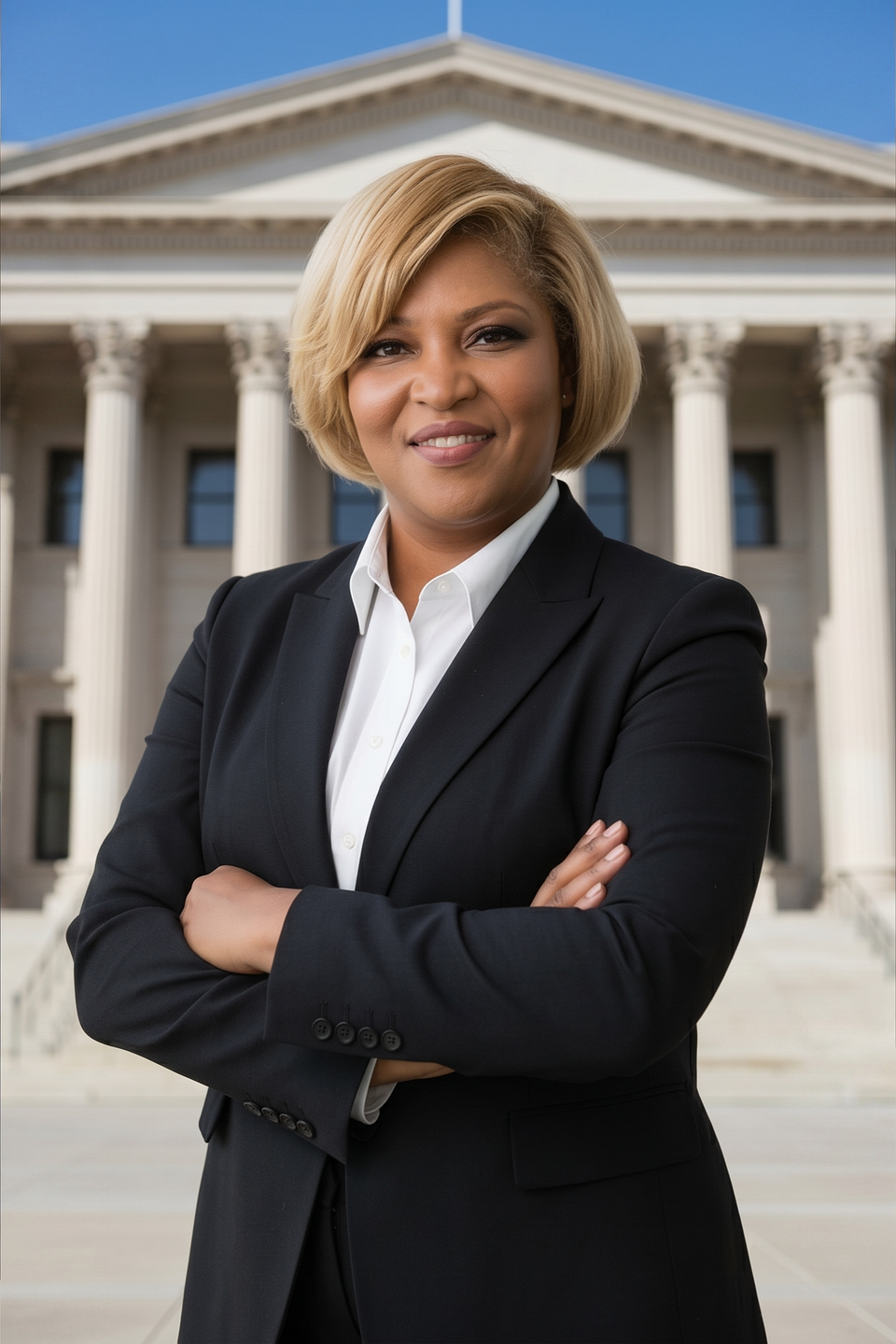
How Liz Frederick Stepped Away From Wall Street Bias and Into Her Own Badass Heels to Lead a New York Justice Revolution
“No, I like my shoes. I’ve earned my shoes, and these shoes are going to help me carry the organization forward.”
I had the pleasure of talking with Liz Frederick. Long before she was navigating the high-stakes world of New York City’s legal system, Frederick was a child of the world. Because of her father’s work with a United Nations organization focused on women and children, she left New York at a young age, moving through the vastly different landscapes of various countries. This global childhood left a permanent mark on her character. From a very young age, she knew that she wanted to do something along the lines of empowerment and giving voices to populations that typically go unheard or unseen.
When she returned to the United States for college and eventually moved back to New York City in 2000, her first encounter with the job market was a stark introduction to systemic bias. Walking into an interview on Wall Street, the interviewer called her name, but looked right through her when she answered. The interviewer looked down at his clipboard and said, “No, Elizabeth Frederick.” When she confirmed her identity again, the corporate door effectively closed in her mind. It was at that moment she decided that was the sector she wanted to avoid, because he was clearly associating her name with how she looked. That single, unsettling experience shifted her career trajectory entirely, pushing her away from corporate finance and directly into the nonprofit field, where she has now spent 26 years fighting for social justice.
In 2006, while studying juvenile delinquency for her master’s degree at John Jay College, Frederick’s research brought her to Manhattan Criminal Court. There, she sat down with Angel Rodriguez, the legendary Co-Founder of Avenues for Justice, an organization that had been working with youth in the Lower East Side since the late 1970s. A brief 30-minute interview turned into a heavy, two-hour conversation about the realities facing kids caught in the legal system. Listening to Angel’s passion about his work and how he recognized that young people were getting into trouble during the peak after-school hours drew her in completely. She knew right then that she wanted to be part of the movement.
Frederick began her journey at the organization in operations, later mastering fundraising as development manager, before the board unanimously elected her Chief Operating Officer in 2020. Taking the operational reins right at the onset of the pandemic meant surviving an unprecedented crisis. When the city’s education system moved online, Frederick realized administrators were ignoring the digital divide affecting underresourced neighborhoods. The organization stepped in to provide internet and Wi-Fi to youth who lacked basics at home, while simultaneously building their HIRE Up program to move court advocacy and wraparound services to a hybrid platform. By 2024, when Rodriguez retired, Frederick beat out nearly 200 other applicants to become the Executive Director.
Stepping into the shoes of a founder who had led the organization for 45 years came with intense scrutiny from the New York legal community. People constantly reminded her of the legacy she had to live up to. During court appearances for arraignments, lawyers and colleagues repeatedly told her she had big shoes to fill. One afternoon, an attorney openly questioned how the organization could even function without its founder. Frederick, who happened to be wearing a pair of badass heels that day, looked down at her shoes and told him that she liked her own shoes, she had earned them, and those shoes were going to help her carry the organization forward.
Today, Frederick leads a lean team of eleven individuals who live in the very same neighborhoods as the young people they serve. Operating out of community centers in Harlem and the Lower East Side, along with courthouse offices in the Manhattan Criminal Court building, the organization works with close to 700 young people annually, splitting them into Court-Involved youth and a Preventative population. Frederick consciously rejects the standard language of the bureaucratic state when describing these teens. Other groups often refer to them as “at-risk,” but she explicitly moves away from that terminology because “at-risk” connotes a risk of failure. To her, it is truly a preventative population-which is the center of alternative to incarceration work
The core strategy relies on intense, individual stabilization by providing a continuum of care with court advocacy and holistic, wraparound services for job readiness, education, and mental health wellness. Rather than shuffling teenagers between multiple case managers and social workers, each youth is paired with a single Court Advocate who remains their constant support system for the duration of their stay. That Court Advocate becomes everything to that young person. This consistency has helped the organization maintain a 94 percent success rate, meaning the vast majority of their youth are not reconvicted of a crime within three years of enrolling.
The human impact of this model is clear in the story of Kat, a young woman from a crowded apartment in the Bronx who was facing five to seven years in prison. After meeting an advocate in court, the judge mandated her to the program. Kat immersed herself into the workshops, completed three paid internship cohorts with local businesses, and eventually secured long-term employment as a teacher’s assistant with the Department of Education. Last year, she got her own apartment. Frederick points out that if Kat had been incarcerated, she would have missed the prime of her adulthood, only leaving prison at age 27. Seeing everything she accomplished through the program was phenomenal.
Yet, keeping this work alive is increasingly difficult in a shifting political and economic climate. Frederick notes that many modern philanthropic organizations are scaling back their financial support for racial justice initiatives, even as society seems to be regressing toward a rigid “law and order” mindset. For Frederick, the long-term mission is to shift public perception entirely, arguing that alternatives to incarceration should be the norm rather than the exception. She believes society must acknowledge mass incarceration and its deep, generational impact in this country, treating the crisis not just as a matter of public safety, but as a public health issue. Organizations should also prioritize being youth-led, and not just youth-centered.
After twenty years of working quietly behind the scenes to keep the organization running, Frederick is adjusting to being the public face of the fight. Her leadership philosophy remains grounded in humility and collaboration. She maintains that an Executive Director does not need to have all the answers, frequently citing her favorite quote: “Bosses have titles, and leaders have people.” For Frederick, the work is about leaning into her staff, listening honestly to the youth, and remembering that she does not have to carry the weight of the system entirely on her own.
Diane: I want to thank you for your time and for being here. Liz, I look forward to our conversation. Why don’t we get started by getting to know you a little bit? Give us a little bit of background on who you are and the journey leading you to today.
Liz: It’s a pleasure to meet you, Diane. My journey really started in childhood with my father being in the United Nations. I left New York City at a young age, and we traveled around the world because of his work. He worked for a United Nations organization that focused on women and children. From a very young age, I knew that I wanted to do something along the lines of empowerment and giving voices to populations that typically go unheard or unseen. I lived in Bangladesh, Kenya, India, and Denmark.
When I came back to the United States for college, and after graduating, I moved to New York City in 2000. My first job interview was actually on Wall Street. I remember going into the interview and the interviewer called out my name. I said, “Yep, that’s me.” He looked down at his clipboard and said, “No, Elizabeth Frederick.” I replied, “That’s me.” It was at that moment I decided that was the sector I wanted to avoid, because he was clearly associating my name with how I looked. That experience really drove my journey into the nonprofit field, and I’ve been working in social justice for 26 years now.
Diane: That’s really great. Can you tell me a little bit about some of the causes and what it’s really like to be making a difference at this high level?
Liz: My main cause, inspired again by my father’s work, has always focused on children, teen empowerment, and youth development. When I moved to New York City and saw the discrepancy between communities just based on zip codes and blocks, I knew I wanted to delve into a profession that would allow me to provide resources for those areas, particularly Black and brown communities in New York City.
One of the secret sauces of Avenues for Justice is that we are a small team of twelve, but all of us live in the same communities as the young people we work with. We understand the needs of the communities and the lack of resources when it comes to education, employment pathways, healthcare, and access to mental health wellness.
For the past few years, particularly coming out of the onset of the pandemic, we expanded our work. In addition to our court advocacy, we developed new initiatives at Avenues for Justice. We work with two distinct populations. Our first population is court-involved; these are young people who have legal court matters, are going through the criminal legal system, or have had interactions with law enforcement. We provide court advocacy for them.
Our second population is our preventative population. Other groups often refer to them as “at-risk,” but I want to move away from that language because “at-risk” connotates a risk of failure. It is truly a preventative population. For these youth, we offer our HireUp services. Our HireUp program focuses on three pillars.
The first pillar is workforce development and job readiness. We also provide financial and digital literacy, teen empowerment, leadership council workshops, and legal rights and responsibilities. The second pillar is education. We have a lot of young people coming into our program who have dropped out of school, or who are high school students reading at a fifth or sixth-grade middle school level. The third pillar is mental health. We really saw the effects of the pandemic on our young people and the backlog in accessing mental health services.
Our focus is on more than just triage or a quick fix. At Avenues for Justice, we work on stabilizing them in addition to helping them with their court matters. Some of the court outcomes we look for, particularly with young people below the age of 18, include obtaining Youthful Offender Status. This ensures their records are sealed so they aren’t stigmatized with a court record for the rest of their lives, or we look for probation or deferred sentencing. That is what we strive for in terms of court advocacy.
The HireUp workshops are designed to stabilize our young people and provide them with a continuum of care in-house. A few years ago, we focused primarily on court advocacy and would refer our young people out to peer organizations. However, we saw that the likelihood of success was lower because young people are less inclined to go to Avenues for Justice for court advocacy and then travel to another organization for academic support. To stabilize them, we provide as many in-house services as possible.
We have two community centers: one on the Lower East Side and a second in Harlem. Due to the population we work with, we understand there are safety issues where young people cannot easily travel between different boroughs. Because of this, we offer all of our services on a hybrid platform. For example, we might have a young person who was arrested in Queens, has a court matter in Queens, and lives in Staten Island, but wears an ankle bracelet so they cannot physically access our community center. All of our programming is available to them online.
The beauty of Avenues for Justice is that we take an individualized approach to every young person who comes through our door. We work with close to 700 young people annually. When we do an intake, it is an opportunity for that young person to co-author how they would like to see their journey with Avenues for Justice unfold. We pair them with a court advocate who remains with them for the duration of their stay. We don’t shuffle them from a court advocate to a social worker to a case manager; that court advocate is everything to that young person.
We also do not put a stipulation on how long a young person can receive our services, because we understand that success looks very different for every individual. Success might just be a young person making it to their court date on time. Success might be a young person completing our internship cohort.
About three years ago, we noticed that due to a lack of access to pathways for employment among Black and brown youth, we needed to step in. We created an internship cohort where we pay the stipends but partner with local BIPOC and women-owned businesses throughout New York City. Our young people are placed in those businesses for eight weeks, working 15 hours a week, and we pay them a stipend of $17 per hour.
Diane: That’s great. I love hearing all the things you have going on and how you’re impacting youth in New York. Can you tell us some success stories and share where some of the youth have been able to really leverage the great things you’re doing?
Liz: When I look at this work as an alternative to incarceration, particularly working with young people between the ages of 13 and 24, success looks very different. We have one of the lowest recidivism rates in the country: 94% of our young people are not reconvicted of a crime within three years of enrolling with us. This is due to our hands-on approach and our understanding that these young people are not data points or statistics; they are real young people with stories.
Every year, we hold our annual Impact Awards where we present a young person with what was previously known as the Second Chance Award. Starting last year, we renamed it after our co-founder, so it is now called the Angel Rodriguez Award. This goes to a young person who has not only successfully completed our program, but has also shown determination and resilience in turning the trajectory of their life around.
The young woman we honored last year, Kat, has her story featured on our website. When she came to our program, she was facing serious jail time — between five to seven years based on the crime she had committed. Our court advocates are stationed in court for situations exactly like this, where young people are processed through the criminal legal system without a clear understanding of what they are facing. She met one of our court advocates in court, learned about our program, and was mandated to us by the judge.
Because we have been doing this work for 47 years, we have a stellar reputation with the court system. When young people like Kat go in front of a judge, instead of mandating harsh sentences, the judges give them an opportunity to work with programs like ours. Kat hit the ground running immediately. She attended all of our workshops and was at our community centers Monday through Thursday. Kat went through three of our internship cohorts because every time she was placed with a business, they wanted her to come back because she performed phenomenally.
From there, she secured long-term employment and now works as a teacher’s assistant with the Department of Education. Kat grew up in the Bronx in a three-bedroom apartment with eight people, and last year, she was able to get her own apartment. She is a shining example of why young people deserve to have wraparound services as opposed to being incarcerated. If she had been sentenced and incarcerated, she would have missed the prime of her adulthood, coming out of prison at the age of 27. Seeing everything she has accomplished through our program is just phenomenal.
We have other young people who were not enrolled in school when they started our program, so our court advocates made sure to re-enroll them in high school. We have a volunteer bank of 60 volunteers, many of whom serve as academic tutors. At our two community centers, youth have access to computer labs where they can complete their homework and get assistance from tutors. Success might look like a young person who used to hate school pairing up with a tutor, excelling, and coming into the community center to proudly tell their court advocate, “Look, I got an A in science,” or, “I’m doing really well in math.” Success is truly unique to every young person.
Diane: Let’s talk a little bit about the organization and the evolution of how you started, where it’s growing, and now that it’s been named one of the Super Impact Hero organizations. What does that evolution look like to you within the organization itself, and what does it mean to be such an Impact Hero?
Liz: I’ve been with the organization for 20 years. I was doing my master’s at John Jay, and my thesis focused on juvenile delinquency. My professor recommended that I speak to the executive director and co-founder at the time, Angel Rodriguez. I remember coming to 100 Centre Street, which is the Manhattan Criminal Court where our court offices are located, to meet with Angel. It was only supposed to be a 30-minute interview, but Diane, we sat and spoke for two hours.
Listening to Angel’s passion about this work and how he started in the 1970s on the Lower East Side was incredible. He recognized that young people there were getting into trouble after school, which is really the peak period for that. He saw the necessity of providing a safe space for them to go to, where it could be as simple as coming into our community centers for a meal. After speaking to Angel, I knew I wanted to be part of this movement.
I started off in operations as an operations manager, moved up to development manager handling fundraising, and then the board elected me Chief Operating Officer in 2020, right before the pandemic. We were able to weather that storm, largely due to the creation of the HireUp program, which allowed us to quickly pivot our services to an online platform. When the Department of Education moved everything online and provided technology, they didn’t take into consideration that some of these young people lacked basics like internet or Wi-Fi at home, so we provided that.
Two years ago, I became the executive director. I wasn’t just handed the position; I applied as an internal candidate along with 199 other people. What made me stand out was not just my longevity, but the fact that I had worked in every facet of the organization, from finance to operations to development. Even right now, in my capacity as executive director, I haven’t had the time to hire a Chief Operating Officer. This is very common in many nonprofits where you do a little bit of everything regardless of your title, so I am still managing the roles of COO and Development Director.
As a Black woman in the criminal justice field, I carved out spaces for myself where there were none, and I opened doors to opportunity. When I became the executive director in 2024, our co-founder was still there, so we were working in tandem. I remember being in court for arraignments, and I kept hearing from people, “Liz, you have big shoes to fill,” because the co-founder had been at the helm for 45 years.
One day an attorney who had known Angel for a long time came up and said, “Angel, you can’t retire. What is this organization going to do without you?” He turned to me and repeated, “Liz, you have very big shoes to fill.” That day, Diane, I happened to be wearing a pair of badass heels. I looked down at my heels and said to him, “No, I like my shoes. I’ve earned my shoes, and these shoes are going to help me carry the organization forward.”
Over the past two years, I’ve been carrying the co-founder’s legacy forward while creating my own footprint. I am focusing on changing the narrative of our young people in the press and media, where they are often portrayed so negatively. I want to give our young people a voice. It’s important for me that our stakeholders understand what our young people are up against, particularly the systemic barriers they face in their communities.
More than anything, Diane, I want to make sure I am promoting my team and staff, creating opportunities for their professional development, and empowering them. This work is tough. Our court advocates take their caseloads home with them. It’s hard when you’ve worked with a young person for a year and then they get remanded or resentenced and incarcerated. I just want to make sure our staff feels supported.
It’s really about amplifying the mission of the organization, especially in this political climate and funding landscape, where many funders and philanthropy in general are scaling back support for racial justice organizations and initiatives.
Diane: As we wrap up this interview, what support do you need from the community, and how can people reach out to provide that?
Liz: That’s a great question. Avenues for Justice thrives because we are so deeply entrenched in our communities, and we do this work alongside our community partners. When I look at the support we need, it comes down to an understanding of resources. We work across all five boroughs, and the zip codes where our young people live need resources. Those resources stem from funding. We need funding to create pathways for employment, to run our workshops and programming — since we rely heavily on facilitators — and we need general operating support to sustain the organization.
More than anything, Diane, in this particular time where society seems to be regressing toward a “law and order” mindset, there has to be an understanding that alternatives to incarceration should be the norm, not the exception. With that understanding must come an acknowledgment of mass incarceration and its generational impact in this country. When a young person comes through our doors, they carry a lot of generational trauma. My primary mission over the next few years is to help people understand that our work is not just about public safety. We need to start addressing the criminal legal system and the crisis of mass incarceration as a public health issue.
Diane: Our final question is always: what are five things you wish you knew before becoming the executive director of a social justice organization?
Liz: The first thing I would say is that as a leader and an executive director, you don’t have to have all the answers. That’s why it’s incredibly important to work with your team and embrace learning on a daily basis. I always tell myself that the day I stop learning something from my team, from the young people, or from doing this job is the day I need to step away. My favorite quote highlights this beautifully: “Bosses have titles, and leaders have people.” For me, it’s about leaning into my people and learning from others.
Second, this job can be very isolating. I’ve learned that it’s important to lean into peer cohorts with other executive directors, embrace executive coaching, and know that I’m not in this alone. There are other EDs and CEOs navigating similar situations, and seeking out safe, collaborative learning spaces is vital.
Third, as a leader, I cannot move this organization forward without truly listening to our youth. As adults, we are so accustomed to making decisions for youth and young adults, but it’s essential to involve them in the process and have honest conversations about their needs and expectations.
Fourth, I’ve learned the importance of being accountable for how I show up — how I show up in this position, for our young people, and for our team.
Finally, it’s crucial to step back sometimes, Diane, come up for air, and look at everything we have accomplished over the past 26 years, as well as everything this organization has achieved. This year has been amazing in terms of the recognition I’ve received. Throughout my various roles in the organization, I’ve always worked behind the scenes. Now that I am at the forefront, it’s a lot to take in, but it’s exciting.
This organization has been doing this work for close to five decades, and we are now rightfully receiving recognition. Any honor I receive as an executive director, I share it with our young people, my team, and our board of directors. The most important lesson is simply: Liz, you don’t have to do this alone. You have people supporting you, and in turn, you need to support others and create pathways for them.
Diane: It has been such a pleasure hearing your story, learning about your organization, and seeing all the good work you’re doing. I truly understand why you are a social impact hero. Thank you very much for your time.
Liz: Thank you so much, Diane. I really appreciate it. Thank you for giving me this platform.
Diane: My pleasure.
How Liz Frederick Stepped Away From Wall Street Bias and Into Her Own Badass Heels to Lead a New… was originally published in Authority Magazine on Medium, where people are continuing the conversation by highlighting and responding to this story.