

Healing begins the moment someone feels seen, believed, and no longer alone.
As a part of this series, we had the pleasure to interview Azadeh Afsahi.
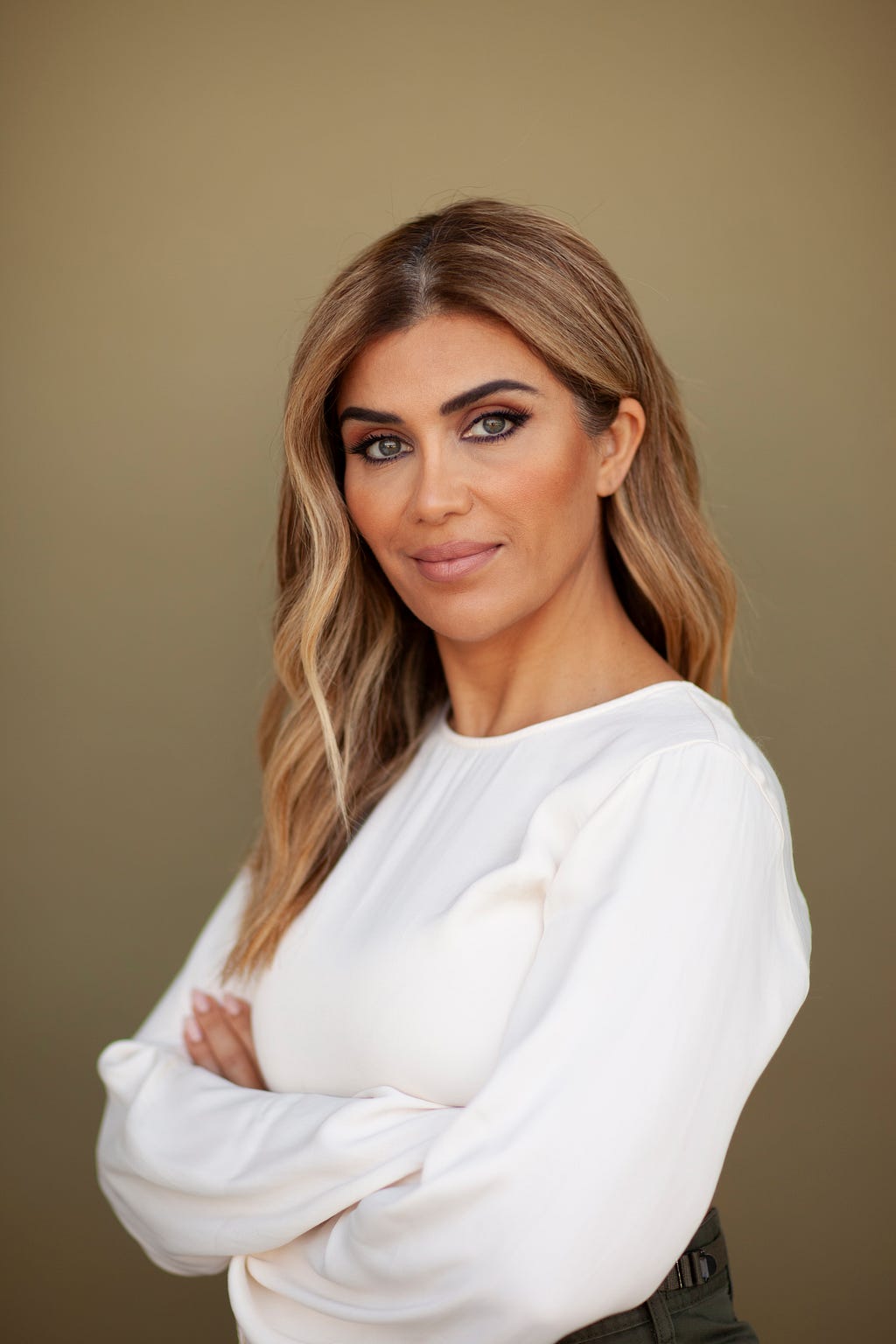
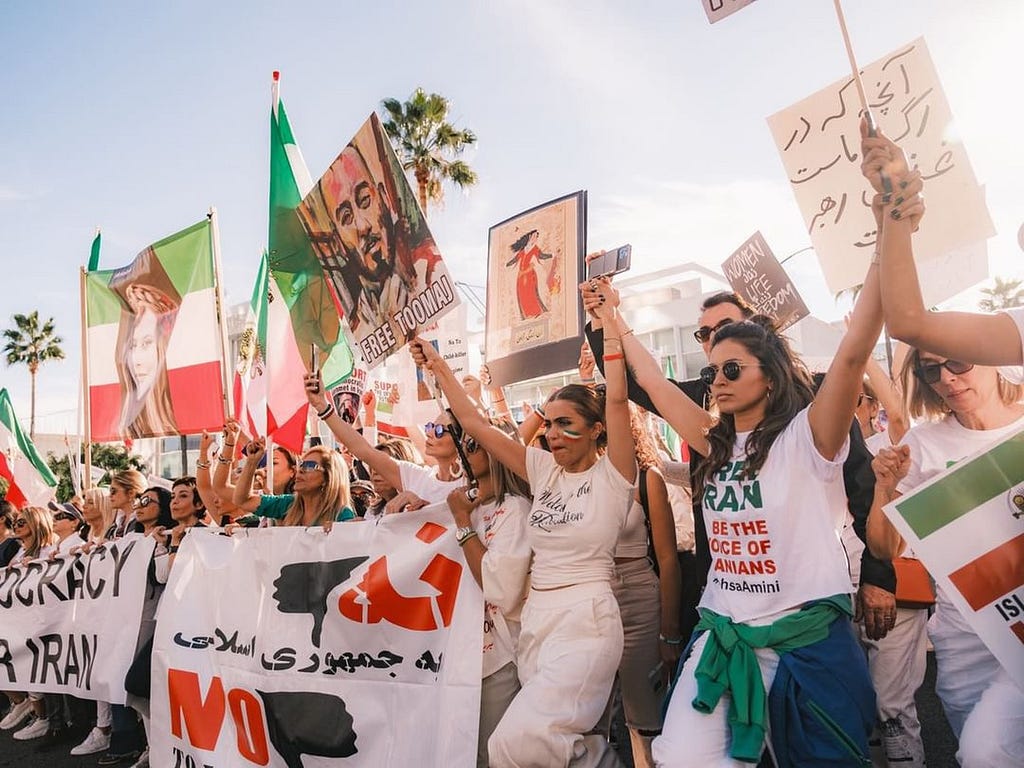
Azadeh Afsahi is a psychotherapist, international speaker, and founder of Houses Inc., a nonprofit delivering culturally grounded, trauma-informed care to survivors of human rights violations. Often described as a “smuggler of hope,” she works in some of the world’s most restricted and stigmatized environments, helping individuals rebuild their lives with dignity. Her mission is deeply personal, shaped by the loss of her father, and has evolved into a global effort that includes “healing homes” like Iran House and Afghanistan House, as well as the forthcoming 24/7 Anar hotline. Through this work, she creates spaces of belonging and recovery for those navigating displacement, conflict, and systemic repression. Azadeh’s impact extends to the international stage, where she has spoken at the United Nations, contributed to the Global Refugee Forum, and delivered a 2026 TEDx talk at Oxford titled Limitless: Smuggler of Hope. She also supports advocacy efforts to end solitary confinement and has organized events for the Women, Life, Freedom movement, including a major 2023 rally in Los Angeles. Learn more at iran-house.org and follow @azadeh.afsahi on social media.
Thank you so much for joining us in this interview series! Can you tell us a story about what brought you to this specific career path?
I believe growing up as an Iranian immigrant, it’s difficult not to become aware of injustice. Politics and human rights were never abstract conversations in our home; they were deeply personal.
Growing up in Sweden, I remember comparing the conversations happening around our dinner table to those of my friends. Their families would talk about their day, school, or everyday life, while ours often revolved around Iran, reminiscing about how different life was before the 1979 Revolution. I could see the longing in my parents’ eyes whenever Iran came up, which was more often than not. Even as a child, I could feel the grief and the emotional weight they carried.
At the same time, I experienced deep personal loss after losing my father to suicide. That experience profoundly shaped the way I understand pain and the invisible struggles people carry. It taught me early on that suffering is not always visible, and that people can appear functional on the surface, pretending everything is fine, while quietly falling apart inside.
Looking back, I realize I was always drawn toward careers and experiences rooted in service. Growing up, I watched my mother constantly help those around her, and subconsciously that shaped my worldview. When I moved to the United States, I was confronted with something I had not witnessed in Sweden: children who did not have Christmas gifts. I remember gathering my friends together and raising around $600 to buy gifts for children in need. Looking back now, I think that moment quietly set the tone for the path I would eventually take in life.
That, combined with the suicide of my father, made me realize I wanted to help people on a larger scale. I didn’t just want to understand trauma academically; I wanted to work directly with people living through it. That eventually led me toward psychotherapy, humanitarian work, and building spaces where survivors feel safe enough to begin healing.
Can you share the most interesting story that happened to you since you began leading your organization?
One of the most surreal moments for me was speaking at the United Nations about the psychological impact of torture, imprisonment, and political violence. I remember standing there thinking about how many survivors never get the opportunity to safely tell their stories publicly, and how, in many ways, I felt honored carrying the voices of people who could not enter those rooms themselves. That moment stayed with me deeply.
Another experience that was incredibly meaningful was speaking on the TEDx stage in Oxford about Iran’s unspoken trauma, exile, and the psychological aftermath of oppression. After the talk, so many Iranian students came up to me in tears, saying they finally felt seen, especially after the January 2026 massacre. But honestly, some of the moments that impact me the most are much quieter. Receiving a message from a survivor saying, “For the first time, I feel heard,” or watching a refugee family finally arrive somewhere safe after years of uncertainty and trauma those moments matter just as much to me as any public platform.
I think what has surprised me most throughout this journey is realizing that healing is not only psychological. Healing begins the moment someone feels seen, believed, and no longer alone.
Can you share a story about the funniest mistake you made when you were first starting, and what lesson you learned from it?
One of the funniest, and honestly most humbling, mistakes I made happened after watching a documentary about happiness that featured a CEO traveling to Kolkata, India, in search of purpose and meaning. Inspired by it, I somehow found the organization’s phone number online and confidently called them, saying I would be coming to visit and volunteer. In my mind, everything was fully arranged.
But once I arrived in Kolkata, I quickly realized there was one major problem: they barely used technology. In fact, they had one shared rotary phone locked away on the third floor of the main building, and to this day I honestly have no idea who I actually spoke to before flying there.
While I was there helping with daily tasks and routines, I remember feeling confused because no one really thanked me or praised the work I was doing. At first, I thought maybe I was doing something wrong or that my help was not appreciated. But over time, I realized the lesson had nothing to do with them; it had everything to do with me and my own expectations.
That experience taught me something incredibly important very early in life: you should not do things expecting something in return. You do them because they feed your soul. The moment expectation enters it, the intention quietly changes.
It was one of the first times I truly understood that meaningful work is not sustained by validation or recognition. The work I do today, whether through psychotherapy or humanitarian work, is not driven by praise; I do it because it gives my life meaning. That experience taught me that service changes the person giving it just as much as the person receiving it.
Can you describe how your organization is making a significant social impact?
At Houses Inc. and Iran House, we provide trauma-informed mental health support to individuals affected by war, political violence, torture, imprisonment, and forced displacement, many of whom would otherwise have little or no access to care. A large part of our work focuses on survivors who have fallen through the cracks of traditional systems: refugees living in limbo, former political prisoners, survivors of torture and sexual violence, and individuals navigating exile without legal, emotional, or financial stability.
But our mission goes far beyond therapy alone. One of the biggest misconceptions about trauma is the belief that healing can happen in isolation. The reality is that people cannot heal when they are still fighting for survival. Someone cannot fully focus on their mental health if they do not know where they will sleep, how they will afford medication, or whether they will be deported back to danger.
That is why our approach is multidisciplinary and deeply human-centered. Alongside psychological support, we help connect individuals to legal resources, medical care, emergency assistance, education, and community support. We work to create systems of care that restore dignity, not just stability.
Our long-term vision is to build “healing homes” around the world, spaces where survivors of oppression, war, and displacement can access support in a culturally grounded and compassionate environment. A place where people are not treated like case numbers or labels, but as human beings with stories, identities, and futures worth rebuilding.
What makes our work unique is that many of the people we support have spent years being silenced, disbelieved, punished, or dehumanized. Sometimes the most transformative part of healing is simply being in a space where someone finally says: “I believe you. You belong here.”
At the center of everything we do is one simple belief: healing begins when people feel like they belong.
Can you tell us a story about an individual or family impacted by your work?
One family that deeply stayed with me had spent nearly six years as refugees in Turkey after fleeing persecution. Over time, survival had completely consumed them. Their children had grown up without stability, and hope had slowly started disappearing.
Through coordinated support and advocacy, we were eventually able to help them relocate safely to Germany. What impacted me most was not just their relocation, but watching what happened afterward — the gradual return of hope, routine, and possibility. Trauma changes people, but safety can also begin to change them back.
Are there three things society or politicians can do to help address the root of the problem?
First, we need to start seeing people beyond labels. Refugee, prisoner, immigrant, survivor, these words often reduce human beings to a single experience rather than allowing them to exist as full human beings. Real change begins when we recognize people’s humanity before their category.
I remember growing up in Sweden, people often could not tell I was Iranian when speaking to me on the phone because I did not have an accent. But the moment they saw me in person, the energy sometimes changed. I would occasionally hear comments like, “Oh, I thought you were Swedish.” Even as a child, I understood what they were really implying: that people unconsciously assign value, assumptions, and belonging based on identity, appearance, or background.
Those experiences stayed with me because they taught me how deeply labels shape the way we treat one another. When we stop seeing people through categories and start seeing them as human beings first, that is where compassion, dignity, and real change can begin.
Second, mental health support must be treated as a human right, especially for communities affected by war, displacement, and political violence.
Third, we need policies and systems rooted in dignity rather than punishment. So many systems around the world operate from fear, liability, and control instead of healing and human connection. Even culturally, particularly in America, there is often a fear of saying the wrong thing, being judged, or being sued. When people and institutions operate primarily from self protection, it becomes difficult to show up authentically, build trust, and create meaningful human connection. Healing requires spaces where people feel safe enough to be honest, vulnerable, and human.
How do you define leadership?
The older I get, the more I believe leadership means learning how to lead from behind. To me, leadership is less about control and more about creating an environment where people feel empowered, heard, and capable.
For example, in meetings, I intentionally let employees or team members introduce themselves first and speak before I do. I never want my presence or title to overshadow the voices in the room. To me, leadership is about creating space and opportunities for people to shine and become the best versions of themselves.
I think many people associate leadership with being the loudest person in the room or always taking the lead, but I’ve learned that some of the strongest leaders are the ones who know how to step back and elevate others. When people feel trusted, valued, and safe enough to contribute authentically, they often exceed even their own expectations.
A great leader is not someone who needs to constantly remind others they are in charge. A great leader creates an environment where people naturally feel inspired to grow, contribute, and lead alongside them.
What are five things you wish someone told you when you first started?
1. Managing people is often harder than managing the mission
No one prepared me for the emotional complexity of running a humanitarian nonprofit. At Houses Inc., we intentionally create opportunities for refugees and displaced individuals. But when someone is living without stability or safety, that uncertainty naturally affects their work and emotional capacity. It taught me the importance of leading with compassion while still creating structure.
2. Running a nonprofit is truly a 24/7 responsibility
There is always another emergency, another message, another person in need. Especially when your work is global, time zones disappear. I don’t think there has been a single day where I have fully “turned off” from this work.
3. Failure is part of finding your path
You will fail many times before you discover what truly aligns with you. Earlier in my career, I used to take setbacks very personally or feel discouraged when things didn’t happen immediately. Over time, I learned that timing matters. Now, when something does not work out right away, I no longer see it as failure in the same way. I trust that the right opportunities, people, and projects arrive when the timing is aligned. Many of the things I once viewed as failures were actually preparing me for the work I do today.
4. Human rights work changes you permanently
When you spend years listening to stories of torture, imprisonment, exile, and loss, your worldview changes. The life you once lived no longer feels the same. At times, you begin questioning humanity itself and the extent of what human beings are capable of doing to one another. But at the same time, this work has also deepened my understanding of humanity in ways that are difficult to explain. Because alongside the cruelty, you also witness extraordinary resilience. You see people who have endured unimaginable suffering and still find ways to love, rebuild, laugh, hope, and survive. I think human rights work permanently changes the lens through which you see the world. Once you truly witness both the darkness and the resilience of humanity up close, you cannot unknow it.
5. Life is not always fair
Growing up, many of us are taught that if you are a good person, good things will happen. But life does not always operate that way. Where we are born, the opportunities we receive, the safety we inherit, and the freedoms we experience are often matters of chance, geography, and privilege rather than merit alone. That realization gave me a much deeper sense of empathy for others. We do not control where we are born, what political system we enter into, or what circumstances shape our childhood. Not everyone begins life at the same starting line. Some people are born into safety and stability, while others are born into war, oppression, poverty, or survival mode. Understanding that changed the way I see people. It made me less judgmental and more compassionate, because often what people need most is not criticism, but support, opportunity, and dignity.
What is your favorite life lesson quote, and why is it meaningful to you?
“Let books guide you, but let real life teach you.”
It’s something I came to believe over time while working in conflict zones and with survivors of political violence, torture, and displacement. I realized that while theory and education are important, real life is often far more complicated than what we learn in textbooks. Working directly with survivors forced me to relearn many assumptions I once believed were universal. Human beings do not heal in perfect formulas. For example, I was educated within a Western mental health system, and many of those frameworks are incredibly valuable within Western contexts. But as soon as I began working outside of those environments, particularly in conflict zones and with displaced populations, I quickly realized that some of those teachings were not always fully applicable. For instance, how do you expect someone to begin healing from PTSD when they are still actively living in trauma? When someone does not know if they will be deported, imprisoned, separated from their family, or where they will sleep the next day, traditional models of healing often become insufficient. That realization transformed the way I practice. I learned that before therapy can truly begin, people often first need safety, stability, dignity, and a sense of belonging. It taught me to approach mental health with far more humility and flexibility, recognizing that healing must be culturally grounded and adapted to the realities people are actually living through.
Is there a person you would love to have breakfast or lunch with?
There are many people who have dedicated their lives to humanity, but Angelina Jolie is someone I deeply admire because she has consistently used her platform to shed light on human rights violations, displacement, and humanitarian crises around the world. What I respect most is not celebrity culture itself, but the way she has leveraged her visibility and privilege in service of others. She has brought attention to communities and stories that are often ignored, particularly refugees and survivors of war and violence. I have a deep respect for people who choose to use influence not for self-promotion, but to create awareness, advocate for dignity, and amplify the voices of those who are unheard. I think that kind of humanity and responsibility is incredibly powerful.
If you could inspire one movement that would bring the most good to the most people, what would it be?
A world less defined by labels.
From my 20 years in the field of mental health, I have come to realize that pain is universal. Regardless of nationality, religion, race, gender, or sexual orientation, human beings all understand suffering when confronted with it. I believe many of the divisions in our world come from forgetting our shared humanity and focusing more on what separates us than what connects us. Yet when people experience grief, fear, loss, love, or trauma, those emotions transcend borders and identity. At our core, we are far more alike than we are different. For instance, grief is something every human being experiences. Loss does not discriminate. A mother grieving her child, someone mourning a parent, heartbreak, fear, and loneliness, these emotions transcend borders, language, and identity.
I think if we truly began seeing one another beyond labels, we would build systems rooted more in compassion than fear. We would become less focused on categorizing people and more focused on understanding them. At the end of the day, most people simply want the same things: safety, dignity, love, belonging, and the opportunity to live without fear.
How can readers follow your work online?
Readers can follow my work and the work of Iran House on Instagram, where we share advocacy initiatives, educational content, survivor-centered campaigns, and updates on our humanitarian and mental health work.
Thank you for sharing these insights!
Social Impact Heroes: How Azadeh Afsahi Of Houses Is Helping To Change Our World was originally published in Authority Magazine on Medium, where people are continuing the conversation by highlighting and responding to this story.