

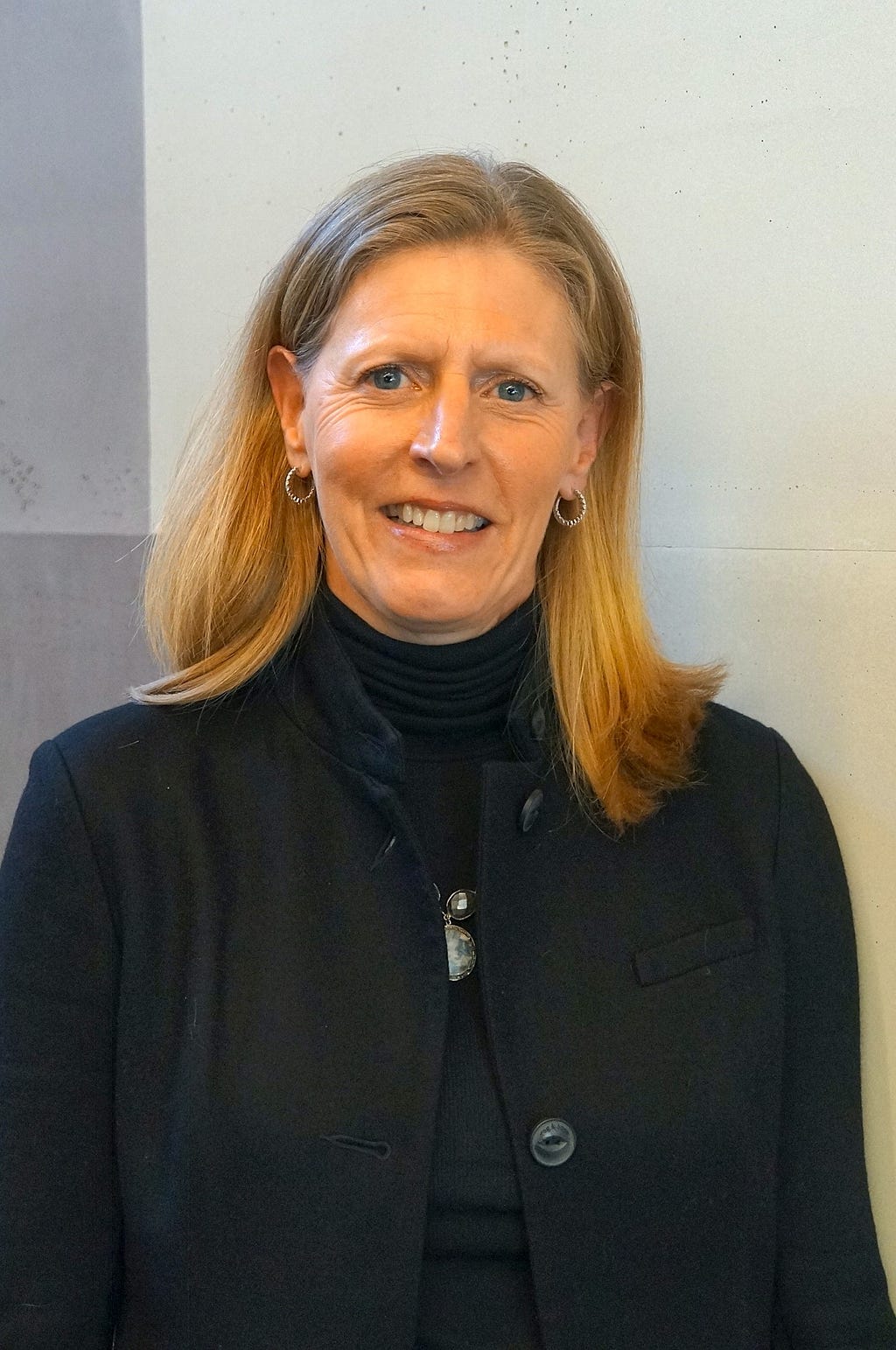

Education Revolution: Kim Snow of Franklin Center On Innovative Approaches That Are Transforming Education
An interview with Dr. Bharat Sangani
I wish I had a better understanding of the differences between mental and behavioral health. They’re distinct concepts, but they’re deeply interconnected. Mental health reflects our internal psychological and emotional state, while behavioral health focuses on the actions and patterns that shape our daily functioning. They influence each other continuously, so supporting someone effectively requires understanding how both interact within the person.
The landscape of education is undergoing a profound transformation, propelled by technological advancements, pedagogical innovations, and a deepened understanding of learning diversities. Traditional classrooms are evolving, and new modes of teaching and learning are emerging to better prepare students for the complexities of the modern world. This series will take a look at the groundbreaking work being done across the globe to redefine education. As a part of this interview series, we had the pleasure to interview Kim Snow.
Kim is the Executive Director at Franklin Center, a school for neurodiverse children and adults in the Minneapolis metro area. She has over 20 years of experience in advertising, marketing strategy, and client services from positions at Fallon, Cargill and Food IQ. She has two children, one enrolled at Franklin Center, and another at the University of North Carolina.
Thank you so much for doing this with us! Our readers would love to “get to know you” a bit better. Can you share the “backstory” behind what brought you to this particular career path?
It wasn’t a traditional pathway to education administration! I have a Master’s in business, which I was using in various management and director positions at Cargill, a global food company based in Minnesota.
My son, Parker, was born with a rare genetic condition called a 4q partial genetic deletion. It resulted in developmental delays that made learning various skills take longer for him than for other kids.
He was in public schools through the 6th grade, and his teachers did a great job, but middle school was simply too big for him to thrive. The number of kids and the associated noise levels were too much for Parker, and he began to retreat into himself.
It was important to me that he have as “typical” a childhood as possible, and that included not isolating him. I wanted him to be in a school’s mainstream without being in a mainstream school. We toured Franklin Center and knew right away it would be a great fit.
With its smaller class sizes, he has had the opportunity to build confidence and leadership skills in ways that would be impossible in public school. The faculty and other specialists at Franklin did a great job with Parker. We were very happy with his progress and the boost in his confidence.
I was so impressed with what Franklin Center had done for Parker that I wanted to find a way to help the school do the same for even more kids, so I ended up joining the school’s board about a year after Parker enrolled. I chaired the development committee during its campaign to purchase a permanent building for the school, then, when I was co-chair of the board, the executive director retired.
I offered to step in as the interim director while a permanent one was found. I quickly discovered the strategic, communications and process skills I’d gained in my previous roles at Cargill were very valuable in this role, so I applied to be the full-time executive director.
Can you share the most interesting story that happened to you since you started your career? Can you tell us what lesson you learned from that?
When you work for a mission-based organization like Franklin Center, it’s a daily occurrence.
We had one student who had significant emotional challenges, including suicidal ideation. Our staff came together to provide immediate support, listened closely to their needs, and engaged in thoughtful conversation to help them work through their feelings. This approach helped them gain clarity and understand the permanency of their plan.
Watching the student continue in our high school was amazing because I know how crucial our staff was in helping them develop a new perspective and a more helpful outlook. That student is still doing very well today.
The learning is in our core values. At Franklin Center, we believe in celebrating neurodiversity and treating each student as a unique individual. We meet each student where they are, honing in on whatever they need in any particular moment, whether that’s behavioral help, mental health counseling or academic assistance.
We work closely with the students and their families to make sure they get to the next level on their way to a successful outcome.
Can you briefly share with our readers why you are an authority in the education field?
Running a school isn’t just about educating the students. We’re a school, but we’re also a non-profit business. My former career in corporate America gave me the tools and skills to make sure the business side of the school is as healthy as possible.
Plus, as a parent of a neurodiverse student, I bring the perspective of knowing what the organization can do for
families, which informs the decisions I make on the business side.
Can you identify some areas of the US education system that are going really great?
Since taking on this role, I’ve seen how many really cool things people are trying to more effectively educate different students in different ways. The education system as a whole was created for neurotypical, mainstream kids. But in reality, there are many different needs, from neuroatypical to gifted.
Making one system serve everyone well is challenging, but it’s exciting to see real work toward addressing all those needs.
Can you identify the key areas of the US education system that should be prioritized for improvement? Can you explain why those are so critical?
The sheer number of students in classrooms is very difficult for teachers. At Franklin Center, we have an 8:1 student-to-teacher ratio. When you consider the therapists and other professionals, that drops to about 4:1.
In a public school classroom, one teacher is often working with 20–30 kids or even more. That makes it very difficult for a teacher to meet all of those kids where they are. Even assuming all the kids in a classroom have similar needs, that many students in one room makes it hard for teachers to get through their lessons and meet educational standards.
Pay is another area that should be addressed. The most important thing we do in America is educating our kids. But our teachers are paid less than most other professions, which doesn’t make sense. Paying teachers fairly for the value of the work they’re doing is something we should prioritize.
Please tell us all about the innovative educational approaches that you are using. What is the specific problem that you aim to solve, and how have you addressed it?
A typical school doesn’t work well for many neurodiverse kids. There are a number of reasons depending on the needs of the student. The number-one reason is classroom size. Many neurodivergent students have sensory issues.
Too much noise and movement can overstimulate them and cause distress. 25 or more kids all moving around in a classroom is a lot: For some students, it causes them to have trouble staying focused. A student can become dysregulated quietly — the teacher would never know, but they’re unable to learn anything in that class. They could
also be dysregulated in the form of a behavior, get kicked out of class and still not be learning anything while being labeled as a “behavioral student.”
At Franklin Center, in addition to small class sizes and a small overall student body, we put a lot of thought into our building’s features.
Our lockers don’t slam — instead, they close quietly so kids with sound sensitivities won’t be negatively impacted. For the same reason, we have a sensory gym with a sound-deadening construction that eliminates the echoes that make a standard gym so noisy.
All of our lighting is indirect, which creates a more comfortable environment for photosensitive people. We frequently dim those lights in classrooms for a calmer setting. If a student still struggles despite all of these features, we move to individual remedies.
Noise-sensitive students can wear headphones. Kids who have difficulty sitting still get fidgets to let them move in a non-disruptive way. And we’re constantly looking for new ways to address student needs. We have one student who really wants to move their whole body. We’re evaluating walking mats we could put in their classroom so they can move and stay regulated.
In what ways do you think your approach might shape the future of education? What evidence supports this?
Speaking not just as an administrator, but as a parent, our approach works. But we can’t grow much larger than we are now because the sensory challenges then become the same as they are in a neurotypical school. That means we’re limited in the number of students we can serve directly, so we’d love to see the approach replicated in other organizations.
Since taking on the director role at Franklin Center, I’ve been thinking a lot about what we can replicate outside of our program. We’re working on ways to use the tools we’ve developed to help students throughout the country. We’ve had a number of conversations with people who want to create a program that looks like ours, and we’re happy to help. They aren’t competition! A school in another state isn’t going to draw students away from us, and I love to be able to help them help their kids.
How do you measure the impact of your innovative educational practices on students’ learning and well-being?
We have many wonderful anecdotal stories of students whose lives have been changed by our program. Kids who had been locked in closets or sent to basements because no one knew how to manage their behavior are now thriving, happy and healthy kids and adults.
We also track effectiveness with a system called Emote. It allows us to track student progress on a continuum rather than the large, discrete steps of state standards. This lets us see progress in smaller increments, which matches the way our students often learn. It also allows for staff to be on the same page, as they can see the data at any time.
Each of our 90 students in the school is very unique. What works for one student will probably not be ideal for the other 89. By building data that tracks progress and outcomes with each student on a year-over-year basis, we’re able to hone in on the most effective plan for individual students more quickly than if we were starting from scratch with each one.
What challenges have you faced in implementing your educational innovations, and how have you overcome them?
Beyond the significant day-to-day challenges of working with kids who have a wide variety of needs and behaviors, our biggest challenge is filling the pipeline of students for our school. It takes a lot of work to make sure we’re the right solution for the students who are enrolled at Franklin Center.
We serve a specific group of neurodiverse kids. We put significant time and effort into making sure everyone admitted to the school can benefit from learning with us.
Another challenge is that, by necessity, we provide mental health services for our students, which means we have to be approved and credentialed with healthcare companies for service reimbursements. Many of our kids are considered “dual-enrolled,” meaning they’re educated by us, but also receive therapy through us, for which insurance companies reimburse us.
Running a private school is expensive, especially when the students all have unique needs. We offer tuition assistance, but we’d like to offer more in the future so our program isn’t out of reach for the families and kids who need it. Fundraising is a key part of that, which is also challenging.
Donors need to know who we are and understand that we aren’t the kind of private school that doesn’t need donations. More donors are becoming interested in supporting our work, but we want to continue to build.
Keeping in mind the “Law of Unintended Consequences” can you see any potential drawbacks of this innovation that people should think more deeply about?
Not all neurodiverse programs are a good fit for all neurodiverse students. Our program is geared toward a very specific set of students — kids who struggle in traditional settings but who can also exist on their own at higher grade levels when equipped with self-regulation and advocacy tools.
Students who don’t fit that description wouldn’t benefit from our services, so we work closely with parents to make sure we’re the right fit. If we’re not, we refer them to programs that are a better match.
If a neurodiverse school doesn’t have that robust admissions program, a kid could end up in a school that isn’t the right fit for them. If you’re looking for alternative solutions for your child, it’s important to understand what a program offers and how it can serve your child specifically.
Be sure to share everything during the admissions process. A lot of kids who apply to our school are coming out of trauma from bad experiences at school or at home. Knowing details of their background is key to making sure they’re a good fit for us and to help us serve them better when they’re here.

What are your “5 Things I Wish I Knew When I First Started”?
1 . I wish I’d known the breadth of needs for kids with neurodiversities. Raising a neurodiverse kid can make you feel like an expert in childhood neurodiversity. But in reality, there’s a huge spectrum of needs for these kids, and mine is not representative of all of them.
2 . I didn’t know what SIB meant when I first got here. It stands for Self-Injurious Behavior, and it’s not something I ever had to address with my kid. He’s never hit me or tried to hurt himself. I wish I’d had more awareness of the complexities of other parents struggling with kids who do exhibit SIB.
3 . I’ve always considered myself a compassionate person, but since starting here, my level of compassion and empathy has grown exponentially. I wish I’d known how much bigger than mine some people’s struggles are. I’ve learned a lot about the capacity of humans — the people on my staff have so much empathy, compassion and patience to work toward solutions where many would have given up.
4 . I wish I’d known more about the variety of organizations that support kids with neurodiversities. It would have helped me understand how to help students who weren’t a good fit for Franklin Center by directing them toward more resources that could better address their unique needs.
5 . I wish I had a better understanding of the differences between mental and behavioral health. They’re distinct concepts, but they’re deeply interconnected. Mental health reflects our internal psychological and emotional state, while behavioral health focuses on the actions and patterns that shape our daily functioning. They influence each other continuously, so supporting someone effectively requires understanding how both interact within the person.
Can you please give us your favorite “Life Lesson Quote”? Can you share how that was relevant to you in your life?
Growing up, my Dad always taught us to “Assume good intent.” That’s been extremely powerful in this role. This is a very challenging environment, and it would be easy to descend into negativity. But by assuming good intent, you reframe your interpretation of what others say and do.
You ask yourself, “What else could someone have meant when they said what they said?”
As a leader, I have a lot of different people with unique perspectives coming to me. I hear multiple sides to every story. By remembering that quote, I’ve gotten to a better place in understanding where the truth is.
We are blessed that some of the biggest names in Business, VC funding, Sports, and Entertainment read this column. Is there a person in the world, or in the US, with whom you would love to have a private breakfast or lunch, and why? He or she might just see this if we tag them 🙂
Temple Grandin. She’s remarkable — even more so to me now as I’ve done this job over the past three years. She was diagnosed as being on the spectrum long before that was common, when there were few resources to help kids with autism succeed. Treatment of autism in the 1950s was sparse, with kids often being shipped off to mental institutions rather than being shown tools to help them grow and thrive.
But she never let that societal disadvantage stop her and instead used her neurodivergence as a way to gain unique insights into animal behavior. She revolutionized the meat industry by helping companies design humane ways to raise and harvest animals.
This not only led to a better experience for the animal, but it also improved the quality of the meat because stress causes changes in muscle tissue that impact taste and texture. Even more impressive is that she did it as a woman in the 1970s in one of the most male-dominated industries in the country.
I’m very impressed by the way she persevered just by seeing the world the way she saw it. She’d be a fascinating person to talk to in the world I’ve come to understand.
How can our readers further follow your work online?
They can connect with me on LinkedIn.
They can also explore Franklin Center on LinkedIn, Instagram and our website.
Thank you so much for these insights! This was so inspiring!
About The Interviewer: Dr. Bharat Sangani is a cardiologist and entrepreneur with over 35 years of experience, practicing in Gulfport, Mississippi, and Dallas, Texas. Board-certified in Internal Medicine and Cardiology, he specializes in diagnosing, treating, and preventing cardiovascular diseases, including heart disease and hypertension. In 1999, Dr. Sangani founded Encore Enterprises, a national real estate investment firm. Under his leadership, the company has executed transactions exceeding $2 billion, with a portfolio spanning residential, retail, hotel, and office developments. Known for his emphasis on integrity and fairness, Dr. Sangani has built Encore into a major player in the commercial real estate sector. Blending his medical and business expertise, Dr. Sangani created the Life is a Business mentorship program. The initiative offers guidance on achieving balance in health, wealth, and relationships, helping participants align personal and professional goals. Now based in Dallas, Texas, Dr. Sangani continues to practice cardiology while leading Encore Enterprises and mentoring others. His career reflects a unique blend of medical expertise, entrepreneurial spirit, and dedication to helping others thrive.
Education Revolution: Kim Snow of Franklin Center On Innovative Approaches That Are Transforming… was originally published in Authority Magazine on Medium, where people are continuing the conversation by highlighting and responding to this story.