

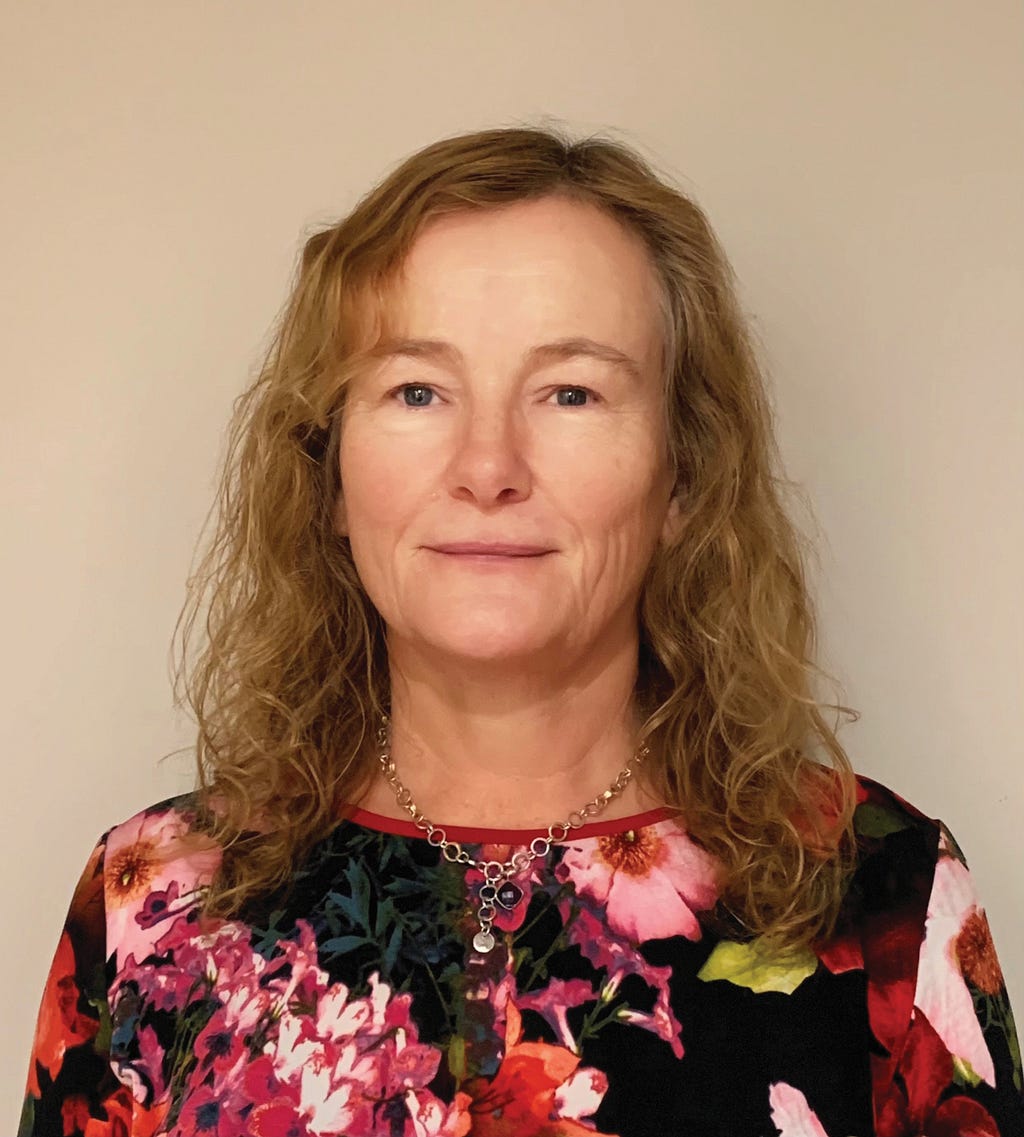

Education Revolution: Katy Pike of 3P Learning On Innovative Approaches That Are Transforming Education
An interview with Dr. Bharat Sangani
Teachers are your greatest partners. Listen to them relentlessly. The most effective innovations have come from listening — really listening — to teachers’ frustrations and wisdom.
The landscape of education is undergoing a profound transformation, propelled by technological advancements, pedagogical innovations, and a deepened understanding of learning diversities. Traditional classrooms are evolving, and new modes of teaching and learning are emerging to better prepare students for the complexities of the modern world. This series will take a look at the groundbreaking work being done across the globe to redefine education. As a part of this interview series, we had the pleasure to interview Katy Pike.
Katy Pike — author of more than 120 book titles covering a wide range of literacy and numeracy topics — is a co-founder of Blake eLearning and has been a key part of the Pascal Group of Companies since 1990. During these 30+ years, Katy has been the primary publisher of literacy and math texts before moving onto digital products where she oversaw the development of Reading Eggs, Reading Eggspress, Reading Eggs Junior, Mathseeds, and Fast Phonics. Katy has created programs that are highly engaging for students and easy to use for teachers. While Reading Eggs has become a globally recognized product, its beginnings were humble, starting with the need for a busy mom to help her child to read. It was Ms. Pike’s own son who struggled to read and in the classic chicken-and-egg conundrum, Pike was unsure if not enjoying reading was the cause or the result of his struggles.
Thank you so much for doing this with us! Our readers would love to get to know you a bit better. Can you share the backstory behind what brought you to this particular career path?
My team and I created Reading Eggs after witnessing the excitement and educational benefits children were experiencing with Mathletics, our first large-scale edtech program. I came into this work from a deep belief that early learning — especially learning to read — changes the entire trajectory of a child’s life. When we saw that thousands of children were not only loving Mathletics, but learning more because of its design, we realised we could bring that same level of motivation, joy, and evidence-based instruction to literacy.
Early on in our Reading Eggs journey, my youngest two children were learning to read, and the joy they found in an online program that taught them, while I sat on the sidelines and cheered, was an amazing thing to witness. So that’s why we have a home version of Reading Eggs and Mathseeds — so that parents can experience the joy of watching their children learn at home. This has been an extraordinary part of our journey as we get so much positive feedback from parents who use the programs with their children.
I’ve now worked at 3P Learning for more than 30 years, and I’ve been at the helm of Reading Eggs since we first launched it in 2008. My career has been shaped by one simple idea: when you combine engagement, research-based instruction, and thoughtful technology, children learn more than we can ever expect.
Can you share the most interesting story that happened to you since you started your career? What lesson did you learn from that?
One story I will never forget came from a mother whose 10-year-old son with Down syndrome had been struggling for years to learn to read. Many around him — teachers, specialists, even well-meaning friends — had assumed reading might never be within reach for him.
But when he began using Reading Eggs, something clicked. He made steady, joyful progress. His mother wrote to us saying it was the first time anyone had believed he could learn to read, she was in tears — and the program’s patient, non-judgmental, supportive design gave him the space to succeed.
Over the years, we’ve heard countless stories like this — from children with autism, from reluctant readers, from families who had nearly given up hope. And the lesson is the same every time: A well-designed online program can be endlessly patient, completely non-judgmental, and relentlessly encouraging — and sometimes that’s exactly what a child needs to unlock learning.
That insight shaped everything we built afterwards.
Can you briefly share with our readers why you are an authority in the education field?
I’ve been leading the development of literacy and numeracy solutions, including Mathletics and Mathseeds, deeply embedded in curriculum design, the essential sequencing of learning content, for more than three decades, and I’ve been at the helm of Reading Eggs since its creation. Our programs now support millions of children across more than 100 countries.
My work has always been rooted in evidence-based practice, particularly the Science of Reading — systematic phonics, oral language, vocabulary, fluency, and comprehension — combined with the principles of the Science of Learning, such as retrieval practice, explicit instruction, and spaced repetition.
Through this work, I’ve seen firsthand what happens when great pedagogy and engaging technology come together at scale.
Can you identify some areas of the US education system that are going great?
Absolutely. There is a renewed national focus on:
- Structured literacy and the Science of Reading, extending into the Science of Learning for Maths as well.
- Data-informed instruction
- Early intervention, especially in K–2
- Teacher professionalism and professional learning
Many states have made bold moves to shift literacy instruction, and that change is already benefitting students across the country.
Can you identify the key areas of the US education system that should be prioritized for improvement? Why are these so critical?
There are always areas to be improved, but for our purposes, let’s talk about improvement with respect to literacy. Our biggest priority is to catch children early, teaching kindergarteners, first- and second-graders to read and be numerate, so that they arrive in third grade with all the skills they need, without losing their joy of learning, as confident successful learners eager to learn more.
Students who are struggling to read fall into Tiers and, before they need Tier 3 intervention which is costly, time consuming, and can be disheartening, we need to make sure that all teachers have:
- Universal access to high-quality early literacy and numeracy tools
- Stronger professional development and support, particularly for K–2 teachers
- More time for students to read and more time to practice the foundational skills that go into reading, not just instruction.
When students don’t master the foundations by third grade, the gap widens quickly — academically, socially, and emotionally. Well-designed early learning programs can dramatically reduce the number of students who later require remediation.
Please tell us about the innovative educational approaches you are using. What problem do you aim to solve, and how have you addressed it?
Reading Eggs is a supplemental resource with a powerful assessment driving what the individual students sees. Regardless of the individual’s reading level, every time they use Reading Eggs, they will be receiving exactly the activities and reading material they need to develop their skills. And, there are rewards all along the way. It is important for children to see themselves succeeding. Whether those successes are incremental changes or giant leaps, that progress is acknowledged so the child feels they are achieving something at every step.
The core problem Reading Eggs tackles is to ensure that every child learns to read — regardless of background, ability, or classroom circumstance.
Our approach in Reading Eggs brings together:
- Systematic synthetic phonics
- Structured, explicit lessons
- Highly engaging, game-based motivation systems
- Adaptive pathways that place students at the right level
- Built-in rewards and feedback to keep students moving forward
The program acts as an endlessly patient tutor — reinforcing skills through carefully designed practice and increasing complexity. That consistency is often impossible to achieve in a busy classroom.
In what ways do you think your approach might shape the future of education? What evidence supports this?
I believe the future lies in hybrid learning models where classroom instruction is fully supported by high-quality online practice that adapts, supports, and motivates every learner.
The evidence is clear:
- Early intervention in reading has the highest long-term positive impact.
- Students who use Reading Eggs regularly make significantly greater gains in phonics, vocabulary, and reading fluency.
- Engagement matters — students who enjoy learning spend more time on task, leading to stronger outcomes.
Technology, when done right, empowers teachers and gives every child a chance to succeed.
How do you measure the impact of your innovative educational practices on students’ learning and well-being?
We look at impact through multiple lenses, because no single metric captures a child’s growth. Our measures include:
- Mastery and progress data across structured phonics, comprehension, vocabulary, and early numeracy
- Reading behaviour patterns, such as fluency, stamina, and text progression
- Lexile growth, which allows us to track long-term improvement on a validated scale
- Ongoing built-in assessments that identify strengths and gaps in real time
- Engagement signals — because motivation is directly tied to learning outcomes
- Parent feedback and anecdotal stories of breakthrough moments
We also study longitudinal district data to see how consistent K–2 usage affects Grade 3–4 proficiency. The story is clear: children who engage regularly with Reading Eggs and Mathseeds early on make significantly stronger literacy and numeracy gains — and require less intervention later.
Our efficacy studies, including ESSA approval research and district-level analyses, consistently show that students who use any of our programs achieve significant gains in reading accuracy, fluency, vocabulary, and comprehension, often outpacing expected annual growth. The same goes for math improvements for students using Matheeds or Mathletics. Those studies validate what we see every day: when rigorous pedagogy and strong engagement coexist, children thrive.
For us, impact is both the data and the human stories. When a child who struggled for years suddenly believes, “I can do this,” that’s real learning.
How do you measure the impact of your practices on student learning and well-being?
We use multiple layers of evidence:
- Lesson-level mastery and progress data
- Reading behaviour data (time-on-task, text difficulty, reading stamina)
- Benchmark assessments including Lexile growth
- Fluency metrics through oral reading analysis
- Teacher surveys and classroom observations
- Long-term district studies to track closing achievement gaps
Well-being is measured through engagement, persistence, confidence indicators, and teacher reports of student motivation.
What challenges have you faced in implementing these innovations, and how have you overcome them?
One of the greatest challenges has been helping decision-makers understand that you can have programs that combine rigorous, research-based pedagogy with genuinely high levels of child engagement. Children won’t learn if they’re not motivated — but engagement without evidence-based structure won’t build literacy either.
Teachers know this instinctively, which is why they respond so strongly to our programs: they see both the joy and the learning. But teachers are not always the ones making procurement decisions at district or state levels. A key part of our work now is helping leaders understand that the best outcomes happen when science-aligned instruction and motivational design work together, not in opposition.
We’ve overcome this by doubling down on the integration of the Science of Reading with motivational design — using meaningful rewards, mastery-based pathways, and joyful learning moments that make practice feel empowering rather than burdensome.
Our new edition of Reading Eggspress, launching in January, reflects this commitment. Its 220 lessons for Grades 2–6 bring together the latest thinking in comprehension, close reading, vocabulary development, and focused, high-impact practice — all delivered through an engaging, student-centred design.
Keeping in mind the “Law of Unintended Consequences,” can you see any potential drawbacks?
Technology must never replace teachers. It should support their expertise, not compete with it.
Any powerful tool must be used thoughtfully. A few things we’ve learned:
Screen time shouldn’t be another chore. There’s a lot of focus on drilling content into students, rather than making learning joyful and motivating. We need that strong learning focus, but let’s stop ‘making’ students ‘learn’ by making them answer a zillion skill and drill questions to ensure they have ‘mastered’ an outcome. Learning should be involving and rewarding. Successfully learning something should make you feel good, not like ‘thank goodness, I’ve finally finished.’
Programs must never become a substitute for human connection. Reading aloud with a child, talking about a book, and celebrating success are irreplaceable.
Data can be overwhelming if not simplified. We have been very intentional about presenting only what is meaningful, actionable, and supportive.
The key is purposeful implementation, where digital tools lighten the load, strengthen instruction, and help children practise in joyful, meaningful ways.

What are your “5 Things I Wish I Knew When I First Started”?
- Engagement is not optional. Motivation is the engine of learning. We knew engagement mattered, but we didn’t yet understand how deeply it fuels persistence, practice, and ultimately proficiency.
- Teachers are your greatest partners. Listen to them relentlessly. The most effective innovations have come from listening — really listening — to teachers’ frustrations and wisdom.
- Every small design choice affects a child’s experience. Details become outcomes. Focus on every detail of the learning experience — the sequence, the pedagogy, the number of repeats, the variety of activities.
- Early years are everything. Catching children in K–2 changes their entire trajectory. If we support children in K–2 with strong structured literacy and maths foundations, we dramatically reduce the need for intervention in later grades.
- Growth takes patience. Big educational gains rarely come from big dramatic moments; they come from sustained, joyful practice over time.
Can you please give us your favorite “Life Lesson Quote”?
I return often to Frederick Douglass’s words:
“Once you learn to read, you will be forever free.”
This resonates deeply with me. Reading unlocks agency, confidence, curiosity, and opportunity. Every child deserves that freedom — and no child should be left waiting for it.
Is there a person in the world with whom you would love to have a private breakfast or lunch, and why?
I would love to sit down with Bill Gates or another global philanthropist committed to improving literacy outcomes worldwide. The scale of the challenge is enormous, but so is the potential impact.
Imagine a world where every child — regardless of geography — receives strong early reading support grounded in the Science of Reading. That is entirely achievable with the right partnerships, vision, and investment.
How can our readers follow your work online?
Learn about our programs at readingeggs.com and follow our broader work in literacy, maths, and edtech innovation at 3plearning.com. We are also active on LinkedIn, Facebook, and Instagram where all of the 3P Learning team write about and share information and resources for developing literacy and numeracy.
Thank you so much for these insights! This was so inspiring!
About The Interviewer: Dr. Bharat Sangani is a cardiologist and entrepreneur with over 35 years of experience, practicing in Gulfport, Mississippi, and Dallas, Texas. Board-certified in Internal Medicine and Cardiology, he specializes in diagnosing, treating, and preventing cardiovascular diseases, including heart disease and hypertension. In 1999, Dr. Sangani founded Encore Enterprises, a national real estate investment firm. Under his leadership, the company has executed transactions exceeding $2 billion, with a portfolio spanning residential, retail, hotel, and office developments. Known for his emphasis on integrity and fairness, Dr. Sangani has built Encore into a major player in the commercial real estate sector. Blending his medical and business expertise, Dr. Sangani created the Life is a Business mentorship program. The initiative offers guidance on achieving balance in health, wealth, and relationships, helping participants align personal and professional goals. Now based in Dallas, Texas, Dr. Sangani continues to practice cardiology while leading Encore Enterprises and mentoring others. His career reflects a unique blend of medical expertise, entrepreneurial spirit, and dedication to helping others thrive.
Education Revolution: Katy Pike of 3P Learning On Innovative Approaches That Are Transforming… was originally published in Authority Magazine on Medium, where people are continuing the conversation by highlighting and responding to this story.