


Education Revolution: Tammy Baumann of Inquiry By Design On Innovative Approaches That Are Transforming Education
A curriculum should hold together on its own so teachers can lead the room, rather than forcing them to manage 14 open tabs.
As a part of this series, we had the pleasure to interview Tammy Baumann.
Tammy Baumann is the Vice President of Curriculum at Inquiry by Design. With over 21 years of experience in the K-12 education sector, she has served as a classroom teacher, district curriculum director, and university research partner. She has also served on national assessment panels for the NAEP and the U.S. Department of Education. Baumann is a dedicated advocate for print-first, coherent instructional materials that honor teacher expertise and drive student success through human-centered design.
Thank you so much for joining us in this interview series! Our readers would love to “get to know you” a bit better. Can you share the “backstory” behind what brought you to this particular career path?
The first part of my story starts in the classroom and school systems. I taught for 10 years, joined a district instructional coaching initiative, and then into a curriculum and assessment role.
I’ve worked in schools for a little over 21 years and decided it was time to stop talking about the lack of quality instructional resources and find a way to change the options available, specifically in literacy and mathematics. If I had a dollar for every colleague that said “If only this program . . .”, I would be a very wealthy woman. So I left the K-12 environment and set out to incorporate all of the items on my ‘if only’ program list. Every aspect of problem solving has always been intriguing to me; defining the challenge, brainstorming possibilities to solve the problem, selecting a viable solution, and of course, building the solution. I was able to put my problem solving skills to work to create environments and teams that design curriculum products being demanded by the K-12 industry.
Can you share the most interesting story that happened to you since you started your career? Can you tell us what lesson you learned from that?
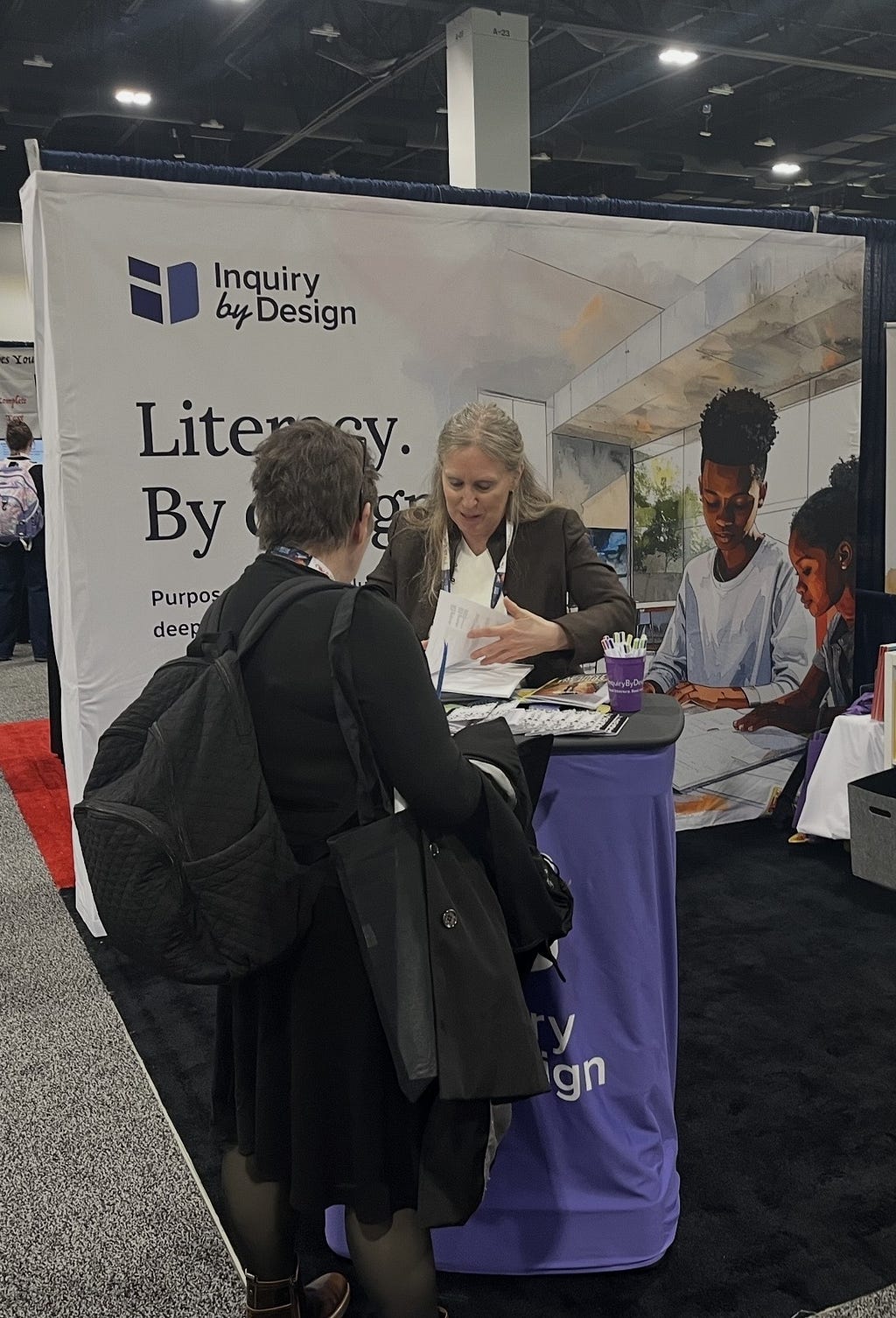
While attending the California Association of Teachers of English (CATE) conference, our booth was right next to a major competitor whose curriculum is primarily digital. Stream after stream of teachers approached their booth, but they weren’t asking about instructional strategy or student engagement, they were asking basic technical questions, like how to navigate the software or locate a text inside the platform.
That experience illustrated the hidden operational cost of over-digitization in education. Technology has unwittingly turned teachers into technical support agents, causing immense decision fatigue and draining planning time that should be spent interacting with students. That made it obvious that curriculum design must support the human and intellectual experience of teaching. A curriculum should hold together on its own so teachers can lead the room, rather than forcing them to manage 14 open tabs.
Can you briefly share with our readers why you are an authority in the education field?
My perspective on education was built from the ground up, starting right where learning happens: inside the classroom as a secondary math teacher.
Over the past twenty-plus years, I’ve had the privilege of seeing the education system from almost every angle: as a teacher, a district curriculum director, a university research partner supporting turnaround schools, and a national curriculum leader who has served on national assessment panels for NAEP and the U.S. Department of Education.
Throughout my career, I’ve viewed curriculum design as a form of practical problem-solving — taking complex instructional goals, standards, and research and building coherent materials that solve real classroom problems. Having walked in the shoes of teachers and administrators, I’ve seen how fragmented, disconnected tools pull classrooms apart.
I came to Inquiry by Design because I wanted to design curriculum like an orchestra, where reading, writing, language development, and discussion perform in harmony. Most recently, that meant leading the team behind our middle school ELA/ELD curriculum for California, which earned an official recommendation from the state review panel with zero issues identified.
For me, it’s always about honoring teacher expertise, simplifying the classroom experience and giving students the space to build lasting understanding.
Can you identify some areas of the US education system that are going really great?
Right now, we are seeing a profound shift back toward depth, human connection, and genuine instructional rigor. After years of over-digitization, the industry is moving away from short digital snippets and returning to long-form, physical texts. Schools are recognizing that reading full novels, plays, and extended works builds the sustained cognitive stamina students need for college and career readiness. In fact, parents and local communities — even in tech-heavy regions like Silicon Valley — are actively speaking up at school board meetings to advocate for reduced screen time, physical books, and classrooms centered on vibrant, face-to-face discussion.
At the same time, the national conversation around the science of reading is expanding beyond early elementary phonics into secondary education. The focus is now on how older students process complex language, build contextual vocabulary, and construct deep comprehension. This evolution is particularly crucial for Multilingual Learners (MLLs). State review panels are now evaluating MLL supports independently of core ELA materials, raising the standard for quality across the board.
We are finally treating a student’s home language as an asset, recognizing that every lesson must teach language alongside content. By integrating structured oral discussion prior to writing and maintaining grade-level texts paired with native scaffolds, we ensure that all students have equal access to rich, meaningful learning without lowering expectations.
Can you identify the key areas of the US education system that should be prioritized for improvement? Can you explain why those are so critical?
If we want to create lasting improvement in American education, the primary focus must be eliminating the instructional fragmentation that plagues our classrooms. Right now, too many schools operate in a “14-tab classroom” reality, where reading lives in one app, writing in another, and isolated skill drills in a third. Teachers bear the immense burden of trying to stitch these disconnected tools together, while students miss out on seeing how literacy concepts actually perform in harmony. Unifying instructional materials brings clarity back to the classroom while directly tackling teacher burnout by eliminating constant decision fatigue.
To make those materials effective, we must also fundamentally rethink how we support teachers and Multilingual Learners. Districts frequently invest heavily in new curriculum products, only to offer a single launch workshop and call it a day. Sustainable growth requires professional learning that is curriculum-specific, job-embedded, and delivered over time so teachers can refine their practice alongside their peers.
At the same time, true inclusion means keeping Multilingual Learners in the core classroom rather than pulling them out or putting them on lower-level digital apps with headphones. When we provide embedded, native support within grade-level instruction, MLLs get to engage with complex ideas right alongside their peers — honoring their potential and ensuring every student has equal access to rich, meaningful learning.
Please tell us all about the innovative educational approaches that you are using. What is the specific problem that you aim to solve, and how have you addressed it?
The primary problem we set out to solve at Inquiry by Design is fragmented, screen-heavy instruction that degrades reading comprehension, isolates students, and exhausts teachers. While the educational market has defined “innovation” as adding more software and screens, we believe true innovation today means stripping away ineffective digital distractions to restore human connection. When learning is scattered across digital apps, reading stamina plummets, and teachers spend their limited planning time trying to stitch together disconnected materials. We address this by offering a print-first, connected curriculum built around five core approaches:
First, we focus on connected literacy. Instead of teaching reading, writing, and grammar in isolation, every lesson integrates language development, text analysis, and student discourse into a single, cohesive experience. Grammar and vocabulary are taught at the point of need so students can apply them directly to meaningful tasks. To support this, our print-first design replaces screen-skimming and digital fatigue with physical, novel-sized print readers. Students read, annotate, and write directly on paper, using books featuring artwork created by actual middle school students, eliminating the need for a core student software platform altogether.
Second, we protect teacher time with non-fragmented teacher resources. We provide explicit modeling, instructional routines, and all necessary student materials in a single, clear manual so teachers can walk into class fully prepared without sacrificing their evenings — while still leaving room for their professional expertise.
Finally, we embed equity directly into the daily lesson through embedded multilingual supports and task specific multi-tiered system of supports (MTSS). Rather than isolating Multilingual Learners or struggling students on remedial software, we frontload vocabulary and build point-of-need scaffolds directly into the core instruction. Features like home-language drafting allow students to process complex, grade-level ideas in their native language before translating to English. By placing Tier 2 and Tier 3 supports right inside the daily task with clear guidance, every student gets access to rigorous content, and teachers get the practical tools they need to reach a diverse room.
In what ways do you think your approach might shape the future of education? What evidence supports this?
Our approach supports a broader movement to Take Back Teaching by fundamentally shifting the classroom environment away from isolated screen management and returning it to shared discussion, physical annotation, and teacher-led instruction. We believe the future of education relies on restoring the human and intellectual experience at the center of learning rather than dividing students across software platforms.
A strong body of evidence supports this shift. Cognitive and eye-tracking research reveals that reading on screens trains students to skim, blow past challenging vocabulary, and lose focus, often requiring two to three re-reads to match the comprehension achieved with physical print. Furthermore, research into silent, headphone-based “personalized learning” models demonstrates that these isolated setups fail to build essential college and career readiness skills, such as peer collaboration, problem-solving, and argument critique.
Real-world feedback from our implementation pilots, such as Clovis Global Academy in California, confirms that print-first, connected materials yield immediate results. When students engage with physical texts together, educators observe that students write more, talk more, and participate in significantly deeper classroom discourse than they ever did in screen-based environments.
How do you measure the impact of your innovative educational practices on students’ learning and well-being?
Real impact shows up in the room before it ever shows up on a test. We measure success by watching student stamina build — more reading, higher writing volume, and vibrant, student-led discussions. Equally important, we measure it by teacher well-being: are educators feeling energized by instruction rather than drained by prep work?
Achieving that requires solving what I consider the most critical challenge in education today: meaningful differentiation. Classrooms are incredibly diverse, and giving every student access to rich content requires effective scaffolding, not simplified tasks. Meeting those varied needs without watering down expectations is far more complex than many realize. But when a curriculum builds those supportive bridges natively, students get the equity of access they deserve, and teachers get their time and energy back.
At the end of the day, true impact is about far more than standardized stats or test scores. We looked closely at the biggest friction points standing in the way of real learning, and we innovated specifically to solve them. Because of that, we hold ourselves accountable to a higher standard: the richness of the texts we put in front of students, the confidence with which they engage, and the space we give teachers to actually teach.
What challenges have you faced in implementing your educational innovations, and how have you overcome them?
One of our biggest hurdles has been pushing against 15 years of deep industry momentum behind “personalized learning” software. School districts invested billions in digital programs that promised remarkable results, but ultimately created isolated classrooms where students sat silently in headphones staring at screens. At the same time, we have had to contend with legacy publishers attempting to “undigitize” their software by simply printing out PDFs into flat, unappealing workbooks. We overcome this challenge by holding fast to intentional design from the ground up. Our student readers are consumable, novel-sized physical books explicitly developed for annotation, tactile engagement, and shared classroom discussion.
Another significant challenge is the deep-seated skepticism many teachers hold toward traditional professional learning. So many educators dread PL because it often feels too directive, invasive, or focused entirely on highlighting deficits in their teaching practice. We overcome this by completely reframing how we approach adult learning. Our professional learning is designed to honor teacher expertise and enrich their own subject-area knowledge. By focusing on professional growth rather than pointing out flaws, we turn skepticism into enthusiasm — to the point where participating teachers consistently ask for additional coaching days because they feel genuinely supported in their craft.
Keeping in mind the “Law of Unintended Consequences” can you see any potential drawbacks of this innovation that people should think more deeply about?
One of the biggest unintended consequences in curriculum design comes from a well-meaning impulse: in our desire to share every good strategy and instructional option, we end up throwing in “everything but the kitchen sink.” It’s done to be comprehensive and meet High-Quality Instructional Materials (HQIM) rubric metrics, but it leads directly to decision fatigue. While this occurs in print, it is far worse in digital formats, where infinite storage makes it easy to keep adding without restraint.
When designing our new program, a major tenet was that materials must be explicit, lean, and grounded in real classroom needs. We didn’t want to overwhelm teachers with endless manuals or endless choices. True innovation shouldn’t overburden educators; it should provide the exact essentials at the point of use, leaving teachers with the time and energy to focus on their students.
What are your “5 Things I Wish I Knew When I First Started”?
1. Scaffolding is an intentional, practical skill
Reflecting on my journey, the first thing I wish I had understood is that scaffolding is an intentional, practical skill rather than just an abstract theory. Early in my teaching career, I struggled immensely with how to actually implement effective scaffolding. I knew what it was and why it mattered, but translating that concept into real-time classroom practice felt incredibly elusive. Over time, I realized that true scaffolding isn’t about making tasks easier or lowering expectations; it’s about building explicit entry points so every single student can engage with rigorous, grade-level thinking.
2. Digital programs are not a cure-all
Second, I wish I had seen through the myth that digital programs are a cure-all for educational challenges. I spent years in K–12 schools during an era when the prevailing philosophy was that software could solve everything — from testing and tracking progress to personalized learning and even direct instruction. It took experience to recognize that an over-reliance on technology degrades actual teaching. Digital tools should support the classroom ecosystem, never replace the vital human connection between an educator and their students.
3. Formative assessment as an instructional compass
Third, I wish I had dug deeper into formative assessment earlier on to grasp its true power as an instructional compass. Learning what high-quality formative tasks look like, how to use student feedback in the exact instructional moment, and how to use those insights to shape future lessons completely transforms teaching from a rigid lesson plan into a responsive, living craft.
4. Curriculum should be designed from the ground up
Finally, I learned that the best curriculum is designed from the ground up with the teacher and student at the center, and that real professional learning only truly begins after you step into the classroom. So many programs I was handed as an educator were clearly built by people who had never managed a live classroom, ignoring the messy realities of daily instruction.
5. Mastery is built over time
At the same time, I came to realize that a college degree alone cannot fully prepare you for the nuances of teaching. My real growth as an educator began when I engaged in high-quality, job-embedded professional learning — because true instructional mastery is built over time through continuous practice, expert guidance, and collaborative reflection.
Can you please give us your favorite “Life Lesson Quote”? Can you share how that was relevant to you in your life?
“The greatest discovery of any generation is that a human can alter his life by altering his attitude.”
Early in my career, I was fortunate to have two incredible mentors who showed me that so much of leadership and life comes down to mindset. We all face unexpected obstacles, whether in the classroom, in business, or in our personal lives. But regardless of the challenge, one truth has always held firm for me: when you intentionally shift your perspective toward possibility and growth, the outcomes almost always follow suit.
We are blessed that some of the biggest names in Business, VC funding, Sports, and Entertainment read this column. Is there a person in the world, or in the US, with whom you would love to have a private breakfast or lunch, and why?
Dolly Parton. Even with her recent passing, her legacy remains an inspiration in literacy.
Long before the national conversation turned toward screen fatigue and print-first learning, Dolly recognized the simple, transformative power of placing physical books directly into children’s hands through the Imagination Library.
If I could share a table with anyone, it would be to honor her work and discuss how we carry that same passion for tangible print, rich storytelling, and equitable access through middle and high school years. We share the fundamental belief that every child deserves access to high-quality books that spark curiosity and build lasting confidence.
How can our readers further follow your work online?
LinkedIn: Tammy Baumann on LinkedIn
Company Website: Inquiry by Design
Thank you so much for these insights! We wish you continued success with your important work.
Education Revolution: Tammy Baumann of Inquiry By Design On Innovative Approaches That Are… was originally published in Authority Magazine on Medium, where people are continuing the conversation by highlighting and responding to this story.