


Creating Powerful, Thriving Digital Communities: Prankit Gupta of stuDex App On How To Cultivate Connection & Community In A Click-to-Connect World
Being digitally connected is not the same as feeling socially connected, but the right digital community can help bridge that gap.
In our digital age, it’s easier than ever to click “connect” — but much harder to create real connection. As more of our social and professional lives move online, the challenge becomes building meaningful communities that go beyond likes, follows, and shares. What does it take to cultivate thriving digital communities where people feel seen, heard, and supported? In this interview series, we are talking to community builders, digital strategists, tech founders, social media experts, and anyone who is creating powerful, thriving online spaces, and digital communities. We want to explore how to cultivate connection and community in a click-to-connect world, and what it really takes to build digital spaces where people can truly thrive. As a part of this series, we had the pleasure to interview Prankit Gupta.
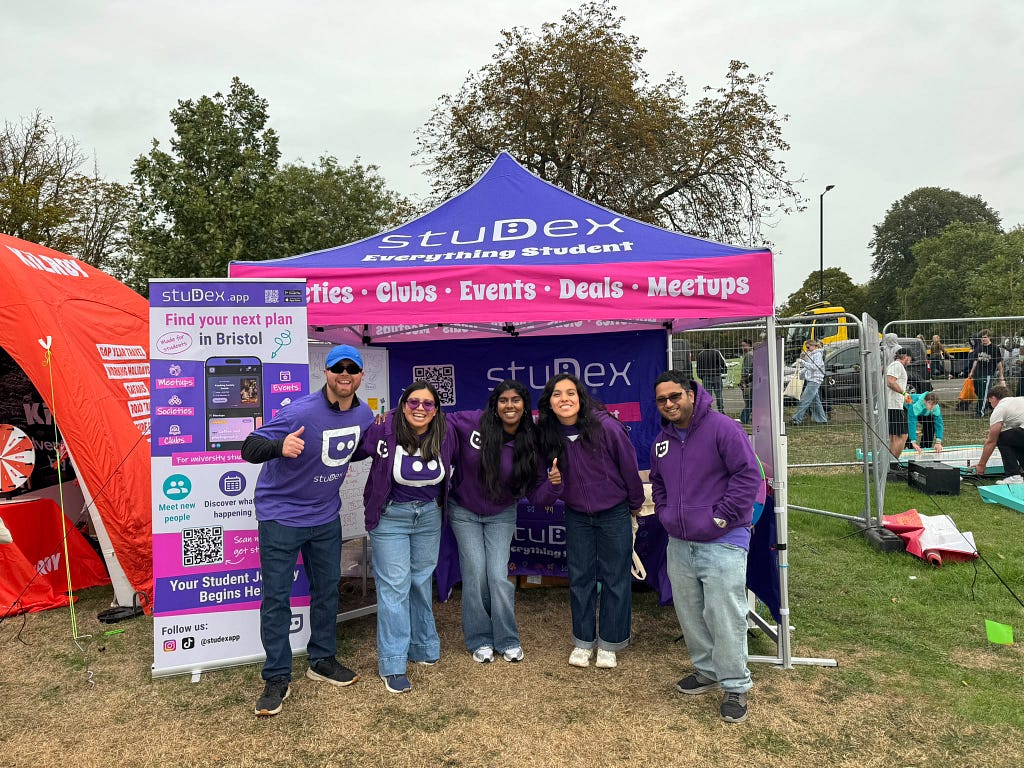
Prankit Gupta is the Founder and Managing Director of stuDex, a Bristol-based app built to help students connect with the local businesses, societies, events and opportunities around them. A PhD in Machine Learning (UWE Bristol) and former Practice Manager for Data & AI at Ingram Micro, he left a five-year corporate career in AI and cloud services to build stuDex with his wife, Mayra Yadira Rivera Lopez, turning firsthand experience of Bristol’s fragmented student scene into a platform that’s already onboarded 3000+ students and 37+ local partners since its September 2026 launch.
Thank you so much for joining us in this interview series! Our readers would love to get to know you a bit better. Can you tell us a bit about your background and how you grew up?
I had a slightly unusual upbringing, spending roughly half of my school years in the UK and the other half in India. We moved around quite a bit and I changed schools several times, so from a young age I became used to arriving somewhere new, meeting people and finding my place within new social circles.
I came to Bristol in 2012 to study Mechanical Engineering. My interests gradually shifted towards robotics and AI, which led me to a master’s in Robotics and later a PhD in Machine Learning & Data Science at the Bristol Robotics Laboratory.
By the time I finished my PhD, I had been in Bristol for almost a decade, studied at both University of Bristol and the University of the West of England, and had experienced many different stages of student life. University was also where I met my wife and now co-founder, Mayra Yadira Rivera Lopez, which made those years particularly formative for me. It reinforced just how much the people you meet and experiences you have at university can shape the direction of your life.
After my PhD, I spent five years at Ingram Micro, eventually leading their Data & AI practice across EMEA. It gave me the opportunity to work with technology on a much larger scale, but throughout that time Mayra and I were also having conversations about ideas we wanted to build ourselves.
This past year, I left my corporate career to launch stuDex full-time.
What inspired you to get involved in building digital communities?
A lot of the inspiration came from our own experiences of student life in Bristol.
By the time I finished my PhD, I had been in the city for almost a decade, and one thing that stood out was how long it could take to break out of the university bubble. Bristol has an incredible local and independent culture, but as a student you can live there for years without necessarily discovering much beyond your course, accommodation, immediate friendship group or the places you already know.
At the other end of the spectrum, we also knew students who spent entire terms largely in their accommodation, hardly venturing out or finding their people. University is often portrayed as this naturally social experience, but making those first connections can actually be quite daunting.
Mayra and I kept coming back to the idea that it should be easier. There was already so much happening around students, societies, sports clubs, local businesses, events and other students looking to connect, but discovering it was fragmented and difficult.
That was really the starting point for stuDex. We became interested in how a digital platform could reduce some of that friction: helping someone discover what is around them, find people with similar interests and ultimately make it easier to take that first step into a real-world community.
Was there a moment when you realized the power of authentic online connection? Can you share that story?
It was not one particular moment, but I remember this especially from my master’s degree. We had a very active Facebook group within our course cohort, and it became a genuine community. People would share things happening around Bristol, organise meetups, create study groups, or simply ask questions that someone else in the group could usually help with.
There were only around 30 of us in the cohort, so the group itself was quite small, but it made a noticeable difference to my experience compared with my bachelor’s degree, where we did not have that same kind of shared space. You felt more connected to what was happening around you and, importantly, more connected to the people you were studying alongside.
What stayed with me was that the value of that group was not really about spending more time online. It was that the online connection made real life easier. It helped people feel less isolated, made it easier to ask for help, and gave you more confidence to get involved in things you might otherwise have missed.
That distinction has stayed with me ever since. Being digitally connected is not the same as feeling socially connected, but the right digital community can help bridge that gap. That experience became one of the influences behind how we think about stuDex today.
What’s the most important lesson you’ve learned along the way that influences how you operate now?
The biggest lesson has been to stay very close to the people you are building for. It is surprisingly easy to sit in a room with a team, have a thoughtful discussion about what people need, and come away with an idea that feels completely logical but does not quite work in practice.
Our pilot taught us that very quickly. Some of the most useful lessons did not come from the ideas we were most excited about, but from watching how students actually used the platform, listening to the same feedback come up repeatedly, and noticing the small points where people hesitated or dropped off.
It has made me much more comfortable changing direction when the evidence tells us to. I now try not to become too attached to a particular feature or idea just because we spent time building it.
For me, the product should evolve with the community. You can have a vision for where you want to go, but the people using it will often show you the best way to get there.
In your opinion, what defines a thriving digital community?
A thriving digital community is not simply the one with the most members, posts or reactions. It is one where people understand what brings them together, feel comfortable contributing, and have a clear reason to keep coming back.
For me, the strongest communities are the ones where participation leads to something meaningful. So instead of just consuming content; they are asking questions, sharing experiences, helping each other, discovering opportunities or forming relationships.
That is particularly important for stuDex. A student might discover a society they did not know existed, join a meetup, find an event happening nearby or visit a local business for the first time. Those actions may begin digitally, but the real value is what happens afterwards.
So I would not measure a thriving community purely by clicks or engagement. A much stronger signal is whether the community helped someone do something they might not otherwise have done, meet someone they might not otherwise have met, or help improve their mental wellbeing.
What are some common mistakes people make when trying to build digital communities?
One common mistake is building for a community without really building with them. When we started stuDex, we had plenty of ideas about what students would want, but it was only through our pilot that we really understood how differently people can behave in practice.
Another is assuming that being digitally connected means people feel socially connected. Someone can be very comfortable online and still find joining a meetup or walking into a room of strangers quite daunting.
We have seen that especially with meetups. Small things like knowing who will be there, having some input on the time or location, and feeling that the plan is clear can make a big difference.
For us, the goal is not to keep people in the app for as long as possible. It is to use the digital experience to make real-world connection feel easier and more natural.
I’m going to try a few of your tips, and I’m hopeful our readers will, too. What are your “Five strategies to cultivate a powerful, thriving digital community?’ Please share a story or example for each.
1. Build around a clear shared identity.
Strong communities usually have an obvious reason for people to feel they belong. stuDex is not trying to be a general social network; it is built specifically for students in Bristol who want to discover more of the city and connect with other students. That focus makes the community feel more relevant from the outset.
2. Give people ways to participate, not just consume.
A community becomes stronger when people can shape it themselves. On stuDex, students can create meetups, join activities and help decide what happens next. Once people start contributing rather than simply scrolling, they begin to feel a sense of ownership.
3. Make the first step feel easy.
Joining something new can be intimidating, especially if it involves meeting people you do not know. We have tried to reduce that pressure in meetups by letting hosts set a general time window while attendees can suggest the exact time or location. Small design choices like that can make participation feel much more approachable.
4. Create trust from the beginning.
People engage differently when they know who they are interacting with. stuDex is student-only, with university email verification, so the community is not completely anonymous. That does not replace moderation, but it creates a stronger foundation for trust and accountability.
5. Keep listening and evolving.
Communities are never finished products. Our pilot taught us that what people actually do is often more useful than what we assume they will do. We regularly look at student feedback, partner conversations and how people use the platform, then adapt accordingly. The community should help shape what the product becomes.
How important is meeting offline, in real life? What is the best way to make that happen? Can you share a story?
Meeting offline is incredibly important to us, because the digital experience is really only the starting point. Its job is to help someone discover an opportunity, find people with a shared interest and feel confident enough to take that first step in the real world.
We only officially launched stuDex across Bristol this September, but we have already seen students use it to find each other for all sorts of things: basketball, study groups, food crawls, and simple meetups over coffee. What I like about those examples is that they are often quite ordinary activities. They do not need to be huge organised events to matter. Sometimes the most valuable thing is simply helping someone find one or two people to do something with.
The key is reducing the uncertainty around meeting people you do not know. Rather than just telling people to “get out there”, you need to make that first interaction feel manageable: be clear about what to expect, keep activities low-pressure, allow people to have some input on the plan and create enough trust that joining does not feel like a leap into the unknown.
For me, our technology is doing its job when it becomes almost invisible and the real outcome is that two or three people who did not know each other before are now doing something together.
How do you handle negativity, trolling, or disengagement in a digital space?
We have moderation tools built into stuDex, including reporting and privacy controls, but so far we have seen very little deliberate trolling or negative behaviour. I think part of that comes from the way the community is structured. Users are verified students, and other students can see their name and university, so interactions feel more real and there is a natural level of accountability.
That does not mean you can become complacent. If something is reported, it needs to be taken seriously and dealt with consistently. Clear boundaries and good moderation are important for protecting trust in the community.
Disengagement is different. I do not think the answer is to push people harder to participate. Usually it is a signal to ask why they are not engaging. Is the content relevant? Is there too much friction? Does joining something feel intimidating? Are they getting enough value from being there?
For us, disengagement is often useful feedback. Rather than blaming the user, we try to understand what the experience is telling us and what we can improve.
What are some practical strategies for encouraging real interaction, beyond likes and emojis?
The most important thing is to give people a meaningful reason to interact. Asking people to simply “engage” rarely works. It is much more effective to ask a specific question, invite a recommendation, let people help make a decision or give them something they can actively contribute to.
It also helps to make the first step small. People are often more willing to join a short conversation, a small group or a low-pressure activity than make a big commitment straight away. Once someone has participated once and had a positive experience, the next interaction becomes much easier.
Another useful principle is to make sure digital interaction leads somewhere. A conversation is more valuable when it helps people make a plan, solve a problem, learn something or connect with someone else.
We use that thinking in stuDex. For example, when students join a meetup, they can suggest the time or location rather than simply clicking “attend”. That gives people a natural reason to talk to each other and helps turn the online interaction into a real shared experience.
Ultimately, likes and emojis are useful signals, but they should be the beginning of engagement rather than the end of it.
What platforms or tools have you found most effective for cultivating meaningful digital engagement?
I do not think there is one platform that is universally best. Different tools are good at different things. Instagram is great for discovery, WhatsApp works well for smaller group coordination, Reddit can be incredibly effective for interest-based communities and more open discussion, and Facebook groups have shown how valuable a shared community space can be when people genuinely contribute rather than just consume.
The more important question is what kind of behaviour you want to encourage. If the goal is discovery, you need reach. If it is discussion, you need a space where people feel comfortable sharing their experiences and opinions. If the goal is to bring people together in real life, the tool needs to make that next step simple.
That thinking influenced stuDex. We wanted to bring discovery, trusted identity and action closer together, rather than relying on students to piece everything together across several different platforms.
We also use product data to understand where people engage or drop off, but I would never rely on data alone. Some of the most useful insights still come from simply talking to the people using the platform and understanding why they behaved the way they did.
Are there certain types of content or activities that tend to spark stronger connection in online spaces?
The content and activities that seem to create the strongest response usually have a clear reason for someone to take part. People engage more when the value is obvious and the first step feels easy.
We see that with local businesses on stuDex. Simple offers such as a free drink, a free trial or something included with a purchase tend to work well because they give students an immediate reason to try somewhere new. That first visit can then introduce them to a part of the city they may not have discovered otherwise.
With student meetups, relaxed and open activities usually perform better than anything that feels too formal or intimidating. Things like coffee, sports, study groups or food crawls make it easy for someone to join without feeling they need to know anyone already.
It also helps when people can contribute rather than simply respond. On stuDex, hosts can leave the exact time or location open and let people joining make suggestions. That small amount of involvement makes the activity feel more collaborative and can help people feel part of it before they have even met.
Success is often a matter of perspective. I’ve always resonated with Henry David Thoreau’s quote, “It’s not what you look at that matters, it’s what you see.” How do you see success — or define success — for yourself now?
For me, the short-term definition of success has become a bit of a moving goalpost.
At first, success was simply getting students and businesses to sign up. Then it became whether they students actually opening the app and engaging with what was there. After that, the question became whether they were taking more active steps such as joining activities and creating meetups.
Now I find myself asking a harder question: are people actually showing up? If someone joins a meetup, do they go? If they discover an event or a local business through stuDex, does that digital interaction turn into something real?
That progression has changed the way I think about success. The numbers still matter, but they are only useful if they represent genuine behaviour and value rather than passive engagement.
Longer term, I want stuDex to become a sustainable and scalable business, but not at the expense of what makes it useful. Success would mean building something that students genuinely rely on, that helps local businesses and student organisations reach the right people, and that becomes part of how students experience their city.
If we can grow commercially while still helping students make connections, discover opportunities and have experiences they might otherwise have missed, that would feel like meaningful success to me.
We are very blessed that some of the biggest names in Business, VC funding, Sports, and Entertainment read this column. Is there a person in the world with whom you’d like to have a private breakfast or lunch with, and why? He, she or they might just see this. 🙂
I would probably choose Daniel Ek, the founder of Spotify. I have always been fascinated by people who are willing to take on an established industry and try to fundamentally change the way it works.
Spotify was a first of its kind, it helped change how an entire generation consumes music, and doing that meant overcoming challenges on both sides: convincing consumers to adopt a completely different behaviour while also earning the trust of artists, labels and an industry whose traditional model was being disrupted.
I would love to talk to him about the resilience required to keep pushing an idea like that forward when there are so many reasons it might not work. I would also be interested in how you build trust with the very organisations whose industry you are trying to change, and how you decide when to adapt your vision versus when to keep pushing because you believe the market will eventually catch up.
More broadly, I think there would be a lot to learn from what it takes to turn an ambitious idea into something that genuinely changes an industry.
What is the best way for our readers to further follow your work online?
The best place to follow me is on LinkedIn, and follow our stuDex journey on studex.app
Thank you for these thought provoking insights. Here’s to your continued success!
Creating Powerful, Thriving Digital Communities: Prankit Gupta of stuDex App On How To Cultivate… was originally published in Authority Magazine on Medium, where people are continuing the conversation by highlighting and responding to this story.