


Systemic change is built step by step- Early in my career, I became impatient when reforms moved slowly, seeing every delay as a setback. Over time, I learned that meaningful change is both a marathon and a mosaic. Each small policy shift, stakeholder meeting, or pilot program may feel incremental, but together they build the foundation for transformation. Celebrating these small victories sustains the long journey and creates proof points for larger reforms.
According to the University of Colorado, “Those who are most affected and have the fewest resources to adapt to climate change are also the least responsible for the greenhouse gas emissions — both globally and within the United States.” Promoting climate justice is an incredibly important environmental responsibility that is slowly becoming more and more recognized. In this interview series, we are talking to leaders who are helping to promote sustainability and climate justice. As part of this series, we had the pleasure of interviewing Sandra Namukaya.
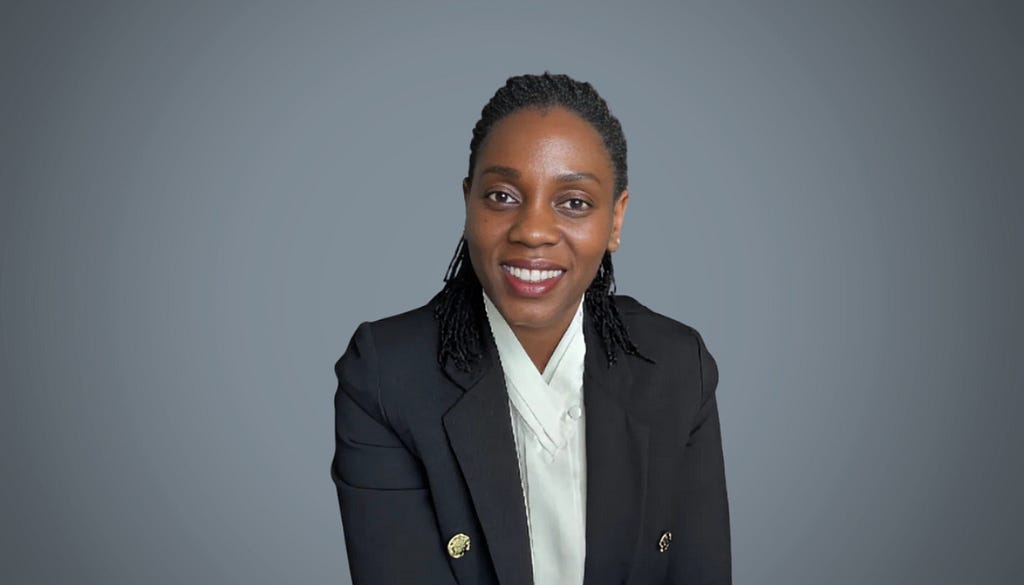
Sandra Namukaya is an Infrastructure & Sustainability Economist with over a decade of experience shaping energy policy, clean energy transitions, and public investment strategies around the world. With a background in economics and a career spanning national governments and global institutions, including the Ministry of Finance in Uganda, the World Bank, and Oregon Public Utility Commission, she brings expertise in resource planning, energy regulation, public investment management, and sustainable development.
As America grapples with aging infrastructure, growing energy demand, and the need for reliable and affordable energy, Sandra’s work provides critical solutions by bridging the gap between policy and implementation. She supports governments by advancing market-based resource planning and utility regulation that optimize long-term investments, protect ratepayers, and strengthen grid reliability while ensuring decisions are grounded in rigorous economic analysis and aligned with national energy security goals.
Thank you so much for doing this with us! Before we dig in, our readers would like to get to know you a bit. Can you tell us a bit about how you grew up?
I grew up in Uganda in a family where education was always emphasized as the key to making our lives better. On my maternal side, while not among the very first to receive formal Western education, were pioneers in promoting and pursuing it in the Country as early as the early 20th century. That legacy meant I grew up with a deep appreciation for learning as both an opportunity and a responsibility.
My parents reinforced those values, instilling in me a strong sense of responsibility and the conviction that hard work should always be tied to making a positive impact on people’s lives. Resources were often scarce. I remember walking miles to fetch water from the borehole and studying late into the night by the light of a kerosene lamp at some point in my life. Even when we eventually had electricity, power outages and disconnections were a regular part of life. Those experiences taught me resilience, discipline, and resourcefulness — qualities that continue to shape the way I approach challenges and opportunities today.
Everyone has a cataclysmic moment or marker in their life which propels them to take certain actions, a “why”. What is your why?
My “why” is rooted in turning personal experiences of scarcity into a lifelong mission to expand access and opportunity for those around me. Growing up in Uganda, I saw how limited resources, whether it was water, electricity, or education, could hold back entire communities. Those challenges shaped my resolve to dedicate my career to building systems that address inequities and create pathways for sustainable growth.
That mission has guided me in every role I’ve taken on, from reforming public investment systems to ensure resources are allocated more effectively, to my current work in energy regulation where decisions today directly influence affordability, reliability, and environmental sustainability for the future. At the core, my “why” is being able to use my skills to design and implement policies that enable people and communities to thrive not just survive by ensuring that critical resources are managed equitably and responsibly.
You are currently leading an organization that is making a difference for our planet. Can you tell us a bit about what you and your organization are trying to change?
My professional mission is to promote equitable and sustainable resource policies. In my career, I’ve focused on how economic tools and regulatory frameworks can ensure that critical resources like energy and water are planned and managed in ways that are fair, reliable, and forward-looking. The change I’m working toward is a system where communities not only gain access to these resources but can depend on them as a foundation for long-term security and opportunity.
Can you share the most interesting story that happened to you since you began leading your company or organization?
One of the most interesting realizations I’ve had is that all of this work is, at its core, a partnership. Whether it’s between policymakers and communities, economists and scientists, or regulators and businesses, no single actor can carry the weight of sustainability alone. Early in my career, I thought my role was mainly about delivering analysis or policy recommendations. Over time, I’ve come to see that progress happens when different perspectives and strengths come together toward a shared goal. That realization has shaped how I approach collaboration ever since.
None of us can be successful without some help along the way. Did you have mentors or cheerleaders who helped you to succeed? Can you tell us a story about their influence?
To be honest, my greatest source of encouragement has been my family, who instilled in me resilience, discipline, and the belief that I should always strive to make a positive impact. That foundation has been reinforced by my own inner drive to contribute to policies and systems that promote fairness and equitable resource allocation.
I’ve also been fortunate to work with wonderful colleagues at every stage of my journey who have supported me, created environments where I could grow, and encouraged me to bring my strengths forward in ways that advanced both organizational goals and my personal mission.
Just as importantly, I’ve worked in organizations that were deeply committed to the betterment of communities. Being part of those missions pushed me to stretch my limits, while giving me the privilege to contribute to work that had a meaningful impact beyond myself.
Thank you for that. Let’s now move to the central part of our discussion. Let’s start with a basic definition of terms so that everyone is on the same page. What does climate justice mean to you? How do we operationalize it?
To me, climate justice means recognizing that the burdens and benefits of addressing climate change are not distributed equally and ensuring that policies and actions correct those imbalances. It’s about fairness: acknowledging that vulnerable and marginalized communities often contribute the least to climate change yet face its most severe impacts, while also making sure they share fully in the opportunities that come from the clean energy transition.
In the energy sector, operationalizing climate justice means looking closely at how decisions about affordability, reliability, and decarbonization affect different communities. For example, we must ensure that clean energy investments do not just flow to those who already have resources, but also expand access for low-income households, rural areas, and historically underserved communities. It also means carefully evaluating cost allocation, so that the transition to renewable energy does not place disproportionate burdens on those least able to bear them.
More broadly, it requires embedding equity into every stage of planning and regulation through inclusive stakeholder engagement, equity assessments in policy design, targeted investments, and accountability mechanisms. Ultimately, climate justice is not an add-on; it’s a lens that has to guide energy policy and planning if we are to build systems that are sustainable, fair, and truly serve the public good.
Science is telling us that we have 7–10 years to make critical decisions about climate change. What are three things you or your organization are doing to help?
That’s a crucial question, and I’ll answer from my own professional perspective rather than on behalf of my current organization. From where I sit, three areas are critical in the next decade if we are to meet the climate challenge.
First, accelerating the transition to clean energy not only scaling up renewable generation, but also ensuring that the grid and transmission systems can integrate them reliably.
Second, centering equity in climate and energy policies. We must make sure that the costs and benefits of the transition are shared fairly, and that vulnerable communities are not left behind in accessing clean, affordable, and reliable energy.
Third, strengthening long-term planning and accountability, guided by both science and data. In my own research, for example, I’ve studied how groundwater mitigation policies affected land values, which revealed how people place value on sustainable water use. That kind of insight underscores how important it is to align policies with human behavior and preferences because climate solutions will only succeed if they are both environmentally effective and socially acceptable.
These are the areas where I’ve dedicated much of my professional work to ensure that resources are managed equitably and sustainably.
Are there three things the community, society, or politicians can do to help you in your mission?
Yes, there are three things that would make a real difference in advancing my mission of promoting equitable and sustainable resource allocation.
First, political will and long-term commitment. Climate and resource decisions can’t be viewed through short election cycles alone. Leaders need to commit to long-range policies that remain consistent, so communities and markets can plan with confidence.
Second, inclusive and participatory processes. Communities must be engaged meaningfully instead of just being consulted at the end. Their lived experiences and local innovations provide insights that can make policies both more effective and more equitable. By adopting and scaling local solutions, people see themselves in the outcomes, and implementation becomes stronger.
Third, investment in data and evidence-based policymaking. Sound decisions require good information, whether it’s about energy use, water availability, or social impacts. As someone who has worked on research into how policies like groundwater mitigation or moratoriums shape real economic behavior, I’ve seen how much stronger policy design becomes when it’s grounded in data that reflects people’s preferences and trade-offs.
If society, policymakers, and communities lean into these three areas, we’ll not only design better policies but also build trust and momentum for the transitions we urgently need.
How would you articulate how a business can become more profitable by being more sustainable and more environmentally conscious? Can you share a story or example?
Businesses sometimes assume that sustainability is a cost, but it’s often a driver of profitability. When companies adopt environmentally conscious practices, they reduce waste, cut long-term costs, and strengthen their resilience to regulatory and market shifts. Just as importantly, consumers, investors, and even employees are increasingly rewarding businesses that align with sustainability values, which enhances competitiveness. For example, in my graduate research on groundwater mitigation policies in Oregon, I found that land values reflected people’s preferences for sustainable water management. Buyers were willing to pay more for land in areas where water use was managed responsibly, because it signaled long-term security and stability. That suggests sustainability isn’t just good for the environment, it carries real economic value. Similarly, in the energy sector, businesses that invest in efficiency and renewable power often see immediate financial benefits. For instance, companies that install on-site solar or switch to energy-efficient operations can dramatically reduce their utility costs while also insulating themselves from volatile fuel prices. While the upfront costs may seem like a drawback, the long-run savings often outweigh the initial investment, and at the same time, these businesses strengthen their brand with environmentally conscious customers and investors. The lesson is clear: by embedding sustainability into operations, whether in agriculture, energy, or any other sector, businesses not only reduce risks but also unlock new opportunities for growth, customer trust, and long-term profitability.

What are your “5 things I wish someone told me when I first started promoting sustainability and climate justice” and why?
While my work has focused more on resource economics, energy regulation, and sustainable policy design, many of the lessons I’ve learned translate directly into sustainability and climate justice. Here are five things I wish someone had told me when I started this journey:
1. Systemic change is built step by step- Early in my career, I became impatient when reforms moved slowly, seeing every delay as a setback. Over time, I learned that meaningful change is both a marathon and a mosaic. Each small policy shift, stakeholder meeting, or pilot program may feel incremental, but together they build the foundation for transformation. Celebrating these small victories sustains the long journey and creates proof points for larger reforms.
2. Meaningful change requires building bridges, not just arguing facts. — Early on, I thought that if I just presented the data and the facts, people would automatically see the right path forward. I wish someone had told me that building trust and inclusive processes is far more powerful than any single data point.
3. The transition is not a “cost”; it’s a long-term investment. — When talking about sustainability, the conversation often gets stuck on the upfront costs. I have learned along the way that emphasizing long-term profitability and resilience is often a good window for buy-in.
4. Find allies in unexpected places. — Sustainability and equity goals don’t have to rely on a single coalition. Businesses, communities, and policymakers may have different motivations, but they often align on outcomes.
5. Keep the human impact at the center. — It’s easy to get caught up in technical details: megawatts, models, and cost curves. But at the heart of this work is human well-being: whether families can afford their energy bills, whether communities can access clean water, and whether the next generation can thrive. Keeping people at the center grounds the work in purpose.
In the end, these lessons remind me that sustainability is not only about policies and resources, but about building systems that enable people and communities to thrive over the long term.
Is there a person in the world, or in the US with whom you would like to have a private breakfast or lunch with, and why? He or she might just see this, especially if we tag them. 🙂
I would love to have a private breakfast with Dr. Ngozi Okonjo-Iweala, the Director-General of the World Trade Organization. She is someone I admired growing up as a career economics professional, and her journey showed me how economic policy can be a powerful tool for global fairness and sustainability. I deeply respect how she bridges economics, governance, and equity in practical ways, and I think we’d have an incredible conversation about how trade and policy can drive sustainable environmental transitions.
How can our readers continue to follow your work online?
The best way to follow my work is on LinkedIn, where I regularly share insights on energy policy, resource economics, and sustainability. I also occasionally contribute articles on energy, economics, and sustainable development to media outlets.
This was very meaningful, thank you so much. We wish you only continued success on your great work!
How Sandra Namukaya Is Helping to Promote Sustainability and Climate Justice was originally published in Authority Magazine on Medium, where people are continuing the conversation by highlighting and responding to this story.