

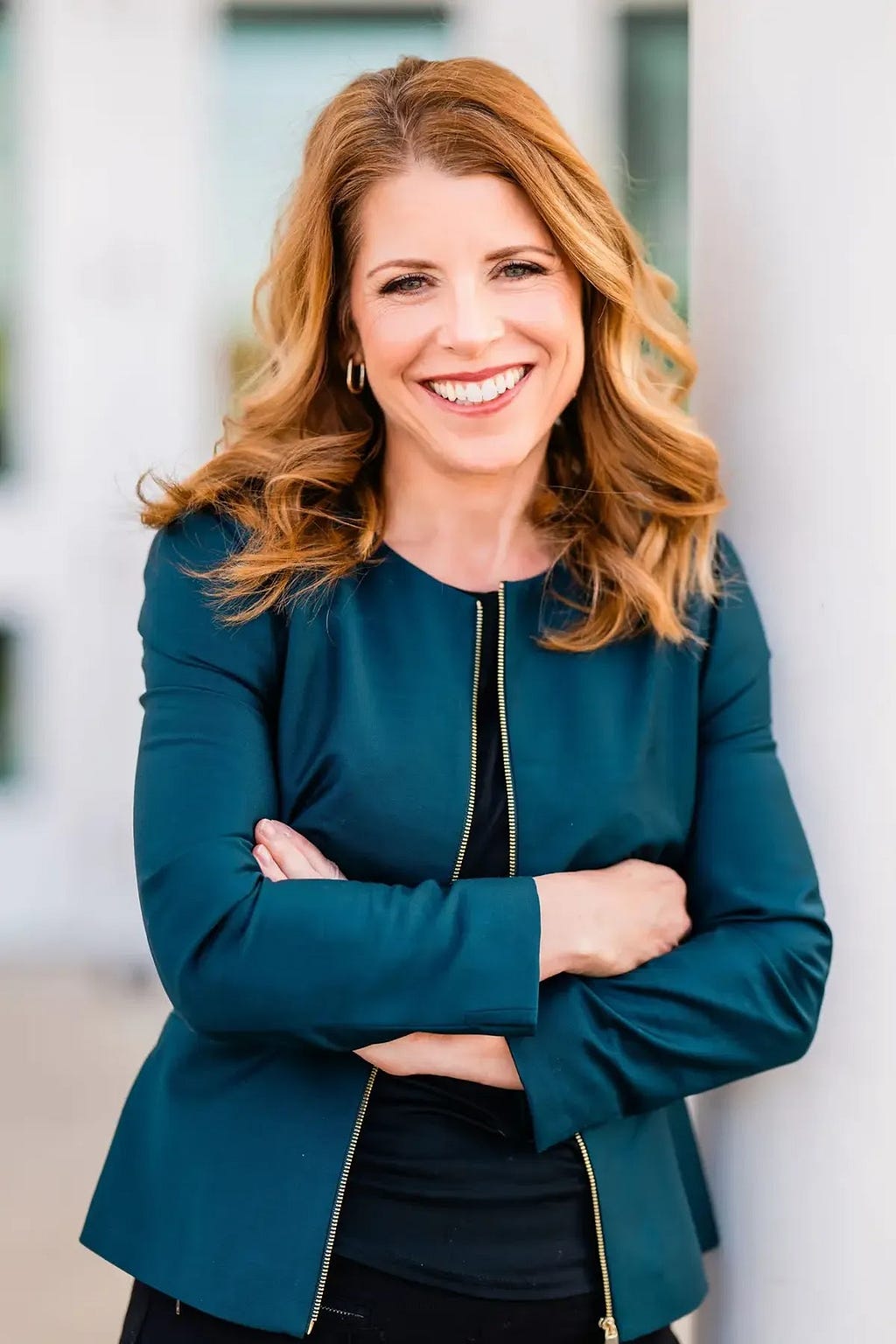
Shawn Kros of The Arc Northern Chesapeake Region On 5 Steps We Must Take To Truly Create An Inclusive, Representative, and Equitable Society
Leadership is creating an environment where people feel valued, supported, and able to use their strengths — while also holding clear direction and accountability for results.
As a part of this series, we had the pleasure to interview Shawn Kros.
Shawn Kros is the President and CEO of The Arc Northern Chesapeake Region, where she has spent more than two decades advancing services that empower people with disabilities to live, work, and thrive in their communities. With over 26 years in nonprofit human services, she is a nationally recognized speaker and leader who has strengthened organizational impact, expanded community presence, and championed inclusive opportunities for individuals with differing abilities. Through her leadership and advocacy, Kros has helped position her organization as a model for inclusion and disability support at both the state and national levels.
Thank you so much for joining us in this interview series! Before we dig in, our readers would like to ‘get to know you’. Can you tell us a bit about how you grew up?
I grew up on a farm on the Rosebud Reservation in South Dakota, the oldest of three. Being part of a community where I was not the cultural majority gave me an early awareness of difference, but over time I’ve come to understand that being in the minority is not the same as lacking power. That distinction has deeply influenced how I think about equity, leadership, and accountability.
Is there a particular book that made a significant impact on you? Can you share a story or explain why it resonated with you so much?
One book that has stayed with me is The Oz Principle, which focuses on accountability. It reinforced that leadership starts with taking ownership, especially in complex systems where it’s easy to deflect or delay. That idea resonated with me because much of my work has involved leading through ambiguity and change, where progress depends on people stepping forward and owning outcomes. I’ve also been influenced by Leadership and Self-Deception, which continues to shape how I think about my role in creating a strong and healthy culture.
Do you have a favorite “Life Lesson Quote”? Do you have a story about how that was relevant in your life or your work?
A quote I return to often is from Maya Angelou: “Do the best you can until you know better. Then when you know better, do better.” It reflects both compassion and accountability. Recognizing that growth is part of leadership, but so is the responsibility to act on what we learn. I’ve found that mindset is especially important in my work, where a willingness to stay curious and continuously improve has led to better decisions, stronger systems, and better outcomes for the people we support.
How do you define “Leadership”? Can you explain what you mean or give an example?
Leadership is creating an environment where people feel valued, supported, and able to use their strengths — while also holding clear direction and accountability for results. I see that reflected in our team, who show up every day for people who deserve dignity, opportunity, and a full life. A strong example is the launch of monarc, where women across our organization led the design and implementation of a new model of care, demonstrating what happens when people are trusted to lead and innovate.
Ok, thank you for all that. Now let’s move to the focus of our interview. In the summer of 2020, the United States faced a very important self-reckoning about race, diversity, equality and inclusion. This is, of course, a huge topic. But briefly, can you share your view on what made the events of 2020 different from racial reckonings in the past?
The events of 2020 felt different because they created a broader, more sustained awareness that inequities are embedded in systems, not just individual experiences. It moved the conversation from awareness to responsibility, especially for leaders. For me, it reinforced the importance of listening differently and ensuring that voices often left out of decision-making are meaningfully included.
Can you tell our readers a bit about your experience working with initiatives to promote Diversity and Inclusion? Can you share a story with us?
My approach to diversity and inclusion has been grounded in doing the internal work first. During 2020, rather than issuing a public statement, I focused on engaging our team through town halls and honest conversations to ensure we were aligned in how our values showed up in practice. That commitment is reflected today in a highly diverse workforce and leadership team, including an all-women executive team and strong representation of women of color, demonstrating that inclusion must be built, not just communicated.
This may be obvious to you, but it will be helpful to spell this out. Can you articulate to our readers a few reasons why it is so important for a business or organization to have a diverse executive team?
A diverse executive team leads to better decisions, stronger performance, and more relevant outcomes because it reflects the complexity of the people and communities being served. It also builds trust -internally and externally- when leadership reflects a broader range of experiences. In my experience, diversity at the leadership level isn’t just about representation; it directly impacts how effectively an organization operates and evolves.

Ok. Here is the main question of our discussion. You are an influential business leader. Can you please share your “5 Steps We Must Take to Truly Create An Inclusive, Representative, and Equitable Society”? Kindly share a story or example for each.
1. Integrate Behavioral Health Into Disability Services — Not Alongside Them
Mental health care cannot sit adjacent to disability services. It must be fully integrated. Too often, individuals with disabilities are misunderstood, misdiagnosed, or overmedicated in traditional systems, leading to fragmented care. At The Arc NCR, we launched monarc specifically to bridge that gap by embedding behavioral health within a system that already understands the person, not just the diagnosis.
2. Design Services That Adapt to the Individual — Not the Other Way Around
True equity means designing services around the individual and not expecting people to fit rigid clinical models. At monarc, we intentionally adapt communication styles, environments, and therapeutic approaches to meet people where they are, including sensory and cognitive needs. I’ve seen individuals labeled “noncompliant” or “inappropriate” in traditional settings who, once the approach was adjusted, were able to engage in ways no one had previously seen. When services are designed to be inclusive for people with disabilities, they ultimately become more accessible for everyone.
3. Embed Trauma-Informed Care as a Standard, Not a Specialty
For many individuals with disabilities, trauma is not the exception, it is the experience, often rooted in years of exclusion, misunderstanding, or overmedicalization. That’s why trauma-informed care must be foundational, not optional. At monarc, we built this into the model from day one, ensuring every interaction recognizes the full history a person brings.
4. Train Clinicians in Disability Competency — Not Just Clinical Expertise
Clinical expertise alone is not enough if providers don’t understand disability. Inclusion breaks down when professionals lack awareness of communication differences, support needs, and lived experience. At monarc, we prioritize building a team that is not only clinically strong, but truly competent in disability-informed care grounded in continuous learning and growth.
5. Build True Continuity of Care Within Community-Based System
Lasting equity comes from connected systems, not siloed services that leave individuals navigating gaps on their own. monarc is intentionally integrated within a broader network of community-based supports, creating continuity across housing, employment, and daily life. When care is connected, people are supported as whole individuals — not just during appointments, but in how they live, work, and thrive.
We are going through a rough period now. What makes you optimistic about the future of the US? Can you please explain?
What makes me optimistic is the people I see every day — individuals, families, and professionals who continue to show up with commitment, compassion, and a belief that things can be better. I also see a growing willingness to challenge outdated systems and build more inclusive ones. That combination of dedication and forward momentum gives me real hope.
Is there a person in the world, or in the US, with whom you would like to have a private breakfast or lunch, and why? He or she might just see this, especially if we tag them. 😊
I would choose Robert Waldinger, who leads the Harvard Study of Adult Development and co-authored The Good Life. His work on relationships, well-being, and what truly contributes to a meaningful life closely aligns with the work we do. I’d value the opportunity to explore how those insights can help shape systems that support people with disabilities in living full, connected lives.
This was very meaningful, thank you so much. We wish you only continued success on your great work!
Shawn Kros of The Arc Northern Chesapeake Region On 5 Steps We Must Take To Truly Create An… was originally published in Authority Magazine on Medium, where people are continuing the conversation by highlighting and responding to this story.