

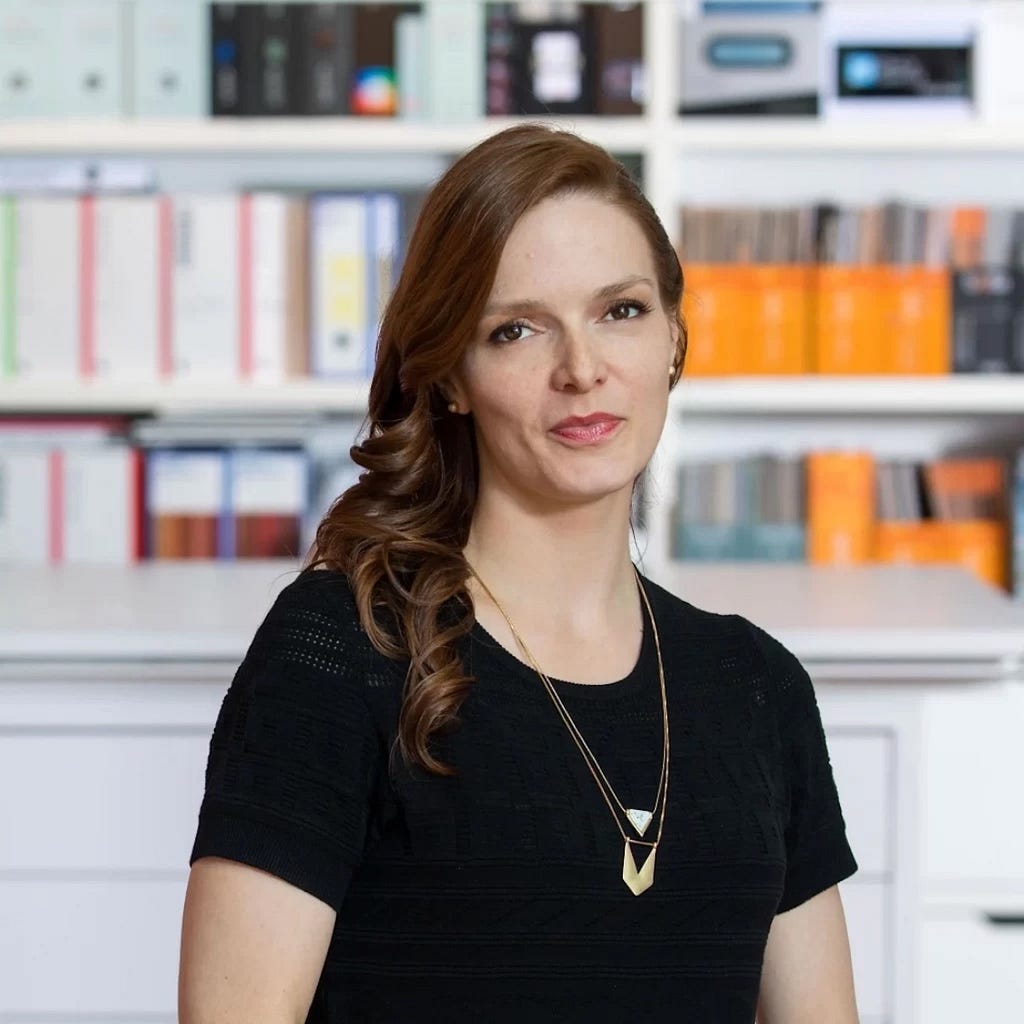

Elizabeth Von Lehe Of CannonDesign On Five Things You Need To Create A Highly Successful Career As A Commercial Designer
An Interview With Athalia Monae
Embrace the senses, always. The elements that make or break every single design are acoustics, lighting, and scent. At the Turf Experience Center, we leaned all the way in. Acoustics were a given — but visitors also pick up on the precise, mood-setting lighting and a signature scent we originally created for Turf’s first showroom. Now it’s part of the ritual, especially for NeoCon and events. The result? You don’t just walk into a space — you’re wrapped in a vibe.
As a part of my series about the ‘Five Things You Need To Know To Create A Highly Successful Career As A Commercial Designer,’ I had the pleasure of interviewing Elizabeth Von Lehe.
Elizabeth Von Lehe, NCIDQ, ASID, is a Senior Design Leader at CannonDesign based in the firm’s New York City office. A nationally respected voice in design, Elizabeth is known for blending interiors, branding, curation, and user experience into powerful, story-rich environments. Elizabeth has an impressive and diverse background, spanning fashion, furniture, interiors, experience strategy, and branding, resulting in a uniquely human-centered and multidisciplinary approach to design. Beyond her project work, Elizabeth is an active leader within the American Society of Interior Designers (ASID), serving as the chair-elect for the national board of directors. She also mentors graduate students at Columbia University and teaches a studio course in partnership with the Institut Paul Bocuse in Paris, France.
Thank you for joining us today! Can you share the story of what led you to pursue a career in commercial design?
I started in commercial product design, where everything begins with the end user — who they are, what they need, and what sensory cues will support them in the moment. That mindset naturally led me to commercial environments. Whether it’s a boutique or a behemoth institution, it’s still about orchestrating experiences that actually serve people. Same approach, just more square footage.
Can you describe a recent project you completed and what your specific contributions were?
I recently led the design for the new Turf Design Experience Center, which was a dream project for someone who loves orchestrating multi-sensory environments. I developed the core concept around the idea that whether you’re designing a workplace or a wild immersive installation, the magic happens when you give people choices — spaces that feel tailored, flexible, and alive to the senses. I oversaw the entire design across a constellation of collaborators, making sure every detail aligned with that vision and showcased Turf’s acoustic products not just as objects, but as experiences you can actually feel in the space.
How do you approach balancing aesthetics and functionality in your designs?
I’m not a decorator — I’m a designer. That means every decision, whether it’s a piece of furniture or a structural element, is doing more than just looking good. I’m crafting systems and spaces that shape how people perceive, feel, and function within an environment. Aesthetics matter, but only when they’re working in tandem with performance — supporting clarity, emotion, and usability all at once.
What strategies do you use to ensure your designs meet the needs of the end-users?
Design is never a solo act. We make the process as collaborative as possible from the start — because the best solutions come from truly engaging with the people who will live, work, or create in a space. With the Turf Experience Center, for example, we embedded their R&D group right into the design process, testing and developing new details alongside their brilliant team in real time. And we always plan for change. A space isn’t static — it needs to flex, grow, and evolve with the people using it. Building in that adaptability ensures we’re not just meeting user needs today, but setting them up for tomorrow too.
How do you approach sustainability in your commercial projects?
For me and my teams, sustainability starts with designing the right-sized solution. If a space is going to be redone in 10 years, it makes zero sense to spec a material meant to last 50 — and burn a ton of energy in the process. I focus on materials that are responsibly manufactured, Red List Free as a baseline, and tough enough to handle real use. Just as important: what happens after. Can it be reused, sold, or donated? Good design shouldn’t just serve the now — it should set up a smarter, less wasteful next chapter.
What impact do you think remote work and digital transformation will have on the design of commercial spaces?
Remote work and digital everything have made one thing clear: commercial spaces need to be flexible and ready to pivot on a dime. Whether it’s a workplace redefining productivity or a retail space navigating an online-first world, design has to keep up with shifting expectations — and shift fast. Sometimes that means built products that can change, like demountable partitions and flexible furniture and fixture systems. Just as often, though, it means flexibility in considering how space is planned and inhabited — and how that impacts the digital, physical, and human systems that support it.
What are the five things you believe are essential for creating a highly successful career in commercial design? Can you share a story or example for each?
1. Embrace the senses, always. The elements that make or break every single design are acoustics, lighting, and scent. At the Turf Experience Center, we leaned all the way in. Acoustics were a given — but visitors also pick up on the precise, mood-setting lighting and a signature scent we originally created for Turf’s first showroom. Now it’s part of the ritual, especially for NeoCon and events. The result? You don’t just walk into a space — you’re wrapped in a vibe.
2. Don’t assume the right answer is always more space, or even a space at all. This is especially playing out in the workplace across every sector — completely upending the 1:1 ratios of desks and offices in favor of more flexible shared or bookable space models. That may actually mean talking a client into fewer spaces, but working with them on a strategy for new models of workspace that are unique to their organization.
3. Realize that career paths aren’t linear. If you can honestly own your strengths, passions — and yes, your weak spots — you can shape a career that doesn’t follow a traditional ladder. Titles and time alone don’t equal growth. It’s what you do with them that matters.
4. Go beyond design to understand business models. Great design doesn’t stop at the space — it has to plug into the business model. Code and aesthetics are table stakes. The real magic happens when design aligns with operations. As an example for a quick-serve client, we didn’t just plan layouts or rollout kits — we dug into how delivery and ordering were evolving, and used that insight to redesign both pickup and back-of-house. The result was a system that didn’t just look good — it scaled their business.
5. Be a fan of your peers. Celebrating others’ excellence doesn’t dim your light — it amplifies the joy of design. Plus, saying nice things behind someone’s back? That’s a quiet flex of character everyone notices.
What role do you think commercial design plays in community building and social interaction?
Commercial designers are increasingly shaping everything from civic spaces to transit and healthcare, meaning we’re not just designing a space, but stitching together the full rhythm of someone’s day. By offering choice in how people interact — public or private, calm or kinetic — we create environments where they can truly connect and thrive.
How can our readers follow your work online?
CannonDesign Website: https://www.cannondesign.com/
CannonDesign Instagram: @cannondesign (https://www.instagram.com/cannondesign/)
Elizabeth Instagram: @superevl (https://www.instagram.com/superevl/)
Elizabeth LinkedIn: https://www.linkedin.com/in/elizabeth-von-lehe/
Thank you for your time and excellent insights! We wish you continued success.
Elizabeth Von Lehe Of CannonDesign On Five Things You Need To Create A Highly Successful Career As… was originally published in Authority Magazine on Medium, where people are continuing the conversation by highlighting and responding to this story.