

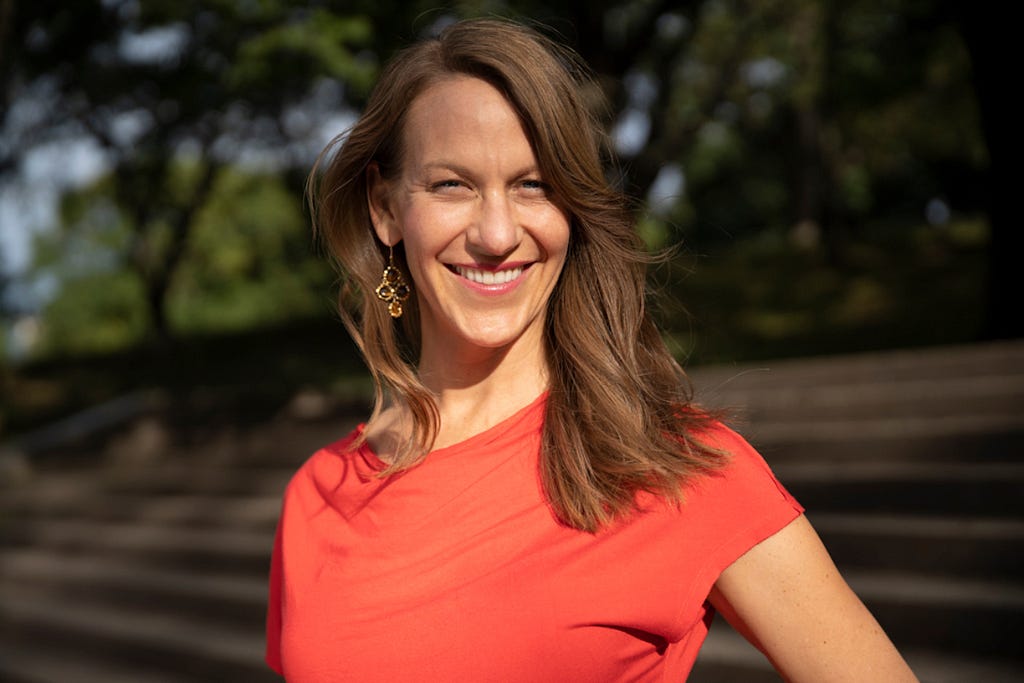

Lisa Gralnek of iF Design: Five Strategies Our Company Is Using To Tackle Climate Change & Become More Sustainable
An Interview With Martita Mestey
To our knowledge, the iF DESIGN AWARD is presently the only international design award where sustainability is fully embedded into the primary jurying criteria. We didn’t just add a “green” box to tick on the application or create a secondary award; we made sustainability one-fifth of our entire evaluation framework across all 93 categories. We think this is a big deal; we’d like to see more media outlets talk about this! So, thank you!
As part of our series about how companies are becoming more sustainable, we had the pleasure of interviewing Lisa Gralnek.
Lisa Gralnek is a brand builder with 25 years of experience creating and launching new ideas and initiatives for diverse international organizations. She is currently US Managing Director and Global Head of Sustainability & Impact for iF Design, and previously held leadership roles in strategy, marketing and operations at Chobani, Walmart, moo.com, adidas, and BCG. Lisa is a recognized thought leader in values-driven leadership and host of the award-winning podcast, FUTURE OF XYZ. She holds a BA in Political Science and French from Bates College and an MBA from INSEAD.
Thank you so much for doing this with us! Can you tell us a story about what brought you to this specific career path?
What is the mission of your company? What problems are you aiming to solve?
At iF Design, our mission is to recognize and celebrate design that not only excels in form and function but is also differentiated by idea and the positive impact it makes on society and the planet. We are deeply committed to showcasing the best in sustainable design and driving the change towards a more responsible future. Our definition of excellence recognizes beautiful products, spaces and experiences, but we also aim to inspire and encourage designers to integrate sustainability into their work, from materials and production methods to accessibility and community engagement.
Can you tell our readers about the initiatives that you or your company are taking to address climate change or sustainability? Can you give an example for each?
iF Design’s sustainability initiatives are foundational to the work we do. Our nonprofit parent organization, the iF Design Foundation, has been committed to design research and education since its inception, focusing on the role of design in making the world a better place. Our iF DESIGN STUDENT AWARD and iF SOCIAL IMPACT PRIZE both support projects that ladder to one or more of the United Nations Sustainable Development Goals (UN SDGs). And within our primary award platform, the iF DESIGN AWARD, we introduced Sustainability as one of five core jurying criteria, representing one-fifth of the overall score across all 93 entry categories. To ensure that the detailed questions we ask of participants are relevant and that our jurors are supported across the two-stage jury process, we established a Sustainability Working Group comprised of multidisciplinary experts who work in partnership with us to drive the sustainability agenda forward. Also, we just launched the iF DESIGN ACADEMY where we’ll offer design leaders the chance to learn about topics related to personal leadership, business, technology and sustainability.
How would you articulate how a business can become more profitable by being more sustainable and more environmentally conscious? Can you share a story or example?
There is ample evidence that shows sustainability doesn’t have to cost profitability. In fact, it can be a catalyst for innovation, customer loyalty, market capitalization, talent retention, and long-term value creation. I spent the majority of my career in the business world, leading growth initiatives and driving change, and have seen firsthand how businesses that prioritize sustainability gain a competitive and operational edge; the results may not be immediate but they are undeniable. Moreover, consumer demand for sustainable products continues to grow, yet our options remain limited in the market — largely because this false binary between profits and people/planet continues to persist in corporate boardrooms.
The youth led climate strikes of September 2019 showed an impressive degree of activism and initiative by young people on behalf of climate change. This was great, and there is still plenty that needs to be done. In your opinion, what are a few things parents should do to inspire the next generation to become engaged in sustainability and the environmental movement? Please give a story or an example for each.
The most important thing parents, friends and guardians can do is model good behavior. Turn off the water. Separate out the recycling. Reuse your aluminum foil, plastic wrap, and all kinds of bags. Avoid highly-processed foods, keep an eye on single-use plastics, and just generally buy less! And educate yourself about the digital footprint of your tech usage. Simple stuff. We can’t preach sustainability if we’re not being mindful in our own decision-making. Secondly, we need to make design choices visible so they can be recognized and understood.Young people will be interested to learn how every object, space, or experience is designed. Point out how those design choices matter to them as users, to manufacturers, and the community. And of course, both business and design education must set this next generation up with creative, critical, and strategic thinking skills so they can help solve the problems of tomorrow.
What are your “5 Things I Wish Someone Told Me Before I Started” and why?
- Sustainability is still misunderstood in the world at-large. As part of the work at iF Design, we’ve needed to define what it means to us and also help our various stakeholders understand why it matters to them.
- The shift we made in 2024 to embed sustainability into the primary jurying criteria of the iF DESIGN AWARD forced us to reckon with the possibility of losing a certain share of entrants. We couldn’t know the future, but our leadership was willing to take the risk, because it was the right step for us as industry leaders and for the industry. In year 1, we saw NO decline in total entry numbers, testament to the industry’s readiness to embrace sustainability within the definition of design excellence.
- Even when sustainability and impact are core values of your organization, change is hard. No matter how good the argument or supporting data — leading a change program requires diligence, persistence, great collaborators, and grace.
- We have a big footprint at iF Design, but actually turn out to be a very small team. Nothing is possible without all people rowing in the same direction. So, I’m very grateful for this team who helps elevate the cause of sustainability and impact in design every day.
- To our knowledge, the iF DESIGN AWARD is presently the only international design award where sustainability is fully embedded into the primary jurying criteria. We didn’t just add a “green” box to tick on the application or create a secondary award; we made sustainability one-fifth of our entire evaluation framework across all 93 categories. We think this is a big deal; we’d like to see more media outlets talk about this! So, thank you!
None of us are able to achieve success without some help along the way. Is there a particular person who you are grateful towards who helped get you to where you are? Can you share a story about that?
My maternal grandfather was a gentleman of the so-called Greatest Generation who graduated college during the Great Depression, served his country in WWII while a young father and budding business leader, who later in life served on diverse community and nonprofit boards, all while adhering to the utmost principles of human kindness and mutual respect. While he left us nearly twenty years ago as I made my first big career pivot- leaving fashion after eight years to return to grad school- his intellectual curiosity, understanding of people, and love of nature inspired me to pursue my passions and not compromise my values regardless of short-term or perceived public gain. I still miss him every day.
You are a person of great influence and doing some great things for the world! If you could inspire a movement that would bring the greatest amount of good to the greatest amount of people, what would that be? You never know what your idea can trigger.
At iF Design, Sustainability is now a core judging criteria across all categories of the iF DESIGN AWARDS. There should be more incentive encouraging sustainability to be baked into the definition of design excellence, not tacked on as an afterthought. Also, I’m a long-time member of 1% for the Planet- a platform founded by Patagonia’s Yves Chouinard where business members commit 1% of annual gross revenues to accredited environmental and social nonprofits. My strong conviction is that this should be a mandate, not a nice-to-have that select businesses opt-into.. Together, a movement towards sustainable design and sustainable funding should be the norm — taught in schools, supported by policy, rewarded by consumers, and required by investors around the world. We cannot consume our way to a better future without this.
Do you have a favorite life lesson quote? Can you tell us how that was relevant to you in your own life?
“Turn your face to the sun and the shadows fall behind you.” Attributed to the poet Walt Whitman, variations can also be found in multiple indigenous proverbs. Reading this quote during a particularly difficult period of my life many years ago, illustrated by a young girl in watercolors looking towards a bright sun on blue sky, the common sense of the idea overwhelmed me. I realized in that moment how the power of perception is one of humankind’s greatest assets. I can choose to be optimistic, positive, hopeful. And while it doesn’t mean the darkness disappears, because that’s not realistic, we can warm ourselves and take delight and energy by focusing on the light.
What is the best way for our readers to continue to follow your work online?
Visit ifdesign.com to track award deadlines and results, follow our sustainability initiatives, and get inspired by design stories from across the world. Subscribe to FUTURE OF XYZ, our award-winning winning interview series available everywhere you get your favorite podcasts and on YouTube. And of course, feel free to connect with me on LinkedIn (@Lisa Gralnek) for behind-the-scenes insights, brand leadership, and running insights on the role of design in creating systems-level change.
This was so inspiring. Thank you so much for joining us!
Lisa Gralnek of iF Design: Five Strategies Our Company Is Using To Tackle Climate Change & Become… was originally published in Authority Magazine on Medium, where people are continuing the conversation by highlighting and responding to this story.