



Impactful Communication: Aram Baek of Nurilounge On 5 Essential Techniques for Becoming an Effective Communicator
An Interview With Athalia Monae
Nothing undermines communication faster than inconsistency. When I tell creators we value their voices, I back it up by building reward systems and hosting community events. Consistency builds trust, and trust makes every message stronger.
In an age dominated by digital communication, the power of articulate and effective verbal communication cannot be understated. Whether it’s delivering a keynote address, leading a team meeting, or engaging in a one-on-one conversation, impactful speaking can open doors, inspire change, and create lasting impressions. But what truly sets apart an effective communicator? What techniques and nuances elevate a speech from mundane to memorable? As part of this series, we had the pleasure of interviewing Aram Baek.
Aram Baek is a seasoned entrepreneur from Seoul, Korea, with over a decade of experience redefining how Korean brands engage with consumers across borders. His career has led him to the intersection of beauty, technology, and global community-building–fueled by his passion for cultural exchange and digital innovation.
In 2010, Aram co-founded Wishcompany, a powerhouse in the K-beauty and media space that grew into a leading name in the global K-beauty movement. After a decade of success with Wishcompany, Aram launched Nurilounge, a global platform built to empower creators and connect them with Korean beauty, lifestyle, and culture through strategic brand partnerships. Within its first year, the platform onboarded 200+ K-beauty brands, expanded to the US and Japan, and drew 1,000 creators in its debut campaign, generating over 800 pieces of original content in just three days.
What’s next for Aram? Continuing to meet Nurilounge members, listen to their journey’s, and together–revolutionize the future of the global creator economy.
Thank you so much for joining us in this interview series. Before we dive into our discussion about communication, our readers would love to “get to know you” a bit better. Can you share with us the backstory about what brought you to your specific career path?
I’ve always been fascinated by how beauty and culture connect people. More than a decade ago, I witnessed firsthand how powerful content and community can shape consumer behavior and I knew I wanted to build something that amplified that connection.
When I founded Nurihaus and its flagship platform, Nurilounge, my vision was crystal clear: to create a bridge between Korean brands and global creators. I saw a major gap: brands wanted to expand internationally but struggled with localizing their message and building authentic connections. At the same time, creators around the world were eager for meaningful collaborations and opportunities to monetize their influence.
Nurilounge was born to close that gap. It’s more than a platform; it’s a community-driven ecosystem where culture, creativity, and commerce come together. Today, Korean beauty brands are rapidly expanding globally, and we’re building the infrastructure that connects their innovation with creators who authentically share their stories. My dream is to make these connections so seamless that global collaboration becomes second nature.
You are a successful business leader. Which three character traits do you think were most instrumental to your success? Can you please share a story or example for each?
- 1) Strategic Foresight with Hands-on Execution
I’ve always believed in balancing the big picture with the small actions that make it possible. In the early days of Nurilounge, I personally met foreign creators living in Korea one by one to build trust and understand their needs. That personal effort laid the foundation for a strong community. When we later expanded to the U.S., our very first event brought together just 30 creators in New York, a small group, but a critical step toward what is now an 80,000-member global network.
2) Resourcefulness and Relentless Learning
Nothing I’m doing today is truly ‘new’; it’s the sum of 15 years of wins, failures, and the lessons that came with both. I’ve learned to leverage every experience, every relationship, and even small insights to create bigger breakthroughs. For example, the network I cultivated years ago during my first venture became instrumental in onboarding our first Korean brand partners to Nurilounge. Success is rarely about having everything; it’s about making the most of what you have.
3) Consistency with an Integrated Vision
Our projects aren’t random; they’re interconnected. Nurilounge began as a creator community, then evolved into a platform that supports marketing, commerce, and logistics through services like Nuriglow. Each step was intentional, creating an ecosystem where every function, from creator engagement to cross-border sales, works together seamlessly. That structural consistency allows us to scale globally without losing focus or identity.
How would you define an “Effective Communicator?” What are the characteristics of an effective communicator?
An effective communicator doesn’t just transmit information; they create connection. To me, that means clarity, empathy, and adaptability;
- Clarity — delivering a message in simple, precise terms.
- Empathy — understanding what matters to your audience before you speak.
- Adaptability — adjusting your tone and approach when cultural or situational contexts change.
I’ve learned this firsthand while building Nurilounge, a global creator community. Communication isn’t just about language; it’s about connection. When we expanded to the U.S., we didn’t simply translate Korean content; we built localized communities around shared cultural codes. The most powerful communication doesn’t start with words; it begins with understanding what people truly care about.
How can one tailor their communication style to different audiences or situations?
The ability to adapt your style is what turns good communication into impactful communication. The foundation is understanding context, what your audience values, how they consume information, and what resonates emotionally. Communication is never one-size-fits-all; it’s like a tailored suit.
For example, when I pitch Korean beauty brands to U.S. creators, I don’t start with technical product details or ingredient jargon. Instead, I lead with storytelling, how this product fits into their lifestyle, why it reflects authenticity, and what experience it offers. On the other hand, when speaking to brand executives, I focus on measurable outcomes, ROI, and market entry strategies.
In my experience, the more diverse the audience, the more important it becomes to shift your language, tone, and even format, sometimes from data-driven presentations to casual conversations over coffee. The principle remains the same: meet people where they are, not where you are.
Can you provide an example of a time when you had to adapt your communication style to reach a particular audience successfully?
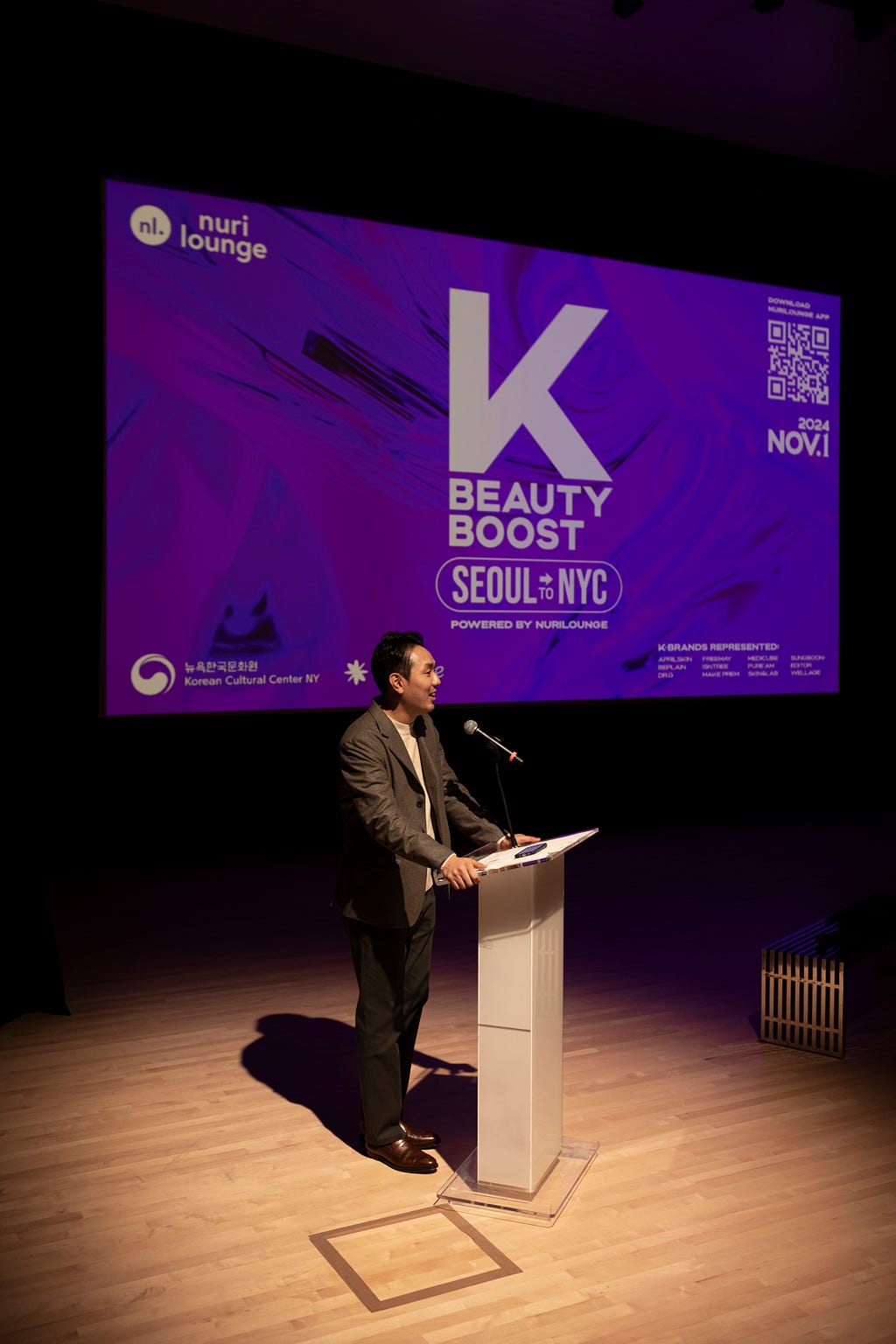
During our K-Beauty Boost event in New York, I had to address two very different audiences in the same room: Korean brand executives and U.S.-based influencers. My original script was full of facts and data, great for executives, but completely unrelatable for creators.
The night before the event, I tore it apart and rewrote everything in my hotel room. I opened my talk with a personal story: how I spent Halloween night in Manhattan rewriting a speech instead of attending a party. The room burst into laughter; not at the joke, but at the honesty. I could feel the tension melt away in that moment. That moment broke the ice and opened the door for real connection.
From there, I introduced our community and vision in a way that spoke to both sides: creators felt inspired, and brands understood the mission behind it. That experience reinforced a lesson I now carry everywhere: connection before information. People will truly listen only after they feel understood.
How do you handle difficult or sensitive conversations while maintaining open and effective communication?
Difficult conversations test not just your words, but your character. One of the toughest moments for me was when a major partner called, frustrated and ready to walk away from a collaboration we had spent months preparing. I felt the weight of losing this deal; it would have been a major setback.
My first instinct was to defend our position, but instead, I took a breath and said, “Tell me what’s worrying you.” For the next 20 minutes, I just listened. No pitch, no defense. When I finally spoke, it wasn’t to argue; it was to reflect their concerns and explore solutions together. I focused on uncovering what they truly needed and looked for common ground that could serve both sides.
We didn’t just save the partnership; we deepened the trust. That day taught me that in sensitive conversations, your goal isn’t to win; it’s to make the other person feel safe enough to stay at the table.
In your experience, how does storytelling play a role in impactful speaking? Why do you think stories are effective in communication?
My first interview with a major international magazine was a disaster at the start. They asked about our metrics, and I froze. Speaking in a language I wasn’t fully comfortable with, my thoughts felt scattered. Every answer sounded flat, and for a moment, my mind went completely blank.
Then I shifted. Instead of trying to sound perfect, I shared something deeply personal: the story of how I started Nurilounge by meeting creators one by one. For a year, I sat down with over 700 creators to understand their needs and build a service around real human connections. Suddenly, the editor leaned in. The tension disappeared.
From that moment on, the numbers didn’t matter. They saw the vision because they felt the journey. That experience taught me this: a true story carries more weight than any polished pitch. Stories create empathy, build trust, and even give you confidence when words fail.
What are your “5 Essential Techniques for Becoming an Effective Communicator”?
- Listen Before You Speak
Great communication starts with listening. Too often, we rush to convince before we understand. When a key partnership was on the verge of collapse, I spent 20 minutes just listening; no defense, no pitch. That single act turned a conflict into collaboration and saved the deal.
2. Simplify the Message
If it takes too long to explain, people won’t remember it. Early in my U.S. expansion efforts, I noticed brand decks were overloaded with jargon. I rewrote everything to focus on one clear idea: “We help Korean brands and global creators grow together.” That simplicity made our value instantly clear.
3. Adapt to the Audience
Communication is not one-size-fits-all; it’s a custom suit. When I pitch to creators, I lead with lifestyle and storytelling. When I speak to brand executives, I focus on ROI and market strategy. The message stays the same, but the framing changes, and that makes all the difference.
4. Use Storytelling as Your Anchor
Facts inform, but stories transform. During a high-stakes media interview, I froze when asked about metrics. So I shifted to a personal story; how I met 700 creators one by one to build Nurilounge. The tone changed instantly. Stories create empathy and make abstract ideas real.
5. Align Words with Actions
Nothing undermines communication faster than inconsistency. When I tell creators we value their voices, I back it up by building reward systems and hosting community events. Consistency builds trust, and trust makes every message stronger.
How do you integrate non-verbal cues into your communication? Can you provide an example of its importance?
Non-verbal cues often speak louder than words. Eye contact, tone, and posture can determine whether your message inspires confidence or creates doubt.
I make a conscious effort to send positive signals; a slight smile, steady eye contact, and small acknowledgments to show that I’m fully engaged. These gestures might seem minor, but they can completely change the dynamic of a conversation.
I remember an early investor meeting where my words were solid, but something felt off. Later, I realized I had been sitting rigidly, hands clasped, which made me appear closed off. The next time, I intentionally opened my posture, leaned in slightly, and let my gestures flow naturally. The shift was incredible; the conversation became warmer and more collaborative.
Non-verbal communication is like silent punctuation. When practiced consistently, it turns your message from informative to impactful.
How has digital communication changed the way you convey your messages? Are there any specific challenges or advantages you’ve encountered?
Digital communication has made messages faster and broader but also noisier. The real challenge today isn’t just being seen; it’s being remembered.
One lesson I’ve learned is that in the digital world, reputation is everything. Every post, every comment, every interaction leaves a trace. It spreads instantly and rarely disappears. Unlike the early internet era where anonymity was possible, the mobile age makes every action permanent — and this will remain true even as AI evolves.
For us at Nurilounge, this means avoiding inflated promises and building credibility step by step; because in the digital world, trust is the most valuable currency. It’s slower, but it creates a strong narrative that compounds over time. A well-built reputation turns digital communication from noise into influence.
In the digital age, communication isn’t about volume; it’s about creating trust at scale.
Public speaking is a common fear. What techniques or strategies do you recommend to manage and overcome stage fright?
Stage fright never fully disappears; you learn to manage it. My biggest strategy is reframing: instead of thinking, “I’m being judged,” I remind myself, “I’m sharing something valuable.” Let me share a story.
When I was a freshman in college, our campus had a small outdoor stage by a pond. At night, I would walk past it and imagine standing there, speaking to an audience. Sometimes, I’d climb up and practice “talks” about my day, my dreams, even my heartbreaks; often to an empty space, pretending it was a full house.
Those moments, as silly as they seemed, taught me something: the more you practice speaking without pressure, the easier it feels when the stakes are high. Start small. Share your thoughts out loud; even if it’s just to an empty room. Over time, your voice will feel like home.
Confidence doesn’t come from avoiding fear; it comes from building familiarity.
What additional resources do you recommend for individuals looking to improve communication skills?
Honestly, the best resource I’ve found isn’t a book or a podcast; it’s honest feedback. I’ve made plenty of mistakes in communication. I’ve mishandled sensitive conversations, failed to show empathy, and even lost good deals because I let emotions take over.
But mistakes are universal. The key is not to stay stuck in them. I make it a habit to reflect on my conversations and ask myself: ‘How could I have handled that better?’ That same mindset shapes how I lead my team; we never stop learning. More importantly, I ask for feedback from the people who know me best; my wife and my closest friends. I’ll say, “Was there anything in how I communicated recently that felt off?” These are the people who will give me the most honest answers because they care about my growth.
Improving communication isn’t a solo project. It’s a dialogue; sometimes the most valuable lessons come from the people who love you enough to tell you the truth.
If you could start a movement that would bring the most amount of good to the most amount of people, what would that be? You never know what your idea can trigger. 🙂
I would start a global “Creator Economy for All” movement; empowering individuals everywhere to turn creativity into opportunity. The last decade has transformed media into a real-time, borderless platform.
Today, anyone can share their voice, but too many talented creators remain unheard because they lack resources, networks, or confidence. While tech giants built the stage, there’s still a gap in helping people use it effectively, and that’s where I want to make an impact.
Imagine a world where cultural exchange and economic growth happen through creativity, not borders. This isn’t just a business vision; it’s a belief that everyone deserves a platform to share their story, and be rewarded for it.
How can our readers further follow you online?
You can connect with me on the following platforms:
Instagram: @aram__baek
LinkedIn: Aram Baek
Thank you for the time you spent sharing these fantastic insights. We wish you only continued success in your great work!
Impactful Communication: Aram Baek of Nurilounge On 5 Essential Techniques for Becoming an… was originally published in Authority Magazine on Medium, where people are continuing the conversation by highlighting and responding to this story.