


Guilt immobilizes. Responsibility moves people toward action.
As a part of this series, we had the pleasure to interview Terence Keel.
Terence Keel is an award-wining scholar, founding director of the BioCritical Studies Lab, and a Professor at UCLA where he holds appointments in the Department of African American Studies and the UCLA Institute for Society and Genetics. Keel’s work explores how the human body carries the virtues and failures of the societies we design. His latest book is The Coroner’s Silence: Death Records and the Hidden Victims of Police Violence, published by Beacon Press.
Thank you so much for joining us in this interview series! Before we dive into the main focus of our interview, our readers would love to “get to know you” a bit better. Can you tell us a bit about your childhood backstory?
I was born raised in Sacramento, CA and I come from sharecroppers in Louisiana, autoworkers along the Rust Belt, and a long line of Black military men. When I was young, I wanted to become a preacher or a medical doctor. I was raised to believe that we owe service to the communities and places that have poured into us. Becoming a scholar and an author has given me the opportunity to touch people’s minds (and I hope also their hearts) like a preacher might. And my work on the history of science, medicine, and public health has given me a chance to empower people to see how the society we all share impacts our health, our bodies, and our life chances.
When you were younger, was there a book that you read that inspired you to take action or changed your life? Can you share a story about that?
Growing up I had an aunt who would bring books for me to read, usually over the summer break. One summer she gave me To be Young, Gifted, and Black. The book opened an entire world. It was Lorraine Hansberry’s memoir and also the name of her autobiographical play. I didn’t know who she was at the time and this book — pulled from her own writings and reflections — taught me about Hansberry’s life, her inspiration to be creative, and her love of Black people. I remember being struck by its title. To put the words “young, gifted, and Black” together was revolutionary and intimate for a 12-year-old boy who was already feeling out of place. The title told me that I would find something about myself in this book. Later it would bring me to Nina Simone’s marvelous song of the same title — a tribute to Hansberry’s stage play. The book was also my first time encountering the mind of James Baldwin, one of Hansberry’s dearest friends, who wrote the introduction. One book connected me to a brilliant American thinker committed to showing the complexity of Black life in America, a lifetime of listening to Simone, and many years spent pouring over the writings of Baldwin. It is pretty amazing how behind every book is an entire universe of thinking and living waiting for us to discover.
It has been said that our mistakes can be our greatest teachers. Can you share a story about the funniest mistake you made when you were first starting? Can you tell us what lesson you learned from that?
When I first started working with communities, I made the mistake of thinking I needed to show up in these spaces like I did in my classes. But this was wrong. What I learned was that often times communities needed me to learn from them, to bear witness to what they carried, and then shoulder that weight into spaces where community might not be able to reach because of the hierarchical nature of our society. If you are doing it right, working with community should change you.
Can you describe how you aim to make a significant social impact with your book?
I want readers to lose something by the time they finish this book — the comfortable distance most of us keep between ourselves and the people we are socialized to forget. Americans who die during arrest, in jail, before trial — these are not abstractions. They are people whose full humanity has been systematically erased, first by the circumstances that brought them into contact with law enforcement, and then again by the records written after their deaths. My hope is that The Coroner’s Silence closes that distance. Not by making readers feel guilty, but by making them feel responsible. There is a difference. Guilt immobilizes. Responsibility moves people toward action. If this book convinces even a handful of lawmakers, physicians, journalists, or everyday citizens that our death-reporting system is not simply broken but deliberately fragmented — and that we have both the power and the obligation to change it — then it will have done what I set out to do.
Can you share with us the most interesting story that you shared in your book?
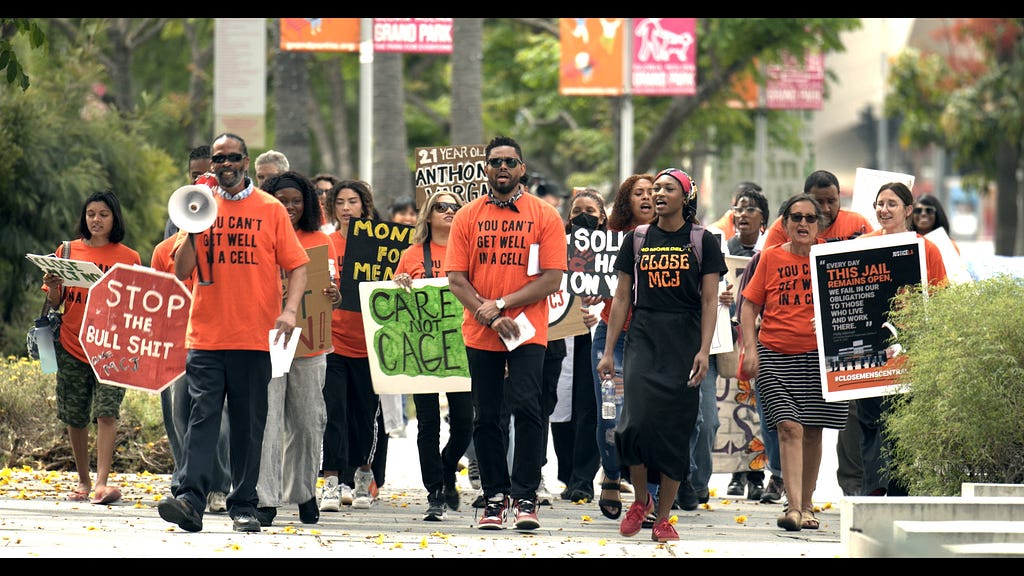
Every story in this book stays with me. But if I had to choose one, it would be the story of Helen Jones and her son John Horton III, which opens the book and in many ways never leaves it. John was twenty-two years old, a writer and musician with dreams of opening a youth center in South Central Los Angeles, when he died inside Men’s Central Jail on March 30, 2009 — twelve days after a judge had finally ordered that he receive medical supervision and be transferred to a firefighting camp program. Helen had fought for weeks to see him, was denied visiting passes without explanation, watched him appear briefly in a courtroom in handcuffs where he could only communicate to her through a quick, barely visible nod that said, things aren’t good.
When John’s body was returned to a mortuary near their home, Helen found injuries that no one had explained — a broken nose, bruising, internal hemorrhaging to his abdomen and kidneys. She found the ligature the medical examiner claimed he used to hang himself, which should never have left county custody, sent back with his belongings like an afterthought. The county eventually settled for two million dollars, conceding that deputies had not properly monitored John during his time in solitary confinement, but never admitting he was murdered. No one was held responsible. Helen is still searching for answers. What strikes me most about her story is not only what was done to John, but how methodically the record was arranged to make it appear that he did it to himself. That is not an accident. That is a system working exactly as designed.
What was the “aha moment” or series of events that made you decide to bring your message to the greater world?
It was not a single moment. It rarely is. I had been racially profiled by police more times than I can count. I had family members impacted by law enforcement violence. I had long understood, intellectually, that our criminal justice system was unjust. But understanding something intellectually and truly seeing it are different things. What changed for me was watching the video of George Floyd’s death and then turning, almost immediately, to his autopsy. The county medical examiner wrote that Floyd’s preexisting heart condition had contributed to “cardiopulmonary arrest complicating law enforcement subdual.” What that language was doing — quietly, clinically, expertly — was making it appear that Floyd’s body had failed him at the worst possible moment, rather than that an officer’s knee had been pressed into his neck for nine minutes and twenty-nine seconds. I had spent my career studying how science and medicine produce knowledge about race. Suddenly I understood that the autopsy report was one of the most powerful and least examined sites where that production happened. After that, I could not look away. I met Helen Jones shortly afterward and she gave me the language, the wisdom, and the moral urgency to go further than I ever would have gone alone.
Without sharing specific names, can you tell us a story about a particular individual who was impacted or helped by your cause?
There is a mother I think about often. She had been fighting for years to understand how her son died inside a county jail — fighting through bureaucratic denials, through redacted records, through a medical examiner’s finding that attributed his death to natural causes. She had taught herself to read autopsy reports with medical textbooks and legal dictionaries. She had built an entire body of knowledge out of grief and refusal. When my lab began working with her and the organization she was part of, something shifted — not because we gave her answers she didn’t have, but because we gave her research that confirmed what she already knew. Her knowledge became our methodology. Her questions became our framework. Watching her stand in front of local officials with data our lab had produced together, demanding accountability, demanding that her son’s death be counted — that taught me more about what research is supposed to do than anything I learned in graduate school. She reminded me that the most rigorous form of truth-telling is the kind that begins with someone who has nothing to lose.
Are there three things the community/society/politicians can do to help you address the root of the problem you are trying to solve?
- First, Congress must pass and fully fund a national mandate for in-custody death reporting with standardized data fields and meaningful penalties for noncompliance. We currently know more about the number of flights delayed on any given day than the number of people dying in police custody. That is not an oversight — it is a policy choice, and it can be reversed.
- Second, states must expand unconditional public access to autopsy records. Only fourteen states in this country allow the public unrestricted access to death records. That means the geography of your birth determines whether the circumstances of your neighbor’s death in police custody will ever be known. Secrecy is not privacy — it is power protecting itself.
- Third, and perhaps most importantly, communities must insist on their right to be part of the death investigation process — not as passive recipients of official findings, but as active participants who can challenge, question, and demand accountability. The families I have worked with have repeatedly proven that impacted communities possess expertise that no coroner’s office has. We need structures that honor that expertise rather than exclude it.
How do you define “Leadership”? Can you explain what you mean or give an example?
Leadership, to me, is the willingness to see what others have decided not to see, and then to act on that vision even when the institutional conditions around you reward looking away. Helen Jones is a leader by this definition. She is not a politician or a professor. She is a mother from Watts who lost her son and refused to let that loss become invisible. She built expertise out of necessity, organized communities out of grief, and transformed her personal tragedy into a framework for understanding how an entire system operates. She did not wait for permission. She did not wait for someone with credentials to validate what she already knew. That kind of leadership — rooted in community, sustained by love, and oriented toward collective transformation — is the inspiration we all need.
What are your “5 things I wish someone told me when I first started” and why?
1. The archive will break your heart before it gives you anything useful
I spent months early on believing that somewhere inside our government, someone was keeping a comprehensive list of people killed by law enforcement. There is no such list. Understanding that absence — not as a failure but as a design — changed everything about how I approached the research.
2. Community knowledge is not a supplement to scholarship. It is scholarship
I came to this work as a historian of science with all the methodological training that implies. Helen Jones taught me more about reading a death record than any methodology seminar I ever attended. I wish I had arrived at that understanding sooner.
3. You will have to lose something to write honestly
I write about this in the opening pages of the book. A part of me that wanted to believe in American progress had to perish before I could see clearly what I was looking at. Belief in progress inspires passive and empty optimism, which in turn can blind us to where things are failing and broken. You work a bit harder, take things more seriously, once you realize we might not get this right — that history doesn’t naturally bend toward justice but must be forced to. Writers and researchers who carry beliefs that prevent them from being changed by their material will never fully tell the truth.
4. The bureaucratic obstruction is the story, not an obstacle to it
Early on I experienced redacted files, denied public records requests, and stonewalled county offices as frustrations standing between me and the real research. Eventually I understood that the obstruction itself was the argument I was trying to make. Every denial was evidence.
5. Build the team before you build the project
The work of the UCLA Lab for BioCritical Studies has only been possible because of a community of students, researchers, journalists, legal advocates, and impacted families who brought their full selves to the tasks in front of us. No individual scholar could have gathered, verified, and made sense of nearly one thousand autopsy records. The work demanded collaboration. It took me some time to realize building that kind of collective is the intellectual project.
Can you please give us your favorite “Life Lesson Quote”? Can you share how that was relevant to you in your life?
Saidiya Hartman writes that the point of telling impossible stories is not “to give voice to the slave, but rather to imagine what cannot be verified, a realm of experience which is situated between two zones of death — social and corporeal death — and to reckon with the precarious lives which are visible only in the moment of their disappearance.” I return to this passage more than any other. It reminds me that the goal of my work is not to speak for people who cannot speak — it is to create the conditions in which their full existence becomes imaginable again. It also reminds me of my mother, who died at thirty-seven after years of being misdiagnosed. She was visible to the medical system only in the ways it had already decided to see her — poor, Black, not educated, too young to be that sick, not worthy of competent medical care. I have spent my career trying to understand how this happens, and trying to abolish it from our minds.
Is there a person in the world, or in the US with whom you would like to have a private breakfast or lunch with, and why?
Saidiya Hartman, without question. Her work — Lose Your Mother, Wayward Lives Beautiful Experiments, Scenes of Subjection — has shaped not only how I think about archives and storytelling but how I understand the relationship between history, imagination, and justice. I would want to ask her how she sustains the emotional and intellectual labor of sitting with so much loss, and how she decides when imagination has gone far enough and when it risks overreaching. I think she has worked out something about the ethics of storytelling across the boundary between evidence and speculation that I deeply admire. I imagine we would have much to talk about.
How can our readers further follow your work online?
You can find me at terencekeel.com, where the Coroner Report Project lives alongside data, reports, and updates from the UCLA Lab for BioCritical Studies. The Coroner’s Silence is available wherever books are sold, in hardcover, e-book, and audiobook. I am also on LinkedIn and Instagram, where I share ongoing research, public talks, and reflections on the questions this work keeps opening up. If the book moves you, I hope you will share it — and I hope even more that it moves you to ask questions about your own community’s death records, your own state’s public access laws, and the names that have not yet been counted.
Thank you for sharing these insights!
About The Interviewer: Yitzi Weiner is a journalist, author, and the founder & Editor-In-Chief of Authority Magazine. The guiding principle behind all of Authority Magazine’s content is that good stories should be beautiful to heart, mind, and eyes. Yitzi is also the CEO of Authority Magazine’s Thought Leader Incubator, which has guided dozens of leaders to become trusted authorities in their field after becoming syndicated columnists, authors, and media commentators. Yitzi is also the author of five books. At Authority Magazine, Yitzi has conducted or coordinated more than 4000 empowering interviews with prominent Authorities like Shaquille O’Neal, Floyd Mayweather, Kelly Rowland, Bobbi Brown, Daymond John, Lori Greiner, Robert Herjavec, Lindsay Lohan, Cal Ripken Jr., Jillian Michaels, Derek Hough, and the C-Suite executives of companies like eBay, Kroger, American Express, MasterCard, 3M, L’Oréal, Walgreens, Intuit, Virgin, Campbell, Walmart, CVS, Wells Fargo, AT&T, Oracle, ZOOM, Udemy, Samuel Adams Beer, Zappos, Adobe, Capital One, Lockheed Martin, Gallup, Procter & Gamble , Anheuser-Busch, Chipotle, Starbucks, and thousands others. A trained Rabbi, Yitzi is also a dynamic educator, teacher and orator. He currently lives in Maryland with his wife and children. If you are a successful leader in your field, and think you would be a good fit for the Thought leader Incubator, feel free to reach out to Yitzi anytime.
Social Impact Authors: How & Why Author Terence Keel Is Helping To Change Our World was originally published in Authority Magazine on Medium, where people are continuing the conversation by highlighting and responding to this story.