


High Impact Philanthropy: Nicole Capossela Of Lupus Research Alliance On How To Leave A Lasting Legacy With A Successful & Effective Nonprofit Organization
Success is no longer just what we accomplish. It’s how we build organizations strong enough to deliver impact today and resilient enough to meet tomorrow with clarity, heart, and true humanity.
For someone who wants to set aside money to establish a Philanthropic Foundation or Fund, what does it take to make sure your resources are being impactful and truly effective? In this interview series, called “How To Create Philanthropy That Leaves a Lasting Legacy” we are visiting with founders and leaders of Philanthropic Foundations, Charitable Organizations, and Non-Profit Organizations, to talk about the steps they took to create sustainable success.
As a part of this series, we had the pleasure to interview Nicole Capossela.
As Chief Advancement Officer for the Lupus Research Alliance, Nicole sits at the intersection of mission, message, and momentum. She brings a rare blend of nonprofit, advertising, and media expertise — and a reputation for turning vision into impact. With a proven ability to build high-performing teams, solve complex challenges, and cultivate meaningful donor and client relationships, Nicole understands that fundraising and storytelling are most powerful when they work together. Her career has shaped a deeply strategic approach to advancement — one that creates authentic connections, compelling messaging, and experiences that truly resonate.
Thank you so much for joining us in this interview series! Before we talk about your work, our readers would love to learn a bit about you. You are a successful leader. Which three character traits do you think were most instrumental to your success? We would love to hear a few stories or examples.
1. Curiosity: I love to ask questions!
Curiosity. When I feel like I’m in a corner and there is no way out, I ask questions — especially ones that others aren’t asking. I find that when I do, I am able to break through and find an innovative path forward.
When I joined the Lupus Research Alliance (LRA), I became part of a mission with enormous scientific complexity and equally enormous opportunity. Instead of being intimidated by that complexity, I dove right into it.
That curiosity fueled innovation: the creation of new infrastructure, development of partnerships and implementation of new data systems and AI-powered prospecting strategies, and a three-year vision that now guides our team toward sustainable growth. Curiosity is also what helped me raise hundreds of millions of dollars in the course of my career — because when you’re authentic and genuinely interested in people, they feel it and respond.
2. Acknowledged Empathy: I want to build a community of trust
In my career, I have found that acknowledging others’ perspectives, experiences, and backgrounds is not just ‘the right thing to do’ but necessary to build mutual trust.
Empathy is more than a trait — it’s a leadership strategy. But it’s only effective when paired with trust — that assurance that people are seen, heard, and supported. I’ve built, led, and mentored large, high-performing teams across nonprofits, universities, and the private sector. Team happiness and satisfaction drive high performance, and that doesn’t happen by accident. It comes from intentionally building a culture of safety, clarity, and belonging.
And of course, beyond our internal teams, when I sit with someone living with lupus — often a young woman navigating an unpredictable disease — that empathy and trust become my fuel for urgency, impact, and change.
3. Resilience: I reset with purpose and lead with momentum
If curiosity is the spark, resilience is the engine. My career has spanned natural disasters, high-stakes university campaigns, massive rebrands, and national fundraising efforts. I’ve secured transformational eight-figure gifts and stewarded multi-million-dollar partnerships. None of that happens without setbacks.
Resilience is what lets me turn obstacles into momentum and rally teams to push forward with renewed energy. We are all stronger together, and it is resilience paired with collective support that turns any challenge into an opportunity.
What’s the most interesting discovery you’ve made since you started as a leader of your organization?
The most exciting thing I’ve discovered since I joined the Lupus Research Alliance is that this community — spanning people living with lupus, researchers, clinicians, donors, partners, policymakers — is deeply committed and ready to accelerate change. All the pieces are in place to realize our vision of life without lupus. And, we will only get to a solution if we break down age-old siloes, coordinate together, collaborate with one another, and unite.
I’ve never been so hopeful that in my lifetime, if we can work together, we can find a cure for lupus.
Can you please tell our readers about how do you or your organization intend to make a significant social impact?
The Lupus Research Alliance is driving impact on multiple fronts — all with one purpose: to spark social change in lupus care and research by ensuring that people living with lupus, their voices, and their lived experiences shape every decision we make.
We listen to and elevate their voices, making lived experience a catalyst for change by influencing research priorities, clinical trial design and participation, public awareness, and innovations that genuinely reflect what people with lupus need to thrive.
We are the world’s largest private funder of lupus research, investing boldly in high-risk, high-reward science that challenges the status quo and opens new pathways to better care.
We support the full spectrum of research, from foundational discovery to Phase III clinical trials — removing barriers so breakthrough ideas can move from the lab to the lives of people who need them most.
We elevate scientific talent, championing bold thinkers and empowering ideas that traditional funders often overlook — pushing the field forward because patients deserve innovation that is ambitious, inclusive, and future-focused.
Our goal is nothing less than transforming what it means to live with lupus — advancing both science and social change so that every person with lupus can experience better outcomes and realize a future where lupus has been cured.
What makes you feel passionate about this cause more than any other?
We have the opportunity to make a profound difference for people living with a disease that is both devastating and profoundly underserved. It affects millions of people worldwide — many waiting years for answers, and many living with symptoms long before they receive appropriate care. Women of color, in particular, are disproportionately impacted and yet remain vastly underrepresented in clinical trials.
That inequity is impossible to ignore.
With no cure and too few effective treatments, lupus is a crisis hidden in plain sight. My passion comes from knowing and meeting people whose lives have been fundamentally altered — those who have lost careers, independence, pregnancies, or the ability to plan for the future — not because science couldn’t do better, but because the world hasn’t yet prioritized lupus the way it deserves.
I am not willing to accept that.
I’m motivated by the possibility of a different future for people living with lupus: shorter paths to diagnosis, better and more equitable treatment options, and a research community that truly sees and values them as partners.
If our work can help replace years of uncertainty with hope and progress, then that’s the kind of impact that makes this work not just meaningful –but necessary.
Without naming names, could you share a story about an individual who benefitted from the organization’s initiatives?
There are so many stories that come to mind — but I’ll share two. Each focus on building connections.
We were able to connect a woman with lupus with the Vice Chair of the Lupus Clinical Investigator Network that our clinical affiliate Lupus Therapeutics oversees to enroll her in a clinical trial for a new CAR T therapy (an emerging but promising area of potential treatment) that has dramatically improved her quality of life.
Another woman was so inspired by what she learned as a participant in our peer-to-peer clinical trial education program called Patient Advocates for Lupus Studies (PALS) that she now wants to become a PAL herself. She wants to pass on what she learned — why clinical trials are so important and how to get involved — as well as the one-on-one support she was given to others who could benefit from joining a study but need information and encouragement. Virtually all people who join our organization talk about finding a supportive and inspiring community. When first diagnosed with a disease that few people have even heard of, many feel very alone, so being seen and listened to, connecting with others who are managing the same issues is incredibly empowering and hopeful.
We all want to help and to live a life of purpose. What are three actions anyone can take to help address the root cause of the problem you’re trying to solve?
Very few people know what lupus is — but just about everyone knows someone with lupus. And one of the biggest challenges we face is the extraordinary heterogeneity of the disease: lupus looks different in every person, affects different organs, and follows unpredictable patterns that can mimic many other conditions. This heterogeneity makes diagnosis difficult, treatment inconsistent, and research more complex.
Here are a few actions anyone can take to help address this foundational issue:
- Start the conversation — even when the disease is hard to explain. Raising awareness helps people understand that lupus can manifest in many different ways and that early recognition can profoundly change outcomes. To learn about lupus, I encourage people to check out our website, LupusResearch.org, and follow along with us on social media.
- Show up for the lupus community. Whether uplifting the stories of people living with lupus, coming out to support us at events, advocating with your representatives to fund lupus research, or explore joining a clinical trial, your engagement strengthens the push for treatments that address different disease pathways — not just a one-size-fits-all approach. We want to showcase hope in action. Our voices are powerful and make that possible. You can get involved in so many ways.
- Invest in research that embraces the disease’s heterogeneity. Funding research specifically designed to study lupus’ diverse molecular drivers can accelerate breakthroughs that tailor treatments to each individual person living with lupus. Every dollar makes a difference, fueling studies that help scientists understand the many forms of lupus and paving the way for precision medicine and, ultimately, a cure.
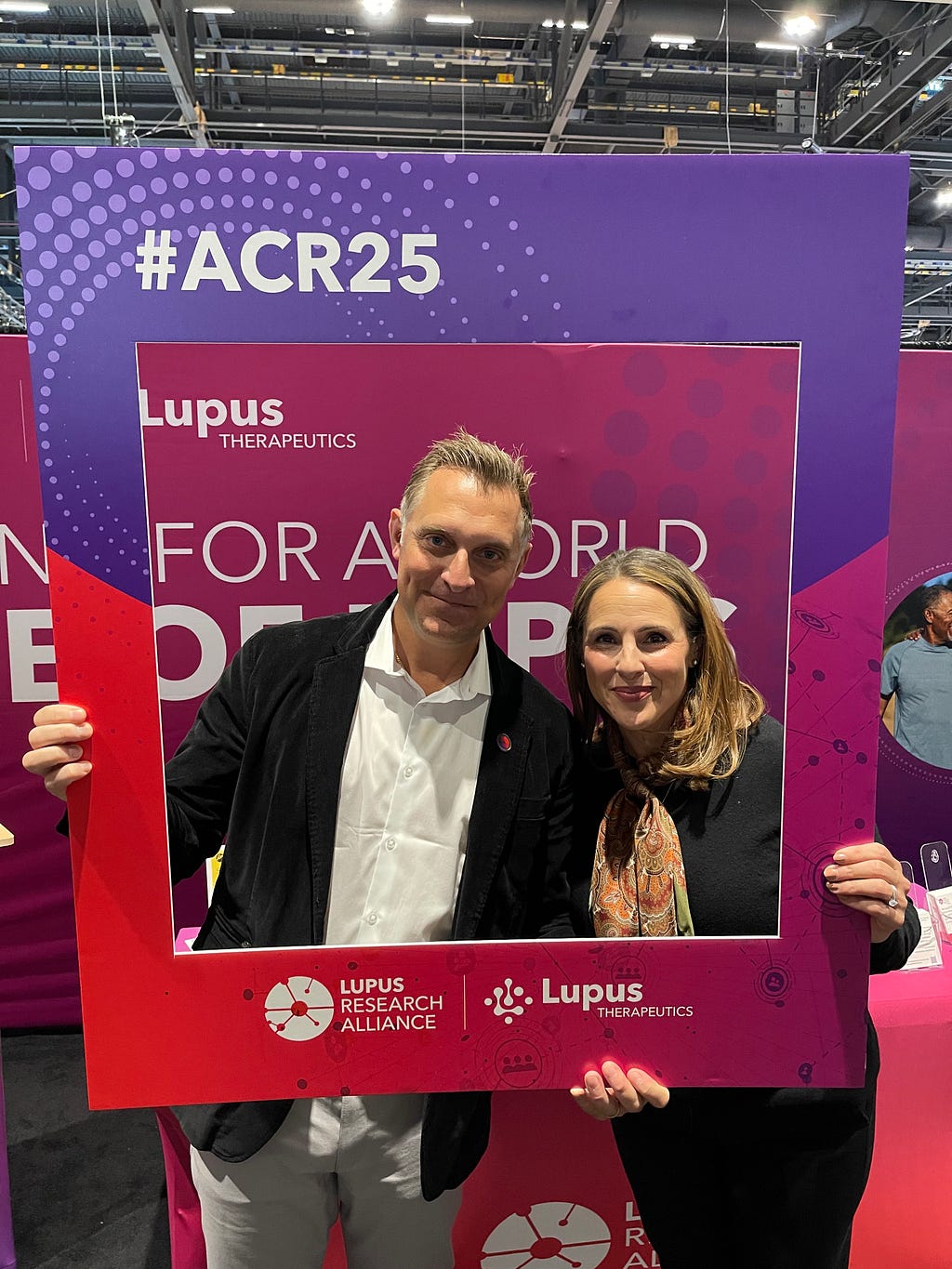
Based on your experience, what are the “5 Things You Need to Create a Successful & Effective Nonprofit That Leaves a Lasting Legacy?” Please share a story or example for each.
1. A mission that is bold, clear, and unwavering
LRA’s mission — freeing the world of lupus — is laser sharp. It guides every decision and ignites every partnership.
2. Infrastructure that truly supports impact
One of my first priorities at LRA was building systems, data tools, and teams with the expertise we needed to scale. Legacy requires structure, not just passion.
3. Relentless commitment to innovation
I’ve spent my career launching innovative programs, rebrands, partnerships, and technology solutions. Nonprofits must innovate like startups, but with the heart of a mission-driven organization.
4. Storytelling that moves people to action
People don’t give to budgets. People give to people and purpose. At Team Rubicon, UCLA, and now at LRA, storytelling has transformed engagement, personified the mission, and unlocked transformational gifts.
5. Teams who feel seen, supported, and inspired
The best ideas come from teams that feel empowered. I’ve built high-performing teams across industries, achieving record retention and results because people stay where they feel valued. When teams feel trusted and supported, they don’t just meet expectations — they push harder, think bolder, and achieve more than any one person could imagine. A strong team creates its own momentum, turning shared purpose into extraordinary performance.
How has the pandemic changed your definition of success?
Pre-pandemic success looked like scale. Post-pandemic success looks like sustainable, human-centered resilience.
It’s about far more than growth charts or expanded reach — it’s about our capacity to stay grounded, connected, and adaptable in a world that keeps shifting beneath our feet. Today, success requires a different kind of leadership and a different kind of courage. It requires looking at:
- How we take care of our people — because burnout, fatigue, and uncertainty are real, and teams can only rise when they feel protected and supported.
- How we adapt — with curiosity, flexibility, and the humility to rethink what we assumed was fixed.
- How we show up for communities in moments of crisis — not with polished answers, but with presence, responsiveness, and partnership.
In this new era, success is no longer just what we accomplish. It’s how we build organizations strong enough to deliver impact today and resilient enough to meet tomorrow with clarity, heart, and true humanity.
How do you get inspired after an inevitable setback?
After a setback, I reconnect to service — that’s always where I find my grounding. Working in nonprofits, especially in a disease area as complex and urgent as lupus, can sometimes feel like we’re pushing against impossible odds. Burnout is real. Doubt creeps in. And the work can feel heavier than the resources we have to meet it.
But what consistently inspires me is doing something kind for someone else — even something small.
Reaching out to a person living with lupus to check in. Handwriting a note of encouragement or gratitude. Sitting with someone as they share their story. Supporting a colleague who’s having a tough day.
These moments remind me why this work matters far beyond the spreadsheets and strategy decks. It’s about each other and pursuing something bigger.
We are very blessed that very prominent leaders read this column. Is there a person in the world who you would like to talk to, to share the idea behind your non-profit? He, she, or they might just see this, especially if we tag them.
Melinda French Gates. Her lifelong commitment to women’s health equity aligns powerfully with the realities of lupus — a disease that overwhelmingly strikes women. Ninety percent of people with lupus are women, most often diagnosed between the ages of 15–45. A partnership like this wouldn’t just elevate the conversation — it could reshape the future of lupus research and care, bringing global attention, gender equity framing, and catalytic investment to a disease that has been historically overlooked. Her voice could help drive earlier diagnosis, close racial disparities, and accelerate scientific breakthroughs that match the urgency felt by the millions of women living with lupus.
You’re doing important work. How can our readers follow your progress online?
Check us out at LupusResearch.org and on social media at: X, Facebook, LinkedIn, and Instagram. You can learn more about lupus, research breakthroughs making a difference, and join our incredible community working to free the world of lupus!
Thank you for sharing these insights!
High Impact Philanthropy: Nicole Capossela Of Lupus Research Alliance On How To Leave A Lasting… was originally published in Authority Magazine on Medium, where people are continuing the conversation by highlighting and responding to this story.