



Impactful Communication: Mathew Blades Of Mathew Blades Media On 5 Essential Techniques for Becoming an Effective Communicator
An Interview With Athalia Monae
Having a clear goal, what do you want to get out of it? When we have an aim point, it makes it easier to move in that direction. Imagine playing golf and not knowing where the pin is. Sure, you might get there, but it might take you 25 strokes; however, when you can see the pin, even the worst golfers can get there in 8 strokes. Having a goal or an aim point is critical.
In an age dominated by digital communication, the power of articulate and effective verbal communication cannot be understated. Whether it’s delivering a keynote address, leading a team meeting, or engaging in a one-on-one conversation, impactful speaking can open doors, inspire change, and create lasting impressions. But what truly sets an effective communicator? What techniques and nuances elevate a speech from mundane to memorable? As part of this series, we had the pleasure of interviewing Mathew Blades.
When organizations need to break free from dysfunctional workplace cycles and build winning team cultures, they turn to Mathew Blades. An award-winning broadcaster turned captivating keynote speaker, he shares a startling new perspective on how teams can relate — to themselves and each other — to achieve the extraordinary, together.
Drawing from 27 years of broadcasting experience and hundreds of transformational interviews through his podcast Learn From People Who Lived It™, Blades helps leaders and teams renegotiate what they believe work can look like. His unique approach has impacted organizations like Kia, Hyundai, Keller Williams, and Panera Bread, empowering teams to release unhelpful patterns and reset their cultures from the ground up.
Known for asking powerful questions that wake audiences up to new possibilities, Blades delivers high-impact keynotes and workshops that address the root causes of workplace dysfunction. His signature talk, ‘Break the Cycle™’, provides practical strategies for building healthier, more fulfilling team cultures where everyone shares the same goal and everyone wants to win.
Even Howard Stern has taken note, suggesting others should ‘take a play from his playbook.’ Described as ‘the epitome of motivational speaking,’ Blades transforms how organizations operate by focusing on what truly matters — personal well-being, meaningful relationships, and collective success.
Thank you so much for joining us in this interview series. Before we dive into our discussion about communication, our readers would love to “get to know you” a bit better. Can you share with us the backstory about what brought you to your specific career path?
Sure, I wanted to be a radio personality from the time I was ten years old. At 19, I was hired to be the overnight guy on a radio station in St. Cloud, MN. From there, I went on to have a storied career, receiving awards, working in the biggest markets, and even a couple of nationally syndicated shows. Four years ago, I fell out of love with the one thing I loved since a child, radio. My mental health was terrible, I was avoiding hard conversations, and I just did not feel good about where life was headed.
After walking away from my radio job, I knew I wanted to help others confront their demons and encourage them to break their own cycles of dysfunction. One of the critical components of breaking cycles is effective communication. Look, I spent 28 years being an effective communicator, and I know I can help you find your voice and USE IT effectively.
Can you share the most interesting story that happened to you since you started your career?
I’ve had hundreds of interesting experiences because I’ve interviewed everyone from Taylor Swift to Barack Obama. However, one of the more interesting stories was the day that Howard Stern started talking about me on his radio show. I’d just made the decision to walk away from my radio job, and it gained national attention, and Howard was struck by my choice. So one Monday morning, he opened up his show discussing my situation and was very gracious toward me. I am grateful to Howard for “having my back.” But yeah, that was WILD!
You are a successful business leader. Which three character traits do you think were most instrumental to your success? Can you please share a story or example for each?
- Avoid tune-out
- Communicate honestly and effectively
- Execute the fundamentals flawlessly
1 — What do I mean by tune-out? I mean, you make it hard for people to want to work with you. Do you give people reasons to be cautious about you? That is a real-life tuneout. It could be your body language, or the words you choose to use, but those things give off an energy that either makes people want to be around you or not. I will often challenge audiences by asking this question: “If we were to watch you with no sound, what would we see?”
2 — Honesty is the hardest part of communicating since it requires so much self-awareness. Let’s face it, not everyone is very self-aware. One example I can share is from my time as a high school hockey coach. We had a kid who was skipping practice and just showing up to the games. His coach was getting very upset by that and wanted to sit him down and read him the riot act. I knew how that would end, so I stepped in with some honesty and effective communication. Instead of screaming at him, we told him how important he was to our club. We told him how much value he brings to the table, how we are a better team when he’s here. ALL TRUE. We also reminded him that practice is not optional, and what do you think happened? He never missed a practice again, and that team went deep into the playoffs. Yes, we could have yelled and screamed, and sure, we may have even felt better, but it would not have accomplished our goal of getting him to practice each day.
3 — Executing the fundamentals flawlessly. Every job or role has its basic function, and too often we see people trying to control things that are not there to control, or slacking on the fundamentals for the shiny “hack” that will save them time. NEWS FLASH, there are rarely shortcuts in life. If you want it, execute the fundamentals flawlessly every single day. I always told people I wasn’t the best radio personality that ever lived; I just did all the little things exactly as I needed to and paid attention to the details. That is the difference between success and failure.
Ok, thank you for that. Let’s now jump to the primary focus of our interview. Let’s begin with a basic definition so that we are all on the same page. How would you define an “Effective Communicator?” What are the characteristics of an effective communicator?
I define effective communication this way: Both parties walk away with a clear understanding of what’s next, and the relationship is either strengthened or preserved. This keeps it outcome-focused.
The Characteristics of an effective communicator are:
Honesty (This is the hardest one, because you have to dig deep to make sure you are clear about what you need to communicate)
Tone (There are 20 + types of tone, friendly, assertive, firm, formal, sarcastic, etc.)
Articulation (Can I understand the words coming out of your mouth? Are you clear? What words are you choosing to use?)
Director mentality (Your role is to guide the conversation; when it gets off track, you say “Cut” and bring things back to where they need to be)
How can one tailor their communication style to different audiences or situations?
Three words — READ THE ROOM. Who are you talking to? What do they care about? What problem are you trying to help them solve? When you know the answers to those questions, it’s easy to tailor your style. This will require you to ask a lot of questions and make it less about you and more about them.
Can you provide an example of a time when you had to adapt your communication style to reach a particular audience successfully?
I had to do this for my entire career. In the radio business, we have different formats, and each is geared towards a different radio demographic. So when I was on hit-based formats, our demo was the 18–24 year old listener, when I was on an adult hits station, the demo was more like 35–45, which is a very different audience. You think about how a 21-year-old lives vs a 38-year-old, and they are VERY different. To be successful, I had to get into the mind of my listener, and I really believe all of us can do that in our own lives. In my work as a podcast coach, I am always asking my clients, “Who was that for?” When we know WHO we are talking to, it’s much easier to be an effective communicator.
How do you handle difficult or sensitive conversations while maintaining open and effective communication?
Easy, RUN-WAY!
If you take one thing away from this article, I hope it’s this: people need a runway. Let me explain it like this. When it comes to having those hard conversations, I will usually lead with something like, “Hey I need to talk with you about something serious and I don’t know how it will end, but I’m hoping for _____.” We do two things with that: first, we tee them up a little and set the tone that this is an important conversation. Secondly, we tell them what we are hoping to get out of the conversation. This does something very important: it disarms most people. If you just jump right in with all your anger or assertiveness, people are likely to get defensive, and you know as well as I do, when you get on the defensive, it’s hard to get out of that mode unless you are self-aware. Two examples of this are:
- You have to talk to your boss about a raise. Instead of walking in and demanding more money, you say something like, I need to talk with you about my salary, and I’m hoping that you can help me get to where I want to be. You might even take a step further and add some honesty to it, but adding, and I’m nervous to have this conversation because I don’t want you to think I’m ungrateful for this opportunity. That is a completely different conversation from — GIVE ME MORE MONEY cause I deserve it.
- Perhaps it’s a conversation with your spouse about a nagging issue, try something like this, “Hey I’m sure you can feel the tension of ___ too and I’d love for us to get on the same page about it because I don’t want to be angry with you everyday, I love you.” That is a very different conversation from, “Why don’t you do this, or that?”
People like a little runway, so dig deep, get honest, and set up your conversation moving forward instead of diving right in.
In your experience, how does storytelling play a role in impactful speaking? Why do you think stories are effective in communication?
It’s how we connect, and it’s how we’ve been connecting since the beginning of time. Put simply, it’s a universal language. It’s one of the reasons becoming good at telling stories is so important. For example, I can tell you about forgiveness and the power of doing it, and in a crowd of 100 people, 5–10 might take my action steps and work on it. Conversely, if I share a powerful story of forgiveness, especially one that has emotion to it, that will resonate with 50–70 people out of 100.
As long as they can see themselves in your story, it’s a much more effective way to communicate with folks.
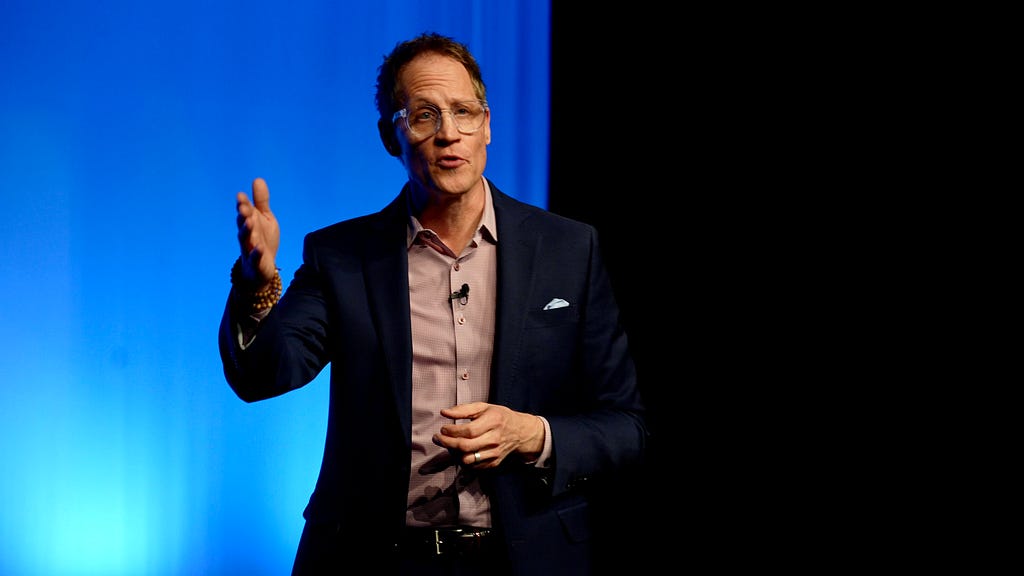
What are your “5 Essential Techniques for Becoming an Effective Communicator”?
- Goals (what do you want to get out of it)
- A Runway (meaning how to set up the conversation)
- The Tone (what tone will you be taking here? Firm? Curious? Humor?)
- Word Choice (the words you use have power; select carefully)
- Articulation (is what you are trying to communicate, easy to understand)
1 . Having a clear goal, what do you want to get out of it? When we have an aim point, it makes it easier to move in that direction. Imagine playing golf and not knowing where the pin is. Sure, you might get there, but it might take you 25 strokes; however, when you can see the pin, even the worst golfers can get there in 8 strokes. Having a goal or an aim point is critical.
2 . Use the runway, meaning set up the conversation. See the above example of using the runway method.
3 . Choose tone wisely. Simply put, each situation requires a different approach. Some conversations require a firm tone, others a friendly tone. Still others will require a curious tone or humor, even. Our tone sets the table.
4 . Word choice is critical. This is where working this conversation out with a trusted friend or mentor is helpful. What do you need to say? What words do you need to say? I often write down the keywords or phrases I need to communicate. You can take it a step further and inject some honesty and say something like, “I was thinking about this conversation earlier and wrote down a few notes that I wanted to make sure I conveyed.” Then you simply read what’s on the list and go from there.
5 . Articulation is defined as the formation of clear and distinct sounds in speech. Is what you are trying to communicate easy to understand? Are you mumbling? Are you speaking clearly? Do the words you are using make sense to the listener? Articulation is your responsibility.
How do you integrate non-verbal cues into your communication? Can you provide an example of its importance?
For me, it’s facial expressions. In the world of Zoom meetings and social media posts, our faces are what most people see. I use my smiles a LOT when I’m having hard conversations. I want people to know that I am not angry or upset, I’m simply trying to gain clarity on our next steps.
I believe that we can do hard or challenging things with a smile on our faces. On top of that, it completely changes the tone of our meeting, and let’s be honest, it’s hard for the other person to be upset when you meet them with a smile.
How has digital communication changed the way you convey your messages? Are there any specific challenges or advantages you’ve encountered?
It has, the digital comms have one major issue — our tone usually gets misinterpreted. It’s why people use emojis to convey a smile, a frown or anger. One workaround for me is the use of video emails. There are so many platforms out there that you can use, like LOOM, and so when I have something a little more complex to tackle with someone, I use video emails so they can hear my tone, see my smiling face, and gain clarity on where I am coming from. Plus, the people I interact with tell me they LOVE the video emails.
Public speaking is a common fear. What techniques or strategies do you recommend to manage and overcome stage fright?
The biggest one, as a guy who has been speaking for 30 years, is to remember this: it’s not really about you. If you can get your head around the idea of service, that alleviates the pressure that YOU have to perform. The other tip is to breathe full breaths. Most speakers take these rushed, short breaths, and that causes more anxiety. Finally, I would suggest that people learn their material, versus memorizing your material. Once you learn your material, you can ebb and flow; you can be taken off track by a question or comment and find your way back. If you just memorize your speech and don’t leave room for “real-life,” it’s easier to get off track, and then you are on the stage trying to remember what’s next. That would make any of us anxious.
What additional resources do you recommend for individuals looking to improve communication skills?
Two things: preparation and practice. There are very few conversations I have where I am just “winging it.” I hear people say things like, I don’t like to prepare, I just want to live in the moment.
Sounds good on paper, but in real life, folks appreciate someone who has taken the time, ahead of time, to get ready. Then the other thing is to practice more. Get on more calls, talk to people that you don’t know, talk to yourself in the mirror, or my best advice is to workshop the conversation with a trusted friend, mentor, or therapist.
You are a person of great influence. If you could start a movement that would bring the most amount of good to the most amount of people, what would that be? You never know what your idea can trigger. 🙂
I would challenge people to work on their past difficulties or traumas that have wired them in a way that makes it hard for them to live. Let’s take hard conversations, for example, if you grew up in a house where your voice wasn’t important, you may be more inclined to NOT use it. When people don’t know how you feel, your needs are unmet. Then resentment, or speculation, enters the situation. That is a problem.
How can our readers further follow you online?
I’d love to connect with you over LinkedIn in at https://www.linkedin.com/in/mathewblades
Or my website www.MathewBlades.com or my podcast website, www.LearnFromPeopleWhoLivedIt.com
Thank you for the time you spent sharing these fantastic insights. We wish you only continued success in your great work!
Thank you, have an amazing day.
Impactful Communication: Mathew Blades Of Mathew Blades Media On 5 Essential Techniques for… was originally published in Authority Magazine on Medium, where people are continuing the conversation by highlighting and responding to this story.