

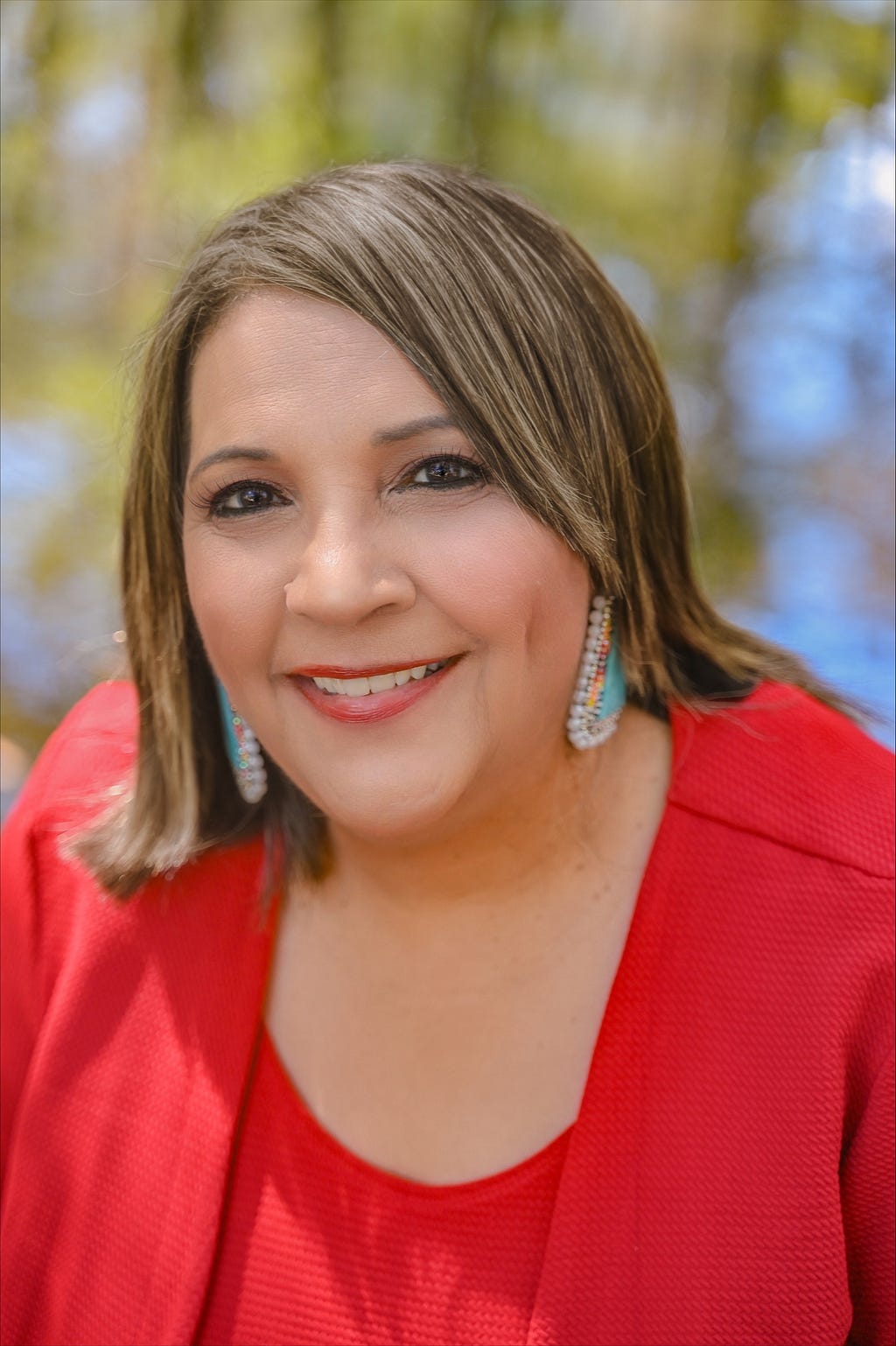
Heroes Of The Addiction Crisis: How Linda Oxendine Of CORE Is Helping To Battle One of Our Most Serious Epidemics
Leadership is showing up with compassion, clarity, and consistency, even in difficult situations. It is listening to the community’s needs, taking action, and being willing to stand in the systemic gaps to create change that improves and saves lives.
As a part of this series, we had the pleasure to interview Linda Oxendine.
Linda is the North Carolina Area Manager at CORE, driving and overseeing the region’s diverse emergency response and preparedness and health access programs. CORE began working in North Carolina in 2018 in response to Hurricane Florence. Since then, Linda has led a small local team to support the resilience of marginalized communities while providing critical support after natural disasters and throughout the COVID-19 pandemic. Her team’s diverse backgrounds — spanning education, management, public health, nursing, military, and industry — enhance their ability to serve the community. CORE’s reach includes Robeson County and the Native American Indian Tribal Communities in Robeson, Scotland and Hoke Counties. Over the years, Linda has helped to evolve CORE’s programming in the region. This includes designing and implementing the Teen CERT model that has empowered over 300 local youth (ages 16–24) with emergency response skills and training, as well as robust harm reduction programs supporting Native American communities that experience disproportionate rates of drug misuse. When Hurricane Helene hit in summer 2024, Linda travelled around the state to connect with partners and address the complex needs of devastated communities. A North Carolina native, Linda’s leadership and strategic oversight has been invaluable for cultivating meaningful relationships with community-based organizations, local and state government, and community leaders and members. Linda’s humanitarian journey began in 2016, when she led her first disaster response efforts in Lumberton after Hurricane Matthew, which ignited her passion for supporting those in need. She holds a degree in Business Administration with a concentration in management.
Thank you so much for joining us in this interview series! Can you tell us a bit of your backstory?
I am a member of the Lumbee Tribe, the largest federally recognized tribe east of the Mississippi River, and a lifelong resident of the community I serve.
I first met CORE (Community Organized Relief Effort) while employed with the City of Lumberton, where I served as Director of Public Services. During my tenure, our county experienced two historic hurricanes, and I helped lead local response and recovery efforts during both disasters. These experiences strengthened my commitment to serving communities in times of crisis and reinforced the importance of partnerships in disaster response.
After retiring from local government with 32 years of service, I was given the opportunity to work alongside CORE, an organization that had supported my community during the second hurricane in 2018. Today, I am honored to continue serving communities through CORE — key efforts include emergency response, public health programming, and long-term community resilience. We are able to respond to immediate crises while also investing in the systems, partnerships, and local leadership that help communities recover and thrive long after the emergency has passed.
I first joined CORE in 2019, where I worked as a contractor, designing CORE’s youth disaster preparedness program based on the CERT model. In 2020, I became a Program Manager and led the COVID-19 response efforts in Robeson County and across the Lumbee Tribe’s tribal territory, including Hoke, Robeson, Scotland, and Cumberland counties. In 2022, I was promoted to NC Area Director as CORE expanded its work into western North Carolina.
Is there a particular story or incident that inspired you to get involved in your work with opioid and drug addiction?
In 2022, a three-year-old had a fatal overdose after consuming his mother’s illegal drugs. My heart was crushed. I was his father’s church youth leader when he was younger, and was his pastor’s wife. At the time, I had little knowledge about illegal drugs and was ignorant about the number of overdose deaths in my community. Soon after hearing the tragic story, I began researching and discovered that overdoses were occurring at an alarming rate, especially in the Native community.
One of CORE’s strengths is its ability to listen. We listen and learn about the community’s needs and adapt our programming accordingly. Because CORE had already built trusted relationships through disaster response and public health initiatives in our region, we could engage our neighbors, faith leaders, and local partners in conversations about substance use and overdose prevention. After we secured funding, we designed programs to help educate the community about drug use, overdose prevention, and where to find help. Our goal became to raise awareness, reduce risks, and provide support and resources to those affected by substance use.
Can you explain what brought us to this place? Where did this epidemic come from?
Research shows there were three waves that led us to where we are today. In the 1990s, doctors began prescribing opioids for chronic pain. Pharmaceutical companies assured the medical community that these pain medications were not addictive, so doctors prescribed them at a high rate. However, the medications were highly addictive, and many patients, now hooked, began misusing them. As misuse increased, so did overdose deaths.
Over time, stricter limits were placed on prescription opioids, and many people who had become dependent on them turned to street drugs. The second wave was driven by heroin use. Today, we are in the third wave, with fentanyl being the drug most often involved in overdose deaths.
Fentanyl, for those unaware, is extremely potent, and its widespread presence in the illegal drug supply has made the overdose crisis even more deadly.
Can you describe how your work is making an impact in battling this epidemic?
CORE’s programs focus on education, awareness, and harm reduction. We share information about opioid use disorder, overdose prevention, and the resources available in the community. A big part of our work is helping individuals, families, and community members better understand substance use and the role they can play in preventing overdose deaths.
As people learn more, we see stigma toward people who use drugs (PWUD) start to decrease. When stigma goes down, communities are better able to understand the overdose crisis and respond with compassion instead of judgment.
To make sure our programs are actually making an impact, we conduct pre- and post-knowledge surveys. That helps us see what people are learning and whether their understanding of overdose prevention and harm reduction is improving.
We also provide practical support, like access to safe-use supplies, Narcan to reverse overdoses, and connections to support services for food, housing, and treatment. We take a holistic approach to addiction by supporting the whole person, not just the substance use. Our goal is to meet people where they are, reduce risk, and support them when they are ready to take steps toward change. We have partnered with community champions to encourage community members to engage in education, reduce stigma, and participate in overdose prevention efforts.
Without sharing real names, can you tell us a story about a particular individual who was impacted by your initiative?
There’s a young woman named Faith who had fallen into addiction, with fentanyl being her substance of choice. Her parents attended an educational event hosted by CORE at a local church. After learning about our programs, they reached out.
Faith, a single mom, had already been forced to surrender her child to the DSS system due to her addiction. Through CORE’s network of community partners and support services, she was connected to treatment and support services. Today, she has not only been reunited with her child, but she has also given birth to a healthy baby.
We were so excited about the outcome of her treatment that we shared her journey on our website. In our community, we erected billboards to remind our neighbors to see the person, not just the addiction. Through Faith’s story, others have been encouraged to begin their own journey toward recovery and seek help when they are ready.
Can you share something about your work that makes you most proud? Is there a particular story or incident that you found most uplifting?
I am most proud to see the community applying what they have learned. CORE held an educational event at a local church where individuals were taught how to recognize and respond to an overdose, including how to administer Narcan.
A few weeks later, the church pastor reached out to our program manager to share that he had assisted with an overdose reversal. He explained that he came upon an accident scene just moments before the volunteer fire department arrived. The individual had overdosed. He remembered the Narcan training and that he had some in his car. With support from a volunteer firefighter, he administered the Narcan and thankfully reversed the overdose.
This experience shows a real change in behavior. Prior to the training, like many others, the pastor had limited knowledge about substance use and, in many ways, viewed it as a moral failing. After attending the session, he began to understand substance use disorder as a health condition rather than a character issue.
As a result of that shift, he could respond quickly in a life-threatening situation. As a Community Champion, he continues to work toward changing attitudes in the community around people who use drugs (PWUD), encouraging others to respond with education, compassion, and preparedness rather than judgment. For me, this story reflects what CORE is trying to accomplish every day: equipping ordinary community members with the knowledge, tools and confidence to save lives.
Can you share three things that the community and society can do to help you address the root of this problem? Can you give some examples?
To help address the opioid epidemic, there are three roles the community can play: prevention, response, and support.
Prevention includes education and awareness — helping people understand substance use disorder, reduce stigma, and make informed choices. It also means sharing information about risks and resources early, before someone reaches a crisis point.
Response is about being prepared to act in an overdose situation. This includes knowing how to recognize an overdose, calling for help, and using tools like Narcan to reverse an overdose and save a life.
Support means helping individuals and families after an overdose or during recovery. This can include connecting people to treatment, housing, food, and other resources, and treating substance use as a health condition rather than a moral failing.
When communities take part in all three roles, they become more equipped to reduce harm, save lives, and support long-term recovery. This is the same model CORE uses during a disaster.
In emergency response, communities also play three key roles: prevention, response, and recovery. Prevention focuses on being prepared before a disaster happens through education, planning, and training. Response is what happens during the event — knowing how to act quickly, stay safe, and support life-saving efforts. Recovery takes place after the disaster, when the focus shifts to helping individuals and communities rebuild and restore stability.
We use this same approach in addressing the opioid epidemic because it is also a public health emergency.
If you had the power to influence legislation, which three laws would you like to see introduced that might help you in your work?
I would like to see laws that divert arrest when a person is struggling with addiction. Instead of incarceration, individuals should be directed to treatment and support services that address substance use as a health condition rather than a criminal issue. This approach would reduce repeated involvement with the justice system and connect people to care earlier. It would also give individuals a better chance of recovery by focusing on treatment, stability, and long-term support rather than punishment.
Second, I would like to see mandatory access to Medication for Opioid Use Disorder (MOUD) in jails and prisons. People should not be taken off life-saving treatment while incarcerated. Ensuring the continuity of care would reduce relapse and overdose risk after release.
Lastly, I would like to see stronger MOUD programs focused on reintegration. Individuals leaving jails and prisons should have immediate and continuous access to treatment and be connected to recovery and community resources before release to support long-term stability and reduce overdose risk.
I know that this is not easy work. What keeps you going?
At the core, I believe every person has value, and that belief is what guides my work.
Do you have hope that one day this leading cause of death can be defeated?
I have hope that one day this leading cause of death can be defeated. That’s why I do what I do. That hope is what keeps me committed to this work every day, even when the challenges feel overwhelming.
However, I know it won’t be easy, and it will take more than just hope. It will take continued education, strong community partnerships, access to treatment and harm-reduction services, and policy changes that support prevention, response, and recovery. Everyone will need to work together to treat substance use disorder as a health issue and not a moral failing, and to make sure people have the support they need at every stage.
How do you define “Leadership”? Can you explain what you mean or give an example?
Leadership is showing up with compassion, clarity, and consistency, even in difficult situations. It is listening to the community’s needs, taking action, and being willing to stand in the systemic gaps to create change that improves and saves lives.
For example, leadership is being present for vulnerable people during a crisis, responding in real time, and making sure they have access to lifesaving support and resources when they need them most.
What are your “5 things I wish someone told me when I first started” and why? Please share a story or example for each.
1. You don’t have to know everything to make a difference. I learned in this work that sometimes people have questions that you do not have the answers for. That’s why partnerships are so important. Working with others allows us to connect people to the right expertise, resources, and support, even when we don’t have all the answers ourselves. It reminds me that no single organization can do this work alone, and that collaboration truly strengthens our impact in the community.
2. Empathy is just as important as information. I used to focus heavily on educating people, but I’ve learned that how you show up matters just as much as what you say. People often remember how they were treated long after they remember what they were told.
3. Change takes time. There were moments I expected faster results, especially when working in crisis situations. But real change in behavior, systems, and communities takes patience and time.
4. Stories are just as important as data. Data helps us understand the scope of the issue, but stories are what move people to action. I’ve seen how sharing real experiences can shift stigma and open doors for healing.
5. Self-care is important. This work can be heavy. I’ve learned that if I’m not well, I can’t fully show up for others. Taking time to reset and stay grounded is not optional; it’s necessary.
You are a person of enormous influence. If you could inspire a movement that would bring the most amount of good to the most amount of people, what would that be? You never know what your idea can trigger. 🙂
If I could inspire a movement that would bring the most good to the most people, it would be a movement that treats substance use disorder as a health issue everywhere it shows up — in healthcare, in communities, and in the justice system. I would encourage people from all walks of life to share their stories of addiction and recovery, so the community can better understand that this issue affects real people, not stereotypes.
Can you please give us your favorite “Life Lesson Quote”? Can you share how that was relevant to you in your life?
A favorite quote of mine is by Anne Frank, who wrote, “No one has ever become poor by giving.”
This is especially meaningful to my work because we provide support to vulnerable communities every day. It reminds me that when we give, whether it’s time, resources, compassion, or education, we are not losing anything. Instead, we are helping to build stronger, healthier communities where people feel supported and cared for, which makes us feel fulfilled and grounded in our purpose.
Is there a person in the world or in the US whom you would love to have a private breakfast or lunch with, and why? He or she might just see this, especially if we tag.
I would love to sit down with the President of the United States to share what I have learned through CORE’s work in this area. I would want to present both the data we have captured and the stories behind it, because together they show the real impact of the opioid epidemic in our communities. The data helps tell the scope of the issue, and the stories help show the human side, what people are experiencing, and what recovery can look like when support is available. I would also like to share what CORE has learned through its community-based approach in North Carolina, especially within tribal and rural communities. Some of our most successful strategies have been built around trust, local partnerships, and culturally informed outreach, and I believe those lessons could help shape broader solutions nationwide.
This was very inspiring. Thank you so much for the time you spent on this. We wish you continued success!
Heroes Of The Addiction Crisis: How Linda Oxendine Of CORE Is Helping To Battle One of Our Most… was originally published in Authority Magazine on Medium, where people are continuing the conversation by highlighting and responding to this story.