

Invite conversation, not just consumption. The goal isn’t just for people to read your book, it’s for them to talk about it, share it, and act on it.
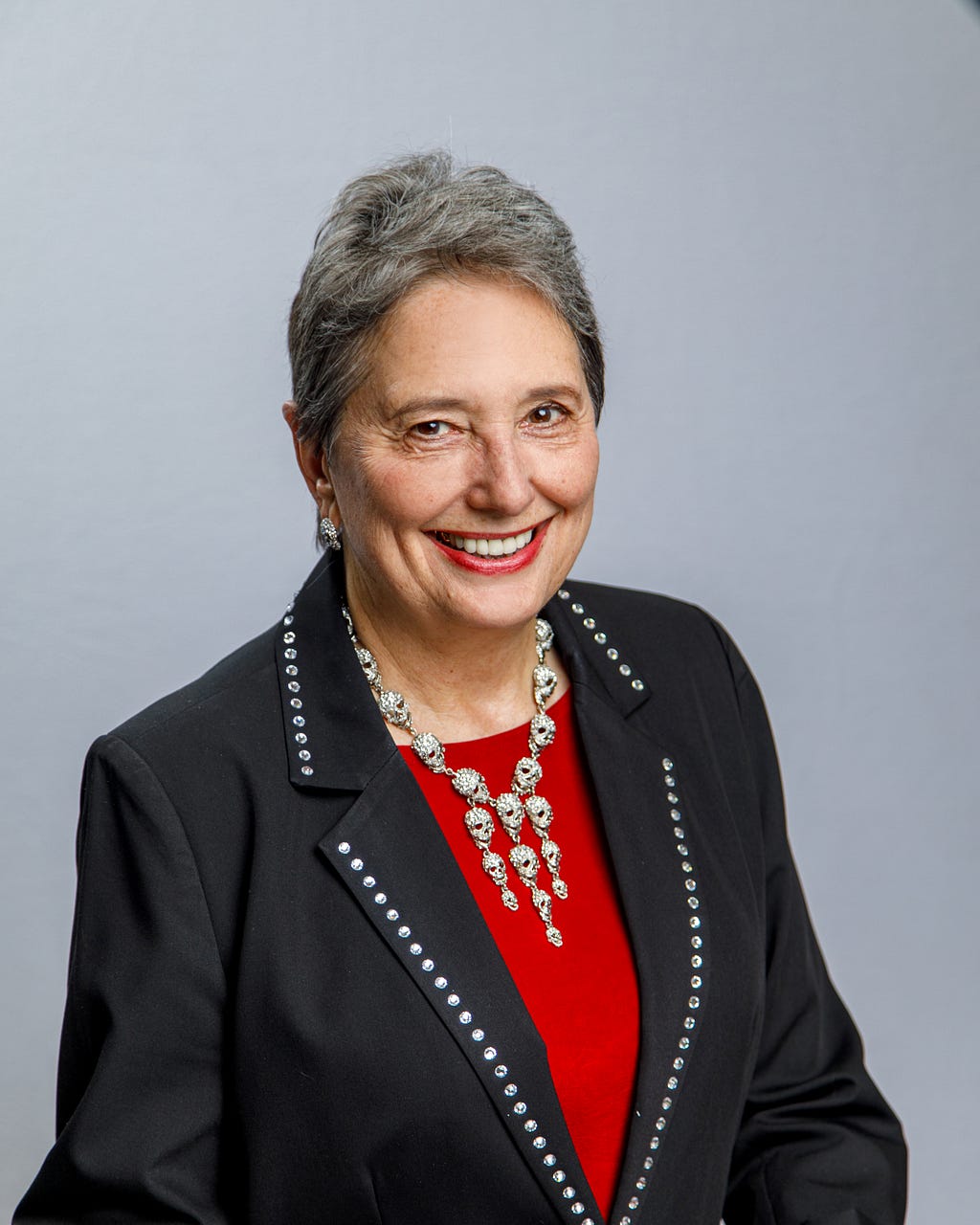
As a part of our series about “How to write a book that sparks a movement,” we had the pleasure to interview Gail Rubin.
Gail Rubin, CT, known internationally as The Doyenne of Death®, is a pioneering death educator, award-winning author, and two-time TEDx speaker. Rubin has built a career around breaking one of society’s last taboos: conversations about death. With a rare blend of expertise, humor, and accessibility, she helps people approach end-of-life planning with clarity, confidence, and even laughter. Rubin is the author of several acclaimed books, including A Good Goodbye, Kicking the Bucket List, Hail and Farewell and The Before I Die Festival in a Box, offering practical guidance on everything from funeral planning to downsizing and legacy preparation. Her work extends beyond the page: she is the coordinator of the award-winning Before I Die New Mexico Festival, a leader in the U.S. Death Café movement, and the host of the Mortality Movies TV series and Mortality Movie Night events. A Certified Thanatologist (CT), Rubin brings professional expertise in death, dying, and grief education, combined with an engaging speaking style that uses film and storytelling to spark meaningful dialogue. Her signature message is simple but powerful: “Talking about sex won’t make you pregnant, talking about funerals won’t make you dead.” Her humor helps prepare families to navigate end-of-life issues with less fear and more intention. Recognized for her impact, Rubin received the 2024 Community Educator Award from the Association for Death Education and Counseling, and was named one of Albuquerque Business First’s Women of Influence.
Thank you so much for joining us! Can you share the “backstory” of how you grew up?
I grew up in a loving family in the suburbs of Washington, DC. I was a creative child from a young age, writing, crafting and enjoying movies. I majored in television, film and communications in college.
When you were younger, was there a book that you read that inspired you to take action or changed your life? Can you share a story?
There was a film that was very influential in my development as a pioneering death educator. Sometime in my teens, I saw the 1958 arthouse classic film by Ingmar Bergman, The Seventh Seal. The film opens with a medieval knight waking up on a beach at dawn. The character of Death appears to take the knight. Thinking quickly, the knight challenges Death to a game of chess. As long as the knight keeps winning, he gets to live.
In college, I had a film production class where the students had to create a 3-minute, black and white film titled The Bubblegum Film. I did a satire of this opening scene from The Seventh Seal. When the knight challenges Death to a game of chess, Death says he never learned. But the knight has bubblegum, and Death loves bubblegum! They agree to abide by the fortunes in the wrappers, and in the end, Death gets his man.
I look back on that short film project and realize it predicted my future as a death educator. I am doing what I was meant to do in this lifetime: use film to make death less scary and help people plan for our 100% guaranteed mortality.
What was the moment or series of events that made you decide to bring your message to the greater world? Can you share a story about that?
It actually started with my wedding…not where most people expect a death educator origin story to begin. When my husband and I got married, we created a lively Jewish Western wedding. Everyone had such a good time, I thought, “Why should weddings have all the creativity?” I wanted to write a book about a range of creative life cycle events: birth, marriage, and yes, death.
That led me to start writing a monthly column called Matchings, Hatchings and Dispatchings. I explored these milestones with a mix of humor, practicality, and a willingness to talk about the things most people avoid. The columns about death got the most reader response. People were hungry for a way to talk about death without whispering or running out of the room. And let’s face it, there are plenty of creative wedding planning books, but 16 years ago, there wasn’t much about creative funeral planning.
So as an event planner, I focused on the party no one wants to plan: a funeral. My column grew into The Family Plot Blog and eventually grew into my first end-of-life book, A Good Goodbye: Funeral Planning for Those Who Don’t Plan to Die. That’s when I realized this wasn’t just a personal interest, it was a public service. Or as I like to say, I help people plan for their 100% guaranteed mortality.
My latest book, 98.6 Mortality Movies to See Before You Die, expands the conversation starting with the power of films and television shows. It provides discussion guides for 142 movies so people can ease into difficult topics without having to personally experience death and illness, or the grief that leads to growth.
What impact did you hope to make when you wrote this book?
I wanted to normalize conversations about death so people would actually plan for it, emotionally, practically, and financially. I realized that planning ahead reduces stress at a time of grief, minimizes family conflict, saves money, and helps people create a good goodbye.
I noticed in the Death Cafes I facilitate, mostly women attend. When I started holding Mortality Movie Nights, more men started participating. We watch a movie, then have a discussion afterwards about themes the film raises. The discussion guides in 98.6 Mortality Movies to See Before You Die make it easy to have those conversations, and then, hopefully, take action.
If my book could help even a handful of families avoid chaos, confusion, and conflict at the end of life, that would be a win. But I also hoped to do something bigger: take death out of the shadows and put it on the table where it belongs, right next to conversations about living well.
Did the actual results align with your expectations? Can you explain?
In some ways, yes, and in other ways, the impact went far beyond what I imagined.
I expected readers to say, “This was helpful.” What I didn’t expect was, “This changed how my family communicates,” or “We finally had that conversation because of your book.”
The biggest surprise was how relieved people felt. Once someone gives them permission to talk about death in a practical and even lighthearted way, it’s like watching a collective exhale.
What moment let you know that your book had started a movement? Please share a story.
There wasn’t one lightning-bolt moment. It was more like a steady drumbeat.
People started telling me they were hosting “death dinners,” creating end-of-life plans, and even using my work in professional settings, such as hospice, elder care, financial planning. The Before I Die New Mexico Festival that I coordinated since 2017 grew every year, people looked forward to it.
But one moment that stands out was when someone told me they brought my book to a family gathering, right alongside the potato salad. And instead of killing the mood, it sparked one of the most meaningful conversations they’d ever had together.
When your book shows up at a picnic and starts a legacy conversation? That’s when you know something’s happening.
What kinds of things did you hear right away from readers? What are the most frequent things you hear from readers about your book now? Are they the same? Different?
Early on, I heard, “I didn’t expect to laugh while reading about death.” That’s still true today. Humor is the spoonful of sugar that helps the medicine go down, except in this case, the “medicine” is planning your inevitable demise.
Now, I hear more long-term impact stories: “We finally completed our advance directives,” “We chose a funeral plan that actually reflects who we are,” or “I’m not as afraid anymore.”
So, the tone has shifted from surprise to gratitude, and that’s a pretty meaningful evolution.
What is the most moving or fulfilling experience you’ve had as a result of writing this book? Can you share a story?
One of the most fulfilling moments is hearing from people who used what they learned during a real-life loss and felt more prepared instead of overwhelmed. I took my own advice. My husband and I pre-planned and paid our funerals in advance when we received a windfall in 2021.
Then, two years later, my husband died unexpectedly of medical complications after what is typically a low-risk surgery. As I walked into the funeral home with my brother-in-law to make the arrangements, I said to him, “I don’t know how people who haven’t planned ahead can do this.”
I’ve had readers tell me that because they had conversations ahead of time, they were able to focus on being present with their loved one instead of scrambling to make decisions in a crisis.
That’s the goal: less chaos, more connection, even at the end.
Have you experienced anything negative? Do you feel there are drawbacks to writing a book that starts such colossal conversation and change?
The biggest “drawback,” if you can call it that, is that not everyone is ready for the conversation. And some people can be…enthusiastically avoidant.
Talking about death can still feel taboo, and occasionally I run into resistance or discomfort. But honestly, that’s part of the work. If everyone were already comfortable with this topic, I’d be out of a job.
So, I don’t see it as a negative, just evidence that there’s still important ground to cover.
Can you articulate why you think books in particular have the power to create movements, revolutions, and true change?
Books, as well as movies, create a private, safe space for people to engage with big ideas at their own pace.
When you’re reading or watching a movie in the dark, no one is watching you squirm, laugh, or have an “aha” moment. That makes it easier to confront topics that might feel overwhelming in a group setting… like death.
And once someone internalizes those ideas, they carry them into conversations with others. That’s how movements spread: one reader, one viewer, one conversation at a time.
What is the one habit you believe contributed the most to you becoming a bestselling writer? (i.e. perseverance, discipline, play, craft study) Can you share a story or example?
Consistency. Not glamorous, not mysterious, just showing up and doing the work.
Writing my column regularly forced me to think about these topics in fresh ways and communicate them clearly and engagingly. Over time, that body of work built both my voice and my audience. I now have a Substack column, Mortality Movies with The Doyenne of Death, where I post weekly about the topic.
There’s no shortcut for putting in the reps.
What challenge or failure did you learn the most from in your writing career? Can you share the lesson(s) that you learned?
Early on, I had to learn how to balance humor with sensitivity. Death is not a punchline. It’s a profound human experience.
The lesson is that humor works best before a crisis, not in the middle of one. It’s important to reach people well before anyone is sick or dying. It’s hard to laugh about death when the Grim Reaper is staring you in the face. Once I found that balance, everything clicked.
You can make people smile and help them face something difficult, but you have to respect the weight of the topic.
Many aspiring authors would love to make an impact similar to what you have done. What are the 5 things writers need to know if they want to spark a movement with a book?
1. Write about something people are avoiding, but need.
I chose death, which is the ultimate “I’ll deal with it later” topic. That’s exactly why it matters so much.
2. Make it accessible.
If your message is too heavy or complicated, people won’t engage. Humor, stories, and plain language open the door.
3. Be consistent and visible.
My column, my blog, and my Substack kept the conversation going long before the book came out. Movements need repetition.
4. Invite conversation, not just consumption.
The goal isn’t just for people to read your book, it’s for them to talk about it, share it, and act on it. I love the camaraderie Movie Nights generate, whether the gathering is in someone’s home, a funeral home, or other gathering places.
5. Practice what you preach.
I’ve done my own end-of-life planning. People can tell when you’re walking your talk, and that builds trust.
The world, of course, needs progress in many areas. What movement do you hope someone (or you!) starts next? Can you explain why that is so important?
I’d love to see a movement around normalizing end-of-life planning as a standard part of adult life, right up there with writing a will or saving for retirement.
We plan for weddings down to the napkin color, but many people leave their final arrangements completely unplanned. That disconnect creates unnecessary stress for the people we love most.
If we can shift that mindset, we can turn one of life’s most difficult moments into something more thoughtful, intentional, and even meaningful.
I hope Mortality Movie Nights (or Matinees) take off in a big way, and change the way we think about life, death, and living fully until the final credits roll. The End is coming for all of us.
How can our readers follow you on social media?
The conversation continues online. You can find me at www.AGoodGoodbye.com, and on social media where I share tips, tools, and the occasional dose of death-positive humor.
LinkedIn: https://www.linkedin.com/in/gailrubinctagoodgoodbye/
Instagram: https://www.instagram.com/gail.rubin.doyenne.of.death/
Facebook: https://www.facebook.com/AGoodGoodbye/
YouTube: @GailRubin
If we’re going to talk about mortality, we might as well make it a conversation worth having.
Thank you so much for these insights. It was a true pleasure to do this with you.
Gail Rubin of The Doyenne of Death On How To Write A Book That Sparks A Movement was originally published in Authority Magazine on Medium, where people are continuing the conversation by highlighting and responding to this story.