


Education Revolution: Mara Tieken of Bates College On Innovative Approaches That Are Transforming Education
An interview with Dr. Bharat Sangani
Teaching is very public work; your students are always watching, even when you’re not in front of the classroom. They’ll force you to walk the walk, not just talk the talk — and that’s a very good thing.
The landscape of education is undergoing a profound transformation, propelled by technological advancements, pedagogical innovations, and a deepened understanding of learning diversities. Traditional classrooms are evolving, and new modes of teaching and learning are emerging to better prepare students for the complexities of the modern world. This series will take a look at the groundbreaking work being done across the globe to redefine education. As a part of this interview series, we had the pleasure to interview Mara Tieken.
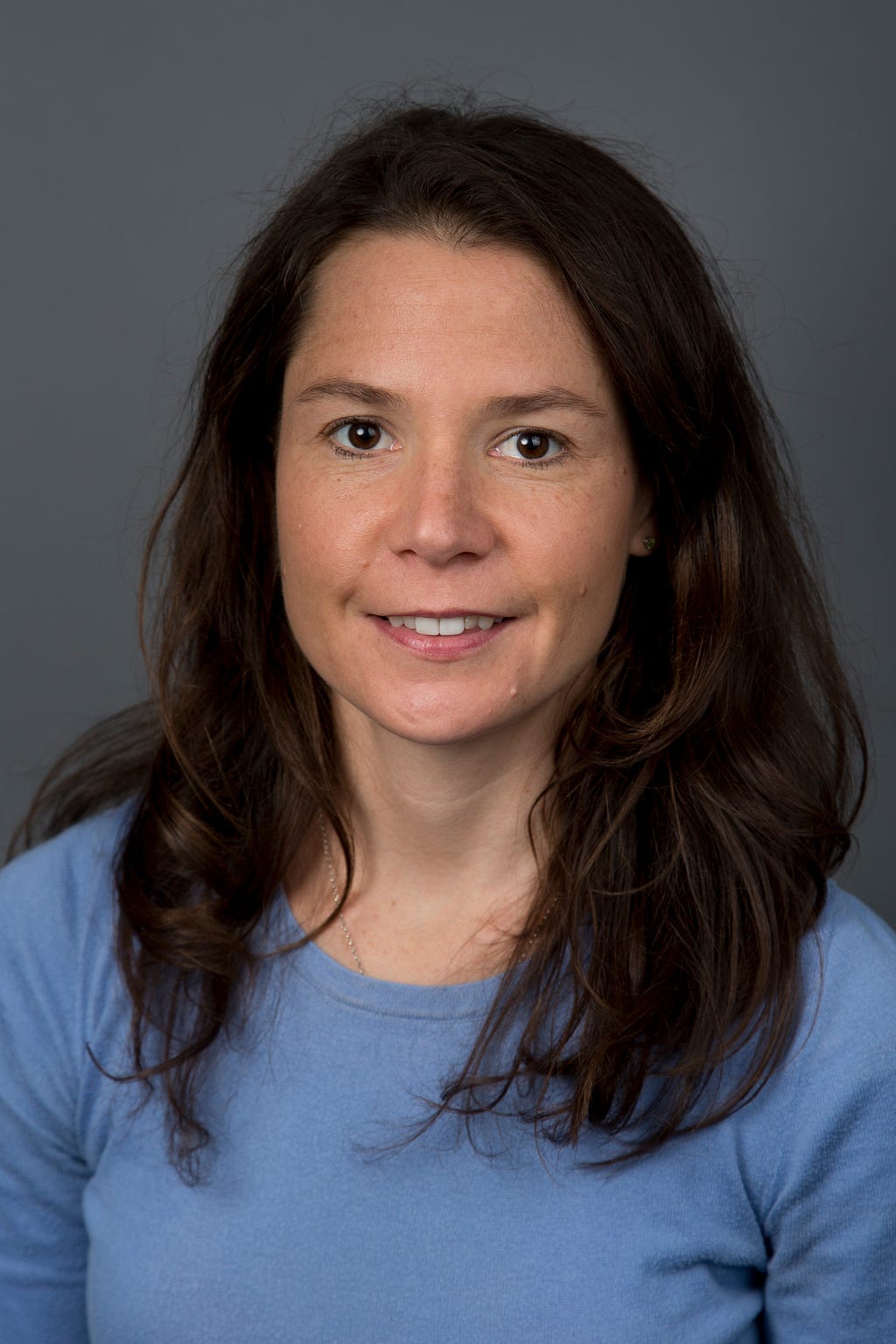
Mara Casey Tieken, a professor of education at Bates College in Lewiston, Maine, studies rural education. She is the author of Educated Out: How Rural Students Navigate Elite Colleges — and What It Costs Them (University of Chicago Press, 2025) and Why Rural Schools Matter (University of North Carolina Press, 2014), and she created and maintains a web-based toolkit for rural communities navigating school closure. She used to be a third-grade teacher in rural Tennessee.
Thank you so much for doing this with us! Our readers would love to “get to know you” a bit better. Can you share the “backstory” behind what brought you to this particular career path?
I never thought I’d be a teacher: I remember sitting in my high school English class, watching my teacher lecture, and thinking, “How awful it must be to have to get up in front of people and talk seven times a day!” But during college, I somehow ended up taking an education class, and I loved it. This led to a teaching internship in the Marshall Islands and then entering my college’s elementary teaching certification program, with a teaching practicum at a school in rural Vermont. And here we are, in a practicum in rural Vermont at a college in rural New England, and we’re only talking about urban schools. Why is that? Why have academics — and, I began to discover, policymakers and practitioners — so neglected rural schools?
After college I found a job teaching in rural Tennessee, and I saw the same thing: a school that mattered so much to its local community, yet was so overlooked in research, policy, and practice. It’s this gap that I wanted to address — and so I went to graduate school and now, I spend my time studying rural schools and trying to call attention to the unique opportunities and challenges of rural education. I’m also still in the classroom, teaching undergraduates and also preparing the next generation of teachers.
Can you share the most interesting story that happened to you since you started your career? Can you tell us what lesson you learned from that?
When I was a student teacher completing my teaching practicum, I was placed with a mentor teacher in a fifth grade classroom in rural Vermont. Over the course of five months, student teachers take on more and more responsibility in the classroom, including a series of “solo days” where we teach without the assistance of our mentor teacher.
My first solo day was an unmitigated disaster. The day ended when my math lesson dissolved into student-led rebellion, counting blocks began flying across the classroom, a student went missing, and someone called the principal. We found the missing student handcuffed to a tree outside — apparently, he would rather chain himself to a tree than suffer another minute in my classroom. Teaching was hard, I learned, and just because I liked kids and wanted to teach didn’t mean I was any good at it. But, over the course of those five months, I also learned that teaching is a craft, and, like any other craft, the skills it requires can be practiced and improved. And so I committed to that improvement, and it’s worked: over the year, my teaching has won a number of awards — and I haven’t had another student handcuff themselves to a tree.
That experience has also given me a lot more humility when it comes to thinking about other folks’ teaching, whether my own students’ or that of the rural teachers I work with in the field. It is hard, hard work, and most teachers want to do right by their students — they just need the support to do so.
Can you briefly share with our readers why you are an authority in the education field?
I have been working in education, in some capacity or another, for nearly thirty years. I have now taught hundreds of students at public and private institutions at all levels, from preschool to graduate school and adult education, as well as non-classroom settings, like science museums and professional development workshops.
For the last twenty years, I’ve also been studying rural schools, students, and communities. I’ve written two books on rural education (Educated Out: How Rural Students Navigate Elite Colleges — and What it Costs Them and Why Rural Schools Matter), and I’m working on my third, which looks at the effects of school closure on rural Black communities. My work has been published in top-tier education journals, but I also write op-eds for national and local outlets, and I regularly counsel communities navigating school closure and policymakers looking to improve schools.
“Authority,” though, doesn’t come from publications. It comes from trust, relevance, resonance — doing work that changes hearts and minds.
Can you identify some areas of the US education system that are going really great?
I think the basic principles underlying the U.S. system of public education — that all children, no matter who you are and where you live, should have access to a free and fair education — are unquestionably laudable, and it’s a right not afforded youth in many other countries. We should fight hard to protect that right and realize its full potential.
Can you identify the key areas of the US education system that should be prioritized for improvement? Can you explain why those are so critical?
Broadly, my research calls for more place-sensitive approaches to education policymaking and practice. It’s widely acknowledged that factors like race, class, gender, (dis)ability, and sexuality may shape a student’s educational experiences and opportunity. We might not do a great job at addressing those inequities, but we recognize them, and many of us try. Place, though, has mostly been overlooked as an element of the opportunity structure. And it matters. Where you live shapes your access to schools, the quality of those schools, availability of educational resources, and your longer-term options and trajectories. If we don’t address these place-based inequities, we will never achieve a fair and just educational system, and we also risk exacerbating the rural-urban economic and political gaps that currently divide the United States.
Right now, my research focuses on two issues: 1) rural students’ college opportunities and experiences, and 2) rural school closures. Rural college access — the focus of my book Educated Out — is a critical issue. Aside from the moral imperative of making sure that rural youth have the same opportunities as urban youth, right now we have an urban-rural educational attainment gap: about 45 percent of urban adults hold a post-secondary degree, compared to only 31 percent of rural. This gap matters: it’s tied not only to urban-rural gaps in employment and earnings, but also gaps in civic engagement, physical health, and one’s children’s life chances. It maps onto political divides, too. And it’s growing: it grew from 10 percentage points to 14 percentage points from 2000 to 2021. So, think about what it might look like in twenty, thirty, or forty years. We need to address this gap.
As for school closure, right now, we’re at the start of what will likely be an unprecedented wave of school closures. Many districts are facing dropping enrollments and budget deficits, in part due to recent federal policies, and this is creating new pressures on districts. To address them, many districts and states are shutting schools. But we know that closure really doesn’t save much money, and it can have all kinds of adverse impacts on both students and communities: lower test scores, decreased college and employment outcomes, bullying and behavior issues, increased absenteeism, and, locally, fewer jobs and adverse economic and social impacts. Closures also disproportionately impact Black and low-income communities. We need to stop the indiscriminate closures and take a much more measured, collaborative, and equitable approach — before we do irreversible damage to students and their communities.
Please tell us all about the innovative educational approaches that you are using. What is the specific problem that you aim to solve, and how have you addressed it?
My research has led me to advocate for a number of innovative educational approaches. In general, I’m calling for policymakers and practitioners to recognize that there is a geography to educational opportunity — that where you live shapes the kinds of resources and opportunities you have access to — and then leverage the resources and address the disparities. For example, as I describe in Educated Out, we know that rural students have less contact with admissions officials, especially those from four-year colleges, than non-rural students. We also know that they are offered fewer college preparatory courses and may not receive adequate college counseling, in large part due to how we fund schools. So we need to put programs and policies in place — whether it’s rewriting our funding formulas or engaging in more thorough admissions outreach — that compensate for these disparities. Rural students also often feel isolated on college campuses; ambassador programs and student-led affinity groups can help reduce that isolation. Finally, college career centers need to bolster their networks in rural areas so that rural students who want to return to a rural place post-graduation can. And these kinds of changes to education policy and practice should be coupled with economic policies and practices that bolster rural economies and create rural jobs for college-educated workers.
As for school closure, we need to give communities a much larger role in the fates of their schools. They should be meaningfully included in long-term planning, including conversations about closure. In addition, these debates must be grounded in accurate data. Right now, I think we are too quick to close, and we need to look at other cost-saving measures, like multi-district service-sharing agreements. If closure must happen, it needs to be well-planned, with good communication for families and lots of supports for students, and we should leave schools in the communities that need them most: low-income and Black and Brown communities that have faced generations of state neglect.
In what ways do you think your approach might shape the future of education? What evidence supports this?
I think this kind of place-sensitive approach could do a lot to address place-based gaps in education resources and outcomes and, ultimately, help close some of the urban-rural disparities that divide U.S. society. Over the past few years, several new programs have emerged that work to expand college access. One is the STARS Network, which partners with colleges to help ensure rural students can apply and enroll. And these kinds of initiatives appear to be working; more rural students are enrolling. A few campus-based programs are focused more on retention, such as the Rural Areas Student Initiative at the University of Illinois and the North State Student Ambassadors at Chico State. These offer rural students critical supports.
With school closure, the research on the short and long-term impacts of closure supports the need for a very different approach.
How do you measure the impact of your innovative educational practices on students’ learning and well-being?
I think about “measurement” a little differently than many education researchers. I’m working with populations that are often so small that traditional approaches to “measurement” don’t work, or the “intervention” that’s been “measured” was never designed for them to begin with. So I take a qualitative approach to my research, asking folks about their experiences in schools or the effects of education policies and/or observing those schools or policies at work. And I find that we can trust those perspectives; after all, people are the experts of their own lives, and for far too long, we’ve excluded those most implicated from the decisions that matter most. So when someone tells me something is or isn’t working — and I can witness those impacts — that’s the “evidence” that I trust.
What challenges have you faced in implementing your educational innovations, and how have you overcome them?
Stereotypes about rural communities — as uneducated or ignorant or “backwards” — are remarkably sticky, and they profoundly shape assumptions about policy and practice, including who should be making decisions about or for rural people and places. I try to use my work to counter those stereotypes. I find that sharing stories is more effective than more abstract arguments.
What are your “5 Things I Wish I Knew When I First Started”?
1. Teaching is so rewarding — and also so exhausting. When you take care of yourself, you’re better able to care for your students.
2. Don’t listen to the teacher-workroom talk about students. It’s often coming from a place of momentary frustration, and it won’t help you serve those students well.
3. Teaching is very public work; your students are always watching, even when you’re not in front of the classroom. They’ll force you to walk the walk, not just talk the talk — and that’s a very good thing.
4. Public-facing policy work is totally different than typical academic publishing. Build coalitions, think creatively, and prepare for the long fight.
5. No one reads academic articles anyway. Write for the audiences that matter.
Can you please give us your favorite “Life Lesson Quote”? Can you share how that was relevant to you in your life?
There are no silver bullets. A beloved mentor told me this in graduate school, and she is totally right. There’s no one policy or one practice that will magically bring about educational equity (or meet any other goal), and we need to stop pursuing the next shiny thing. Changing educational practice takes time, patience, and deep knowledge, and it requires the participation of those most affected: students, families, and teachers. It’s hard, messy, and complicated — and so, so important.
We are blessed that some of the biggest names in Business, VC funding, Sports, and Entertainment read this column. Is there a person in the world, or in the US, with whom you would love to have a private breakfast or lunch, and why? He or she might just see this if we tag them 🙂
How can our readers further follow your work online?
I maintain a website for rural communities navigating school closure; even if you’re not facing this in your community, I encourage folks to check it out and educate themselves on the issues. (And, unfortunately, school closure is affecting communities everywhere right now…)
I’m also on LinkedIn.
Thank you so much for these insights! This was so inspiring!
About The Interviewer: Dr. Bharat Sangani is a cardiologist and entrepreneur with over 35 years of experience, practicing in Gulfport, Mississippi, and Dallas, Texas. Board-certified in Internal Medicine and Cardiology, he specializes in diagnosing, treating, and preventing cardiovascular diseases, including heart disease and hypertension. In 1999, Dr. Sangani founded Encore Enterprises, a national real estate investment firm. Under his leadership, the company has executed transactions exceeding $2 billion, with a portfolio spanning residential, retail, hotel, and office developments. Known for his emphasis on integrity and fairness, Dr. Sangani has built Encore into a major player in the commercial real estate sector. Blending his medical and business expertise, Dr. Sangani created the Life is a Business mentorship program. The initiative offers guidance on achieving balance in health, wealth, and relationships, helping participants align personal and professional goals. Now based in Dallas, Texas, Dr. Sangani continues to practice cardiology while leading Encore Enterprises and mentoring others. His career reflects a unique blend of medical expertise, entrepreneurial spirit, and dedication to helping others thrive.
Education Revolution: Mara Tieken of Bates College On Innovative Approaches That Are Transforming… was originally published in Authority Magazine on Medium, where people are continuing the conversation by highlighting and responding to this story.