

The most interesting part of my career has been watching those seemingly separate interests come together into a very clear calling.
In many large cities in the US, there is a crisis caused by a shortage of affordable housing options. This has led to a host of social challenges. In this series called “How We Are Helping To Make Housing More Affordable” we are talking to successful business leaders, real estate leaders, and builders, who share the initiatives they are undertaking to create more affordable housing options in the US. As a part of this series, we had the pleasure of interviewing Christopher Montes.
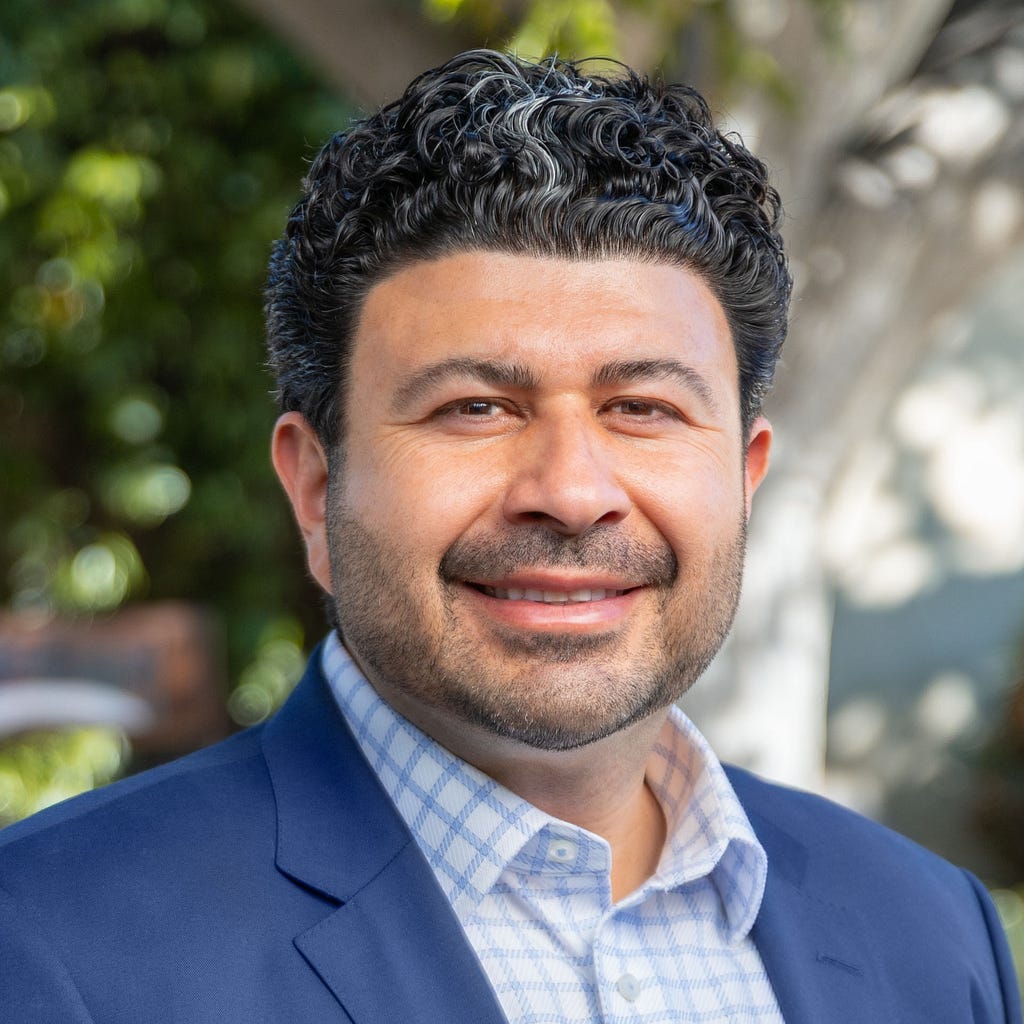
Christopher Montes is the founder and CEO of OLOS Impact, a housing development company that partners with faith-based organizations to transform underused land into housing and lasting community assets. Drawing on his background in finance, capital formation, real estate and organizational leadership, he structures developments designed to generate both measurable social impact and sustainable financial returns. His work is also shaped by his Christian faith and a belief that land, capital, relationships and professional abilities should be stewarded for the benefit of others.
Thank you so much for joining us in this interview series! Before we dig in, our readers would like to get to know you a bit more. Can you tell us a bit about your “backstory”? What led you to this particular career path?
My path to OLOS Impact came from the convergence of several parts of my life: finance, capital raising, housing and faith.
Professionally, I developed the ability to evaluate real estate opportunities, structure capitalization plans and bring together the resources required to make a development feasible. Personally, I am a man of faith who believes that our work should serve people and communities and can produce practical and economic benefits as well.
Over time, I began to see a significant opportunity to bring those worlds together. Faith organizations own substantial amounts of land, often in communities with an urgent need for housing. Many of those organizations want to serve their communities in a new and practical way but do not necessarily have the development expertise or capital relationships required to do it alone.
OLOS Impact emerged from that need. We partner with faith organizations to explore how their land can be used to create housing, strengthen their long-term legacy and generate both community and financial value.
Can you share the most interesting story that happened to you since you began your career?
The most interesting story has really been the evolution of my career itself.
When I began working professionally 14 or 15 years ago, I did not have a master plan that said I would eventually lead a company combining real estate development, finance, faith and community impact. That focus developed organically.
Over time, the practical skills I had acquired in real estate and finance began to intersect with a deeper desire to help organizations and communities. I found myself increasingly drawn to work that could be both purpose-driven and profit-driven.
There is sometimes an assumption that social impact and financial performance must compete with each other. My experience has shown me that the right structure can allow them to reinforce each other. A development can create housing, expand the legacy of a faith organization and still produce the returns required to attract investment capital.
The most interesting part of my career has been watching those seemingly separate interests come together into a very clear calling.
Are you able to identify a “tipping point” in your career when you started to see success? Did you start doing anything differently? Are there takeaways or lessons that others can learn from that?
My first year as a professional was extremely challenging. I was learning how to operate in a new environment, how to respond to feedback and how to handle the inevitable setbacks that come with building a career.
During my second year, something began to click. It was not one dramatic event so much as the result of continuing to work through the difficulty. I became more receptive to feedback, more resilient and more confident in applying what I had learned.
Since then, I have felt steady progression each year — not only in professional results, but in the way I lead, support our team and contribute to the community personally and professionally.
The lesson is to push through the period before the breakthrough. Endure the obstacles. Remain teachable. Listen carefully to people who have more experience than you. Continue working even when the results are not yet visible.
Resilience matters enormously. You may not control exactly when the breakthrough occurs, but you can control whether you are still prepared and moving forward when it does.
None of us are able to achieve success without some help along the way. Is there a particular person to whom you are grateful who helped get you to where you are? Can you share a story about that?
I am grateful for every supervisor, manager and director who hired me, saw potential in me and took the time to cultivate it.
One person who stands out is Charles Ostroff, who was my first boss when I worked at Arbor Realty Trust. Charles created an environment in which I could bring him questions, discuss what I was observing and receive honest feedback and wisdom. Our relationship did not end when either of us left our prior company. We have remained close for approximately 14 years, and he now serves as aboard advisor to OLOS Impact.
That continuity has been especially meaningful to me. The best professional relationships are not merely transactional or limited to one job. They can become lifelong sources of friendship, perspective and accountability.
I am also grateful to T.J. Edwards and Brian Frazier, who supported me during my time as a banker at Walker & Dunlop. Banking and sales involve significant highs and lows. T.J. and Brian consistently offered practical expertise and remained in my corner through both.
Each of these leaders helped me understand the value of making yourself available to the people you lead. A conversation, an open door or a word of encouragement may influence someone’s day or possibly their career far beyond what you can see in the moment.
Do you have a book, podcast, or talk that’s had a deep impact on your thinking? Can you share a story with us? Can you explain why it was so resonant with you?
One book that has remained with me is Dale Carnegie’s How to Win Friends and Influence People. I first read it when I was 16 after a family member gave it to me, and I have revisited it nearly every year since.
Its lessons are enduring because leadership and business are ultimately about people. Technical expertise matters, but so does listening, empathy, respect and the ability to understand another person’s perspective.
Another book I value is The Go-Giver by Bob Burg and John David Mann. It turns the conventional “go-getter” mentality on its head. Rather than defining success only by how much you accomplish or obtain, it asks how much value you create and how generously you contribute to the people around you.
That idea resonates deeply with my work. Ambition and generosity are not opposites. You can pursue excellence, build a successful enterprise and generate financial returns while also asking how your progress can benefit employees, partners, communities and families.
Another book that has been tremendous for me personally and professionally is Lead With Prayer, by Ryan Skoog, Peter Greer and Cameron Doolittle. It has reminded me not only to pray about the decisions and meetings ahead of me, but to invite trusted people to pray for me as well. Leadership can be complex and demanding, and I do not believe we are intended to carry its weight entirely alone.
Can you please give us your favorite “Life Lesson Quote”? Can you share how that was relevant to you in your life?
Yes. There’s a quote from Muhammad Ali that has always resonated with me. It’s a quote that that goes, “The fight is won or lost far away from the witnesses, behind the lines, in the gym, and out there on the road; long before I dance under those lights.” To me that’s always meant you put the work in; you put in the preparation. People will see the end product. In Muhammad Ali’s case, people have seen him perform as a professional boxer. In my case, they’ll eventually see the positive social and financial impact to communities and faith organizations around the county through Olos Impact. Right now, our job is to do what we’re doing, to keep working, keep grinding, and keep putting the preparation in. Ultimately, when you’re in that limelight, everyone will see the end product.
Let’s now shift to the main part of our discussion about the shortage of affordable housing. Lack of affordable housing has been a problem for a long time in the United States. But it seems that it has gotten a lot worse over the past five years, particularly in the large cities. I know this is a huge topic, but for the benefit of our readers, can you briefly explain what brought us to this place? Where did this crisis come from?
The housing crisis is the cumulative result of several interrelated issues.
First, real estate remains a highly traditional industry that has not adopted innovation as quickly as many other sectors. Advanced construction methods — including modular construction, 3D printing and other forms of off-site manufacturing — have the potential to reduce construction time, waste and certain costs, but adoption remains uneven.
Second, producing housing requires navigating an extensive process, bureaucracy, and paperwork. That is true for market-rate housing as well as affordable housing. Before construction can even begin, a developer may spend years working through entitlements, permits, and multiple layers of public review. That process is not only time-consuming; it is expensive. Developers must support staff, consultants and professional teams throughout the approval period. If land was purchased with debt, they may also be carrying financing costs while no housing is being produced.
Third, the cost of labor and construction materials has continued to rise.
Finally, and perhaps most fundamentally, land has become extraordinarily expensive in many of the communities where housing is needed most. Before a developer buys a single piece of lumber or pours a foundation, the project must absorb the cost of acquiring the dirt beneath it.
Solving the crisis therefore requires more than simply telling builders to build more. We must reduce unnecessary delay, embrace new construction approaches, and unlock access to land in innovative ways.
Can you describe to our readers how your work is making an impact to address this crisis? Can you share some of the initiatives you are leading to help correct this issue?
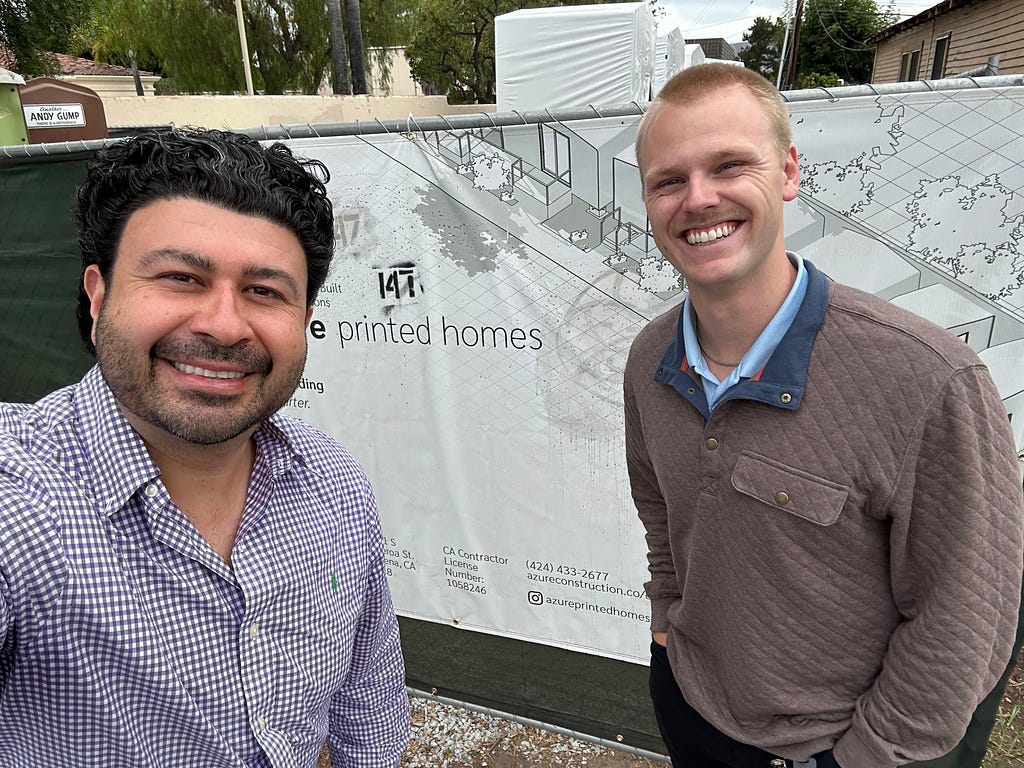
The most direct way OLOS Impact addresses the crisis is by creating housing in an innovative way.
What differentiates us is our land partnership model. Rather than purchasing land in the conventional way, we partner with faith-based organizations that already own it. The faith organization becomes a participant in the development rather than simply selling its land and not having a say in what gets built there in the future.
That structure creates several advantages for all parties. OLOS does not need to incur millions of dollars in upfront land acquisition costs or carry that expense through a lengthy predevelopment period. The faith organization maintains ownership and gains a development partner capable of understanding its vision, evaluating feasibility, attracting capital and executing the project. The community benefits because homes are now available that would not of otherwise been available to them.
In every development, we begin by listening. What does the faith organization hope to accomplish? What does service to its community look like? What legacy does it want to sustain or create? We then determine whether that vision can be translated into a financially and operationally viable real estate development.
California is currently a particularly important market for this work because it has taken a leading role in allowing housing to be developed on land owned by faith organizations. The entitlement pathway can be considerably faster than the process a conventional development might face.
A traditional project can sometimes require three or four years to reach a building permit. Depending on the property and circumstances, a faith-land development may be able to move through that process in approximately 12 to 18 months. That is still not instantaneous, but it can represent half or even one-third of the conventional timeline.
Time is money in development. Reducing both land costs and entitlement time can improve the project’s return and operational performance. More importantly, it can turn a project that would otherwise be financially impossible into housing that can actually be built.
Can you share something about your work that makes you most proud? Is there a particular story or incident that you found most uplifting?
The most uplifting part of this work is hearing the stories of the faith organizations we meet.
Every church and organization has a distinct history. Pastors and other leaders tell us about their involvement in the community, the generations they have served and the needs they see around them. They also tell us how they hope housing can become the next chapter of that legacy, and that it serves a very practical ministry for the community.
For many, this is not simply a real estate decision. They are asking how land entrusted to them can continue serving people for decades to come.
I can’t point to only one conversation because each story is different and meaningful. What makes me most proud is being invited into those conversations and being trusted to help translate a mission into something tangible: homes for families, individuals and young adults, along with a stronger financial position for the faith organization itself.
In your opinion, what should other home builders do to further address these problems?
I think builders and developers should look at the housing problem from a broader perspective and become more collaborative.
It is natural for a company to evaluate a project according to its own capabilities, returns and objectives. Those considerations matter. But the question should not end with, “Does this work for us?” It should also include, “Who else could help make this work?”
At OLOS, we do not approach conversations with sharp elbows. When a faith organization speaks with us, we first seek to understand its vision. Then we evaluate whether the project is feasible. Finally, we ask whether we are the right partner.
Sometimes the best outcome may involve bringing another organization, developer, nonprofit, capital provider or public-sector participant into the conversation. A project should not be passed on because it does not fit neatly within one company’s model.
Housing is too large and urgent a problem to be solved through isolated efforts. We should all be focused on building ecosystems to solve a housing crisis rather than defend territories or market share that we’ve individually established.
Can you share three things that the community and society can do to help you address the root of this crisis? Can you give some examples?
First, advocate consistently for housing. Community members should communicate the need for attainable housing to elected officials, planning departments and civic organizations. Public officials hear frequently from people opposing development. They also need to hear from residents who understand that teachers, first responders, service workers, young adults and families need places they can afford to live.
Second, evaluate underused land as a community resource. Faith organizations, nonprofits, institutions and other landowners should consider whether vacant or underutilized property could support housing. They do not need to become developers themselves, but they can begin a conversation with qualified partners about what might be possible.
Third, continue educating people about the scale and complexity of the need. Communities should understand the relationship among land costs, regulatory timelines, financing cost, construction expenses and the supportive services certain residents may require. Better-informed communities are more capable of evaluating projects constructively instead of reacting from fear or incomplete information.
The crisis will not be resolved by one sector. It requires developers, policymakers, local officials, nonprofits, philanthropy, faith organizations, capital providers and community members to work together with people at the center of the effort. It truly takes a village.
If you had the power to influence legislation, are there laws which you would like to see introduced that might help you in your work?
I would prioritize two areas.
The first would be legislation or incentives that make predevelopment capital more widely available. This is often the most difficult capital to raise because it is needed before a project has completed entitlement and can qualify for conventional construction financing.
Without pre-entitlement capital, a project may never reach construction. Tax incentives, public-private funds, loan guarantees or other policies that encourage investment at this stage could unlock many viable housing opportunities.
The second would be broader adoption of policies that streamline housing development on land owned by faith organizations. California has become a leader in this area, but the opportunity exists nationwide.
Faith organizations are among the country’s largest private landholders. This is not solely a California solution. Every state has churches and other faith-based institutions that own land and want to serve their communities.
Whether through federal policy or individual state legislation, creating a more predictable and efficient pathway for housing on faith-owned land could unlock an extraordinary amount of new supply.
What are your “5 things I wish someone told me when I first started leading my company,” and why? Please share a story or example for each.
1. Refine the budget one more time.
You cannot put too many qualified eyes on your revenue assumptions, expense projections and financial model.
When we launched OLOS Impact, we assembled a brain trust of four or five people, with significant participation from our board, to evaluate and refine our projections. That process improved the model considerably.
Even so, I would tell my earlier self to complete one more iteration. A financial plan is not merely an accounting exercise. It determines hiring, timing, capital needs and which opportunities the company can responsibly pursue.
Optimism is valuable in an entrepreneur, but assumptions should be pressure-tested by people who are not emotionally attached to them.
2. Begin communicating earlier — but earn the right to communicate.
We invested early in building the right team, capabilities, infrastructure and network. In hindsight, I would have made public relations and marketing a priority from the first day rather than beginning that conversation a few months later.
At the same time, early communication must be disciplined. A company should not hold a press conference at the bottom of the hill and announce that it has already reached the summit.
The balance is to communicate the vision while being precise about what has and has not yet been accomplished. You do not need to wait until the entire journey is complete, but you should never overclaim, overpromise or substitute visibility for execution.
3. Remember that culture is being created before you realize it.
In the beginning, founders are often consumed with capital, operations, clients and immediate deliverables. Culture can feel like something to formalize later. In reality, it is forming from the first interaction.
We are fortunate to have excellent people and a strong culture at OLOS. Now I think constantly about how to protect and nurture our culture so that it remains healthy and grows over the short, medium and long-term.
Culture is built through simple, repeated actions: spending time together, treating one another kindly, creating a safe environment for disagreement and encouraging constructive dialogue. It is also built through lunches, dinners, shared experiences and the proximity that allows people to know one another beyond their job descriptions.
You cannot outsource culture. Leadership must model it, reinforce it and protect it.
4. Stop running from the leadership that keeps finding you.
When I was younger, leadership repeatedly found me, and I repeatedly tried to avoid it. My instinct was to say, “I’m not the person.”
Eventually, I recognized that when the same responsibility continues to present itself, it may be something you are meant to accept and steward.
Anyone who has led people knows that leadership is difficult, complex and humbling. It is also the most rewarding.
5. Build partnerships, not just transactions.
A company can waste enormous energy trying to own every opportunity, capability and relationship. Our work has shown me that the strongest outcomes often emerge when several organizations contribute what each does best.
Our entire business model is based on partnership. Faith organizations contribute land, local knowledge and a vision for community impact. OLOS contributes development, finance and execution capabilities. Capital partners, public agencies, nonprofits and construction innovators contribute additional components that make the project viable and make it so that the project can be delivered on time or has the necessary support.
The lesson applies well beyond housing. Do not ask only how much value you can extract from a transaction. Ask what combination of people and resources can create the greatest total value.
The right partnership can make the economic returns stronger while also multiplying the human impact.
You are a person of enormous influence. If you could inspire a movement that would bring the most amount of good to the most amount of people, what would that be? You never know what your idea can trigger.
I would inspire a movement centered on stewardship.
Each of us has been entrusted with something: abilities, education, experience, relationships, financial resources, property, influence or leadership. We have also been entrusted with the communities, cities, states and nations in which we live.
We should not take those gifts for granted or use them only for ourselves. Caring for your spouse and immediate family is essential, but I believe there should also be an overflow that positively affects the people around you.
In our work, stewardship has a very practical meaning. A faith organization may own vacant land worth $25 million. With thoughtful development over time, that land might become an asset worth $200 million while also providing housing for families, individuals or young adults.
That is more than maximizing the financial value of property. It is multiplying the impact of something that has been entrusted to us.
I think the same way about leadership. For years, I resisted leadership even though it continued to find me. Eventually, I realized that my abilities and opportunities were not given to me merely for personal advancement. They represented a responsibility.
A stewardship movement would ask every person and institution: What has been placed in your hands, and how can you use it to create the greatest good beyond yourself?
Is there a person in the world, or in the US, whom you would love to have a private breakfast or lunch with, and why? He or she might just see this, especially if we tag them.
I would choose Elon Musk.
I believe that if I could show him the scale of the opportunity, the economics of our model and its potential for global impact, he would understand it immediately.
The combination of underused faith-owned land, advanced construction technologies and a replicable development model could create housing far beyond California and eventually far beyond the United States.
I would not need an elaborate presentation. Coffee would be enough. I would show him the opportunity and the numbers and ask him to consider what could happen if we applied world-class innovation and capital to housing at scale.
How can our readers further follow your work online?
Readers can follow OLOS Impact on LinkedIn, Instagram and Facebook under OLOS Impact. They can also visit OLOSImpact.com to learn more about our company, our team, our areas of focus and the work we are doing with faith-based organizations. Those channels are also the best way to contact us about potential partnerships, properties or opportunities to create housing.
Thank you so much for the time you spent on this. We wish you continued success!
Christopher Montes of OLOS Impact: How We Are Helping To Make Housing More Affordable was originally published in Authority Magazine on Medium, where people are continuing the conversation by highlighting and responding to this story.