

Chosen Families: Matthew McCall of The Home for Little Wanderers On Why Adoption and Foster Parenting Matter More Than Ever
Thinking money is a reason someone fosters undervalues the incredible service a person is doing.
The definition of family keeps evolving, and adoption and foster parenting play an increasingly vital role in providing stability, love, and opportunity for children in need. Countless young people are waiting for safe, supportive homes, while many adults feel called to step into caregiving roles in meaningful ways. But the journey of building a chosen family — through adoption or foster care — comes with both profound rewards and real challenges. What motivates individuals and families to take this path? What systemic barriers still exist, and how can they be addressed? How can communities do a better job supporting both children and caregivers? In this interview series, we are talking to adoptive parents, foster parents, child welfare advocates, social workers, policymakers, and anyone who is an authority about “Chosen Families: Leaders On Why Adoption and Foster Parenting Matter More Than Ever.”
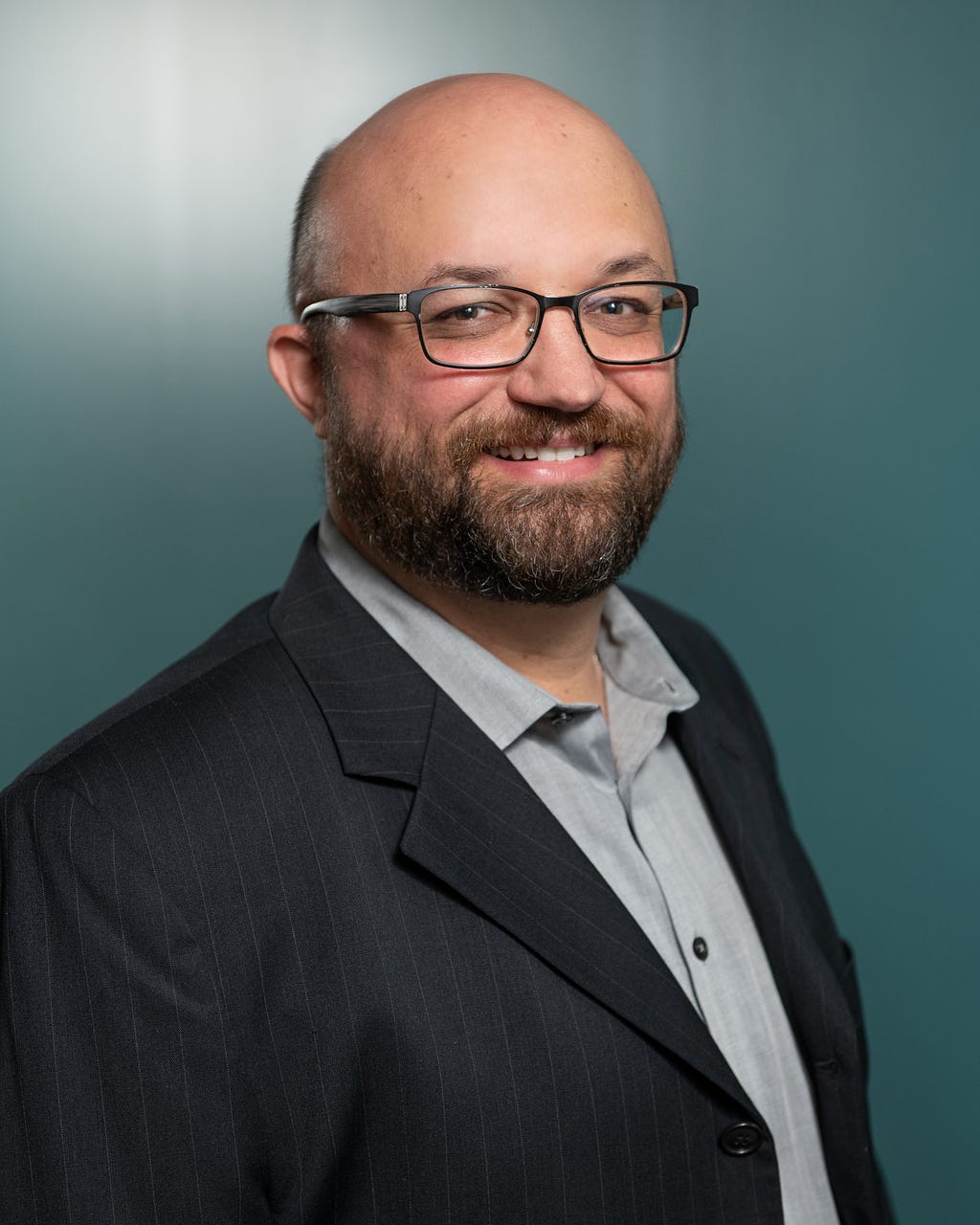
As a part of this series, we had the pleasure to interview Matthew McCall.
Matthew McCall started at The Home in 1998 as a Child Care Worker. McCall has held virtually every client serving role at The Home, from counselor, to clinician, program and department director, in both congregate care and community settings. For much of his career at The Home, McCall served as an internal consultant to all The Home’s programs, providing support and leadership during times of transition, challenge, growth, or reimplementation. In his current role he brings these skills to bear developing and supporting new programs, business lines, and initiatives for The Home. He also oversees The Home’s Family Support Programs, Foster Care and Adoption, Transition Aged Youth, and Therapeutic After-School Programs.
Thank you so much for joining us in this interview series! Our readers would love to get to know you a bit better. Can you tell us your “Origin Story”? How did you grow up?
I grew up mostly raised by my mom. My parents divorced when I was young. We moved from Ohio, where I was born, to Massachusetts to be closer to my Mom’s family and I have spent most of my life in New England since.
What’s a moment from your childhood that you didn’t realize mattered until much later?
Looking back, I don’t think I realized the significance of moving from Ohio to Massachusetts. I was too young to understand at the time what that meant, how it shaped the childhood that I had. Coming from Ohio and then moving to Massachusetts and the things that I learned in Massachusetts and how they stuck with me. I also did not recognize at the time the big changes with my family and how it would shape everything going forward.
What do you think are the biggest misconceptions about fostering and adoption that you would like to dispel? Can you share a story that helps challenge or reframe those assumptions?
I think adoption and foster care get lumped together but are in fact very different. A big misconception on foster care is the thinking that people become foster parents for financial reasons, when in fact that is not the case. Foster parents barely make enough money to care for the children that they are fostering. In some cases, they lose money. What should be focused on is the service that foster parents are providing and that they are doing it for good. Not for money. Foster parenting is more about wanting to do something good. Thinking money is a reason someone fosters undervalues the incredible service a person is doing.
I think an underappreciated aspect of adoption is the sense of loss around it. Most people come into adoption because something has not gone the way it was supposed to. For a child it is neglect or abuse, with adults, I think there is a thought that people are settling to adopt a child because a couple cannot conceive a child themselves. When in fact, for most adoptive parents, it’s more that we tried to conceive in all these ways and it didn’t work. While that was really sad and horrible to lose that opportunity, it brought us to this beautiful, wonderful, amazing, family that we are today. That journey of challenge and difficulty is part of what makes this family so important and so wonderful and so beautiful. I think that’s a nuanced conversation that oftentimes is hard to have with somebody.
Please share your “Five Things I Wish Everyone Knew About Adoption and Foster Parenting.” If possible, please include a story or example for each.
1. Understanding that the process is difficult and somewhat unnatural
I don’t think people understand everything you have to go through and how challenging the process can be, even when it goes really well and smoothly. I have had a number of adoptive parents, for instance, that have been searching for a child to adopt for a year and a half and have made some connections, but ultimately it not worked out. It is tricky to go through the process and to experience over and over again, and the sense of loss and rejection that can be really hard. I think understanding that is important.
2. Recognizing the importance of permanency
Recognizing the importance of permanency and everything that goes on as it relates to adoption or foster care. It is important that regardless of whether a young person will ever see their biological family again there’s going to be a connection to them in some way. And helping parents, but also friends and relatives to understand how important that is and what to do to build and maintain that relationship in a good way is really key to a child’s successes.
This certainly has been a big change for us over the years. We used to have a lot less emphasis on permanency and for many of our foster parents, it took a lot longer of a transition for them. The message was oftentimes the parents of these children were not able to care for them, and it is their fault that they weren’t able to care for them and you’re here to get them to a safe place.
3. It is ok that children still have a connection with their parents
We’ve now come to a deeper understanding of how it is a complex set of things that gets us to a place where a family is not able to care for their child anymore and regardless of that, those parents still love their children and want to do what is best for their children. It is important to recognize a child’s connection and relationship to their parents and honoring that and holding on to that permanency while at the same time helping them to connect to their new family, I think is really hard for a lot of people to understand. And oftentimes there’s an assumption that the child has nothing to do with their family anymore when in fact it’s really important.
4. The incredible importance of sibling relationships
Along those same lines, the incredible importance of sibling relationships and honoring and maintaining those. The number of young people that we have worked with at The Home they come to our foster care program, and they haven’t seen their siblings in five years. One of the first things that we’ll look at is why? Why aren’t you seeing your siblings on a regular basis? They’ll say, “we live too far away, and nobody can get us together”, so we haven’t seen each other in five or six years. Oftentimes those are the ones that are really struggling behaviorally because they have this really important person in their live that they never get to see. One of the things that we really push hard on at The Home and oftentimes are really successful with is, let’s figure out what the barrier to that is. We work with DCF and get us to a place where these children can see each other and start setting up regular visits. We spend a lot of time in the car driving families from one place to another so they can see each other because nobody else would do it.
5. The extra work is really worth it
You can see the transformation these children go through, from I don’t care about anything to I need to go to school because when I see my little brother next week he needs to see that I’m doing the right thing. That is pretty amazing and powerful.
What are some small first steps someone can take if they are curious but unsure?
There are a lot of Facebook groups out there for adoptive parents and foster parents that are great for support and information. They are a really great place to join and start asking questions of folks that are also curious or have gone through the journey themselves. Just be mindful of the groups you join, some are better than others. I also recommend checking out your local foster care agency, adoption agency like The Home for Little Wanderers. We will talk to you and have conversations about the journey because part of our job is to help you figure out, is this right for you? We want to help you have real information to make that decision.
How can communities, not just individuals, better support children and families in the system?
I think the first thing is awareness in our communities not just the people who are in our communities, but also the challenges that many young people and families face. Having a full understanding of why many families struggle to support their children, and why many children struggle with mental health and behavioral issues, leads to better support. This is not to blame or to dismiss the behaviors, but to address them from a place of wisdom and awareness.
Then, for me, it is about finding ways to welcome those families into our communities and show them they are valued and wanted members of our community. One of the biggest barriers to recovery for our kids and families is the isolation that happens when families are system involved. This is a time when they need connection, permanency, and support more than ever. The lack of that almost always leads to families remaining involved in the system longer and suffering more.
What gives you hope when you think about the future of adoption and foster care?
I am excited to see the way foster care and adoption continues to expand to include more kinship and found family placements. It is a huge change from historical approaches, and it is opening up new options for kids and families to find permanency
You are a person of great influence. If you could inspire a movement that would bring the most good to the greatest number of people, what would that be? You never know what your idea might spark.
In the foster care/adoption world I think the pairing of the permanency practice with foster care and adoption has been a game changer for us and families.
How can our readers follow your work online?
Readers can learn more about The Home for Little Wanderers, adoption, foster care and our work by visiting thehome.org.
Thank you for sharing these insights!
Chosen Families: Matthew McCall of The Home for Little Wanderers On Why Adoption and Foster… was originally published in Authority Magazine on Medium, where people are continuing the conversation by highlighting and responding to this story.