


The biggest impact I could have is not this lofty idea of changing the world all at once, but creating change together, one person at a time.
As a part of this series, we had the pleasure to interview Haley Moss.
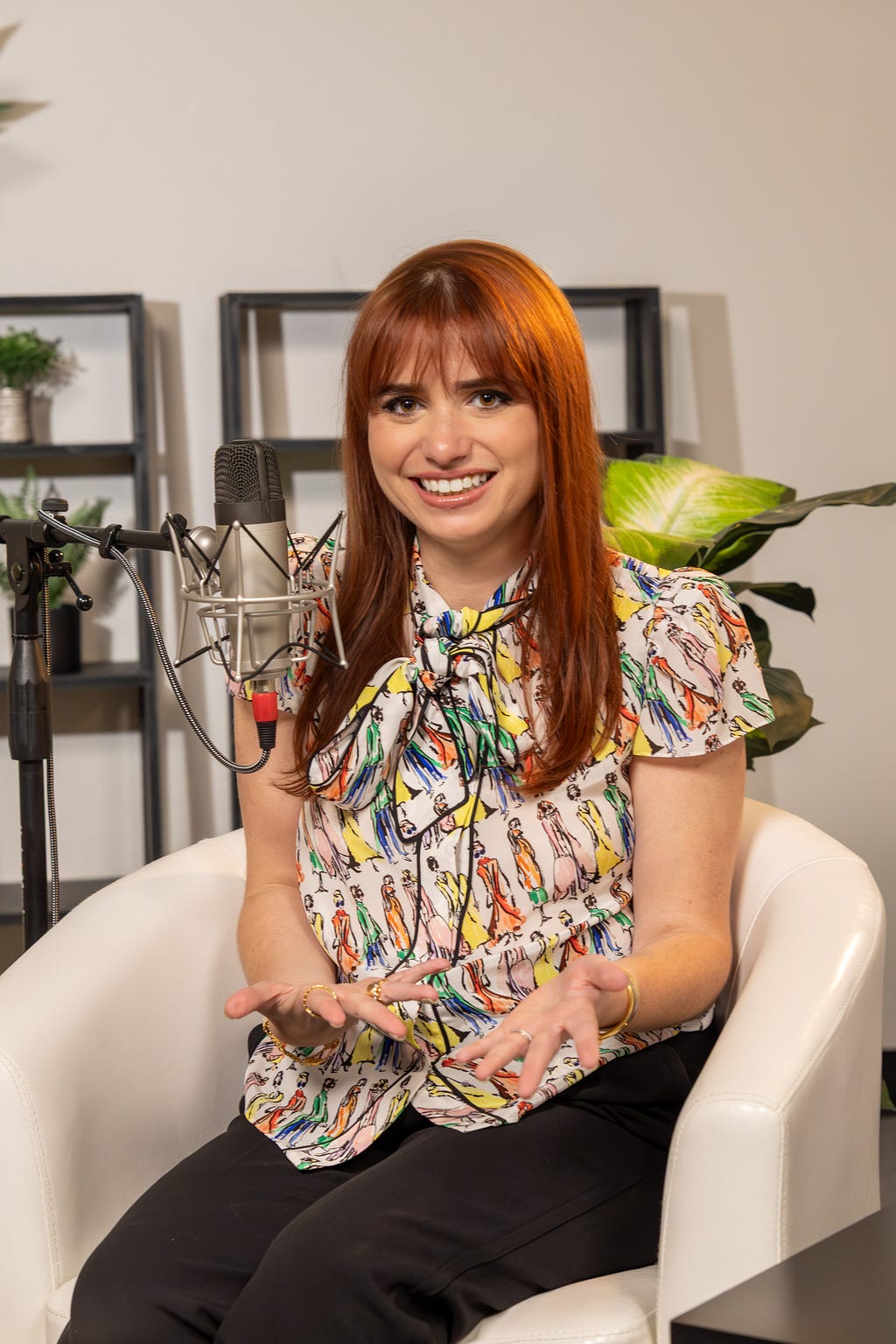
Haley Moss is a neurodiversity expert, lawyer, and the author of five books that guide neurodivergent individuals through professional and personal challenges. Once considered non-speaking, Haley now uses her voice as a keynote speaker to challenge stereotypes, empower others, and spark conversations about neurodiversity, accessibility, and disability inclusion. Through her lived experience, advocacy, and passion for positive cultural change, she hopes to make the world a little more inclusive than she found it.
Thank you so much for joining us in this interview series! Can you tell us a story about what brought you to this specific career path?
I was diagnosed with autism when I was three years old. I was initially non-speaking with a prognosis of possibly never earning my driver’s license, graduating high school, or having more than a minimum wage job. I fell into autism advocacy almost by accident — I was asked to speak on a panel at an autism conference when I was a teenager. It was in Orlando, and I am a lifelong Floridian born and raised, so naturally I wanted an excuse to go to the theme parks. What I didn’t know is how that panel discussion would change my life. I was the only girl and the youngest panelist, so my experiences were especially interesting to the audience and resonated with them. I was then approached afterwards about writing a book. Fast forward, and I ended up going to law school after realizing my passions were in writing, speaking, and advocacy would help me become a disability rights lawyer.
I ended up practicing in healthcare litigation and international law. My story as Florida’s first openly autistic attorney went viral and within a year, I chose to leave law practice to start my business in speaking and consulting to pursue neurodiversity education and advocacy full-time!
Can you share the most interesting story that happened to you since you began leading your company or organization?
There are so many of them! One of the biggest blessings of my advocacy work and speaking business is the travel. One of those trips was a 10-day trip to Alaska where I was bringing autism education throughout the state, including to more remote communities. That trip was the catalyst that convinced me to take the leap of faith into starting my business because I knew it would require such a substantial time investment and taking 10 days off as a new lawyer was probably not in the cards for me. You’d think the end of the story is that I went to Alaska in early 2020 and the rest is history.
However, during my Alaska work trip, I was determined to see a moose in real life. During each of the 7 talks I gave that trip, I would share my goal and give a moose update. After one of my later talks, someone in the audience shared there was a moose in the parking lot. A group of people went outside with me to experience the sheer joy I had at seeing a wild moose. I have pictures and videos from that and still laugh and smile. Sometimes, the best stories aren’t always about impact or leadership, but the human moments that bring us together and memories we create along the way. The friends and colleagues I met on that trip will still talk about our moose adventure.
It has been said that our mistakes can be our greatest teachers. Can you share a story about the funniest mistake you made when you were first starting? Can you tell us what lesson you learned from that?
Since I have been involved in advocacy for more than half of my life beginning as a teenager, one of the most important “career” things you pick up is to have headshots taken. My first professional headshots are from my senior year of high school. They were taken more candidly to celebrate my upcoming graduation with some personality and to showcase my paintings. Those photos were on my very first website, and I used them when I was writing online in college. Those same senior photos are still online and every once in a while, organizations and clients will find them and want to use them! I’m in my thirties now and don’t look the same I did when I was 17.
The big lesson here is: realize things last on the internet for a very long time. Sometimes you have to laugh when someone insists your promotional headshot should be one of your high school senior portraits or a portrait you had taken on a cruise ship formal night because you didn’t realize you needed more corporate-appropriate professional headshots.
Can you describe how you or your organization is making a significant social impact?
I am trying to create more inclusivity and empowerment, one keynote at a time. As someone who was once considered non-speaking, I recognize the privilege I have in using my voice every single day to step in and help other people better understand autism, neurodiversity, accessibility, and disability inclusion. As someone with lived experience and professional expertise, it is important to me to blend education and personal perspective. I have spoken to Fortune 500 companies, top global law firms, nonprofits, schools and universities, and community organizations and inspire others to create culture change, more inclusive communication, and break down barriers for neurodivergent and disabled people.
In addition to speaking, I am also the author of several books that guide neurodivergent individuals through professional and personal challenges. My books cover all sorts of topics from a practical guide for lawyers and other professionals on neurodiversity, to disclosure and accommodations to becoming an adult and exerting your agency and autonomy to be more independent, to surviving college and the middle school. My writing has also appeared in places such as The Washington Post and Fast Company!
In essence, my goals are straightforward: do my part to shape a world where neurodiversity is celebrated and accepted rather than just tolerated or misunderstood.
Can you tell us a story about a particular individual who was impacted or helped by your cause?
Honestly, I feel so lucky to say I have a lot of stories of helping people better understand the neurodivergent people in their lives. One moment in particular that sits with me is at one of the first conferences I keynoted, I had a mom come up to me and she was telling me about her child, she started crying. She didn’t finish what she was saying, and all I remember doing was asking her if I could give her a hug. She nodded and I stayed and hugged her. I never know what to do in the instances where someone is moved to tears, so I try to offer hugs and be a calming presence. It really reminds me of how much power and impact our personal stories and lived experience hold and how they can gently challenge perceptions. The biggest impact I could have is not this lofty idea of changing the world all at once, but creating change together, one person at a time.
Are there three things the community/society/politicians can do to help you address the root of the problem you are trying to solve?
Education around neurodiversity and disability. A lot of people don’t engage with the topics of neurodiversity, disability, and inclusion because they are afraid of doing or saying the wrong thing. Sometimes, just asking respectful and curious questions and seeking out new information goes a long way. We need more than awareness, we need acceptance, understanding, and action.
Better policies around accessibility and treating access as a priority rather than an afterthought. Disability leads to innovation, and so many innovations we use are the result of disability access. If you’ve ever used closed captioning or relied on curb cuts on sidewalks, you’ve benefitted from accessibility. If we lead with access, we can create space for more people to participate in our communities, activities, the workforce, and so much more!
Actively listen to disabled people. So often, we are written out of our own stories. People assume they know what is best for us or what our lives are like without ever talking to us, and assume our quality of life is worse than it is, or that we are so totally different. In fact, there are more things we have in common than that separate us. I sometimes have to remind folks that my disability isn’t my entire identity or personality, although it is a big part of my life. I have many of the same hopes and dreams my friends and fellow humans do.
How do you define “Leadership”? Can you explain what you mean or give an example?
Leadership to me is about being a positive influence and serving others. It doesn’t mean you have to have the loudest voice in the room, or even extroverted. I think it’s important to take it seriously when you realize other people admire or look up to you and try to set a good example when you can while also encouraging others to best their best and support one another.
What are your “5 things I wish someone told me when I first started” and why. Please share a story or example for each.
1. There is no “correct” way or order to do things in. I actually invested my first bonus from law practice into hiring a web designer since my first website from my teen years was in Comic Sans and was almost exclusively focused on my artwork. I attempted to redo my website during spring break in law school to focus more on my writing and it lost any semblance of personality. Having an organized, clean website built before I even refined my mission actually helped me get in front of more people since I was able to showcase my different talents and passions.
2. Don’t forget why you care! It’s so easy to lose focus on your mission and goals when you have to think about the day-to-day of running a business or the many different hats you wear in a day. I regularly will read emails from after a keynote to remind myself that what I do is impacts individuals and creates the inclusive environments I dream of.
3. Laugh more than you think you should. I talk about disability, autism, and neurodiversity, which are serious and important topics. However, I am also an autistic person and realize that life is not easy for many disabled people, myself included. If I let myself get caught up in the perceived deficits and difficulties, it is depressing. I have to laugh at the absurdity of some of my lived experiences, like what do you mean I’m afraid of the sounds my washing machine and dryer make when they are done even though I’ve heard those same sounds for over a decade?!
4. Trust yourself. You know your heart, your mission, your passions, your business. You know those things more than anybody else does. Sometimes you just need to listen to your intuition more than a business coach, course, or other external people or factors.
5. Take at least one opportunity outside of your comfort zone. With my latest book, Talking the Talk About Autism: How to Share and Tell Your Story, I was asked if I would be interested in recording the audiobook version or if the publisher should use a voice actor. I chose to be the voice of the book even though I didn’t know if I would be a good audiobook narrator. I spent a few days inside of a recording studio in Miami where several Grammy winners recorded and had an amazing sound engineer guide me through the process to make sure the final product was as polished for readers and authentic to me as possible. I am so proud of that audiobook.
Can you please give us your favorite “Life Lesson Quote”? Can you share how that was relevant to you in your life?
“Different is neither better or worse. It’s just different, and different can be extraordinary.” My mom first said this to me when she explained my autism diagnosis to be at 9 years old, and it gave me such a great framework for understanding myself and my own disability. Unlike other disabled kids, I didn’t think something was “wrong” with me. I thought I had a different operating system and learned about myself from a place of strength rather than weakness or deficit.
Is there a person in the world, or in the US with whom you would like to have a private breakfast or lunch with, and why? He or she might just see this, especially if we tag them. 🙂
I’d love to get to spend time hanging out with Taylor Swift. I think it would be cool to vibe with another creative writer and storyteller, and I enjoy a lot of her music. I feel like I would leave that meal with a lot of stories and feel very inspired to keep writing and making art.
You are a person of enormous influence. If you could inspire a movement that would bring the most amount of good to the most amount of people, what would that be? You never know what your idea can trigger. 🙂
I would hope to inspire a global movement of neurodiversity acceptance and innovation where we recognize what every single unique brain brings into this world. Instead of viewing difference as a deficit, we view it as a strength. Inclusion benefits us all.
How can our readers further follow your work online?
You can visit my website at http://haleymoss.com, or you can follow me on social media. I’m on Instagram, Facebook, LinkedIn, TikTok, and YouTube!
This was very meaningful, thank you so much. We wish you only continued success in your great work!
Social Impact Heroes: How Haley Moss Is Helping To Change Our World was originally published in Authority Magazine on Medium, where people are continuing the conversation by highlighting and responding to this story.