


Leadership, to me, is about connecting with people in a way that enhances their individual strengths while maintaining an unwavering belief in their ability to achieve exceptional outcomes.
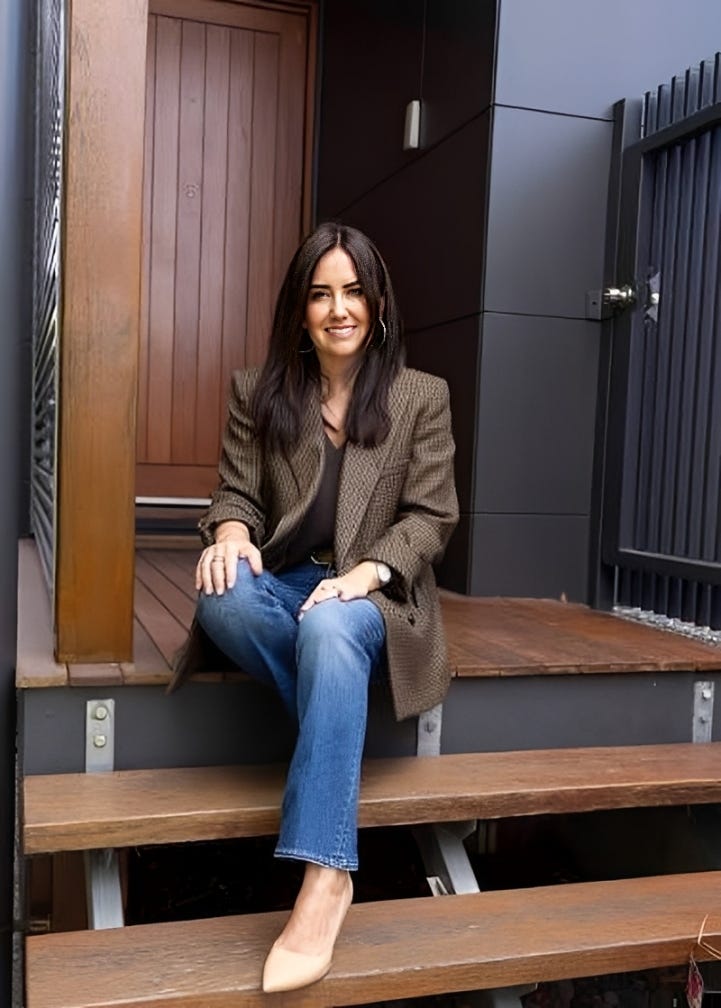
As a part of this series, we had the pleasure to interview Lisa Honeychurch.
Lisa Honeychurch is a former litigation partner and psychology graduate who transitioned to founding a charity to support children in out-of-home care, developing a one-of-a-kind camp program and a learning and wellbeing support program after a precedent-setting 2013 Family Court pro bono case. Lisa ran the foundation for 10 years and is s now the patron of the Change for Youth Foundation, which delivers the Empower Youth Program to re-engage vulnerable children in out-of-home care through education, replacing reactive school exclusions with trauma-informed mentoring. This evidence-backed model has delivered over 32,000 support hours and $1.39 million in scholarships, generating a verified $5.60 social return per dollar spent. Lisa is driving systemic policy advocacy and legislative reform to modernise corporal punishment laws.
Thank you so much for joining us in this interview series! Can you tell us a story about what brought you to this specific career path?
My journey from private legal practice to child advocacy was irrevocably set in 2013 by a pro bono case for a foster boy named Ryan. As an employment litigation partner in a firm, I became aware that child safety authorities were attempting to reunite a three-year-old boy with his biological mother over a seven-week period. Every weekend he returned to his foster parents with nightmares and bruises. When existing legal avenues offered no recourse, I took on the case pro bono and ran over $150,000 worth of litigation. We won on appeal, securing precedent-setting long-term parenting orders in the Family Court.
That case exposed a deeply broken child protection framework where vulnerable children were routinely failing in silence. Realising that reactive legal battles took an immense personal toll and came too late in a child’s life, I established the Keema Children’s Foundation which ran Little Stars Kids camps (later renamed Little Stars Foundation and now Change for Youth Foundation). Initially, I ran the foundation as a hobby alongside my legal practice, but after an accident in 2019 I could not continue with law, and so my focus became solely on improving outcomes for children using relational intervention, using education, fun, joy and one-on-one relational support as a primary tool to heal trauma and prevent children from entering the youth justice system.
Can you share the most interesting story that happened to you since you began leading your company or organization?
When we developed the Empower Youth digital program management portal, we built it as a real-time collaboration tool connecting mentors, carers, teachers, and Child Safety Officers. Instead of using standard administrative logs, our Learning Support Mentors must submit detailed session summaries within 12 hours.
This feature, I built in a standards-of-care and child protection concern reporting system, turned an educational platform into a real-time child safeguarding warning system. In one instance, mentors logged behavioural indicators that led to the disclosure of active self-harm in three vulnerable young girls — something that had gone completely undetected in their residential placements. Because the alerts generated instant notifications to Child Safety Officers and clinicians, they mobilised immediate medical and therapeutic interventions. This action prevented placement breakdowns. Maintaining a stable family-based placement costs approximately $60,000 annually, compared to over $600,000 per child per year in residential care facilities. Beyond the financial savings, it proved that structured educational touchpoints can literally save a child’s life.
It has been said that our mistakes can be our greatest teachers. Can you share a story about the funniest mistake you made when you were first starting? Can you tell us what lesson you learned from that?
In 2019, I ran a private law practice, directed day camps for 120 children with 40 volunteers, and managed a household with two young children. I was trying to be everywhere at once.
One morning, I was sprinting between my daughter’s school awards ceremony and an international meeting with a visiting Japanese karate delegation. Realising I had forgotten something inside, I sprinted back toward the garage just as my husband triggered the automated door to close.
I ran at full speed into the lowering door, hit my face, ricocheted onto the concrete floor, and ended up needing plastic surgery and suffering a severe concussion that lasted a full year.
The lesson was unforgettable: if you refuse to slow down, the universe will construct a wall to stop you. I learned that you can’t be everything to everyone. Rest and self-care are not rewards for completing work; they are mandatory operational requirements for effective leadership.
Can you describe how you or your organization is making a significant social impact?
In Queensland, 12,500 children live in out-of-home care. While they make up less than 1% of the student population, they receive 25% of all school suspensions and exclusions because developmental trauma is routinely misdiagnosed as bad behaviour. Unhandled disengagement creates a direct pipeline to the justice system, where 65% of young people under youth justice supervision have prior child protection contact.
The Empower Youth Program I developed replaces reactive school exclusions with one-on-one, trauma-informed mentoring delivered in the child’s home. An independent Social Return on Investment (SROI) evaluation conducted by Lumenia verified that our program creates $5.60 in social and economic value for every $1 invested. I’m so proud of the organisation that delivered over 32,000 support hours, provided $1.39 million in educational scholarships, re-engaged more than 600 children in mainstream schooling, and stabilised care placements.
Can you tell us a story about a particular individual who was impacted or helped by your cause?
An 11-year-old boy in care was referred to us after long-term educational neglect. When his caseworker first met him, he was completely illiterate and only able to attend school for one hour a day due to severe behavioural overwhelm. He felt completely isolated from his peers.
We matched him with a dedicated Learning Support Mentor trained in trauma-informed practice and relational connection. Over the year, his mentor built a safe space where he felt secure enough to try learning without fear of failure. His reading ability progressed rapidly, and his school attendance normalised. At the end of the school year, his report card came back with A’s and B’s. Seeing a child who once couldn’t read a single sentence proudly hold up an academic report card demonstrates how relational safety unlocks a child’s natural capacity to learn. This kind of impact drives me to keep going and advocate for every child who deserves a better start in life.
Are there three things the community/society/politicians can do to help you address the root of the problem you are trying to solve?
- Modernise Corporal Punishment Laws: Queensland laws still retain Section 280 “reasonable chastisement” defences in the Criminal Code, permitting physical discipline against children. Removing these legal defences aligns us with international human rights standards and stops intergenerational cycles of violence at the source.
- Mandate Trauma Pedagogy in Tertiary Degrees: Teaching and psychology degrees currently omit comprehensive, mandatory training on developmental trauma. Education departments must mandate trauma-informed training across undergraduate teaching curricula so teachers understand the neurobiological impacts of trauma.
- Redirect Crisis Funding to Early Placement Stability: Our state spends upwards of $600,000 annually per child to house young people in crisis residential care facilities. Allocating a fraction of those resources to early educational mentoring and foster carer support maintains family-based placements and prevents children from entering residential systems.
How do you define “Leadership”? Can you explain what you mean or give an example?
Leadership, to me, is about connecting with people in a way that enhances their individual strengths while maintaining an unwavering belief in their ability to achieve exceptional outcomes. True leadership isn’t about building dependence on a founder or director — it’s about engineering scalable systems and empowering others to carry the vision forward.
As part of this philosophy, I recently structured a share sale to transfer operational management of the Empower Youth program and charity to Andrea Lochs and Sammy Bruderer. By stepping into an Ambassador and Patron role, I can focus entirely on legislative advocacy and systemic policy reform while ensuring the frontline program continues seamlessly under capable new leadership.
What are your “5 things I wish someone told me when I first started” and why. Please share a story or example for each.
1. Trauma presents as misconduct, not a lack of capability
Traumatised children are locked in chronic hypervigilance where survival instincts override logic and emotional regulation. Classrooms misinterpret pain-based behaviours as defiance, triggering exclusions that compound harm. Never look only at the problem; look at the cause and start there.
2. Supporting the carer is essential for child stability
Placement breakdowns rarely happen because a child is “too difficult”; they happen because carers burn out from a lack of practical, in-home support. Supporting the carer directly protects the child’s home placement. Who can you partner with to make an earlier impact that ripples across multiple lives?
3. You can’t outsource quality control
Early on, we contracted third-party tutoring agencies, but we lacked visibility and performance oversight. Building our internal recruitment model and proprietary digital portal allowed us to maintain rigorous standards and safeguarding protocols.
4. Rigorous data moves systems faster than passion alone
Passion opens initial doors, but independent evaluation and verified numbers — such as our $5.60 SROI ratio — are what convince governments, corporate partners, and policymakers to invest. Make sure you measure everything so you can prove tangible impact — unfortunately, the metrics matter; children’s stories get noticed more by decision-makers when presented as a case study.
5. Rest is an operational strategy, not an afterthought
Running yourself to exhaustion ultimately hurts the cause. Sustainable social impact requires leaders to protect their own well-being so they can lead effectively over the long term.
Can you please give us your favorite “Life Lesson Quote”? Can you share how that was relevant to you in your life?
“That which the mind cannot perceive, one cannot achieve.”
This quote guides everything I do. When you set out to reform entrenched government systems, challenge legal frameworks, or reverse childhood educational disengagement, the obstacles can seem insurmountable. You must establish a crystal-clear internal vision of the end outcome before you can build the tactical steps, technology, and partnerships required to bring that vision into reality.
Is there a person in the world, or in the US with whom you would like to have a private breakfast or lunch with, and why? He or she might just see this, especially if we tag them.
Michelle Obama. She represents an extraordinary model of female leadership — combining formidable intellectual rigour with deep empathy, warmth, and authenticity. She’s used her global platform to advocate for vulnerable youth while standing firmly behind her core values.
You are a person of enormous influence. If you could inspire a movement that would bring the most amount of good to the most amount of people, what would that be?
I would inspire a global legislative and social movement to completely eradicate corporal and physical punishment against children.
Physical discipline against children remains legally sanctioned in many jurisdictions under outdated ‘domestic discipline’ provisions. Data from child maltreatment research proves that physical discipline alters brain development, increases mental health vulnerabilities, and perpetuates intergenerational trauma. By legally protecting children from physical harm and educating society on positive, trauma-informed parenting, we can address the root cause of societal dysfunction, reduce lifelong mental health costs, and create safer, more compassionate communities worldwide.
How can our readers further follow your work online?
https://www.linkedin.com/in/lisa-h-47030915/
https://changeforyouthfoundation.org.au/
Thank you so much for the time you spent sharing these inspiring insights!
Social Impact Heroes: How Lisa Honeychurch Of Change For Youth Is Helping To Change Our World was originally published in Authority Magazine on Medium, where people are continuing the conversation by highlighting and responding to this story.