


The best way to know you can do something is to do it. Get it done. There aren’t that many Carson McCullers out there that will write The Heart Is a Lonely Hunter out of the gate. When you finish that first work, it will unlock a door in your imagination where everything you never knew you could create will come through.
As a part of this series, we had the pleasure to interview Will Saulsbery.
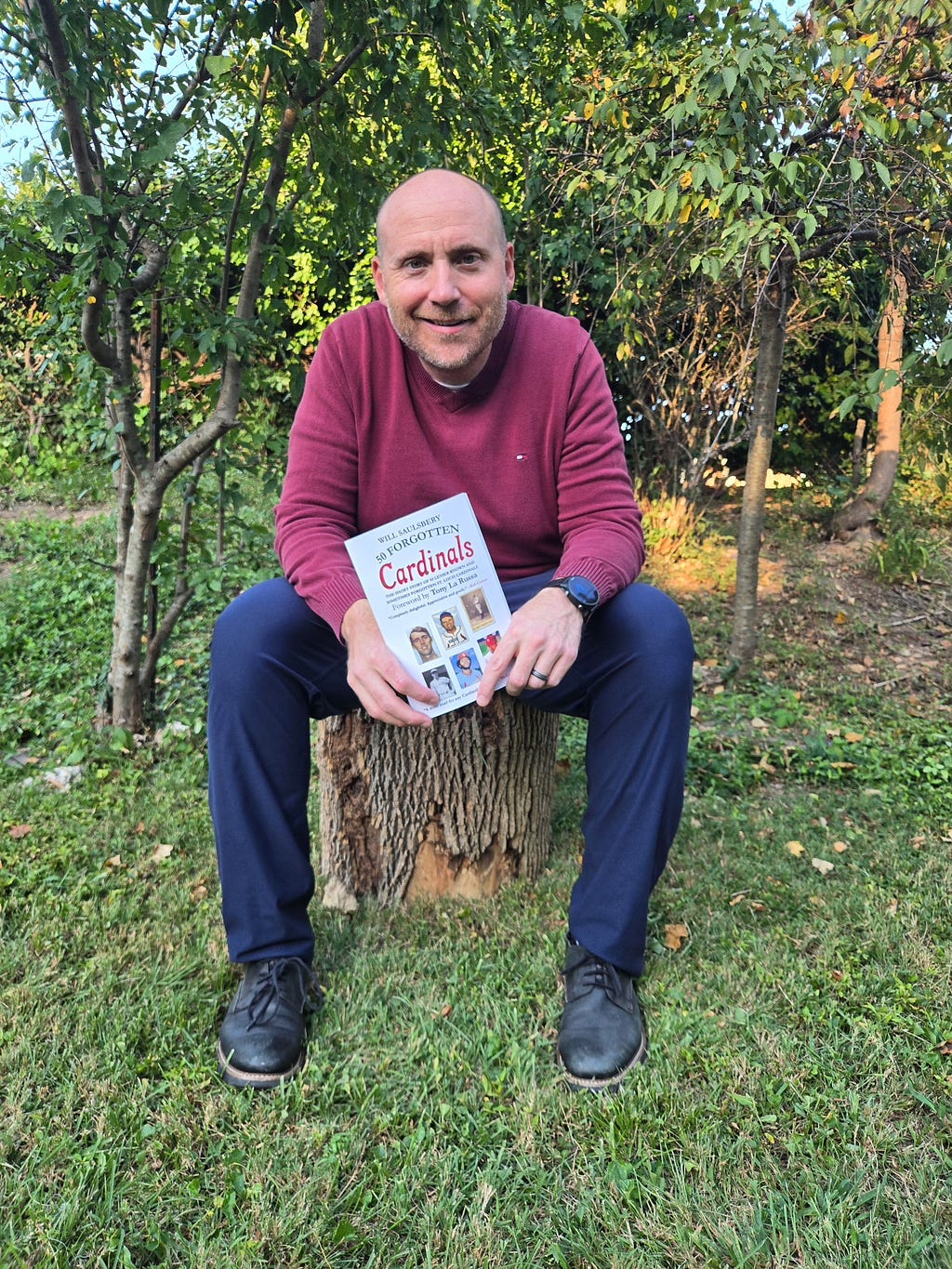
Will Saulsbery is a St. Louis–based author, ghostwriter, sports writer, and podcaster. His latest book, 50 Forgotten Cardinals, with a foreword by Hall of Fame manager Tony La Russa, uncovers the overlooked players and stories woven throughout more than 140 years of St. Louis Cardinals history. Saulsbery is a contributing writer and podcast host for Scoops Sports Network, and his bylined work has appeared in Fast Company. He also co-wrote PGA Tour professional Jay Delsing’s You Wouldn’t Believe Me If I Told You, a runner-up for Sports Book of the Year from the American Writing Awards, and wrote the short-story collection Death in the Midwest. A University of Missouri graduate and lifelong Missourian, Saulsbery writes at the intersection of sports, history, business, and culture, with a particular interest in the people and stories that might otherwise be forgotten.
Thank you so much for joining us in this interview series! Can you share a story about what brought you to this particular career path?
Since I was a little kid in St. Louis, I’ve loved stories: books, cartoons, movies, you name it. I’ve never grown tired of them, and always dying to get to the end so much that sometimes I have to fight myself from skipping ahead.
From reading and watching, I started writing. I wanted to write things I wanted to hear and read. And, just like before, I can’t wait to see how they end.
Can you share the most interesting story that occurred to you in the course of your career?
When I started writing, there was a bit of trepidation to put what I created in my singular mind out in the world. All those BS insecurities of what people will think, how they will treat me, will my family be embarrassed? All that junk that takes up space in your head. The opposite is true, as so many people have always supported and encouraged me through these past two decades of writing. They know what it means to me, and they love seeing me still doing it. People who love you just love you. It’s not based on the condition that they like your writing. I’m glad I learned that early.
What was the biggest challenge you faced in your journey to becoming an author? How did you overcome it? Can you share a story about that that other aspiring writers can learn from?
The long evolution of deciding how I write, or what people call “my voice.” I tried a lot of different things in my early 20s. They never quite fit. I remember writing an article for TEDx GatewayArch about Forrest Park in St. Louis. I kept trying to force this line into the piece because it was how I wanted to write, or how I wanted to come across. I finally stopped forcing it and wrote the line that was correct for the piece. From that day forward, I have always put the work as it should be ahead of how I want it to be.
Can you share a story about the funniest mistake you made when you were first starting? Can you tell us what lesson you learned from that?
Oh man, I remember this one class when I was in college at Mizzou. I was working on my creative writing English degree, and my buddy Jake Harper was next to me while workshopping our latest poems. I thought I had done something so provocative and new. I had this whole poem which was a comment on how the biggest and nicest building in this dirt-poor small town was the church. So, I thought… hey, I’ll spell Jesus with two dollar signs!! 20-year-old me was so convinced of my genius in the moment. Jake looked at it, leaned over with a smile, and just said, “subtle.” I laughed then, and I still laugh about it now.
What are some of the most interesting or exciting projects you are working on now?
The latest book I published, 50 Forgotten Cardinals, was the most fun I’ve had writing anything in my life. It is so funny, full of love, and flat-out baseball nerdom. I thought I knew about Cardinals baseball, but I learned so much more than I ever thought I would.
On my fiction side, I’m 30 pages into my first novel called “The Cartographer.” I am absolutely in love with this book, its characters, and what I’m learning about them every time I sit down at the keyboard. I cannot wait to see how it ends!
Can you share the most interesting story that you shared in your book?
The lives and ruin of Bugs Raymond and Slim Sallee. These two guys were the textbook definition of “characters.” Work hard, play harder. I tell everyone, these guys threw 300–400 innings in a season in the 1910s, and ibuprofen wasn’t invented until 1962. You gotta dull that ache somehow. When you read those chapters, you will be obsessed with them.
What is the main empowering lesson you want your readers to take away after finishing your book?
My goal and hopes are simple. Whatever mood you are in when you start reading for the day, you will be in a much better mood when you put the book down. You’ll learn a lot about baseball and its forgotten players, and you’ll have a few belly laughs and a ton of smiles.
Based on your experience, what are the “5 Things You Need to Know to Become a Great Author”? Please share a story or example for each.
1. Writer’s block is a myth; it does not exist. Show up every single day and write. Waiting for inspiration to fall from the sky and writing only when the time is right is what people who do this for a hobby do. There are people who write; then there are writers. Be a writer.
2. Be boring and make an outline. I know, it’s so unsexy. But damnit, it works. One of the best and most prolific writers of the century, Craig Johnson, told me to look at it like a map for a road trip. You’re starting one place and ending another. But that doesn’t mean you can’t take a few exciting detours on the way.
3. Write a story you want to know the ending of. The audience is you and your imagination. Never be hampered by what you might think someone could possibly say about something you’re thinking of writing. It’s a waste of time and a waste of your intellect. My songwriting hero is Noel Gallagher. One of my favorite explicit-laced rants of his boils down to the fact that the consumer doesn’t know what they want. “People didn’t know they wanted Jimi Hendrix, but they got him and they f&*%ing loved it.” Trust not only your talent, but your taste. If you’re writing something you love, so will loads of other people.
4. Once it’s done and published, it’s not really yours anymore. People will take it in and add new meaning to it. It becomes theirs as well. You have a favorite book, a favorite song. It’s yours, even though it isn’t. The same will happen with your work. This is a good and beautiful thing. I know what Play it as it Lays by Joan Didion means to me, and I know it’s a helluva lot different than what it meant to her.
5. The best way to know you can do something is to do it. Get it done. There aren’t that many Carson McCullers out there that will write The Heart Is a Lonely Hunter out of the gate. When you finish that first work, it will unlock a door in your imagination where everything you never knew you could create will come through. The first album I wrote is not good. But doing it, learning the process, and knowing that I could do it led to so many songs and albums I will put up against anyone’s. But if I had stopped halfway through because I didn’t think it was good enough, I would not be writing this now. I’d be a sad sack with regrets.
What is the one habit you believe contributed the most to you becoming a great writer? (i.e. perseverance, discipline, play, craft study). Can you share a story or example?
I always read and make a point of reading fiction, non-fiction, everything from all different kinds of writers. You cannot just read the stuff you like; you have to read so much more. When I was a college radio DJ at KCOU 88.1 at Mizzou, there was this quote on the wall that read, “If you listen to more than just your favorite bands, you’ll have more favorite bands.” The same goes with all forms of art. Be open to everything. Han Kang is one of my favorite writers because my friend Emily Lecaque recommended her. I never would have found her on my own. I’ve now read five books by Yasunari Kawabata because my friend Robert Ashton told me I had to read Snow Country. You owe it to yourself and your work to have a huge pool of influence.
Which literature do you draw inspiration from? Why?
This list is endless. But I do love hearing the stories that usually remain untold. That’s a huge reason I wrote 50 Forgotten Cardinals. So many players were becoming lost to history. I wanted to learn about them and then share that with every baseball fan on the planet. Anytime you tell the story of a unique person that most people gloss over, I’m in.
You are a person of enormous influence. If you could start a movement that would bring the most amount of good to the most amount of people, what would that be? You never know what your idea can trigger. 🙂
My favorite quote ever I heard was at a company meeting from the Great Wayne Brannon. He said his mantra is “the high road leads to better places.” I tell myself that every day and live it out in every interaction. Live that way. I have never wanted to focus on proving people wrong. You have a lot of people that love you and pull for you. Prove them right.
How can our readers follow you on social media?
https://www.willsaulsbery.com/
Twitter @willsaulsbery
Thank you so much for this. This was very inspiring!
Social Impact Authors: How & Why Author Will Saulsbery Is Helping To Change Our World was originally published in Authority Magazine on Medium, where people are continuing the conversation by highlighting and responding to this story.