


For me, leadership means doing ambitious work without becoming inaccessible to the people coming behind you. I want to keep growing, share what I learn, and take other people’s ambitions as seriously as my mentors took mine. If I go somewhere interesting, I want to leave helpful directions.
As a part of this series, we had the pleasure to interview Lilly Grossman.
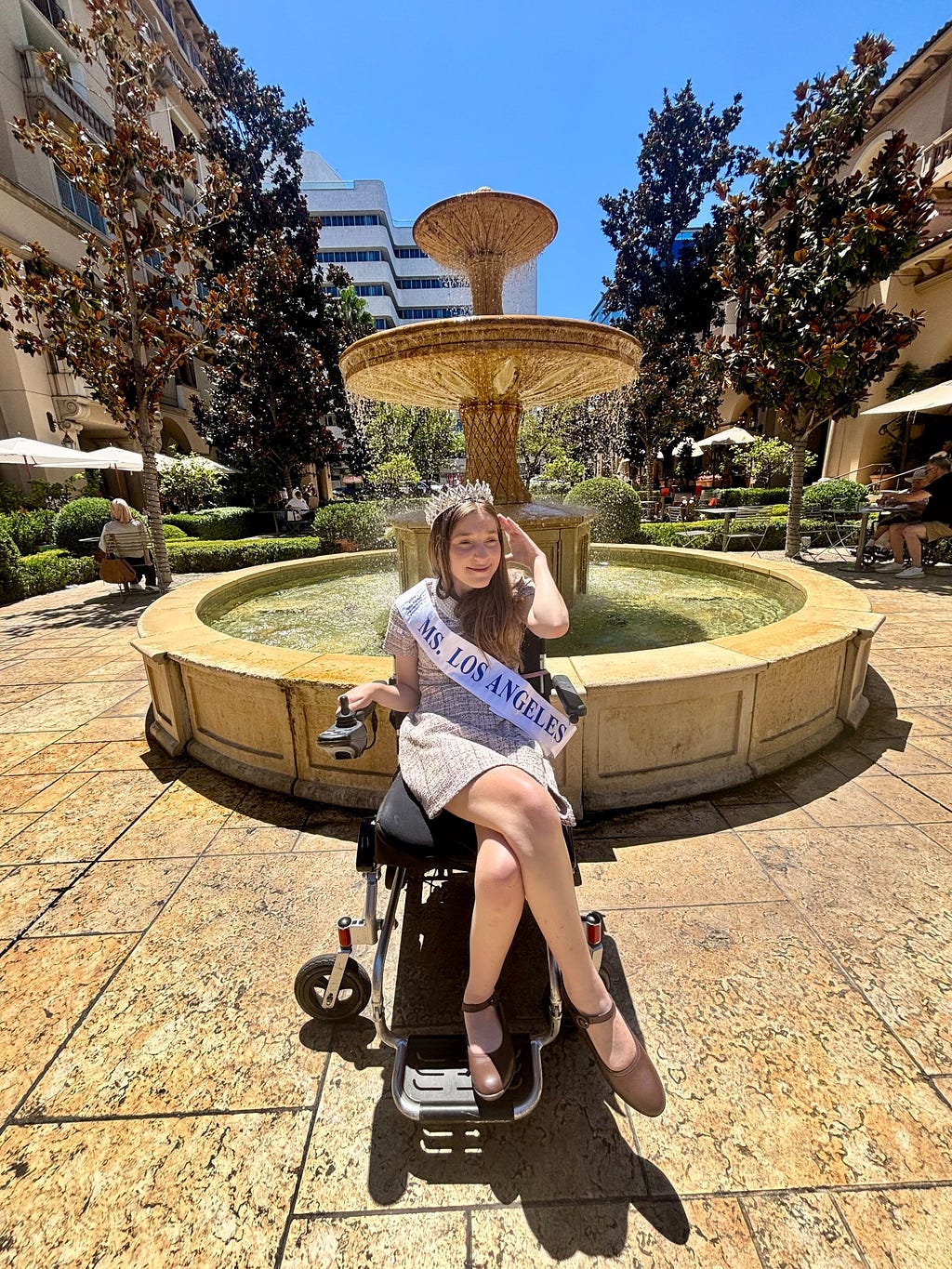
Lilly Grossman is a disability policy researcher, systems strategist, and Founder and CEO of Beyond The Box Advocacy. Her work examines how fragmented disability systems shape mobility, independence, continuity, and economic opportunity for Americans with disabilities. Grossman coined the term “geographic lock-in” and contributes to research through the UCLA Center for Health Policy Research. She is also the author of The Quiet Parts of Disability, a completed manuscript that blends memoir, disability policy analysis, and systems critique. Her work has been featured in Forbes and the USC Equity Research Institute. She advises organizations on disability systems, accessibility, structural barriers, and policy reform. Grossman is also the inaugural United Crown of America Ms. Los Angeles 2026, using her platform to increase disability representation across leadership, professional, community, cultural, and public-facing spaces.
Thank you so much for joining us in this interview series! Can you tell us a story about what brought you to this specific career path?
In 2014, I wrote my college application essay about the future I imagined for myself. My parents raised me to expect a full life, even though my childhood misdiagnosis originally came with a very different prognosis. I wrote about graduating high school, going to college, getting a job, and starting a family because I genuinely assumed I would do all of those things. I ended the essay with the sentence, “I am sure I can and will do everything,” and I meant every word.
I carried that same curiosity into my career, but it took me a while to figure out where I belonged. After graduating from college in 2019, I initially wanted to pursue political journalism. I later explored disability studies because I wanted to understand it beyond my own experience, which led me toward questions about individual experiences through counseling and therapy. Social work widened my perspective by connecting the person to family, services, community, and the larger environment.
As I looked beyond the individual, I became fascinated by the structures surrounding them because the shift was happening in my own life too. I was extremely good at navigating disability systems, planning ahead, finding resources, advocating for myself, and figuring things out when something was unnecessarily complicated. Eventually, I stopped being satisfied with knowing how to navigate the system and began asking why it worked that way in the first place.
Disability policy was where everything finally clicked. I could look at an individual experience, identify patterns across other experiences, study the policies contributing to those patterns, and think about what could change. My ambition carried me far enough to discover the ceiling. Once I found it, I wanted to understand who built it, what held it up, and how to change it.
My career grew from there. I founded Beyond The Box Advocacy, became involved in disability policy research, focused on disability support service portability and geographic mobility, and wrote The Quiet Parts of Disability. My work has also expanded into public representation as United Crown of America Ms. Los Angeles 2026. I’m pursuing a career in social work and disability policy as I prepare for doctoral study because I want to understand the person, recognize larger patterns, and change the policies influencing both.
Can you share the most interesting story that happened to you since you began leading your company or organization?
During the summer of 2026, my research became incredibly personal when I went to Washington, D.C., for a nationally competitive disability policy internship. My established research interest was already disability support service portability, but I somehow managed to become my own disability policy case study.
I rely on 24/7 daily living support, and my services are provided through one of California’s state disability support systems. I do not employ my assistants independently. An agency hires, supervises, schedules, and pays the people who provide my daily support. My support was already authorized in California, so my need for those services was never in question. The only unresolved issue concerned who could provide my existing support during my ten weeks in D.C.
My usual agency could not provide the temporary out-of-state arrangement, and we found another California agency willing to coordinate my support. The alternate agency needed approval to provide my existing services during my temporary stay. Less than fourteen hours before my flight, the agency’s request was denied, and I boarded the plane without seeing the denial. Three days later, I attended an anniversary gala with social insurance and disability policy experts, not knowing that the agency providing my support had been told to stop simply because “it wasn’t approved.”
I was more than 2,000 miles from home, and my dad flew across the country the next day to provide my support for the following seven weeks. I was twenty-nine, had been receiving formal support to live independently since I was eighteen, and suddenly my dad was helping me shower, get dressed, use the bathroom, eat, and get through my daily routine. My mom and her best friend ended up covering the last three weeks of my internship.
My support needs had not changed, and I was not permanently moving out of California. I was pursuing a ten-week professional opportunity and returning home afterward. I had done everything I could to make the opportunity work. I earned the internship, planned months ahead, secured free housing, found an agency willing to support me, and arranged the people who would help me. I needed approval to live my life.
The appeal continued throughout my internship, so my professional and personal worlds were comically intertwined. I was working on disability policy as disability policy was failing me. At one point, I was at a professional happy hour talking on the phone to our attorney about my appeal. I couldn’t have designed a more on-the-nose summer if I tried.
I now think much more seriously about timing because opportunities have deadlines. A ten-week internship cannot wait indefinitely for an administrative process to catch up. People with disabilities pursue internships, fellowships, temporary jobs, education, travel, and other time-limited opportunities, and our support systems need to accommodate lives that move.
It has been said that our mistakes can be our greatest teachers. Can you share a story about the funniest mistake you made when you were first starting? Can you tell us what lesson you learned from that?
My funniest recurring mistake was believing every new career plan was finally THE plan. I would find a field or program that interested me, research everything about it, create a detailed plan, tell everyone about my brilliant new plan, and become completely convinced that I had figured out my entire future. I would quickly learn something new and realize my interests had expanded again.
For a while, I thought the changes meant I hadn’t found my direction. Each field, however, led naturally into the next because my questions kept getting bigger. I moved from disability to individual experiences, to the environments surrounding people, and eventually to the policies influencing them.
I’m much more comfortable with the path now because I understand the throughline. I want to know what someone is experiencing, why it keeps happening, which structures contribute to it, and what would make it easier for the next person. Turns out, I wasn’t terrible at making career plans; I just made plans that were too small for my questions.
Can you describe how you or your organization is making a significant social impact? Can you tell us a story about a particular individual who was impacted or helped by your cause?
A main part of my Beyond The Box Advocacy work involves making disability policy human. You can give me a dense policy document, and my brain will immediately start tracing where it lands in someone’s life. I want to know how a rule affects someone’s ability to take a job, attend school, move somewhere new, travel, maintain support, have a relationship, or pursue an opportunity. I absolutely love disability policy, so I can happily talk about it forever. My job is making everyone else understand why they should care about it too.
Being Ms. Los Angeles 2026 has given me another way to make disability visible. My platform, See Her. Be Her., is personal to me because I want little girls with disabilities to grow up seeing women with disabilities everywhere. I want them to see us building careers, falling in love, becoming leaders, chasing huge goals, and showing up in places where they don’t expect us.
Beyond The Box Advocacy allows me to combine research, policy analysis, direct advocacy, and public engagement. My research on disability support service portability is part of a larger interest in how disability systems influence the lives people can pursue. I am able to take something that sounds like a technical policy problem and make the human consequences impossible to miss.
My best friend, Holly, is one of the people I think about most when I ask myself who I want my work to serve. We both use wheelchairs and require significant physical assistance. Our support needs have many similarities, but our access to resources and opportunities has been very different. Knowing her has made me look more carefully at everything surrounding my own trajectory.
I have had tremendous support throughout my life. My parents advocated for me, created stability, solved problems, and helped me access the resources and opportunities I needed. Mentors took my ideas seriously and professional relationships opened doors. I never want to tell my story as if ambition alone produced everything I have accomplished.
If pursuing my goals required this much navigation with all the resources available to me, I cannot ignore what the same structures demand from someone with fewer resources. I often think about Holly and want to make things easier for the Hollys of the world. Holly and I want very different things from our lives, which is exactly the point. I want disability systems to give people a genuine chance to pursue the lives they choose.
Are there three things the community/society/politicians can do to help you address the root of the problem you are trying to solve?
First, include people with disabilities in policymaking decisions. People who interact with disability systems know where policies become difficult to use, administrative burdens appear, and implementation produces unintended consequences. Research, technical expertise, professional practice, and lived experience all contribute important information. Strong policy needs those perspectives throughout development, implementation, and evaluation.
The second thing is greater coordination across policy areas. Employment connects with transportation and support services, education connects with economic security, and health connects with housing. Separately administered programs also shape relationships, family life, geographic mobility, and community participation. People experience all of those policies within one life, so policymakers should understand how the effects compound.
The third is designing systems with the expectation that people’s lives change. People move, fall in love, go to school, change jobs, travel, build families, discover new goals, and encounter opportunities they could never have predicted years earlier. Public systems need enough flexibility, continuity, and responsiveness to accommodate normal human change.
How do you define “Leadership”? Can you explain what you mean or give an example?
For years, my motto was, “Be who you needed when you were younger.” Mentors sent me resources, introduced me to people, challenged my ideas, and treated my ambitions seriously. Their willingness to share what they knew made unfamiliar professional spaces easier to navigate.
I also remain completely incapable of acting casual when someone I admire compliments my work. When someone knows me professionally, reads my writing, and genuinely respects what I do, I will still clasp my hands together and say, “Oh my gosh! Thank you so much!!” Professional growth has done absolutely nothing to cure the fangirling, and I’m perfectly okay with that.
Lately, I’ve found myself on the other side of those conversations. Students and emerging professionals have been asking me about research, internships, advocacy, graduate education, writing, and finding their place within the disability space. I’m committed to staying approachable, warm, and kind because I was once the person asking those same questions.
For me, leadership means doing ambitious work without becoming inaccessible to the people coming behind you. I want to keep growing, share what I learn, and take other people’s ambitions as seriously as my mentors took mine. If I go somewhere interesting, I want to leave helpful directions.
What are your “5 things I wish someone told me when I first started” and why. Please share a story or example for each.
1. I wish someone showed me more versions of adulthood with a disability. Ambition was never the missing piece because my college application makes that hilariously clear. What I needed were practical examples of adults with disabilities navigating careers, relationships, finances, independence, support, and everyday life. The Quiet Parts of Disability grew partly from my desire to put more of those experiences into words.
2. I wish someone had told me that exploration can be productive. I spent a long time focusing on how often my plans changed instead of what each experience was teaching me. None of those experiences had to be my entire career to contribute to the career I eventually created.
3. I wish someone had taught me to pay attention to the conditions surrounding achievement. An accomplishment tells you something about a person, but the resources, relationships, information, and systems around it matter too. Looking at those conditions changed how I understood my own trajectory and influenced the questions I began asking professionally.
4. I wish someone had told me how expansive disability policy is as a career. I had no idea I could spend my professional life thinking about services, health, employment, education, economics, civil rights, mobility, relationships, and social policy and have all of it count as work.
5. I wish someone had told me that I could create a career connecting different ways of understanding the same problem. Social work keeps me close to individual experiences, research helps me identify patterns, and policy gives me tools for examining the structures influencing them. I spent years searching for the “correct” professional box before realizing I was more interested in the connections between them.
Can you please give us your favorite “Life Lesson Quote”? Can you share how that was relevant to you in your life?
Judy Heumann once said, “I wanna see feisty disabled people change the world.” Her generation changed what was possible for mine. She helped lead the fight for Section 504 and spent her career advancing disability rights in the United States and around the world. I grew up with rights and expectations that exist because people with disabilities before me were willing to organize, challenge institutions, ask uncomfortable questions, and keep going when change took far too long.
I feel a deep responsibility to carry that work forward. The questions facing my generation may look different, but there is still so much work to do to expand the freedom and possibilities people with disabilities have in our lives. I want to contribute through research, policy, advocacy, writing, and any other tool I can use.
I also love how Judy said “feisty” instead of something more polished. I care deeply about doing rigorous and thoughtful work. I never want professionalism to make me less curious, enthusiastic, persistent, or willing to ask why something cannot work differently. If the assignment is to be a feisty person with a disability who changes the world, I am more than happy to take it.
Is there a person in the world, or in the US with whom you would like to have a private breakfast or lunch with, and why? He or she might just see this, especially if we tag them. 🙂
I would choose Reese Witherspoon. I have been incredibly fortunate to get to know many people in the disability community I once admired from afar, which still feels slightly surreal. Reese interests me because she’s expanded her career across acting, producing, storytelling, entrepreneurship, and creating opportunities for women.
After years of exploring various fields, I have discovered I’m happiest when several parts of my brain can participate. I’m very ambitious and have stopped pretending I want a tiny, neatly contained career.
There is also the extremely obvious Legally Blonde connection. I call myself the Elle Woods of Disability Policy because I love serious ideas, pink, sparkles, and bows. I see absolutely no reason they cannot coexist.
You are a person of enormous influence. If you could inspire a movement that would bring the most amount of good to the most amount of people, what would that be? You never know what your idea can trigger. 🙂
I would start The Disabled Dream movement by asking people, “What would you do if you had the opportunity?” Someone may want to build a career, raise a family, compete in a sport, move somewhere new, start a business, fall in love, make art, travel, or live a nice quiet life. I want people with disabilities to have the freedom to give their own answer.
For years, my motto was, “Be who you needed when you were younger,” and I actually became her. I’m now one of the adults younger Lilly needed to see because my life represents one possible version of adulthood with a disability. I want people growing up today to encounter many possible versions. Being Ms. Los Angeles 2026 is especially fun because a little girl with a disability can see a woman using a wheelchair in a crown and sash and think, “Oh, I can do that too.”
Two sentences I wrote twelve years apart capture the larger arc better than any résumé could. In 2014, I ended my college application essay with, “I am sure I can and will do everything.” In 2026, I dedicated The Quiet Parts of Disability to fifteen-year-old Lilly with the words, “Dedicated to fifteen-year-old Lilly. You did it all. I am so proud of you.”
Somewhere between those sentences, my ambition grew into something larger than my own trajectory. Pursuing the life I wanted has made me curious about what influences the lives other people can pursue, and eventually that curiosity became my career. My current motto is “Rewrite Stories, Change Systems, Be What’s Possible.” The Disabled Dream brings those ideas together. I want to make it easier for people with disabilities to imagine lives that matter to them and have a genuine chance to pursue them.
How can our readers further follow your work online?
Readers can follow me through my personal website, Beyond The Box Advocacy, LinkedIn, Instagram, and Medium. I share disability policy research, writing, advocacy, speaking, mentorship, professional projects, and plenty of Ms. Los Angeles 2026 moments because my life apparently now includes both policy research and sparkly crowns. I have so much more I want to do and can’t wait to see how far I take all of it.
Thank you so much for the time you spent sharing these inspiring insights! We wish you continued success with your great work.
Social Impact Heroes: How Lilly Grossman Of Beyond The Box Advocacy Is Helping To Change Our World was originally published in Authority Magazine on Medium, where people are continuing the conversation by highlighting and responding to this story.