

Waste is a design and business model failure, not a fact of life.
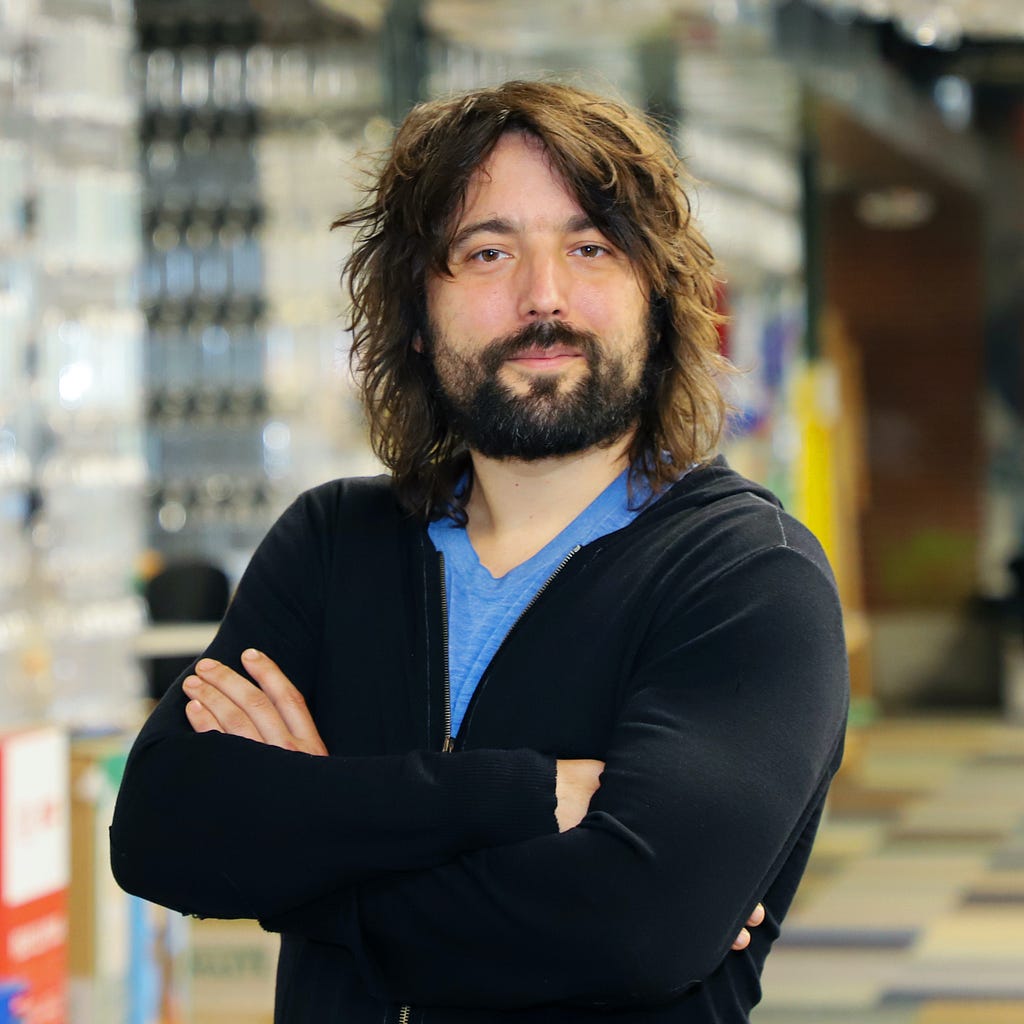
As part of my series about “individuals and organizations making an important social impact”, I had the pleasure of interviewing Tom Szaky.
Tom Szaky is the Founder and CEO of TerraCycle®, an international leader in innovative sustainability solutions, creating and operating first-of-their-kind platforms in recycling, recycled materials, and reuse. Across 18 countries, TerraCycle is on a mission to eliminate the idea of waste and develop practical solutions for today’s complex waste challenges. Tom is the author of several books on the circular economy and a frequent speaker at global forums on waste, packaging, and circularity.
Thank you so much for joining us in this interview series! Can you tell us a story about what brought you to this specific career path?
When I was around nine years old, I remember driving around Toronto with my dad and being genuinely astonished by what people were throwing away. I had grown up in Hungary, where scarcity meant reuse was simply how life worked, so nothing got discarded if it had any remaining use. The first time I ever saw a television set, it was on the side of the road in the trash. That experience shaped a fundamental conviction I still hold: waste is a design and business model failure, not a fact of life. It drives every single strategic decision we make at TerraCycle. That is what ultimately drove me to build TerraCycle: a company whose mission is Eliminating the Idea of Waste.
Can you share the most interesting story that happened to you since you began leading your company or organization?
Honestly, the moment that stands out most is the launching of Loop, our reuse platform, at the World Economic Forum’s annual meeting in Davos in January 2019. The idea itself was simple but radical: what if you could buy the products you already love, from brands you already trust, in durable reusable packaging, at the stores where you already shop? No real behavior change, no compromise on convenience or price, just the same experience without the disposable waste. We launched in partnership with the World Economic Forum and some of the world’s biggest consumer brands, P&G, Unilever, Nestlé, and PepsiCo, with Kroger and Walgreens as our founding retail partners, and that was the moment the 21st-century milkman concept stopped being a pitch and became real. We piloted across the US, Canada, the UK, France, and Japan, and the lessons were hard won. What I find most meaningful now is watching it prove out at scale: In France, with Carrefour as our retail partner and the backing of strong national regulation, Loop has reached real commercial scale. French consumers can access more than 400 products in reusable packaging across over 500 Carrefour supermarkets nationwide, with brands like Ferrero, Danone, Coca-Cola, and Suntory participating. France has proven reuse is not a fringe concept. It’s a mainstream way of doing business when the conditions are right, and that’s the blueprint we’re now taking to the rest of the world.
It has been said that our mistakes can be our greatest teachers. Can you share a story about the funniest mistake you made when you were first starting? Can you tell us what lesson you learned from that?
Honestly, the early days of TerraCycle were one long string of mistakes. We were kids running a business out of a dorm room, packaging worm castings in used soda bottles and trying to convince major retailers to put them on their shelves. I remember showing up to a meeting at Home Depot in a beat-up car, wearing the only jacket I owned, with a bottle of liquefied worm poop in my hand, trying to convince a seasoned buyer that this was the next big thing in lawn and garden. I am not sure whether they said yes because they believed in the product or because they felt sorry for us. Either way, we took it. I cannot single out the funniest mistake from those years because we were moving too fast to stop and laugh at any of them. What I can tell you is that the chaos taught me more than any business class ever did. When everything is held together with duct tape, you learn very quickly what actually matters and what doesn’t.
Can you describe how you or your organization is making a significant social impact?
Social impact at TerraCycle operates on a few different levels. On the recycling side, we run free recycling programs and paid recycling solutions for more than 400 types of hard-to-recycle items. From cigarette butts and dirty diapers to candy wrappers, coffee pods, and contact lenses, our free programs are sponsored by brand partners, meaning the cost of recycling is borne by the companies whose packaging creates the challenge, not the consumer. Our paid solutions, like our Zero Waste Box, give businesses, schools, and households the ability to recycle virtually anything not accepted through their curbside program, on their own timeline, without a brand partner. Across 18 countries, we engage over 200 million people and recycle billions of pieces of trash through our various platforms. We also support the TerraCycle Foundation, a 501(c)(3) nonprofit whose mission is to fight ocean plastic at the source, pulling waterway waste from rivers and canals in Bangkok, Thailand, before it ever reaches the ocean. On the business side, TerraCycle has been profitable for more than ten consecutive years. We have grown net revenue by 93% over the past five years. We recently closed a Regulation CF crowdfunding raise that reached the $5 million maximum in under 60 days, and we’ve now launched a $75 million Regulation A public investment offering at invest.terracycle.com. Our 2018 Regulation A investors have already received dividends totaling 22–24% of their invested capital. At TerraCycle, our mission is Eliminating the Idea of Waste — and I have always believed that the purpose of a business is to change society in some meaningful way, and that profitability enables that change rather than defines it. Those two things are not in conflict. They reinforce each other. I think that is what makes TerraCycle work.
Can you tell us a story about a particular individual who was impacted or helped by your cause?
There are many people along the way who made a greater impact than they probably realize, but it was a casual conversation that moved our business down a different path. Seth Goldman, then CEO of Honest Tea, and I were talking about how children’s drinks were increasingly being sold in pouches with no recycling option. He asked if I could come up with a solution to keep those pouches out of landfills. I jumped on the opportunity, and with Seth’s first investment, we created the Drink Pouch Brigade, and TerraCycle’s sponsored waste business was born. That single conversation set in motion a model that has since kept billions of products and packages out of landfills and incinerators globally and helped raise millions for charities and schools.
Are there three things the community/society/politicians can do to help you address the root of the problem you are trying to solve?
Yes. First, accelerate extended producer responsibility (EPR) legislation. The idea is straightforward: if a company puts packaging or products into the market, it should bear the cost of managing those materials at end-of-life, not the taxpayer. EPR has existed in Europe and other markets for more than two decades, but it only arrived in the US in 2021. Seven states now have packaging EPR laws on the books, and Oregon was the first to move into full implementation in 2025. EPR isn’t a silver bullet, but it creates an important shift in how waste is managed. Right now, the reason most hard-to-recycle materials go unrecycled is economic: the cost of collection and processing exceeds the value of the recycled material. When manufacturers are financially responsible for end-of-life, that math changes: the economics of recycling improve dramatically, and companies like TerraCycle can build the infrastructure to meet that demand. Second, create markets for recycled content, set mandatory recycling targets, and invest in public education around what is and is not typically recyclable through curbside programs. A lot of contamination in the recycling stream comes from well-intentioned people putting the wrong things in the bin, and cleaner streams are more valuable streams. Third, fund and expand municipal recycling infrastructure. One of the biggest barriers to recycling is simply access. Not everyone lives in a community with robust curbside options, and that gap disproportionately affects lower-income communities. Government investment in recycling infrastructure levels the playing field.
How do you define “Leadership”? Can you explain what you mean or give an example?
Leadership, to me, is the ability to motivate people around a shared purpose and give them the latitude to pursue it creatively. Three things have mattered most in practicing that at TerraCycle. First, relentlessness: we have faced countless moments where a rational observer would quit, and we stuck with it anyway. Second, a genuine belief that business can be a force of good. I have always felt the purpose of business is to change society in some meaningful way, and that profitability enables that change rather than defines it. Third, a willingness to fail fast and learn from it rather than getting attached to any one idea. The most rewarding part of being CEO is being able to realize what I set out to create: a profitable business that only does good and with every action brings us closer to a world without waste. Many of our people could be working anywhere, in any industry, but they choose TerraCycle because working with purpose is personally fulfilling in a way that a paycheck alone is not. And that only works if you lead by example. I cannot ask people to care deeply about something I am not visibly invested in myself.
What are your “5 things I wish someone told me when I first started” and why. Please share a story or example for each.
1. Break big problems into small, achievable pieces
If you set a goal that is too big, too distant, or too abstract, people will not get excited or take action. The key is to work in small, digestible steps and celebrate every win along the way. Eliminating the idea of waste is an enormous ambition. But recycling cigarette butts and contact lens packaging through TerraCycle: those are solvable problems. We now have programs for more than 400 types of hard-to-recycle items, each of which started as a specific, manageable challenge.
2. Negative cost marketing is your most powerful tool
Rather than relying solely on paid advertising, invest in telling your story. In today’s media environment, outlets are hungry for compelling content, and a mission like ours gives journalists something genuinely worth writing about. We built TerraCycle’s brand through books, editorial contributions, speaking engagements, a television show, and earned media coverage. Our mission is genuinely newsworthy, and we have leaned into that from the beginning.
3. Hold tight to your identity
TerraCycle struggled in our earliest years: no money, no office space, sometimes not enough materials to fill our sales orders. There were plenty of opportunities to pivot toward something more conventional and probably more immediately profitable. We stuck with our core identity and mission, and it ultimately led to more opportunities, more capital, and more growth than any pivot would have. Your identity is not a constraint on your growth. It is the foundation of it. And in our case, that identity is what allowed us to build a company that creates real, lasting social impact.
4. You are only as small as your vision
If you have a grand vision and an undeniable passion for an idea, you may feel compelled to drop everything and go for it. As long as you stay realistic and vigilant, and as long as you are ready to work harder than you ever have before, you can build something meaningful. TerraCycle started with worm castings in used soda bottles. Today, we are an 18-country operation that is profitable, growing, and giving everyday investors the opportunity to be part of our journey at invest.terracycle.com. Vision matters.
5. Bring people along on the journey
One of the decisions I am most proud of is opening TerraCycle US to everyday investors in 2018 through a Regulation A offering. At the time, it was relatively uncharted territory, but the idea was simple: if someone believes in what you are building, they should be able to invest in it, not just buy your products or recycle with you. More than 6,300 people took that opportunity, and they have since received dividends totaling 22–24% of their invested capital. That told us something important: people want to put their money where their values are. We followed that in late 2025 with a Regulation CF crowdfunding raise that hit the $5 million maximum in under 60 days, and we have now launched a $75 million Regulation A offering. You can learn more at invest.terracycle.com. The lesson is this: if the mission is real and the business is sound, do not underestimate how many people are waiting and willing to be part of it.
Can you please give us your favorite “Life Lesson Quote”? Can you share how that was relevant to you in your life?
“Every time you spend money, you’re casting a vote for the kind of world you want.” — Anna Lappé. This quote drives everything at TerraCycle. Consumers are becoming increasingly aware that their purchasing decisions are a form of agency. As municipal recycling programs have fallen short of what people want in the way of sustainability options, they are stepping up to support brands that take responsibility for the end-of-life of their products. That shift in consumer consciousness is exactly why TerraCycle exists, and why we have been able to grow profitably while staying true to our mission.
You are a person of enormous influence. If you could inspire a movement that would bring the most amount of good to the most amount of people, what would that be? You never know what your idea can trigger. 🙂
I would love to see a global movement toward a real cultural shift away from our current throwaway economy where we focus on reducing overall waste, not just recycling more of it.
The TerraCycle Foundation, an independent nonprofit whose mission is to fight ocean plastic at the source, is doing great work by pulling millions of pounds of waterway waste from rivers and canals in Thailand to keep it from reaching the ocean. But while cleaning up the waste that already exists is vital, our ultimate goal must be to stop creating it in the first place.
As I mentioned earlier, every time you spend money, you are casting a vote for the kind of world you want. If enough people cast those votes thoughtfully and intentionally, the market will respond, and the idea of waste will start to disappear.
How can our readers further follow your work online?
The best way to stay connected is through terracycle.com, where you can learn about our programs, join a free recycling program, or explore our paid Zero Waste Box solutions. If you are interested in the investment opportunity, visit invest.terracycle.com to read the offering circular. You can also connect with me or TerraCycle on LinkedIn.
This was very meaningful, thank you so much. We wish you only continued success in your great work!
Social Impact Heroes: How Tom Szaky Of TerraCycle Is Helping To Change Our World was originally published in Authority Magazine on Medium, where people are continuing the conversation by highlighting and responding to this story.