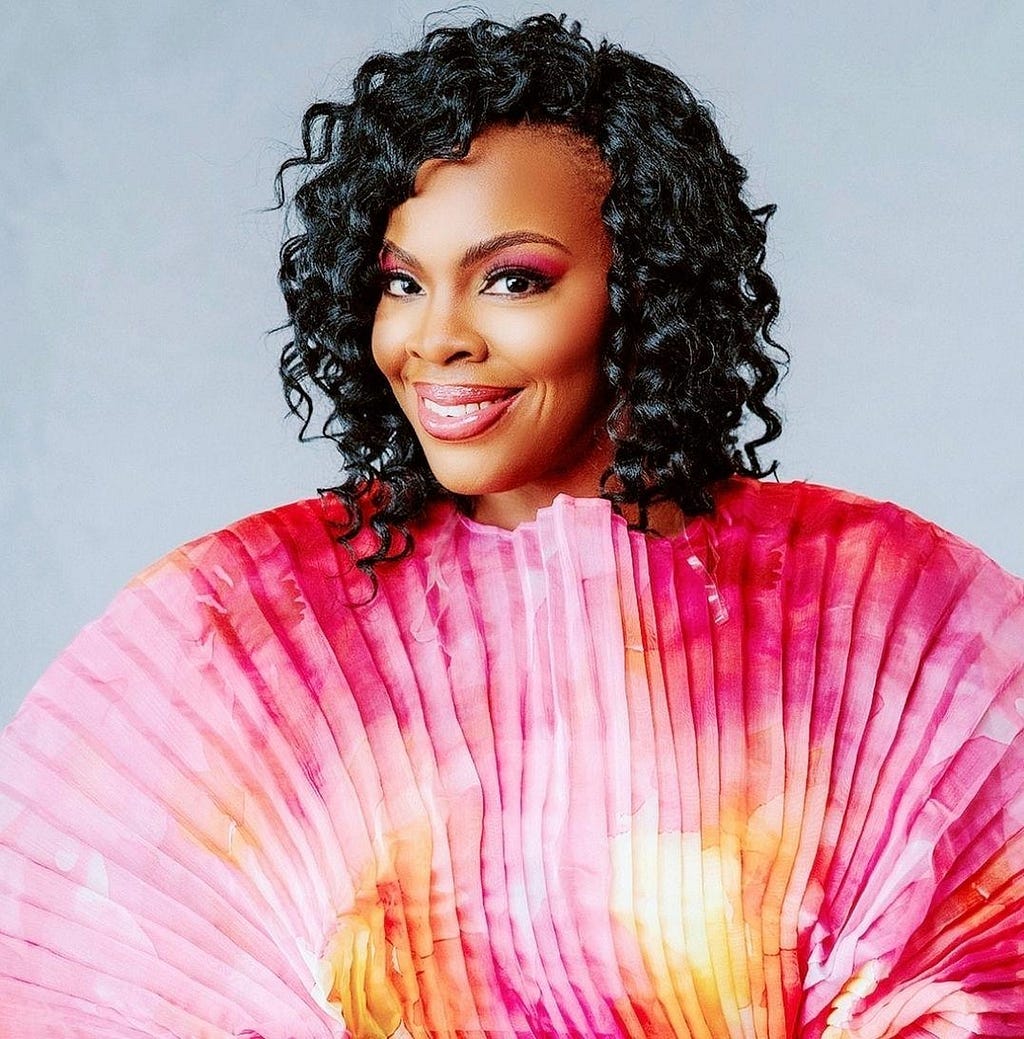
Social Impact Hero Award Nomination: How Chenadra Washington of Black Orchids PR Is Helping To Change Our World
An Interview With Diane Strand
This work is not just about storytelling, it is about representation, connection, and shifting what people believe is possible for themselves.
We recently partnered with DigiFest to present the Social Impact Heroes Award, recognizing individuals and organizations who are leading meaningful initiatives that create real, tangible impact. From nonprofit founders and grassroots organizers to digital advocates and community leaders, this initiative brought forward an inspiring range of voices dedicated to making the world a better place. In this special interview series, we will be featuring every single submission from this powerful contest. Each participant shared a 1-minute video highlighting the work they are doing and the lives they are touching — and we believe every story deserves to be amplified. These Social Impact Heroes are tackling critical challenges, uplifting underserved communities, and using creativity, compassion, and innovation to drive change. What inspired them to begin their journey? What obstacles have they overcome? And what lessons can others learn from their work?
As a part of this series, we had the pleasure of interviewing Chenadra Washington.
Chenadra Washington is an award-winning personal brand strategist, author, and speaker dedicated to helping individuals be seen, heard, and valued. Known for her transformative and transparent approach, she equips people with the confidence and clarity to own their voice and expand their influence. Her work is rooted in turning lived experiences into powerful narratives that drive visibility, leadership, and lasting impact.
Thank you so much for joining us in this interview series! Our readers would love to get to know you a bit better. Can you tell us your “Origin Story”? Can you tell us the story of how you grew up, and the seeds for all the great work that has come since?
I grew up in Houston, Texas, raised by my paternal grandparents in a home rooted in service, structure, and taking care of family. From an early age, I was surrounded by the quiet example of what it means to show up for people, not just when it is convenient, but consistently. That environment shaped how I move through the world long before I had the language to describe it.
As I got older, I realized I naturally created a sense of safety for others. People would open up to me, trust me, and feel seen in my presence. I did not fully recognize it at the time, but that “safe space” energy has always been a part of who I am, and it is something I have carried into every room I enter.
I have always been driven by excellence, not perfection, showing up with intention, doing the work, and growing through every experience. As I navigated my own journey, including moments where I felt unseen or underestimated, I began to understand how powerful it is to truly own your voice. That realization became the foundation for the work I do today, helping others step into visibility, confidence, and impact in a way that feels authentic to who they are.
Can you describe how you or your organization is making a significant social impact?
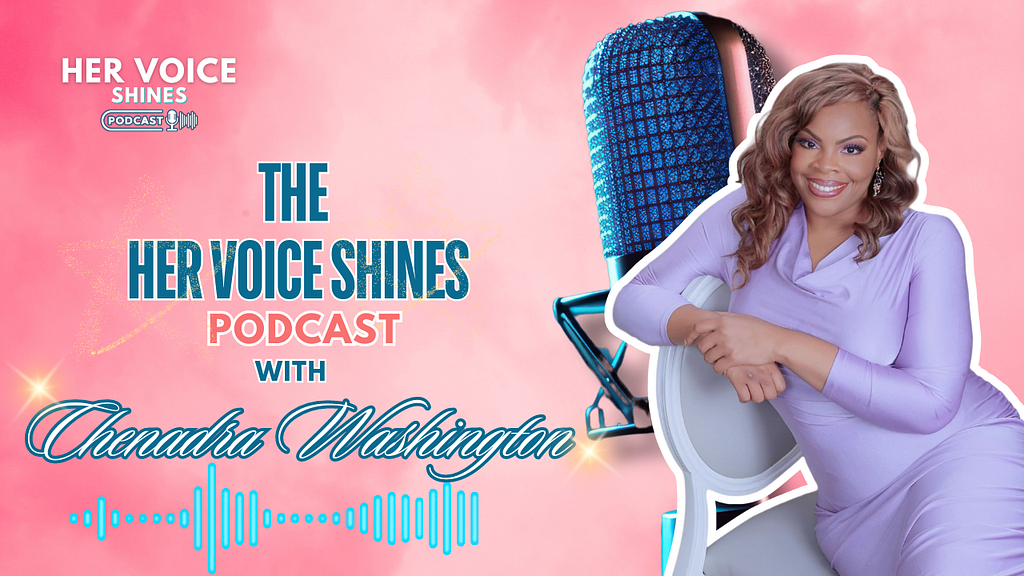
I make social impact by creating platforms and experiences that move people from being unseen to fully owning their voice in public, professional, and leadership spaces. Through Her Voice Shines and HBCU Her Voice, both the podcasts and magazines, I intentionally highlight a wide range of stories that are often disconnected from one another but equally important, from formerly incarcerated women rebuilding their lives, to emerging influencers shaping culture, to executive leaders navigating visibility at the highest levels. Bringing these voices into the same ecosystem challenges narrow definitions of who gets to be heard and creates a more honest, inclusive narrative around success, growth, and transformation.
Through the magazines, I document and elevate these stories in a way that gives them permanence and reach, while the podcasts create space for real, unfiltered conversations that allow people to hear themselves in someone else’s journey. This work is not just about storytelling, it is about representation, connection, and shifting what people believe is possible for themselves.
In addition, I have repositioned training and development to focus on visibility, voice, and personal brand ownership as essential, not optional. I work with individuals and organizations to help people communicate their value clearly, advocate for themselves, and show up with confidence in the rooms they are already in and the ones they are stepping into.
What makes the impact real is that I am not just teaching it, I am an example of it. I actively use Her Voice Shines and HBCU Her Voice as living proof of what it looks like to build visibility with intention, create opportunities, and expand influence. The result is not just individual growth, but a ripple effect where people begin to take up space, open doors, and create impact in their own circles and beyond.
Can you share the story of what inspired you to start your social impact initiative? What was the specific moment when you realized this work was needed?
I found myself in a lot of rooms where everything felt masked. The conversations were surface level, the connection was missing, and even in spaces full of people, there was a sense that no one was really being seen or heard. At the same time, in completely different settings, I would find myself unintentionally creating space for people to open up. Conversations would shift, people would share more than they planned to, and I would often hear, “I’m so glad I met you,” followed by, “What do you do?” and “You have a gift.”
That contrast stayed with me. On one side, I was experiencing environments that lacked depth and authenticity, and on the other, I was consistently seeing what happened when space was created for people to just be real. The specific moment for me was realizing that this wasn’t random. It was a pattern. No matter where I was, people were looking for connection, for a place to be heard without judgment, and I was naturally facilitating that without even trying.
Podcasting became an extension of that realization. It gave me a way to intentionally create the kind of space I kept seeing people respond to, but on a larger scale. What started as organic, one-on-one moments turned into platforms like Her Voice Shines and HBCU Her Voice, where those honest, unfiltered conversations could live, reach more people, and remind them that their voice matters. That was the moment I understood this work wasn’t just something I could do, it was something that was needed.
Can you share the most interesting story that happened to you since you began leading your organization or initiative?
One of the most powerful moments I’ve experienced came during a podcast conversation where I asked a guest to reflect on a specific age, something I do often, and it is usually a light but meaningful way to explore their journey. That day, the age I chose turned out to be one of the most pivotal years of her life, though I had no way of knowing that at the time.
As she began to share, the conversation shifted in a way that was completely unplanned. She opened up about losing someone close to her during the 9/11 terrorist attacks, something she had never spoken about publicly and had only shared within a very small circle. You could feel the weight of that moment, but also the trust. It was not about the question itself, it was about the space that had been created for her to feel safe enough to go there.
What stayed with me is how natural and honest the exchange was. There was no agenda, no pressure, just a real moment of reflection and release. It reinforced for me that this work goes beyond interviews or content. It is about creating environments where people feel seen enough to share parts of their story they have been holding onto. And I don’t take that lightly.
It has been said that our mistakes can be our greatest teachers. Can you share a story about a funny mistake you made when you were first starting? Can you tell us what lesson you learned from that?
On my very first podcast recording day, I scheduled eight guests. Yes, looking back, that was very bold. What made it even more interesting was that just days before, I had been without power for nearly ten days due to Hurricane Beryl in Houston. I considered canceling, but I made a commitment to myself that if my power came back on, I was going to follow through. It did, so I did.
Here’s where the mistake came in. I set up one single recording link and sent that same link to all eight guests, instead of creating individual links for each session. The first interview went perfectly, and I thought I was in the clear. Then everything started to unravel. The remaining guests didn’t have working access, and I found myself scrambling in real time, creating new links, sending emails, and coordinating on the fly just to keep the day moving.
I still can’t believe I pulled it off, but I did. And what I learned from that moment was how to stay calm under pressure and figure things out without letting the energy of the experience drop. It also taught me the importance of preparation and systems, especially as things begin to scale. Now, everything is structured, tested, and intentional. But I also carry that moment with me as a reminder that even when things don’t go as planned, you can still deliver and create something meaningful.
Without saying names, can you tell us a story about a particular individual who was impacted or helped by your cause?
Early in my journey of building my brand, I knew I wanted to explore podcasting because I was already having these natural, meaningful exchanges with people. One moment that stands out is after recording a conversation with a woman based in Australia. Once we stopped recording, we kept talking for hours like we had known each other for years. There was an ease and trust in that conversation that felt effortless.
During that exchange, she gave me a gentle but direct nudge to start immediately and not overthink it. It was simple, but it landed. It pushed me to move from thinking about it to actually doing the work, and that moment has stayed with me ever since.
Since then, I have had guests who have been on major and national platforms tell me that our conversations were some of the most meaningful interviews they have experienced. That still surprises me. It showed me that when people are given the space to be real, without pressure or performance, something different happens. The conversations go deeper, they stay with people, and they often shift how they show up long after the moment has passed. Those conversations have become bridges, connecting people back to themselves and forward into new opportunities.
Are there three things the community/society/politicians can do to help you address the root of the problem you are trying to solve?
Yes, there are a few key things that would make a real difference in addressing the root of this work.
First, there needs to be a stronger investment in communication, visibility, and personal brand development as essential skills, not “soft” skills. In schools, workplaces, and community programs, people are often taught how to do the work, but not how to articulate their value, advocate for themselves, or navigate spaces where presence matters. When people cannot clearly communicate who they are or what they bring, they get overlooked, even when they are qualified.
Second, organizations and leadership need to create environments where authenticity is not just encouraged, but actually supported. Too many spaces still reward performance over honesty, which leads to people feeling like they have to mask who they are to belong or advance. That disconnect impacts confidence, innovation, and long-term growth. When people feel like they can show up fully, the quality of contribution changes.
Third, there needs to be more intentional support for platforms and initiatives that amplify real, diverse experiences. Storytelling is powerful, but access to platforms is still limited. Investing in media, community-driven storytelling, and programs that center lived experiences helps shift narratives at scale. It not only impacts individuals, but influences how communities and industries define leadership, success, and opportunity.
Addressing the root of the problem means creating both the skill set and the environment for people to fully step into who they are, and making sure there are platforms that allow those voices to reach further.
How do you define “Leadership”? Can you explain what you mean or give an example?
I define leadership as how you show up, especially when it’s not easy. It’s not tied to a title or position, it’s reflected in your consistency, your character, and your willingness to take responsibility in real moments.
For me, leadership looks like navigating tough conversations instead of avoiding them, making decisions with emotional intelligence, and being mindful of how my presence impacts others. It’s about creating clarity when things feel uncertain and maintaining integrity even when it would be easier not to.
I also see leadership as a living example. Beyond building a brand, I am a mother, a community builder, a caregiver, and more. In all of those roles, people are watching how I move, how I respond, and how I carry myself. My leadership has to be intact across all of it. It’s not something I turn on and off, it’s something I practice daily, in both the visible and unseen moments.
What are your “5 things you need to create a successful social impact initiative.” Please share a story or example for each.
1 . A heart for the mission
If the mission is not real to you, it will be hard to sustain when things get challenging. This work requires more than strategy, it requires conviction. There have been moments where I was tired, stretched, or navigating competing priorities, but my connection to the mission kept me grounded. I care deeply about creating space for people to grow into their voice, and that “why” carries me when motivation alone is not enough.
2 . Consistency
Impact is not built in one big moment, it is built over time. Showing up consistently, even when the results are not immediate, is what creates trust and momentum. There were seasons where I was recording, producing, and building without knowing who would listen or how it would grow. But staying consistent is what allowed the platforms to evolve and gain traction.
3 . A listening ear
Some of the most powerful moments in this work have come from simply listening. Whether it is during a podcast conversation or an off-camera exchange, people often share things they have never said out loud before. I have learned that listening is not passive, it is active, intentional, and it creates the conditions for real connection and insight. That is where a lot of the impact actually begins.
4 . The ability to create and hold space
It is one thing to have a platform, it is another to make people feel comfortable enough to use it fully. Creating space means removing pressure, allowing honesty, and being present in a way that invites openness. I have seen conversations shift in real time when someone realizes they do not have to perform. That is when the depth happens, and those are the moments that stay with people long after.
5. The willingness to evolve and take action
You cannot wait for everything to be perfect before you begin. Starting, learning, adjusting, and continuing to move forward is part of the process. From launching with limited structure to now having more refined systems, every stage has required me to adapt. The key has been being willing to move, learn quickly, and improve along the way rather than staying stuck in planning.
What is something you have learned from this work that surprised you?
One thing that has truly surprised me is how timely so many of these exchanges have been. There have been moments where conversations felt almost perfectly aligned with what I, or the other person, needed at that exact time. It has felt less like coincidence and more like careful curation along the journey, like the right conversations meeting the right moment.
Through this work, I have also grown in ways I did not expect. I am better, but also more human. Being in these honest, unfiltered conversations has deepened my empathy, my awareness, and how I move through the world. It has stretched me beyond just facilitating dialogue and into truly understanding people on a deeper level.
In many ways, it feels like an accelerated life course. The volume and depth of the stories, perspectives, and experiences I have been exposed to have shaped me quickly and meaningfully. It has changed not just how I do the work, but how I show up in life.
How would you define success for your initiative in ten years from now?
In ten years, I would define success for my initiative as its continued ability to bridge connection, no matter what form it takes. Whether it is through podcasts, magazines, training, or something that evolves beyond what exists today, the core would still be the same: helping people feel more connected to themselves and to others in a meaningful way.
Success for me is not just growth in visibility or scale, but the lasting impact of community building. I want the work to still be encouraging people to move forward in their lives with confidence in their voice and clarity in who they are. I want it to remain rooted in real conversations, real stories, and real transformation. If in ten years people are still using what was created as a bridge to understanding, growth, and opportunity, and if it continues to bring people together across different experiences and backgrounds, then I would consider that success.
This is what we call our “matchmaker question”, and it sometimes works. Is there a person in the world whom you would love to have a power lunch with, and why? Maybe we can tag them and see what happens!
If I had to choose just one, it would honestly be a tie at the top between Michelle Obama and Viola Davis.
Michelle Obama stands out to me because of the way she carries grace, intelligence, and grounded strength all at once. It is not just her platform or her accomplishments, it is the way she shows up in the world with intention and poise without losing her humanity. There is something about how she navigates leadership, visibility, and impact while still remaining deeply relatable that I deeply admire. She represents what it looks like to lead with both power and softness without compromise.
Viola Davis, on the other hand, is someone who evokes something different in me. Every time I see her work or hear her speak, there is a sense of pride and emotional resonance that comes up. She has this ability to bring truth to every role she plays and every story she tells, and it feels like she unlocks something in people through her vulnerability and strength. There is a magic in her presence that ignites something deeper about what it means to own your story fully. She is my unofficial BFF in my head because of how connected I feel to her spirit and honesty.
Both of them represent different expressions of power, voice, and impact, and I would be honored to sit at a table with either of them to simply learn, listen, and absorb.
You are a person of enormous influence. If you could inspire a movement that would bring the most amount of good to the most amount of people, what would that be? You never know what your idea can trigger. 🙂
If I could inspire a movement that would bring the most good to the most people, it would center around people truly getting to know themselves and learning how to give themselves grace in the process.So many people are moving through life shaped by expectations, environments, and labels that were placed on them before they ever had the chance to define themselves. I have seen how that disconnect impacts confidence, decision-making, relationships, and even how people show up in leadership and opportunity. When people do not know who they are, or when they are constantly judging themselves for where they are in their journey, they often shrink in spaces where they were meant to expand.
This movement would be about self-awareness as a foundation and pairing that awareness with grace. It would encourage people to understand their voice, their story, their strengths, and even the parts of themselves they are still figuring out, without shame or pressure to have it all together. Giving yourself grace means allowing space for growth without self-punishment, and recognizing that becoming takes time.
From there, everything shifts. The way people communicate, lead, and build their lives becomes more intentional and grounded. At its core, it would be about helping people return to themselves, remove what was never truly theirs, and treat themselves with the same compassion they often extend to others. Because when people know themselves and learn to extend grace inward, it changes not just their individual journey, but the way they impact every space they enter.
How can our readers further follow your work online?
Her Voice Shines Podcast: https://www.youtube.com/@HerVoiceShinesPodcast-q7f
HBCU Her Voice Podcast: https://www.youtube.com/@HBCUHerVoicePodcast
LinkedIn: https://www.linkedin.com/in/chenadra-washington-163ba474/
Website: www.blackorchidspr.com
This was very meaningful, thank you so much. We wish you only continued success in your great work!
About The Interviewer: Diane Strand is a multi-award-winning serial entrepreneur, executive producer, best-selling author, nonprofit founder, TEDx and national speaker with more than two decades of success in media, education, and creative entrepreneurship. She is the majority owner of JDS Video & Media Productions, Inc. and JDS Actors Studio, and the founder of the nonprofit JDS Creative Academy (JDSCA) — a 501(c)(3) organization dedicated to advancing education, inclusion, and workforce development through the arts. As the creator and executive producer of Spirit of Innovation: Arts Across America — a nationally streamed and locally broadcast ABC TV series — Diane continues to break new ground in creative media, producing the first magazine-style news and information show of its kind in Riverside County. A trailblazer in inclusive education, Diane has authored two state-approved training programs — a Title 17 video production job-training day program for adults with developmental disabilities and a California State Apprenticeship program in media and the arts. Diane has helped launch more than 100 creative careers, as actors, writers, directors, and producers transforming lives and strengthening the creative workforce pipeline in Southern California and beyond. In 2017, Diane founded DigiFest® Temecula, an award-winning annual festival that celebrates digital media, storytelling, and innovation across all creative disciplines. Now entering its 10th year, DigiFest® has evolved into a nationally recognized event uniting students, professionals, and thought leaders from film, television, gaming, design, podcasting, and emerging technologies. The festival embodies Diane’s mission to merge creativity, community, and opportunity — showcasing how the arts can drive education, empowerment, and industry growth. Diane’s Hollywood career includes credits on Friends, General Hospital, and Veronica’s Closet, as well as producing for Barbra Streisand, Disney Channel, and Universal Creative, where she helped launch Playhouse Disney and Toon Disney and contributed to the high-definition control room build at Staples Center (now Crypto.com Arena). As a Lead Columnist for Authority Magazine, Diane now shines a national spotlight on visionary thought leaders, entertainers, changemakers, and philanthropists who are shaping the future of creativity, inclusion, and social impact. If you’re a celebrity, industry innovator, or business leader passionate about using the arts to transform lives, Diane invites you to connect, collaborate, and share your story to help inspire the next generation of innovators.
Social Impact Hero Award Nomination: How Chenadra Washington of Black Orchids PR Is Helping To… was originally published in Authority Magazine on Medium, where people are continuing the conversation by highlighting and responding to this story.