


Social Impact Hero Award Nomination: How Dr. Habiba Jessica Zaman Of North Star of Georgia Counseling Is Helping To Change Our World
An Interview With Diane Strand
For me, leadership is about seeing people clearly and standing for them, even when it is uncomfortable, even when it costs you something. It is about showing up as yourself, fully and authentically, so that others feel safe enough to do the same.
We recently partnered with DigiFest to present the Social Impact Heroes Award, recognizing individuals and organizations who are leading meaningful initiatives that create real, tangible impact. From nonprofit founders and grassroots organizers to digital advocates and community leaders, this initiative brought forward an inspiring range of voices dedicated to making the world a better place.
In this special interview series, we will be featuring every single submission from this powerful contest. Each participant shared a 1-minute video highlighting the work they are doing and the lives they are touching — and we believe every story deserves to be amplified. These Social Impact Heroes are tackling critical challenges, uplifting underserved communities, and using creativity, compassion, and innovation to drive change. What inspired them to begin their journey? What obstacles have they overcome? And what lessons can others learn from their work?
As a part of this series, we had the pleasure of interviewing Habiba Jessica Zaman.
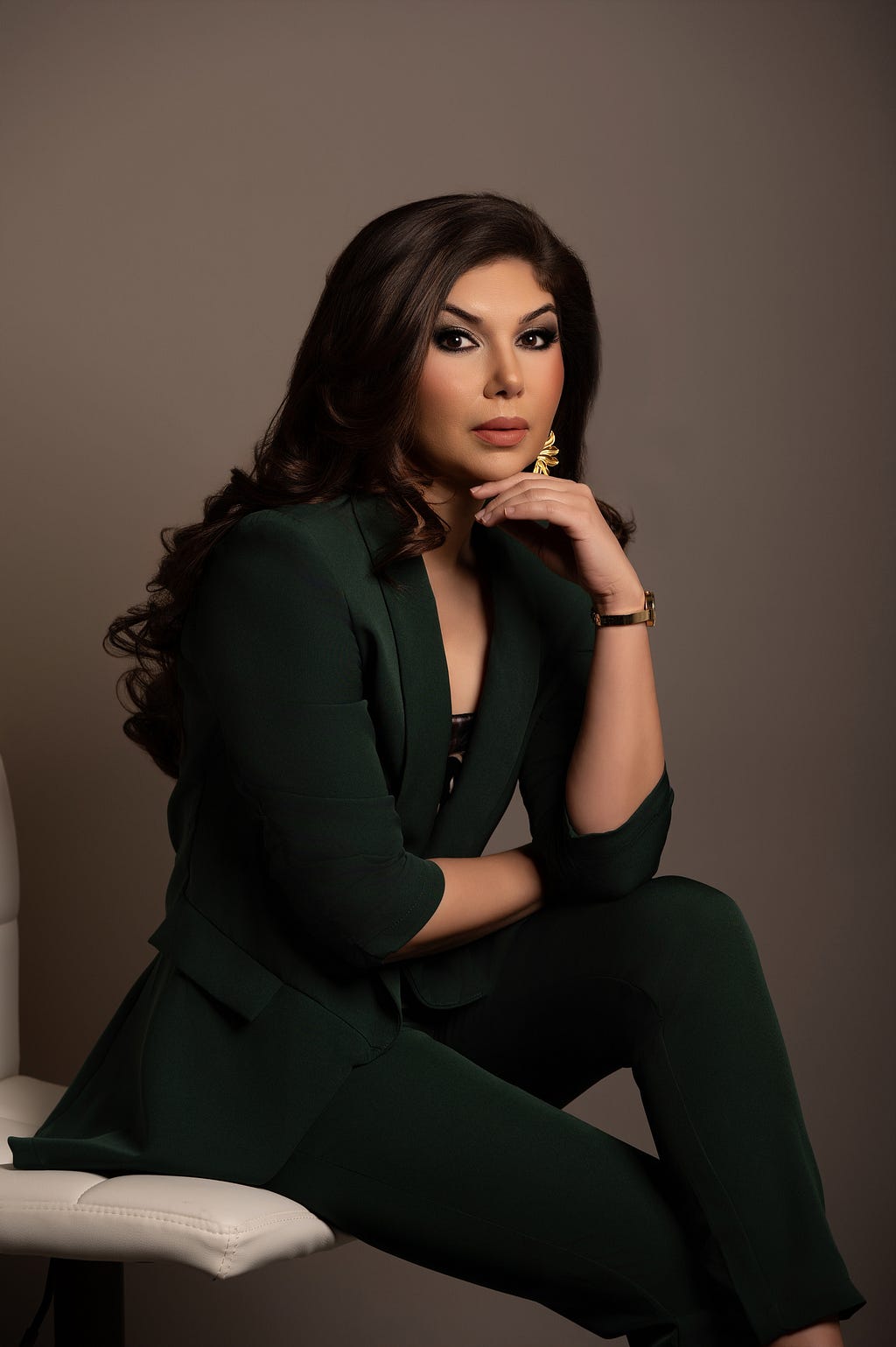
Dr. Habiba Jessica Zaman is a distinguished mental health therapist, author, and entrepreneur with more than 15 years of experience in counseling, life coaching, and therapeutic guidance, and is the founder of North Star of Georgia Counseling in Atlanta, Georgia. She has authored 25 publications and nine books, several of which have achieved Amazon Bestseller status and international recognition, covering themes of trauma, identity, resilience, and personal empowerment. She is also the creator of the I.D. ME Quiz, an innovative self-assessment tool designed to help individuals deepen self-awareness and achieve authentic living. A Forbes-featured voice whose insights have been shared across numerous podcasts and media platforms, Zaman’s work as a clinician, bestselling author, and advocate reflects a sustained commitment to helping others navigate their inner landscapes and live with purpose and resilience.
Thank you so much for joining us in this interview series! Our readers would love to get to know you a bit better. Can you tell us your “Origin Story”? Can you tell us the story of how you grew up, and the seeds for all the great work that has come since?
I have a pretty colorful background, and I think that is actually where everything begins, not in a classroom or a therapist’s office, but in the complexity of who I am and where I come from.
I was born here in the United States, but my grandparents raised me in Bangladesh until I was eight years old. My father thought growing up in Bangladesh with my extended family was going to be the best thing for me. There were children constantly running around and playing, and I was very much loved, and that time shaped me in ways I am still uncovering. My grandparents nurtured a sense of justice in me from the very beginning, and my father was a freedom fighter for the revolution, so the belief that you stand up for what is right, that you fight for people, was never something I was taught as a concept. It was something I lived.
Even at five years old, if someone were bullying someone, I would stand up for them. As I grew older, being so sensitive to humans and what they were going through, and internalizing so much of what they were feeling, became a lot for me to take in. There was a lot of change and upheaval when I was growing up. I really was in a dark place, and there was a lot of trauma. There were many things I could not cope with at a young age.
I have lived in many states, but I have been in Atlanta for the past twenty-five years. Growing up, I was what you might call an expert at being invisible. I had learned to take up as little space as possible, to stay quiet, to move through the world without drawing attention to myself. I had a voice, but I did not believe I was allowed to use it.
Then came the moment that changed everything. I was walking down the hallway of a tiny school in Avery, Texas, and my school counselor, Mrs. Bunch, grabbed my arm. She just paused and looked at me. I was internally panicking. She took my hair and tucked it behind my ears so she could see my face, looked into my eyes, and said, “Whatever it is won’t matter in five years. None of this will matter. Just hold on for a while longer.” I was dumbfounded because I had been seen. I had spent so much time trying to be invisible, and she just saw through me. Whatever superpower she had, I wanted it, and that is what I became.
From that moment, I knew. I knew without the shadow of a doubt that I wanted to do that for others — to see people who had become invisible to themselves, to sit with them in the hard parts and show them they were not alone.
I went to Georgia State University for my undergraduate and Master’s degrees and pursued my passion in counseling. I went back to school and got my doctorate 12 years later. I have always been interested in humans. I love being able to be part of people’s stories and be a witness to everything. It is a true honor.
It has not been a smooth road, though most paths that hold meaning and purpose rarely would be described as such. I am a trauma therapist. I chose this profession because of personal experience and knowing there were many things to heal from, like attachment and identity issues. Some parts of my identity felt like they didn’t belong, even in my own family. I knew I had to heal that discrepancy before I could heal others. From an early age, I integrated myself into services where I could help people feel less alone in their own community, not just in a sense where their appearance would not reflect those around them, but also in perspective, behavior, or standards that felt unattainable. Helping my peers feel accepted and find a sense of belonging became my drive long before I knew of the profession.
Once I became a therapist, I bounced around different hospitals and group homes, trying to figure out what worked for me. I created my own practice where I did individual counseling and offered empowerment groups where women could be women. It was in one of those groups that the next chapter of my story began. A colleague named Shalon Irving started attending, and two years into our professional relationship, she looked at me and said, “We are going to write a book, and you are going to do what you do here, but for everyone.” That book became Beautifully Bare, Undeniably You: a book about identity and creating a strong, undeniable sense of joy. Shalon passed away just three weeks after we finished the manuscript and never got to see it come to life. Every copy that reaches someone is a tribute to her.
I have had my private practice for a little over 14 years now, and in the past ten years or so, I have seen a rise in the need for advocacy in human rights, and I became involved in helping those who survived human trafficking. I went back to school for my PhD for the purpose of having greater credibility and standing in the legal system. Balancing a full private practice, the business, full-time school, and two teenage boys has given new meaning to scheduling and carving out time to ensure everyone feels valued and loved, myself included.
I am so grateful that my own son’s outlook and worldview on life, and on mental health and humans, is so different than what my worldview was at their age. That, perhaps, tells me more about the impact of this work than anything else. The seeds of everything I have built were planted in the love of my grandparents, the courage of my father, the moment Mrs. Bunch tucked my hair behind my ears and refused to look away, and in my own long, imperfect, ongoing journey toward understanding who I am. That is where it all began. And that is exactly why I have never stopped.
Can you describe how you or your organization is making a significant social impact?
At North Star of Georgia Counseling, I view every client as someone in search of meaningful change. Trauma is my specialty, whether it is a significant life-altering moment or chronic childhood neglect. Together, we work toward growth by identifying the issues involved, establishing goals, and becoming increasingly aware of the recurring patterns that have been holding them back. As clients grow in their awareness of their own fears, perceptions, desires, and strengths, they become capable of making real, lasting life changes.
My impact extends well beyond the therapy room. Over the past ten years or so, I have witnessed a dramatic rise in the need for human rights advocacy, and I became deeply involved in supporting survivors of human trafficking. I went back to school to pursue my PhD specifically so that I could have greater credibility and standing in the legal system to fight for those survivors. Through my nine books, several of which have become Amazon bestsellers, I have also worked to bring conversations about trauma, identity, and self-awareness to a much broader audience. And through my I.D. ME Quiz, I created an accessible self-assessment tool that helps people evaluate their sense of identity and enhance their self-awareness, because I believe that is the foundation of everything.
Can you share the story of what inspired you to start your social impact initiative? What was the specific moment when you realized this work was needed?
Even at five years old, I could deeply feel things I didn’t yet have the language to understand. I was always an advocate; if someone were being bullied, I would stand up for them without a second thought. My grandparents nurtured that in me, and my father was a freedom fighter for the revolution, so fighting for your beliefs has always been in my blood.
But the moment that truly changed everything happened in a hallway at school. I was in a very dark place, and I had spent so much time trying to be invisible. My school counselor, Mrs. Bunch, grabbed my arm, looked straight into my eyes, and said, “Whatever it is won’t matter in five years. None of this will matter. Just hold on a little longer.” I was dumbfounded, because I had been seen. She saw straight through me when I had worked so hard for no one to notice. Whatever superpower she had, I wanted it, and that is what I became. I knew without a shadow of a doubt that I wanted to do that for others.
My own personal experience with trauma, attachment issues, and identity, feeling like parts of me didn’t belong, even within my own family, also shaped my path. I knew I had to heal those things in myself before I could truly help anyone else heal.
Can you share the most interesting story that happened to you since you began leading your organization or initiative?
The story that shaped everything for me is the one behind my very first book. After I started my practice, I created empowerment groups where women could just be women. A colleague named Shalon Irving started attending those groups, and she became convinced that what I was doing in that room needed to reach the world. She would sit in my waiting room between my sessions, she would stay after I finished work, and she convinced everyone in my office that this was the path to follow. She believed in me so completely that she would not stop until I said yes.
I should also confess that I am someone who prefers pen to paper over typing, so the process took forever. Shalon would laugh and tease me that I belonged more in the 1920s than in modern day with my reluctance to embrace technology. But we finished it. Tragically, Shalon passed away just three weeks after we completed the manuscript, and she never got to see it come to fruition. That book, Beautifully Bare, Undeniably You, went on to become an internationally recognized bestseller. Every copy that reaches someone is a tribute to her vision, her belief in the message, and her belief in me.
It has been said that our mistakes can be our greatest teachers. Can you share a story about a funny mistake you made when you were first starting? Can you tell us what lesson you learned from that?
My co-author Shalon would be the first to tell you about my greatest early mistake, and she would be laughing the entire time she told it. When we sat down to write our first book together, I completely underestimated how much my insistence on handwriting everything would slow us down. I genuinely prefer pen to paper, and she found this absolutely hilarious. She told me, more than once, that I belonged in the 1920s. She teased me endlessly about my reluctance to embrace technology, and the process took far longer than it ever needed to. I had lost drafts of what I had written and would start the entire process from scratch, each time writing a completely different message. She didn’t trust my process after that, so she took over, and we would work together where she would type while I paced and spoke aloud. Those are some of my best memories while we would be at my office, on a trip together, or in my home, weaving the stories we would teach to the world.
The lesson I took from that is one I now teach my clients every day: we all have blind spots and patterns of resistance, even when we are deeply committed to growth. I was sitting across from clients, helping them recognize their own barriers, while stubbornly clinging to one of mine. Awareness of our patterns is the very first step to changing them, and I learned that lesson myself the hard way, one handwritten page at a time.
Without saying names, can you tell us a story about a particular individual who was impacted or helped by your cause?
One of the stories I hold most closely is that of a young South Asian woman I worked with for several years. When she came to me, she was carrying an enormous weight; overlapping pressures from culture, family, gender, and immigration. She felt “too Western” in South Asian spaces and “too ethnic” in mainstream American spaces. She was exhausted from constantly adjusting her behavior, language, and values depending on who was in the room. She had been taught her entire life that mental health struggles were something to be hidden, and she was terrified that simply being in therapy would bring shame to her family. The most significant hurdle was the enmeshment, the great difficulty she had separating her own needs and desires from her family’s expectations, and the shame she carried around her own body and autonomy. She worked tirelessly, often filled with doubt, but she never gave up. Today, she is rewriting the narrative that her family and culture attempted to write for her. She is living as herself, on her own terms.
Another story I carry close to my heart is that of a young person who first came to me as an adolescent. We worked through family trauma, parental alcoholism, and parental personality disorder together. There were moments when all I could offer was reassurance, guidance, empathy, and support, and it was sometimes genuinely difficult to watch them endure. But they held on to the hope that we would get through it together. They knew I was ready to fight for them at any moment, and all they had to say was when. That young person is no longer an adolescent. They have performed in venues all over the world, earned their degree, and lived in many countries. They still send me pictures from time to time, showing me how they are thriving. Those pictures mean everything.
Are there three things the community/society/politicians can do to help you address the root of the problem you are trying to solve?
- The first is to destigmatize mental health care, especially within multicultural and immigrant communities. I have seen firsthand how deeply people are taught to hide their struggles; how the fear of bringing shame to the family keeps people from seeking help, speaking up for themselves, or setting even the most basic boundaries. Communities and policymakers can do so much more to normalize mental health care and make it feel safe and culturally acceptable.
- The second is to fund and protect survivors of human trafficking. Over the past several years, I have watched the need for advocacy in this area grow dramatically. I pursued my doctorate specifically to have a greater standing in the legal system so I could fight for these survivors more effectively. They need more resources, more legal protection, and more trauma-informed services, and those things require political will and investment.
- The third is to invest in accessible, culturally sensitive counseling. I work with people whose worldview, relationships, identity, and decision-making are all shaped by their cultural context, and a one-size-fits-all approach to mental health care fails them. Policymakers should make culturally competent mental health services a funding priority, especially in underserved communities.
How do you define “Leadership”? Can you explain what you mean or give an example?
For me, leadership is about seeing people clearly and standing for them, even when it is uncomfortable, even when it costs you something. It is about showing up as yourself, fully and authentically, so that others feel safe enough to do the same. Leadership is not a title. It is a way of being.
I have always believed that advocacy and standing up for others define your integrity and your legacy. I learned that as a child. Even at five years old, I was standing up for people being bullied. My father was a freedom fighter, and my grandparents raised me to believe that fighting for your beliefs is not optional; it is who you are. The same philosophy drives how I lead my practice. I do not ask my clients to face things I am unwilling to face myself. I cannot expect someone to explore their shadow self if I am not willing to show mine. That is what leadership looks like to me: going first.
What are the “5 things you need to create a successful social impact initiative?” Please share a story or example for each.
1. Heal yourself first
I chose this profession because of my own personal experiences with trauma, attachment, and identity. I knew I had to do my own healing before I could truly hold space for someone else’s. If you are building something meant to help people, your own unexamined wounds will show up in that work; so, do the work on yourself first.
2. Ground everything in both lived experience and evidence
In my practice, I start with the human being in front of me; their story, their history, what shaped them. And then I teach them the neuroscience behind what they are experiencing, because people heal better when they understand why they feel what they feel. Your initiative needs that same dual foundation: the personal and the clinical, the story and the science.
3. Make the message accessible to everyone
One of my deepest motivations in writing books was filling the gap left by many self-help resources: not just telling people what to do, but actually walking them through how. Whatever your initiative is, if people cannot access it, understand it, or see themselves in it, the impact will always be limited.
4. Show up authentically
The people who work with me see that I embody the same traits I am asking them to develop. I show up as my full self, no part hidden, because I cannot ask someone else to be vulnerable while I stay protected behind a professional mask. Whatever impact you want to create, you have to be willing to be seen.
5. Be tenacious and relentlessly intentional
This path has not been easy. Being a woman, a mother, and a person of dual cultural identity, none of it has made building this work simple. Every step has been intentional, and every obstacle has been met with sheer determination. A social impact initiative is not built in a moment. It is built day by day, decision by decision, with the full commitment that the work matters and that you will not stop.
What is something you have learned from this work that surprised you?
What has surprised me most, honestly, is how universal the experience of not knowing yourself truly is. I came into this work expecting to help people process pain. I do, but what I discovered is that underneath almost every presenting issue, whether it is relationship dysfunction, career paralysis, anxiety, depression, or patterns of self-sabotage, is a person who has been living out a story that was written for them rather than by them.
We go through life making decisions based on the foundation that was created in our subconscious during early childhood development. We assume that we are the masters of our lives, but we are actually living out the narrative that was written for us. How we react to the world, who we choose to love, what feels safe, and all other choices are influenced by the messages we received in childhood, whether overtly or covertly, by our experiences.
What surprised me is that this is not a phenomenon unique to people who experienced dramatic or obvious trauma. It applies to nearly everyone. The executive who cannot seem to hold a relationship. The mother who gives endlessly to everyone except herself. The young person with extraordinary talent who cannot take a single step forward. Underneath all of it is the same thing: a blueprint written in childhood that no one ever taught them they had the power to rewrite. The moment clients understand that, everything shifts. That moment of recognition never gets old for me. It still moves me every single time.
I was also surprised by how much this work asks of me personally. I cannot expect my clients to explore their shadow selves if I am not willing to show mine as well. This profession demands that you keep doing your own work, keep examining your own patterns, keep growing. I did not fully anticipate how much the work would continue to shape me, not just as a clinician, but as a human being. I am a different person than I was when I started, and I am grateful for that.
How would you define success for your initiative in ten years from now?
Success, ten years from now, looks like a world where the conversation about identity and self-awareness is no longer niche; where it is woven into how we raise children, how we build communities, and how we treat people who have been through trauma.
In my practice, success means that the therapeutic model I have spent fifteen years developing, one that integrates psychoeducation, trauma-focused therapy, identity work, and authentic human connection, has reached people who would never otherwise have had access to it. Understanding yourself and integrating what you learn into intentional steps as you evolve through life stages is essential. Being curious about who you are and who you are becoming is an integrated, layered process of healing. That message should not be limited to those who can afford private therapy in Tucker, Georgia. It should be accessible everywhere.
For the human trafficking survivors I work with, success means having helped build a system with greater legal protection, more trauma-informed services, and less retraumatization within the very institutions meant to help them. That is why I pursued my doctorate: to stand with more authority in rooms where decisions are made about these survivors’ lives.
For my books and the I.D. ME Quiz, success means that someone in a country I have never visited picked up Beautifully Bare, Undeniably You, or Dear Love and saw themselves in those pages and decided to take one step toward becoming who they truly are. I love being able to be part of people’s stories and being a witness to everything. Ten years from now, I want that witnessing to have touched far more lives than I could reach in a single therapy room. Personally, success means my sons look at how I lived and know that it is possible to pursue something that truly matters, while still being present for the people you love most.
This is what we call our “matchmaker question”, and it sometimes works. Is there a person in the world whom you would love to have a power lunch with, and why? Maybe we can tag them and see what happens!
Without hesitation, Brené Brown!
Her research on vulnerability, shame, and belonging has run parallel to the work I do in the therapy room for years. What she did, taking concepts that lived in clinical literature and making them accessible, urgent, and human for millions of people, is exactly what I aspire to do with identity and trauma work. She proved that the world is hungry for this kind of honesty about the inner life, and she did it with both rigorous research and radical openness about her own journey.
I would love to sit across from her and talk about what it means to build a body of work that is both clinically grounded and deeply personal. I would want to talk about the moment you realize the work you are doing for others is inseparable from the work you are doing on yourself. I suspect we would have a great deal to say to each other about that.
I also deeply admire her courage in talking about the messy, uncomfortable parts of growth: the parts that do not make it onto the highlight reel. In working with people who have experienced trauma, whether it was one significant life-altering moment or subtle years of emotional neglect and covert abuse, it is daunting to face themselves because who they might have been is no longer the person looking back at themselves in the mirror. Brené speaks to that experience in a way that makes people feel less alone, and that is precisely what I am trying to do. I think that lunch would go on for a very long time.
You are a person of enormous influence. If you could inspire a movement that would bring the most amount of good to the most amount of people, what would that be? You never know what your idea can trigger. 🙂
The movement I would ignite is one I would call Know Yourself First.
The root of so much of what tears people apart, such as broken relationships, cycles of abuse, addiction, identity crises, the inability to set boundaries or advocate for oneself, is a fundamental disconnection from who you actually are. People are living on autopilot, running programs written in their earliest years, and most of them have no idea it is happening. Only when we are aware of these patterns and systems of belief are we able to decide whether or not that is the life we wish to continue to live.
Imagine if self-awareness were treated as foundational, as essential as reading or mathematics. Imagine if children were taught from an early age to understand their emotions, to question their beliefs, to recognize the difference between who they are and what they have been told to be. Imagine if communities created space for that kind of honest reflection without shame or stigma. The downstream effects would be extraordinary. Healthier relationships. Less violence. More compassionate parenting. Greater capacity for empathy across cultural and political divides.
Healing means becoming more honest and aware of yourself. Recognizing your fears, perceptions, desires, and strengths is foundational to transformation and authentic living. That is not a luxury. That is a human necessity. If I could inspire any movement in the world, it would be voiced loudly and clearly that knowing yourself is not self-indulgent. It is the most important work any of us will ever do, and it ripples outward into every life we touch.
How can our readers further follow your work online?
I would love to connect with anyone who resonates with this work. You can find me and everything I do in the following places:
My website, www.habibazaman.com, is the best starting point where you will find my books, the I.D. ME Quiz, information about North Star of Georgia Counseling, and resources for anyone beginning their journey toward self-awareness and healing.
For my counseling practice specifically, you can visit www.northstarofgeorgia.com, where you can learn about the services we offer and reach out if you are ready to take that first step.
You can also find me on Instagram at @northstar_georgia, on Facebook at www.facebook.com/northstarofgeorgia, and on YouTube at youtube.com/@habibazaman3940, where I share content on trauma, identity, self-awareness, and personal transformation.
And of course, my books are available on Amazon, including Beautifully Bare, Undeniably You, Dear Love, Dear Time, and the You’ve Got This, Mama series, among others. Several have reached the Amazon Bestseller lists and received international recognition, and each one was written with the hope that someone, somewhere, would pick it up and feel a little less alone in their own story.
Find me. The conversation is always open.
This was very meaningful, thank you so much. We wish you only continued success in your great work!
About The Interviewer: Diane Strand is a multi-award-winning serial entrepreneur, executive producer, best-selling author, nonprofit founder, TEDx and national speaker with more than two decades of success in media, education, and creative entrepreneurship. She is the majority owner of JDS Video & Media Productions, Inc. and JDS Actors Studio, and the founder of the nonprofit JDS Creative Academy (JDSCA) — a 501(c)(3) organization dedicated to advancing education, inclusion, and workforce development through the arts. As the creator and executive producer of Spirit of Innovation: Arts Across America — a nationally streamed and locally broadcast ABC TV series — Diane continues to break new ground in creative media, producing the first magazine-style news and information show of its kind in Riverside County. A trailblazer in inclusive education, Diane has authored two state-approved training programs — a Title 17 video production job-training day program for adults with developmental disabilities and a California State Apprenticeship program in media and the arts. Diane has helped launch more than 100 creative careers, as actors, writers, directors, and producers transforming lives and strengthening the creative workforce pipeline in Southern California and beyond. In 2017, Diane founded DigiFest® Temecula, an award-winning annual festival that celebrates digital media, storytelling, and innovation across all creative disciplines. Now entering its 10th year, DigiFest® has evolved into a nationally recognized event uniting students, professionals, and thought leaders from film, television, gaming, design, podcasting, and emerging technologies. The festival embodies Diane’s mission to merge creativity, community, and opportunity — showcasing how the arts can drive education, empowerment, and industry growth. Diane’s Hollywood career includes credits on Friends, General Hospital, and Veronica’s Closet, as well as producing for Barbra Streisand, Disney Channel, and Universal Creative, where she helped launch Playhouse Disney and Toon Disney and contributed to the high-definition control room build at Staples Center (now Crypto.com Arena). As a Lead Columnist for Authority Magazine, Diane now shines a national spotlight on visionary thought leaders, entertainers, changemakers, and philanthropists who are shaping the future of creativity, inclusion, and social impact. If you’re a celebrity, industry innovator, or business leader passionate about using the arts to transform lives, Diane invites you to connect, collaborate, and share your story to help inspire the next generation of innovators.
Social Impact Hero Award Nomination: How Dr. was originally published in Authority Magazine on Medium, where people are continuing the conversation by highlighting and responding to this story.