

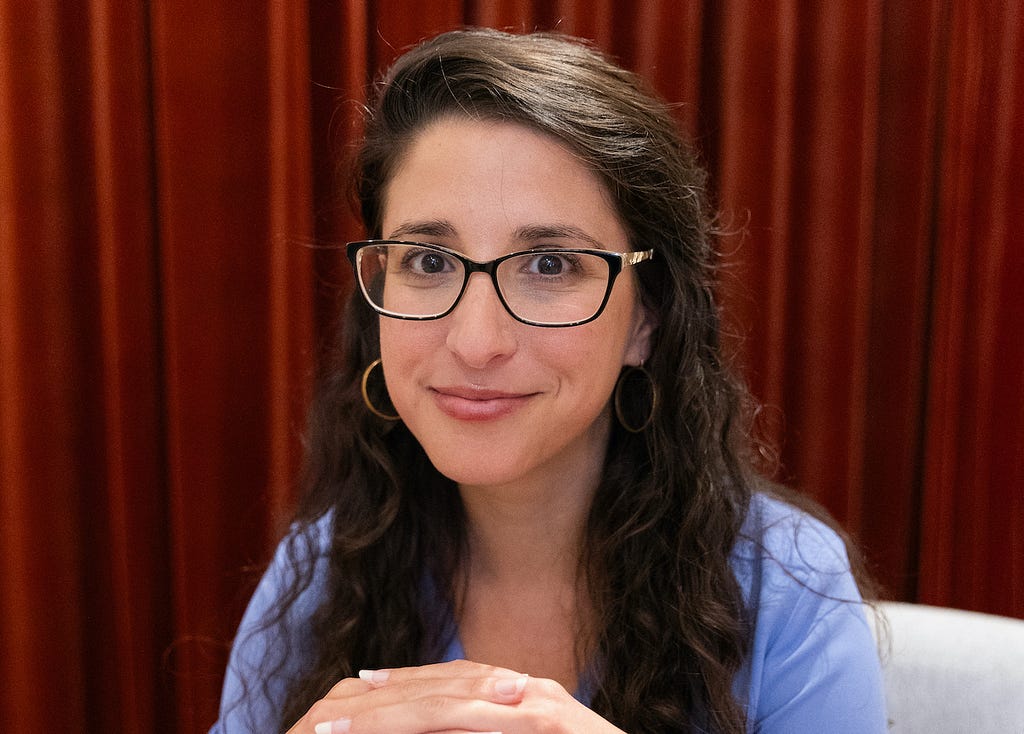
Lilach Mendelovich of Lilach Coaching On The 5 Things You Need To Be A Highly Effective Public Speaker
An Interview With Diane Strand
Everything is a muscle that can be trained, including confidence.
At some point in our lives, many of us will have to give a talk to a large group of people. What does it take to be a highly effective public speaker? How can you improve your public speaking skills? How can you overcome a fear of speaking in public? What does it take to give a very interesting and engaging public talk? In this interview series called “5 Things You Need To Be A Highly Effective Public Speaker” we are talking to successful and effective public speakers to share insights and stories from their experience.
As a part of this series, we had the pleasure of interviewing Lilach Mendelovich.
Lilach Mendelovich is a public speaking confidence coach. Her long career as a top Hollywood audition coach made her a master at bringing out people’s best performances when the pressure is on. She uses acting techniques and applied neuroscience to help face-of-their-business entrepreneurs and corporate professionals get their public speaking nerves out of the way, sound like themselves, and fully connect with their audience, so they can feel as confident in the spotlight as they are in their expertise. In the age of AI, public speaking is no longer optional. It’s necessary to build trust. So Lilach is on a mission to make sure good people who really know their stuff get the promotions, opportunities, and breakthroughs that public speaking skills can provide.
Thank you so much for joining us in this interview series! Our readers would love to get to know you a bit better. Can you tell us the story of how you grew up?
I grew up in a small town, but whenever there was an opportunity to perform I was always first in line. I was the kid putting on puppet shows at every family gathering. When I was 5 my parents took me to audition for a kids talk show… It was a “kids say the darndest things” style program.
In my small circle of friends and family I was the talkative, always-has-a-story kid, so it seemed like a perfect fit. And it would have been, if not for the aggressively loud kid I auditioned with. There were 3 of us brought in together. And every question we got, the loud kid took over before we even had a chance to think. At some point I realized this was a “jump in or you’ll never get to talk” situation and squeezed a few words in, but it felt like a verbal thunderdome situation. I remember being so annoyed because most of the time my answers or stories were better than his, but because he was fast and loud I didn’t have a chance to be heard.
He got into the show, while me and the 3rd kid (who kind of faded into the couch cushions when he couldn’t get a single word in) went home disappointed.
To this day I feel very passionately about making sure those who have something great to say can have the attention they deserve, even if they are not the loudest in the room.
Can you share a story with us about what brought you to this specific career path?
I graduated UCLA with a BA in theater and started out as an actor. I discovered a passion for teaching, and spent over a decade coaching actors for major film & TV auditions. Helping people feel confident when performing under high stakes and pressure is integral to that work.
When the entertainment industry was struggling, I wanted to see where my existing skills could do the most good. So I attended the Biz Revival summit.
There were over 50 small business owners and entrepreneurs talking about their challenges in career growth.
Sitting there listening with my green tea and gluten free muffin, I picked up on a pattern that came up around public speaking:
“Being visible is necessary for my business but it makes me so nervous”
“It makes me want to hide… I want to go under the table”
“I want to own what I know and not feel so timid all the time”
“It takes me forever to prepare enough to feel confident. not sustainable.”
“I’m so in my head. All. The. time.”
And I thought: wait a minute, that’s literally what I work on with actors every day. I can help!
I actually felt a bit silly that it took so long to have that lightbulb moment… I had been helping friends and family with presentations and preparing for job interviews for years, it just wasn’t part of my business.
So I embraced this new direction.
Now I get to help wonderful people who are great at what they do, but can’t get ahead because of struggles around performance.
Can you tell us the most interesting story that happened to you since you began your career?
Honestly, the most fascinating to me is how public speaking confidence permeates all these other aspects of people’s lives. I have a client who said this work helped her “go from being a timid, nervous wreck to a presenter who can manage the pressure and deliver confidently in front of large audiences.”
But after a few months other changes started to happen. She was less self critical, and was able to acknowledge and communicate her value to her employer.
Recently, when management changed and the work environment became a bit toxic, she had the courage to quit and finally pursue the career pivot she’d been dreaming about for years! That would have never happened before she built up her public speaking confidence.
Can you share a story about the funniest mistake you made when you were first starting? Can you tell us what lesson you learned from that?
At this point I’ve worked with quite a few clients in the corporate world. But when I was starting out, and coming from the entertainment industry, I just didn’t know the corporate terminology.
A client hired me because she got put on a PIP, and her presentation skills were part of the problem. For the first 15 minutes of the call I was trying to figure out she was talking about (“can’t be the easter marshmallows… right?”).
You best believe there was some frantic googling going on!
None of us are able to achieve success without some help along the way. Is there a particular person who you are grateful towards who helped get you to where you are? Can you share a story about that?
Building a new business from the ground up is a huge challenge. I don’t think I would have grown it so quickly without guidance and community. It was something I didn’t realize was so necessary for me and my solopreneur workflow until I found one.
My business mentor, Marisa Corcoran, has a wonderful community of small business owners that is so supportive and helpful.
A few of us have a group on Voxer where we share goals, challenges, ideas, and ask for feedback. One time a client who raved privately about our work together refused to give me a testimonial for privacy reasons, but still wanted to support. I had never encountered that situation before, so I asked my Voxer group. A couple other coaches have had similar experiences and offered wonderfully creative solutions that saved the day!
You have been blessed with great success in a career path that can be challenging and intimidating. Do you have any words of advice for others who may want to embark on this career path, but seem daunted by the prospect of failure?
I totally understand the trepidation. It took me a long time to reframe failure as an inevitable and useful stepping stone to success. I would always tell my acting students, “either you win or you learn, so you win either way”.
For speakers, or those who want to or need to embark on the journey of bringing their expertise to a larger audience, my advice is to embrace the fact that:
Everything is a muscle that can be trained, including confidence.
“Talent” just means a level of skillfulness that doesn’t require much practice to be considered good enough. But being great at anything requires practice. And any skill can be cultivated with the right guidance and repetition, even if you don’t have what you’d consider a natural affinity or predisposition for it.
What drives you to get up everyday and give your talks? What is the main empowering message that you aim to share with the world?
I’m equally passionate about public speaking as I am about storytelling. And those two go together.
And I believe the world would legitimately be a better place if good people who really know their stuff got the promotions, opportunities, and breakthroughs that public speaking can provide.
You have such impressive work. What are some of the most interesting or exciting projects you are working on now? Where do you see yourself heading from here?
I’ll be hosting a 2-day summit in the fall called “Skills AI Can’t Touch — what you need to cultivate to make sure you’re irreplaceable.”
Day 1 will revolve around corporate professionals, focusing on HR insights into hiring and promotions in the age of AI. Day 2 centers entrepreneurs, and what they need to get more clients, contracts, and sales.
Public speaking is one of those skills. I firmly believe that in this age of AI, public speaking is necessary to build trust and prove you’re the expert your content says you are. There’s distrust of who (or what) really wrote your copy, but AI can’t show up on a stage for you. Plus, it’s the easiest way to create connection, and everyone is seeking that right now.
Can you please give us your favorite “Life Lesson Quote”? Can you share how that was relevant to you in your life?
Happiness is not a destination, but a manner of traveling.
As someone who grew up very Type A and focused on achievement, I had a tendency to think that I’ll be happy when ________ happens.
I had to learn the hard way, that’s not how life works. Or at least, it’s a terrible way to go about life. When I shifted my focus to make sure that I create some joy in the journey, in how I was doing things day to day, I experienced a lot more happiness. Which helps fortify you for those inevitable times when things get hard.
Ok, thank you for all that. Here is the main question of our interview. What are your “5 Things You Need To Be A Highly Effective Public Speaker?” Please share a story or example for each.
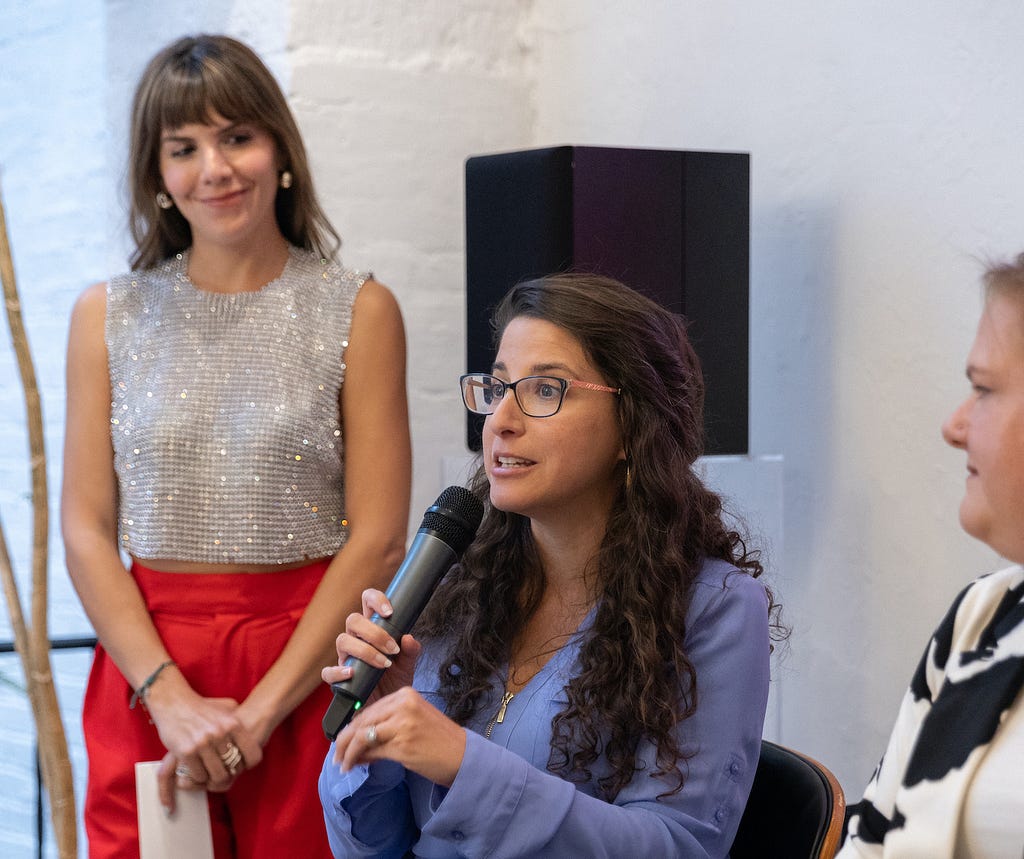
1. Prioritize connection over perfection
Most speakers think a flawless delivery is required to be an effective speaker. But the real speaking superpower is connection. It’s how we create trust and leave a lasting impact on our audience.
The psychological irony is that perfection BLOCKS connection.
We see this constantly with the uncanny valley AI creates. Because connection thrives on human relatability, and perfection — artificial or otherwise — is antithetical to human nature. So a too-perfect performance subconsciously puts the audience’s guard up.
Speakers who stop agonizing over the tiniest flaw and instead turn stumbles into opportunities for connection, by leaning into humor and relatability, are the most effective and unshakable.
2. Lean into your unique style of confidence
Effective speakers are engaging and memorable. We can’t achieve either with forced behavior, trying to imitate what we think confidence looks like. So lean into your natural tendencies regarding how you sound, look, and move.
For example, I talk with my hands A LOT. At some point I was told by a well meaning mentor to cut it out in case it was distracting. But forcing myself to keep my hands still took a ton of extra concentration since it was unnatural for me. It also felt and looked stiff.
I decided to just let my body be part of the communication style. I only made some easy adjustments, like making sure to keep my gestures low so they don’t block my face. That permission to do it my own way created ease, and with it, a confidence boost.
Funny enough, a recent study found that purposeful hand gestures can make speakers appear more competent and persuasive.
But if you don’t naturally talk with your hands, you shouldn’t force yourself to do it just because of that study or because it works for others. It will feel inauthentic for you.
You could make an easy adjustment and add a few impactful gestures at choice moments.
Be like Frank Sinatra and do it your way.
3. Realistic preparation
I find that newer or struggling speakers tend to vastly underestimate how much time and effort naturally effective speakers put into their preparation.
But it’s not just about the amount of time you practice, it’s HOW.
For example, most speakers will rehearse their speech by reading over the words and saying them out loud. They feel memorized, but then get in the spotlight and poof — the words vanish.
Think about each element that creates mental load as a ball you are juggling. So when you practiced, you were trying to remember the words. That’s one ball.
But when you step in front of an audience some adrenaline kicks in… that’s another ball. Anything physical, like holding a microphone or a remote for the slides? Another ball. Doing any kind of crowd work? Another ball.
So really, you practiced with one ball, when you actually need to juggle 3 or 4.
Knowing this, you could rehearse your speech while driving to a place you don’t know. Or while doing the dishes. Those attention splits simulate the mental load of the other balls you will be juggling. If you can rock your talk while multitasking, then you can feel ready.
4. Make it dynamic
Stagnation is the #1 attention killer. That’s because the human brain craves novelty, and if things stay the same for too long it takes major concentration to stay focused. Actors know this all too well… if a scene is “flat” or “one note” — you’ve got problems.
To keep the audience engaged you need to create levels. First of all, make sure your talk takes them on some kind of journey. I should feel differently walking out than I did walking in.
Use examples, stories, or humor to break up longer informational chunks.
Find moments for audience participation, like “raise your hand if you ______”.
It doesn’t need to be a seismic shift, even simple changes in your tone, speed, or emotion can help keep your audience tuned in.
5. Keep it fresh
Speakers rarely give a talk once. Whether just from practice to full performance, or because you have a signature speech you take to different audiences, there will naturally be a lot of repetition. There is danger for the delivery to become stale and over-rehearsed. I also see speakers have a fantastic performance, and then try to replicate it down to the inflection in future talks.
This is where speakers can learn from actors who keep their performance alive and exciting while doing the same show 8 times a week for months. The best way to keep your talk fresh is to have a clear intention of the impact you’d like to make on the audience. You can have one intention for a shorter talk, or one per section of a longer speech.
Is your intention to make people feel so seen they go, “omg it’s like they know me”? Is it to give them a new perspective on the topic, themselves, or the world? Is it to make them feel capable of change?
If you have clear intention and take a moment to remember, connect, and pursue it at the beginning of the speaking engagement — you’ll stay fully present every time.
As you know, many people are terrified of speaking in public. Can you give some of your advice about how to overcome this fear?
This is the core of my work — to help people overcome public speaking nerves so they can feel as confident in the spotlight as they are in their expertise.
So first of all, it’s important to know that this fear is super common (40% of the population) because it has an evolutionary basis. Our brains tend to see this kind of possible rejection or negative reactions as a survival threat, sending us into fight, flight, or freeze.
Understanding the neuroscience behind the things that are holding you back is incredibly helpful in overcoming them without shame or blame.
Step 1 has to be nervous system regulation. We can’t get a handle on the anxiety when it feels like a life or death situation. There are simple physical ways to show the body you’re safe: breathing exercises, EFT tapping, physical exertion, etc.
The other key factor is that confidence isn’t some kind of magic you have to be born with. It’s a muscle. And anyone can train it.
You are a person of huge influence. If you could inspire a movement that would bring the most amount of good to the most amount of people, what would that be?
All the neuroscience informed work I’ve done is based in self-compassion. It’s a practice that everyone could benefit from. It helps speakers recover quickly from any mishaps, but more importantly it substantially improves the quality of your everyday life. Once you learn to have compassion for every part of yourself, even the frustrating ones, your capacity for growth increases exponentially.
Is there a person in the world whom you would love to have lunch with, and why? Maybe we can tag them and see what happens!
Dr. Kristin Neff, her work on self-compassion changed my life.
Are you on social media? How can our readers follow you online?
LinkedIn: https://www.linkedin.com/in/lilach-mendelovich/
My website: speak.lilachcoaching.com
This was so informative, thank you so much! We wish you continued success!
About The Interviewer: Diane Strand is a multi-award-winning serial entrepreneur, executive producer, best-selling author, nonprofit founder, TEDx and national speaker with more than two decades of success in media, education, and creative entrepreneurship. She is the majority owner of JDS Video & Media Productions, Inc. and JDS Actors Studio, and the founder of the nonprofit JDS Creative Academy (JDSCA) — a 501(c)(3) organization dedicated to advancing education, inclusion, and workforce development through the arts. As the creator and executive producer of Spirit of Innovation: Arts Across America — a nationally streamed and locally broadcast ABC TV series — Diane continues to break new ground in creative media, producing the first magazine-style news and information show of its kind in Riverside County. A trailblazer in inclusive education, Diane has authored two state-approved training programs — a Title 17 video production job-training day program for adults with developmental disabilities and a California State Apprenticeship program in media and the arts. Diane has helped launch more than 100 creative careers, as actors, writers, directors, and producers transforming lives and strengthening the creative workforce pipeline in Southern California and beyond. In 2017, Diane founded DigiFest® Temecula, an award-winning annual festival that celebrates digital media, storytelling, and innovation across all creative disciplines. Now entering its 10th year, DigiFest® has evolved into a nationally recognized event uniting students, professionals, and thought leaders from film, television, gaming, design, podcasting, and emerging technologies. The festival embodies Diane’s mission to merge creativity, community, and opportunity — showcasing how the arts can drive education, empowerment, and industry growth. Diane’s Hollywood career includes credits on Friends, General Hospital, and Veronica’s Closet, as well as producing for Barbra Streisand, Disney Channel, and Universal Creative, where she helped launch Playhouse Disney and Toon Disney and contributed to the high-definition control room build at Staples Center (now Crypto.com Arena). As a Lead Columnist for Authority Magazine, Diane now shines a national spotlight on visionary thought leaders, entertainers, changemakers, and philanthropists who are shaping the future of creativity, inclusion, and social impact. If you’re a celebrity, industry innovator, or business leader passionate about using the arts to transform lives, Diane invites you to connect, collaborate, and share your story to help inspire the next generation of innovators.
Lilach Mendelovich of Lilach Coaching On The 5 Things You Need To Be A Highly Effective Public… was originally published in Authority Magazine on Medium, where people are continuing the conversation by highlighting and responding to this story.