

An Interview With Diane Strand
To me, leadership means making it easier for others to act on what they already care about. It is not about having the loudest voice in the room or having all the answers. It is about creating a structure where people can contribute their unique strengths toward a shared goal.
We recently partnered with DigiFest to present the Social Impact Heroes Award, recognizing individuals and organizations who are leading meaningful initiatives that create real, tangible impact. From nonprofit founders and grassroots organizers to digital advocates and community leaders, this initiative brought forward an inspiring range of voices dedicated to making the world a better place. In this special interview series, we will be featuring every single submission from this powerful contest. Each participant shared a 1-minute video highlighting the work they are doing and the lives they are touching-and we believe every story deserves to be amplified. These Social Impact Heroes are tackling critical challenges, uplifting underserved communities, and using creativity, compassion, and innovation to drive change. What inspired them to begin their journey? What obstacles have they overcome? And what lessons can others learn from their work?
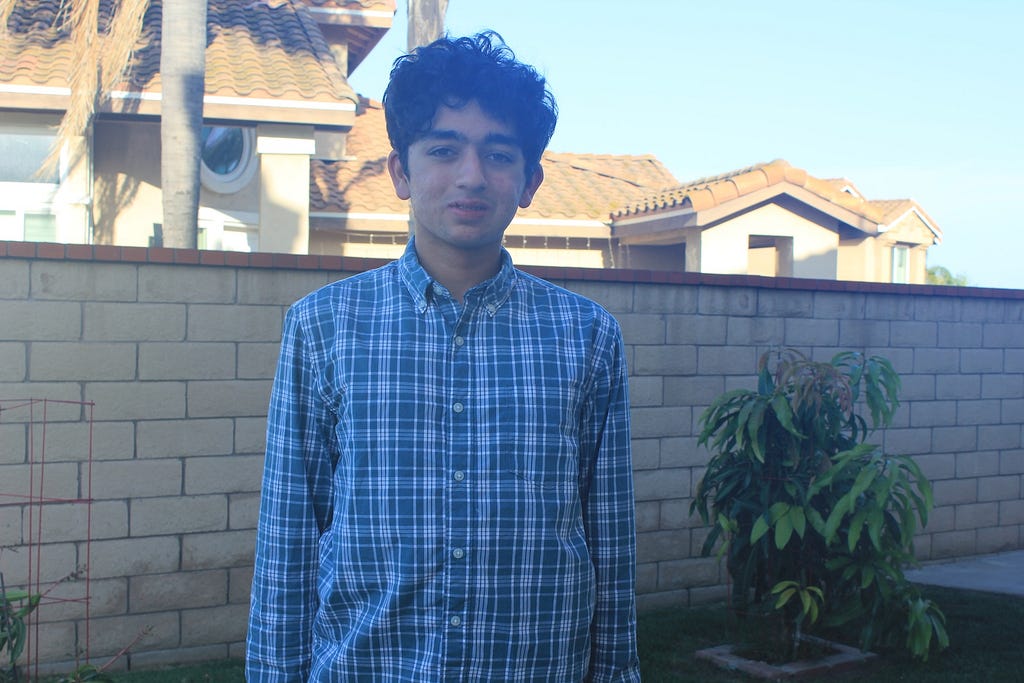
As a part of this series, we had the pleasure of interviewing Aarav Desai.
Aarav Desai is a 10th-grade student at Chino High School in the Inland Empire of Southern California who has been deeply involved in heat-related science research and competitions throughout his life. After seeing the widening gap in heat-related impacts on socially disadvantaged communities in the Inland Empire, where he lives, he decided to take matters into his own hands. As a result, he started the non-profit organization Conservly, dedicated to combating heat-related disparities in marginalized areas. Conservly addresses these environmental inequities by providing vulnerable neighborhoods with heat kits, tree planting initiatives, and urban shade structures.
Thank you so much for joining us in this interview series! Can you tell us your “Origin Story”? Can you tell us the story of how you grew up, and the seeds for all the great work that has come since?
I first became passionate about the environment at a young age, watching nature documentaries and caring deeply about conservation. In fourth grade, I even started a Facebook page dedicated to my favorite animal, the Bengal tiger. That same curiosity led me to join Boy Scouts, where tree-planting projects and community outreach gave me my first real taste of turning that passion into action.
But it was growing up in Chino Hills, in the Inland Empire of California, that gave me a deeper sense of purpose. It is a region known for extreme inequality, underserved communities, and poverty, and because of its inland location and the amount of concrete and pavement, it also has some of the highest levels of heat exposure in the Los Angeles area. Temperatures often rise above 100 degrees. Watching communities around me bear the brunt of that heat and inequality, with so few resources to cope, is what really inspired me to start my initiative.
Can you describe how you or your organization is making a significant social impact?
Our organization, Conservly, is dedicated to solving and mitigating one of Southern California’s leading environmental problems: extreme heat inequality.
In the United States, heat is the leading environmental cause of mortality, surpassing all other environmental hazards. But this heat is not distributed equally. Areas with higher poverty are often hotter than comparatively wealthier areas, and that can be due to differences in access to shade, air conditioning, safe housing, tree cover, and other basic protections.
When you look at the greater Los Angeles region, it is incredibly diverse, but there is also deep inequality, poverty, and a lack of access to the essentials people need to stay safe during extreme 100-degree weather. Things like air conditioning, shade, sunscreen, and water may seem simple, but without them, extreme heat can become deadly and lead to serious conditions like heat stroke.
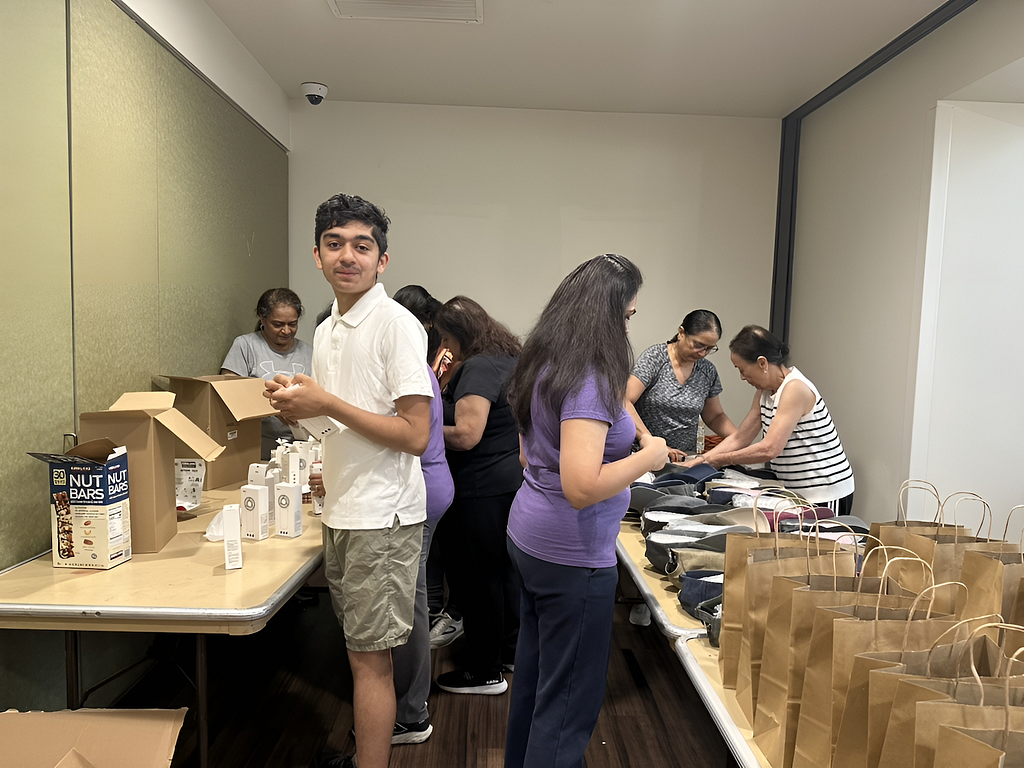
At Conservly, we work to address both the environmental and social sides of this issue. For people who lack reliable access to air conditioning, shade, or other cooling resources — especially members of the homeless population in Los Angeles — we provide heat kits to help them stay safe. So far, we have distributed hundreds of heat kits to community members. These kits include essentials such as snacks, water, sunscreen, hats, and other items that can help reduce the risk of heat-related issues.
But beyond emergency relief, we also want to create longer-term solutions, so fewer people are harmed by extreme heat in the first place. That includes projects focused on tree planting and shade restoration. We are just getting started with this work in Chino Hills, where we have already successfully planted 10 trees as part of our effort to build cooler, safer, and more resilient communities.
Can you share the story of what inspired you to start your social impact initiative? What was the specific moment when you realized this work was needed?
What happened was, during Boy Scout summer camp in 2024, we were in the middle of nowhere, out by a lake, and the bright rays of the sun were just blazing down on the ground. There was almost no shade, it was over 100 degrees, and honestly, it felt like a disaster waiting to happen.
In the middle of the afternoon, a Scout standing near me collapsed and fainted after suffering from severe dehydration. We acted quickly, got first responders, and he was transported to the hospital. Thankfully, he made a full recovery, but it was an extremely eye-opening and shocking moment for me.
This was a group of prepared Scouts, with adult leaders, and even with that preparation, something dangerous still happened. So I started thinking: what happens to an elderly person alone in an apartment with no air conditioning? What happens to someone sitting in a car that traps heat? What happens to outdoor workers with no shade, while concrete and asphalt absorb and radiate heat all day and all night?
After that event, I began researching and discovered urban heat islands — how neighborhoods in the same region can be 10 to 15 degrees hotter simply because of differences in tree cover, pavement, roofing, and access to shade. I also saw how that pattern overlaps with income and health data, where hotter neighborhoods are often poorer and more vulnerable.
That was the moment I realized this work was needed. I wanted to model this problem, understand where the greatest risks were, and do something about it. Preventable deaths like these should not be happening in modern society.
Can you share the most interesting story that happened to you since you began leading your organization or initiative?
When I was presenting the research we developed with help from local high school students we recruited as part of Conservly, the research was part of THRIVE, our app dedicated to modeling and mitigating extreme heat.
I was presenting the research, and the real wake-up call came when people took it as a serious moment — not just as a high school project, but as genuine, publishable science. We were selected for the Congressional App Challenge and the President’s AI Challenge, presented at the regional science fair, and NYU professors agreed to supervise our work. USC and Children’s Hospital Los Angeles also came on as mentors.
That was when I realized our work had crossed a threshold. Scientists saw real value in what a group of teenagers had built, and that is now driving our community service mission.
It has been said that our mistakes can be our greatest teachers. Can you share a story about a funny mistake you made when you were first starting? Can you tell us what lesson you learned from that?
When we first deployed our application, I was mostly focused on getting the data pipeline right and solving the machine learning problem. I did not really think enough about how the user experience would work, or how much data and processing power the app would use.
The model file was actually around 350 megabytes — really, really large. The first time we shared the link publicly, the page took so long to load that several people thought the site was broken. It was just a white screen, and I remember thinking for a second that maybe something had gone wrong or the site had been hacked.
But we had not been hacked. The model was just enormous, and we had not implemented loading indicators or optimized it so it would not keep reloading every time.
So we spent the next week learning how to delay the load, optimize the app, and give users visual feedback so they knew something was actually happening.
The crucial lesson from that mistake was to think about the user first. That applies not just to our app, but also to our community service projects. Will people actually use this? Can it be sustainable? Is it accessible and practical for the people we are trying to help? Mistakes happen, but the important thing is to learn from them and keep moving forward.
Without saying names, can you tell us a story about a particular individual who was impacted or helped by your cause?
When we were doing our tree planting project last fall, the area was frequented by hikers. It is a really beautiful hill, but there are no trees, just a lot of invasive grassland, prairie, and mustard plants. It can get really hot really fast, and you could see that from the amount of brown and gray vegetation in the area.
We were working on tree planting, digging holes, and planting trees, when a hiker came up to us and noticed we were students — a student-led and student-run organization doing real work. She said, “Wow, I’m so impressed by you guys.” She told us that seeing someone care about the community, and seeing young people bring data and solutions, made her feel less invisible. She was just so grateful.
I remember saying thank you and feeling genuinely moved that she stopped to acknowledge what we were doing. I really kept that moment with me. It is what drives me forward to be a better person the next day and to keep going.
Are there three things the community, society, or politicians can do to help you address the root of the problem you are trying to solve?
There are absolutely three things that can really help make the lives of so many people easier.
- First, we need to change how extreme heat is treated within our communities. Extreme heat should be treated as a public health emergency. It is not just uncomfortable weather. It is a real emergency that affects so many people, including unhoused people, seniors, outdoor workers, schoolchildren outside at recess without shade, and families without reliable cooling.
- Second, cities need to invest in cooling infrastructure and use data to target those investments. That includes tree canopy, shade at bus stops, cool pavement, hydration access, cooling centers, and safe walking routes. But these investments should not just go to the places with the loudest voices. Decision makers should use data, like the data we have collected through our THRIVE app, to identify which neighborhoods have the greatest heat exposure and the greatest need.
- Third, schools should integrate environmental and climate education into the curriculum. Young people are going to face the worst consequences of climate change, and the younger the generation, the more serious those consequences may become. Schools should teach environmental justice and climate science so students understand both the data and the human impact behind these issues.
How do you define “Leadership”? Can you explain what you mean or give an example?
I love this question because the answer says a lot about who you are as a person.
To me, leadership means making it easier for others to act on what they already care about. It is not about having the loudest voice in the room or having all the answers. It is about creating a structure where people can contribute their unique strengths toward a shared goal.
Conservly originally started with just me. But over 10 months, we grew to 17 members, and I quickly realized we had so much work that it was impossible and exhausting to do everything alone. We needed coordination, and putting on events had become a serious undertaking.
So I pushed to organize the team into committees: outreach, social media, fundraising, policy, and research. We matched people to roles based on what they were genuinely excited about. One of our members was not a strong public speaker, but was an incredible writer, so instead of pushing them into presentations, we channeled their talent into social media and written content. That is what leadership looks like in practice — trusting your team and building systems that will outlast your own involvement.
What are your “5 things you need to create a successful social impact initiative”? Please share a story or example for each.
1. A Problem That You Have Felt Personally
There are thousands of issues that exist in our world, but you never realize the true depth of your passion until you have actually experienced something firsthand. That is what drives you and makes you want to act.
2. A Great Team That Thinks For Itself
You need a team that brings new ideas and challenges you, not just follows your lead. Conservly became real when our members started proposing ideas I had not thought of, like new ways to decorate pots for fundraising. When you are leading a social impact initiative, do not be the only one driving. Encourage others to bring ideas and keep pushing forward too.
3. A Willingness To Do Boring Work
Leading a social impact initiative is genuinely exciting when you are doing the visible stuff — tree plantings, heat kit drives, presentations to professors. But staying grounded and doing the unglamorous work, like debugging code, writing meeting agendas, sending emails, managing spreadsheets, and applying for grants, is what actually sustains it. Honestly, 90% of the work is going to be that. But you do that 90% so the impactful 10% can be even better.
4. Data And Evidence, Not Just Passion
Passion is what gets you out the door, but data and evidence are what keep those doors open. People will listen to you and understand the scope of the problem when you have something concrete to show them. For us, it was our THRIVE app that really helped push open new doors.
5. Mentorship
You need mentors who challenge you, not just encourage you. Mentors from USC and Children’s Hospital Los Angeles helped us account for confounding variables in our model and offered guidance on chart review and ICD code analysis to refine our health data. They made our work ten times stronger. Find people who believe in your potential enough to be honest with you.
What is something you have learned from this work that surprised you?
The most surprising thing has been how emotional this work is. I came into it as more of a data and engineering person — building code, developing models, thinking about things like cool roof coatings. Those things are hard, but the hardest moments have definitely been the human ones.
It is talking to someone who says they have been afraid to sleep in their home during a heat wave. It is hearing parents talk about how hot it is for their kids to be outside during recess. It is understanding the amount of suffering people experience from something that many people still dismiss as just hot weather.
There are stories about children dying in cars from heat stroke. And there is so much institutional inertia around heat as an issue. Earthquakes, wildfires, and floods get emergency declarations. FEMA responds. But extreme heat, which is actually one of the deadliest environmental threats, is still often treated as just a hot day. Changing that perception has become one of the most important parts of my work.
How would you define success for your initiative ten years from now?
In ten years, I want THRIVE to be used by city planners and public health departments across the country as a standard tool for identifying and responding to heat vulnerability.
The data we collect needs to create real institutional change in how we treat extreme heat, especially here in Southern California. We have built this as a grassroots, student-led movement, but the data needs to drive policy. It should help determine where trees get planted, how cooling centers stay open, and how we develop new technologies and roofing subsidies.
For the organization itself, I want Conservly to be led by a new generation of young people. In ten years, our organization should still be running strong, with hundreds of members joining after I graduate. I want to build something lasting. I want to build a movement.
And even if one city in the Inland Empire adopts a comprehensive heat action plan because of work we started, if we helped cool communities and make lives safer, I would consider that a success.
Is there a person in the world whom you would love to have a power lunch with, and why?
I think I would love to have lunch with Dr. Glynn Hulley.
He is a climate scientist who communicates climate change with clarity, hope, and humanity. I would love to ask him how young people can communicate climate risk in a way that is honest, but does not make people feel powerless.
That balance is one of the missions most important to Conservly. We do not want to only show that extreme heat is dangerous. We also want to show that there are practical local actions people can take to protect themselves and their communities.
If you could inspire a movement that would bring the most amount of good to the most amount of people, what would that be?
As someone from the younger generation myself, I really want to inspire youth to keep environmental issues in their minds and advocate for themselves. The movement I would love to inspire is something like Cool Roofs for All, a nationwide, community-driven effort to help coat the roofs of heat-vulnerable homes with low-cost reflective materials.
If every community had a volunteer team, almost like Habitat for Humanity but for roofs and heat protection, they could spend a weekend coating homes, adding shade, and helping reduce the amount of heat absorbed by roofs, asphalt, and pavement.
The science is clear. Reflective roofs, shade structures, and reflective pavement can lower indoor temperatures, reduce heat-related illnesses, and decrease the urban heat island effect at scale.
Reforestation is the other movement I most want to see grow. Planting trees, restoring shade, and cooling communities should not be treated as optional. They are essential to protecting people from extreme heat.
If a group of high schoolers from Chino can figure out how to start this work, a larger movement can absolutely do the same. And if one young person can help start something like this, why can’t others do the same?
How can our readers further follow your work online?
You can follow Conservly and our work at:
- Website: conservly.org
- THRIVE Heat Vulnerability Tool: thrive.conservly.org
- Instagram: @chino_conservly
- LinkedIn: Aarav-H-Desai
This was very meaningful, thank you so much. We wish you only continued success in your great work!
About The Interviewer: Diane Strand is a multi-award-winning serial entrepreneur, executive producer, best-selling author, nonprofit founder, TEDx and national speaker with more than two decades of success in media, education, and creative entrepreneurship. She is the majority owner of JDS Video & Media Productions, Inc. and JDS Actors Studio, and the founder of the nonprofit JDS Creative Academy (JDSCA) — a 501(c)(3) organization dedicated to advancing education, inclusion, and workforce development through the arts. As the creator and executive producer of Spirit of Innovation: Arts Across America — a nationally streamed and locally broadcast ABC TV series — Diane continues to break new ground in creative media, producing the first magazine-style news and information show of its kind in Riverside County. A trailblazer in inclusive education, Diane has authored two state-approved training programs — a Title 17 video production job-training day program for adults with developmental disabilities and a California State Apprenticeship program in media and the arts. Diane has helped launch more than 100 creative careers, as actors, writers, directors, and producers transforming lives and strengthening the creative workforce pipeline in Southern California and beyond. In 2017, Diane founded DigiFest® Temecula, an award-winning annual festival that celebrates digital media, storytelling, and innovation across all creative disciplines. Now entering its 10th year, DigiFest® has evolved into a nationally recognized event uniting students, professionals, and thought leaders from film, television, gaming, design, podcasting, and emerging technologies. The festival embodies Diane’s mission to merge creativity, community, and opportunity — showcasing how the arts can drive education, empowerment, and industry growth. Diane’s Hollywood career includes credits on Friends, General Hospital, and Veronica’s Closet, as well as producing for Barbra Streisand, Disney Channel, and Universal Creative, where she helped launch Playhouse Disney and Toon Disney and contributed to the high-definition control room build at Staples Center (now Crypto.com Arena). As a Lead Columnist for Authority Magazine, Diane now shines a national spotlight on visionary thought leaders, entertainers, changemakers, and philanthropists who are shaping the future of creativity, inclusion, and social impact. If you’re a celebrity, industry innovator, or business leader passionate about using the arts to transform lives, Diane invites you to connect, collaborate, and share your story to help inspire the next generation of innovators.
Social Impact Hero Award Nomination: How Aarav Desai Of Conservly Is Helping To Change Our World was originally published in Authority Magazine on Medium, where people are continuing the conversation by highlighting and responding to this story.