

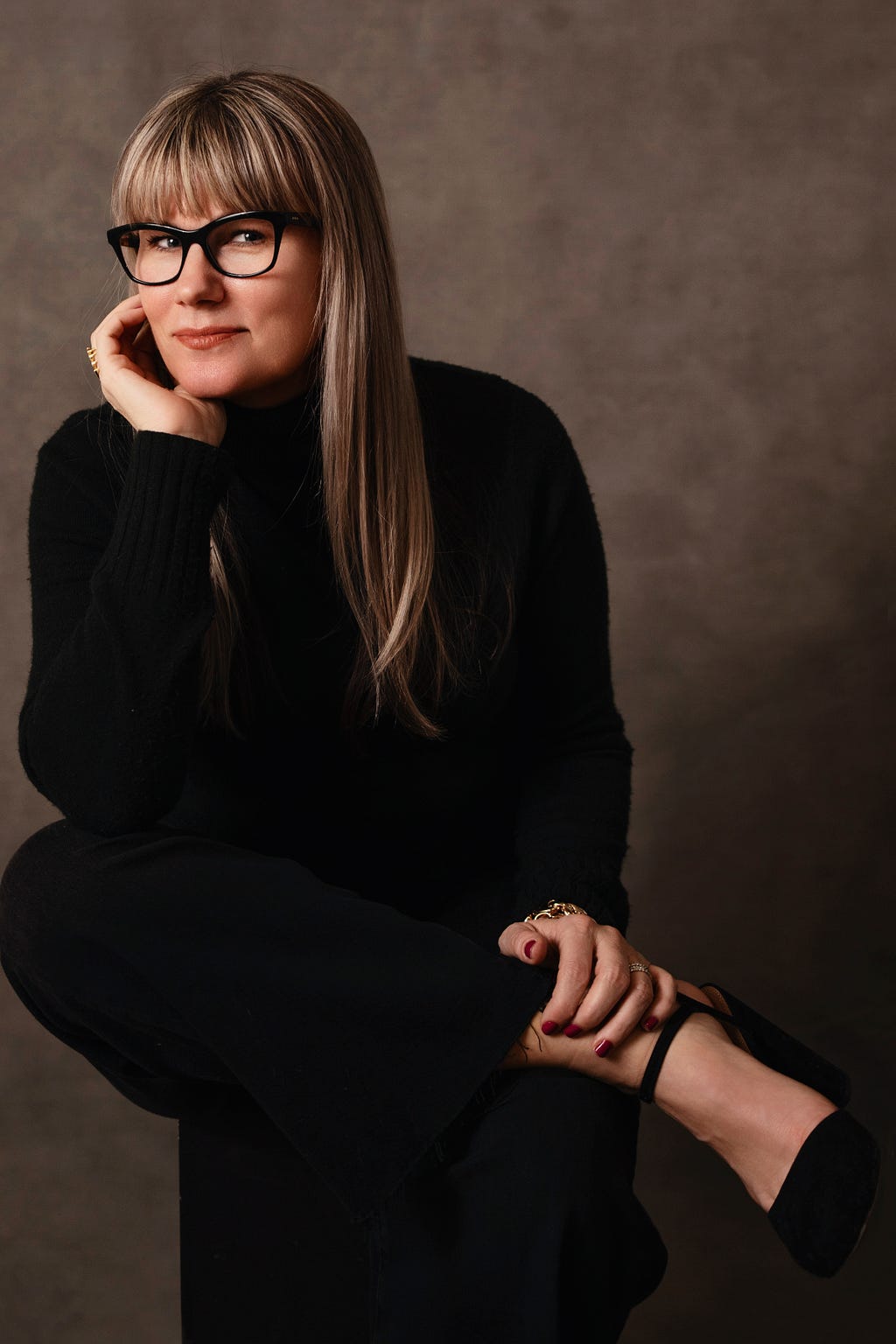

Navigating Capital As A Woman: Melissa Wallace Of Fierce Foundry On Top Strategies for Women Founders, CEOs and Leaders Seeking Institutional Investments
An Interview with Vanessa Ogle
Ensure you can focus 90% of your time on investment opportunities. If the number of meetings is 100, you have to dedicate the time. If you cannot, perhaps it is not the right time. Many founders are notorious for leaving university completely or quitting their FT jobs and working part-time gigs to focus, like Claire Coder, founder of Aunt Flow.
Despite making remarkable strides in the business world, women continue to face unique challenges when seeking institutional investment. In this series we would like to discuss the process of securing capital from institutional investors, and provide actionable strategies to help women founders, CEOs, and leaders navigate this critical aspect of business growth successfully. I had the pleasure of interviewing Melissa Wallace.
In 2018, Melissa joined forces with Laura Maiurano to establish Fivefoottwo, a groundbreaking Marketing Collective dedicated to nurturing early-stage startups. Building on this success, Melissa ventured further in 2023 with the launch of Fierce Foundry, the first US Femtech Venture Studio designed to reduce and equalize the deficit in funding for female founders. Through her unwavering dedication and visionary leadership, Melissa continues to shape the landscape of women in tech, leaving an indelible mark on the industry.
Thank you so much for doing this with us! Before we dig in, our readers would like to get to know you a bit more.
I didn’t set out to work in marketing; I actually originally planned to go to law school. But a temp job in a marketing department changed everything. I realized marketing was less about ads and more about influencing conversations and culture, which inspired me to earn a graduate degree in marketing communications.
From there, I worked on some groundbreaking projects: helping launch TiVo at DIRECTV, rolling out A&E’s first branded Facebook app, and joining Buddy Media in its early days, which grew into one of the most successful SaaS exits of its time.
Throughout my career, one theme has always been constant: advocating for women. In the startup world, I saw how many obstacles female founders faced. What began as a nonprofit offering mentorship evolved into Fierce Foundry, the first FemTech Venture Studio, where we don’t just fund women-led startups, we build them side by side, from idea to exit.
Can you share the most interesting story that happened to you since you began your career?
I’ve actually been laid off five times! Oddly enough, each one turned into a blessing. The severance gave me time to reflect and reset: I finished grad school, filmed a documentary, started two companies, and even had a baby.
What felt like an ending was always the start of something better. That’s why I tell people: don’t fear a layoff, it might just change your life!
None of us are able to achieve success without some help along the way. Is there a particular person who you are grateful towards who helped get you to where you are? Can you share a story about that?
If I had to name one person who changed my career, it’s Kass Lazerow. She gave me a chance, helped me see my own worth, and showed me what real leadership looks like. Her advice — “Act the role you want. Hire fast, fire fast. Belly laugh every day.” — has shaped how I lead and build companies, and I still carry her voice with me.
Is there a particular book that made a significant impact on you? Can you share a story or explain why it resonated with you so much?
There are many, but most recently the Almanac of Naval Ravikant. It’s taken me so much time, but I have learned a lot and I already subscribe to many of his philosophies. I plan to read it again next month and especially the areas I highlighted, to turn them into action items.
How have you used your success to make the world a better place?
My commitment to making the world better has become the foundation of my career. Women don’t thrive in rigid 9-to-5 structures, especially in tech, where the model has long been built by and for men.
That’s why I launched a venture studio designed around the female founder experience. Studios already drive startup success, but ours is the first to reflect how women actually work and lead.
What if the future of work embraced women’s natural rhythms — even our monthly cycles — instead of ignoring them? I believe aligning with those strengths could redefine what’s possible for female founders.
What do you think needs to change in the investment landscape to support more women entrepreneurs?
Real change will only happen when more women are part of the investment landscape itself. People naturally invest in those they can relate to; founders who look like them, products that resonate with their own experiences. So when a woman develops a brilliant medical device for PCOS patients, a male investor may not immediately recognize its value, even if the numbers are strong. It’s not about blame; it’s about perspective. The solution is to create more pathways for women to become investors. Organizations like Fierce Foundry, How Women Invest, and The Fourth Effect are disrupting the status quo and proving that when women have a seat at the investor table, women entrepreneurs thrive.
Can you share a defining moment in your journey to secure institutional investment? What was a key lesson you learned from that experience that other women can apply in their funding efforts?
I founded Fierce Founders, a nonprofit mentoring community for female founders, to help bridge the funding gap at the earliest,and often hardest, stage for women. I offered pro-bono marketing services, but more importantly, I listened. What struck me was how similar their investor stories were: questions about whether they could manage a startup if they got married or had children, or investors sliding into their DMs after rejecting their pitch.
While these weren’t all my own experiences, they fueled my commitment to change the system and support women navigating it. The biggest lesson I’ve learned, and one we emphasize in our own fundraising, is twofold: First, do your research. This is a 10+ year relationship and you need to know who you’re getting into business with. Second, it’s okay to say no. If an investor makes you uncomfortable, walk away. There is plenty of capital out there, and the right money will come from the right partners.
In your experience, what key factors do institutional investors look for in women-led startups that may differ from their general investment criteria?
Two qualities consistently stand out when it comes to women-led startups. First is critical thinking: women founders often demonstrate a unique ability to see problems from multiple perspectives, weigh the impact on diverse stakeholders, and design solutions that are both innovative and practical. Investors recognize this as a competitive advantage, especially in industries where adaptability and empathy for the end user are critical.
Second is risk with consideration: Women tend to approach risk differently, not by avoiding it, but by evaluating it with greater depth and foresight. They balance bold moves with strategic planning, which often leads to more sustainable growth and stronger unit economics. Many institutional investors I’ve spoken with see this as an undervalued strength, particularly when they’re looking to de-risk their portfolio without sacrificing upside.
How do you build and leverage networks to gain access to institutional investors interested in supporting women-led businesses?
I approach every meeting with the mindset that it’s not just one conversation, it’s the start of two or three more. Beforehand, I research each person’s network so I can make thoughtful requests for introductions. I also make sure to follow up with clear next steps and keep myself top of mind for future opportunities. Just as importantly, I lead with transparency and seek out others who share that value. By doing so, I’m not just building a network, I’m building networks of networks and people who actively work together to identify and connect with those committed to supporting women-led organizations.
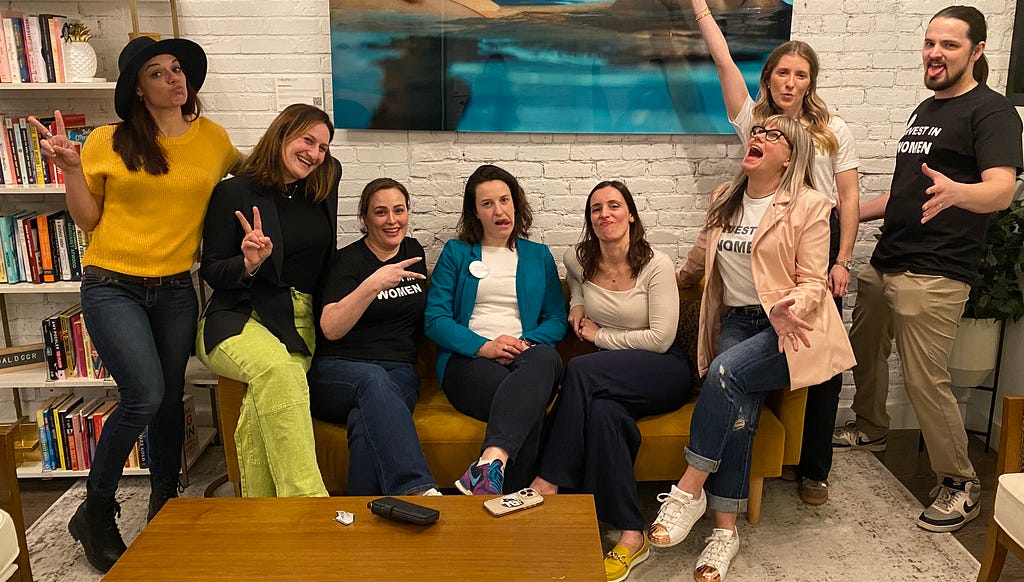
Can you please share your “Top 5 Strategies for Women Founders, CEOs and Leaders Seeking Institutional Investments”?
1 . Network, network, network. This is a relationship, not just money. If possible, give yourself a year of networking and be creative. Melanie Perkins, founder of Canva, met her investor Bill Tai through Kite Surfing!
2 . Ensure you can focus 90% of your time on investment opportunities. If the number of meetings is 100, you have to dedicate the time. If you cannot, perhaps it is not the right time. Many founders are notorious for leaving university completely or quitting their FT jobs and working part-time gigs to focus, like Claire Coder, founder of Aunt Flow.
3 . Know your numbers. Women in particular are pushed on numbers, so spend the money to have someone work through all your forecasts/models and be ready to show your ROI. Melanie Perkins pivoted after each rejection and revised her pitch and numbers to finally make sense for investors.
4 . Don’t take it personally. You will get no’s. But every no means you are one closer to a yes. We women like to internalize the no’s (why don’t they want to invest in me!!!). It’s not about you. Find ways to allow a no to make you stronger. I personally recommend meditation. If you can find 5 minutes each morning to do some deep breathing, every inhale you say “it’s not no” and exhale “it’s a step towards yes”.
5 . Learn what your potential investor invests in — what type of founder. Is that you? And if so, how can you display that for the investor and stay TRUE to who you are? Ida Tin Stood firm in her identity and vision. Despite investor discomfort around menstruation, she persevered and eventually secured a $20M round, demonstrating the depth of her conviction
You are a person of great influence. If you could inspire a movement that would bring the most amount of good for the greatest number of people, what would that be? You never know what your idea can trigger.
I believe female-led tech startups are especially well-positioned to succeed within a venture studio model. My goal is to build a blueprint that others can replicate — one that not only launches successful companies, but also reshapes the funding landscape. By reimagining how we support women from idea to exit, we can transform the VC ecosystem into a more positive, inclusive, and thriving environment.
We are very blessed that some very prominent names in Business, VC funding, Sports, and Entertainment read this column. Is there a person in the world, or in the US with whom you would love to have a private breakfast or lunch with, and why? He or she might just see this if we tag them.
Chelsea Clinton — I’m inspired from afar, imagine how she might inspire me in person!
Halle Berry — I’d love for her to hear what we are building and help us expand beyond what we are able to do today
How can our readers further follow your work online?
https://www.instagram.com/fiercefoundry
https://www.linkedin.com/company/fierce-foundry
https://www.tiktok.com/@fiercefoundry
https://www.linkedin.com/in/melissahudsonwallace/
Thank you for these fantastic insights. We greatly appreciate the time you spent on this.
About The Interviewer: Vanessa Ogle is a mom, entrepreneur, inventor, writer, and singer/songwriter. Vanessa’s talent in building world-class leadership teams focused on diversity, a culture of service, and innovation through inclusion allowed her to be one of the most acclaimed Latina CEO’s in the last 30 years. She collaborated with the world’s leading technology and content companies such as Netflix, Amazon, HBO, and Broadcom to bring innovative solutions to travelers and hotels around the world. Vanessa is the lead inventor on 120+ U.S. Patents. Accolades include: FAST 100, Entrepreneur 360 Best Companies, Inc. 500 and then another six times on the Inc. 5000. Vanessa was personally honored with Inc. 100 Female Founder’s Award, Ernst and Young’s Entrepreneur of the Year Award, and Enterprising Women of the Year among others. Vanessa now spends her time sharing stories to inspire and give hope through articles, speaking engagements and music. In her spare time she writes and plays music in the Amazon best selling new band HigherHill, teaches surfing clinics, trains dogs, and cheers on her children.
Please connect with Vanessa here on linkedin and subscribe to her newsletter Unplugged as well as follow her on Substack, Instagram, Facebook, and X and of course on her website VanessaOgle.
Navigating Capital As A Woman: Melissa Wallace Of Fierce Foundry On Top Strategies for Women… was originally published in Authority Magazine on Medium, where people are continuing the conversation by highlighting and responding to this story.