


Embrace Vulnerability and Authenticity
Purpose begins where pretending ends. For me, the turning point was making a quiet vow to stop acting out of compulsion. That meant being honest about what I truly felt and needed — even when it risked disapproval. Alignment begins when we stop performing and start telling ourselves the truth.
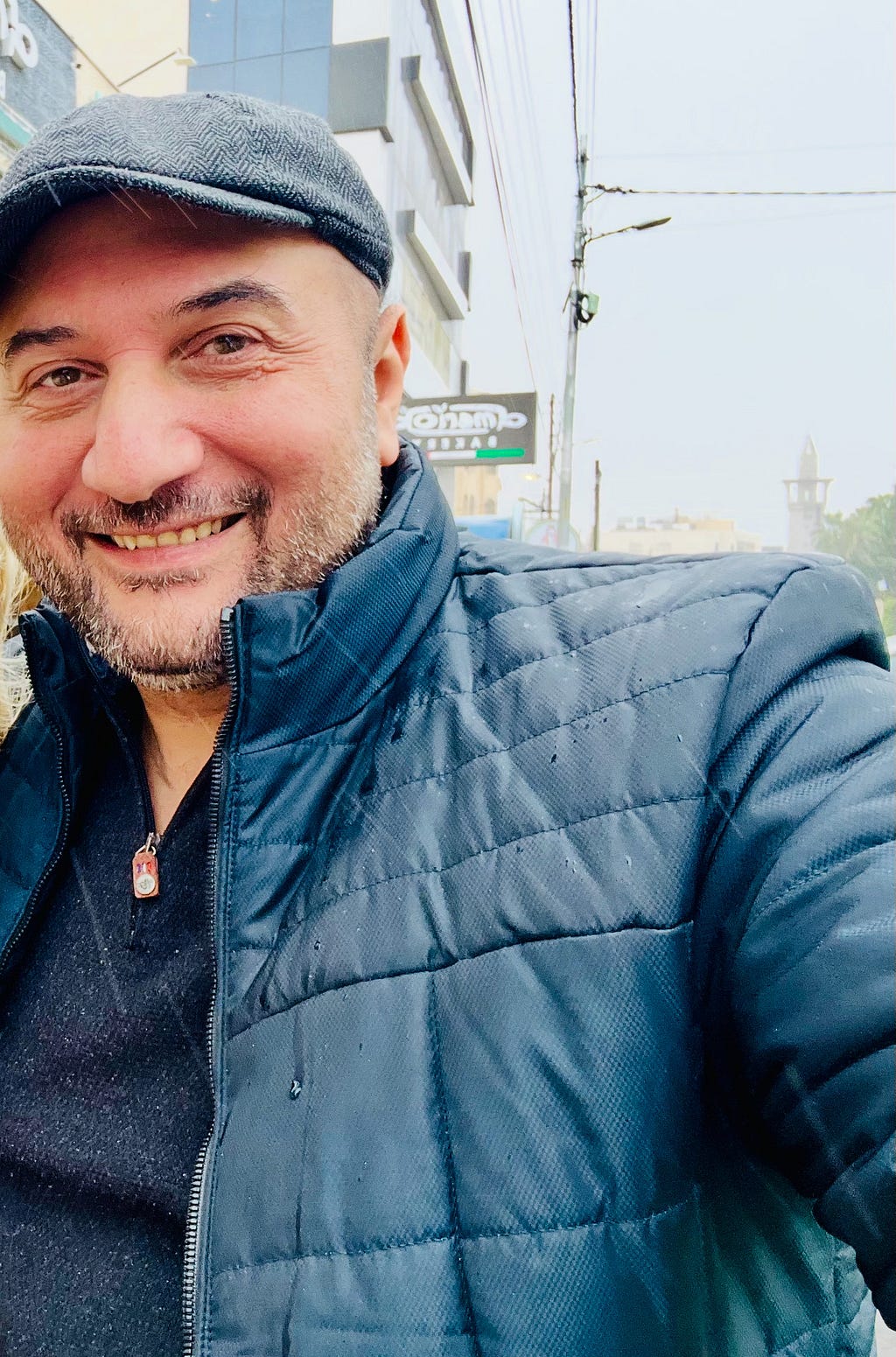
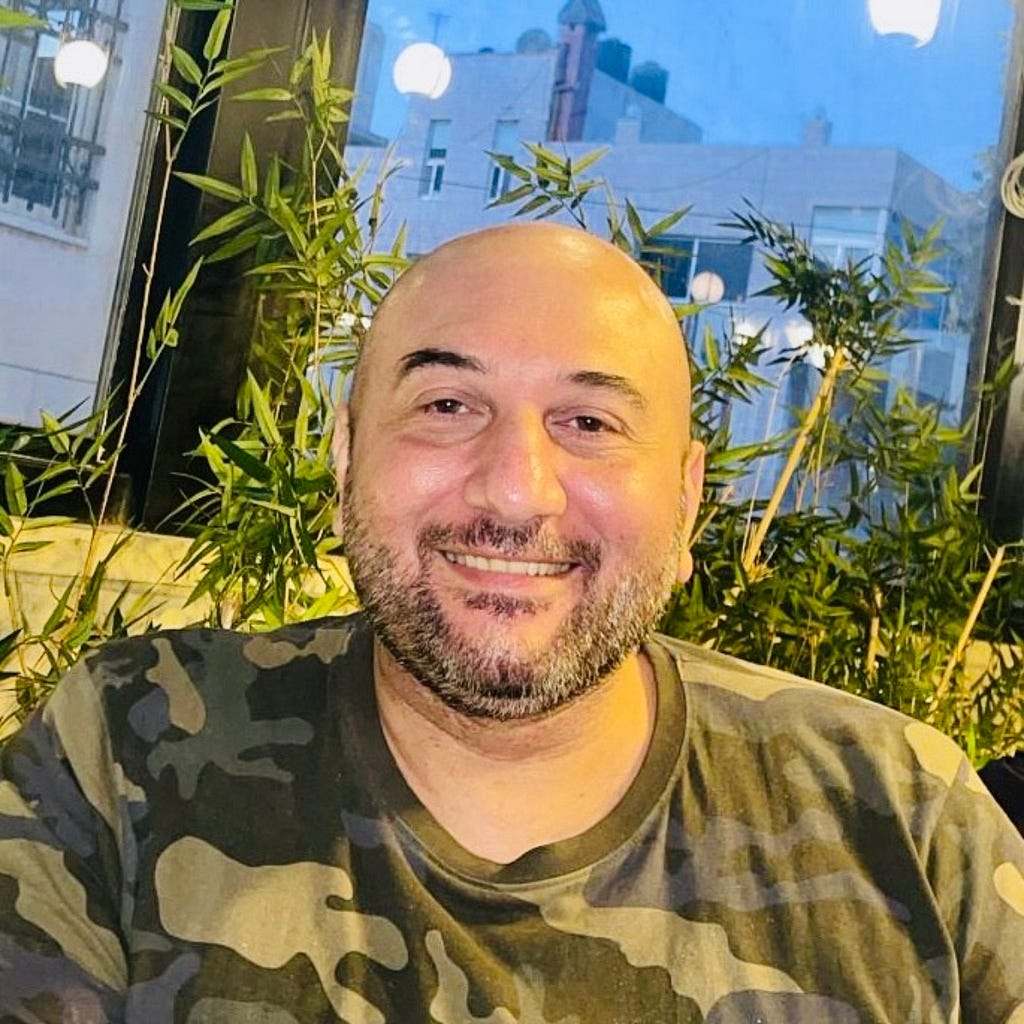
Finding and living in alignment with your true purpose can be a transformative journey. Yet, many struggle with identifying their life’s purpose and aligning their goals with it. In this series, we aim to explore how individuals discover their purpose and create a life that reflects their authentic selves, leading to greater fulfillment and success. As a part of this series, we had the pleasure of interviewing Amer Malas
He is a seasoned product leader, writer, and fellow traveler on the path of self-discovery. From his early years in Amman, Jordan, to leading teams in the U.S. tech industry, his journey has been shaped by resilience, creativity, and a deep curiosity about human potential. Blending professional expertise with personal exploration, he writes about aligning goals with what matters most, guided by the belief that purpose is discovered through authenticity, contribution, and presence.
Thank you so much for your time! I know that you are a very busy person. Our readers would love to “get to know you” a bit better. Can you tell us a bit about your ‘backstory’ and how you got started?
I grew up on the outskirts of Amman, Jordan, in a humble family where my father worked in a factory. From those modest beginnings, my brothers and I eventually found our way into leading tech companies in the U.S. That path taught me resilience and revealed what’s possible when you keep moving forward despite setbacks.
But if I’m honest, the bigger journey hasn’t been about career milestones — it’s been about learning how to live with myself. I’ve stumbled many times. I’ve chased achievement, hoping it would quiet my inner critic, only to find myself exhausted. I’ve overextended, people-pleased, or shrunk to fit expectations.
Every time I hit a wall, I circled the same questions: what does it mean to live with purpose, and how do I align my life with what truly matters — not just for success, but for presence, connection, and meaning? Little by little, I learned I still had agency: to choose again, to learn, to adjust course.
None of us can achieve success without some help along the way. Is there a particular person that you are grateful for, who helped get you to where you are? Can you share a story?
I’m deeply grateful for the wisdom and inspiration I’ve drawn from a few key sources. One of the earliest influences was my grandfather. A lawyer and business owner who, even into his eighties, still tended the family farm. From him, I learned that true strength isn’t about status — it’s about resilience, perspective, and showing up with endurance through every season.
I’m also grateful for the insights of Brené Brown. Her work on vulnerability and connection gave me language for truths I had felt but couldn’t name: that courage and openness are not weaknesses, but the foundation of authentic leadership and relationships. Both my grandfather’s example and Brené’s wisdom continue to shape how I live, lead, and inspire.
You are a successful leader. Which three character traits do you think were most instrumental to your success? Can you please share a story or example for each?
Love & Empathy: Mid-career, I felt stuck. Despite delivering results, I wasn’t progressing in my career. I realized I was leading with blinders on — rushing deadlines, judging colleagues who fell behind, and mistaking pressure for performance. Out of frustration, I turned to the Enneagram test and discovered I was a Challenger type, with growth rooted in empathy and non-judgment. That insight stopped me cold. I saw how much of my “drive” was really conditioning — the belief that worth equals output, that pushing harder was the only way forward. It was uncomfortable, but it gave me a doorway back to my true values. I began listening more, making space for others, and shifting from judgment to understanding. Results improved, but what mattered most was the trust we built and the alignment I felt within myself. It became a turning point in overcoming limiting beliefs, changing how I led, and eventually leading to a promotion.
Creativity & Appreciation of Beauty: Creativity has always been a quiet thread in my life — whether solving complex customer problems at work, sketching a product vision, or writing late into the night. I could lose hours in the flow of building something new and feel most fulfilled when I saw its impact. But I also learned how fragile creativity can be under external pressure. For years, I let my pen go dry and canvases gather dust, convinced that “real” work was what truly mattered. Then my daughter began showing a natural talent for art — sketching her teachers, designing clothes for her dolls, even crafting elaborate stories. When some adults dismissed her passion as impractical, it struck a deep chord. I realized I had buried that same part of myself decades earlier. Slowly, I began to pick up my pen again — writing poems, painting digitally, letting creativity back into my life. It wasn’t about producing something perfect; it was about reclaiming the belief that beauty, imagination, and art matter, and that they deserve space even in the busiest of lives.
Resilience & Faith: After leaving a high-paying VP job, nearly failing at a startup, and losing all my savings, I found myself at a dead end — hundreds of job applications with no response, every path seemingly closed. I remember walking at night with my eyes fixed on the sky, wondering where to go next, yet holding on to a quiet faith that something would open. Reinventing myself, I pursued a Master’s degree in the U.S., even though I felt too old and doubted whether it was possible. It wasn’t easy — months passed before I landed my first job without U.S. experience — but eventually that path led me to Amazon. Along the way, I learned another kind of resilience: not making every problem mine to solve. A mentor reminded me, “what’s holding you back is trying to carry everyone’s burdens.” Adler’s idea of the separation of tasks helped me see that real faith isn’t about controlling outcomes for myself or others — it’s about trusting people to face their own choices, just as I had to face mine.
Ok, fantastic. Let’s now turn to the crux of our interview. Was there a defining moment or experience in your life when you felt a clear sense of your purpose? How did it influence the goals you set from that point forward?
Earlier this year, I found myself sitting motionless on the couch. Not out of rest, but out of heaviness. I had been trying hard to fit into a job that wasn’t the right fit — it felt like walking through mud. There was empathy and support, but something just didn’t click. In that stillness, I saw how the shadows of the past were still reaching into my present, threatening to cast their darkness on the future too. If I didn’t face them now, they would keep holding me back from what was to come. And yet, I also remembered: shadows only stretch where light exists. The light had been there all along — waiting for me to turn toward it.
Almost instinctively, I picked up a notebook and began to write. What came out first was a poem, a fragment of memory and longing: Feet on stone, worn smooth by lives before me. Steps echo, not just mine. That poem became a seed. Soon, it grew into a story, and then into a novel. I didn’t set out to “be a novelist” — it was more like giving shape to something that had been living quietly inside me for years. Writing became a way to ask the questions I had wrestled with in my own life: what does it really take to live your truth? What does it mean to belong?
The novel is, in many ways, a mirror of my own journey. It explores inherited rules and survival patterns, the inner critic that keeps us small, and the slow, tender work of returning to who we really are. It became a story not about triumph, but about presence — about choosing love over performance, truth over approval, and learning to stay rather than disappear.
Looking back, I see that moment of heaviness on the couch not as a collapse but as a beginning. Out of the stillness came clarity, and out of the writing came healing. I don’t pretend to have all the answers — the book is less about answers and more about a path, an invitation to walk with me in the questions.
Today, the novel is called Shards of Belonging. It’s my first, and I hope to see it published soon. My wish is simple: that it meets readers in the very moments they are questioning how to live their own truth — and that in the protagonist’s journey, they may find pieces of themselves, and inspiration to keep walking toward the light.
What practical steps can someone take to begin uncovering their life’s purpose if they feel lost or unsure about their direction?
When we think of purpose, it’s easy to imagine it as a crystal-clear mission declared early in life — like Pelé, who as a boy promised to bring the World Cup back to Brazil. But my own path hasn’t looked anything like that — and honestly, most people’s don’t.
For me, purpose has felt less like a destination and more like stumbling in the dark until a bit of light appears. As a child, I loved stories. I would imagine entire worlds and lose myself in the rhythm of 5th century Arab poetry. But school had other expectations. Teachers told me writing wasn’t for me, that I should focus on math. So I buried that part of myself.
Years later, during my master’s, I read a few of my poems at a small bards’ event. To my surprise, they resonated with people. A seed was planted, but I still couldn’t call myself a writer. I kept pushing it aside.
Then, earlier this year, I hit another wall. I sat motionless on the couch — not resting, but weighed down by heaviness and loneliness. Work felt distant. Life even more so. And then something shifted. I realized shadows only stretch where light exists. That light had been there all along. Out of that stillness, a poem came. Soon it became a story. It poured out as if it had been waiting decades for permission to live. That spark eventually grew into what became my first novel: Shards of Belonging.
That moment reminded me: purpose doesn’t always announce itself in grand visions. Sometimes it’s about remembering what we once loved, and daring to give it space again.
For me, uncovering purpose hasn’t been about clarity from the beginning. It’s been about listening, stumbling, rediscovering, and growing into it. Brené Brown says vulnerability is the birthplace of creativity and belonging — and that’s exactly what I’ve found. Every time I allowed myself to be vulnerable enough to listen — whether through poetry, parenting, or presence — another layer of purpose revealed itself.
How do you differentiate between external pressures — like societal expectations — and the inner calling that aligns with your true self?
For me, the difference often shows up in my body before it shows up in my mind. External pressures — whether from cultural expectations, family roles, or comparison — feel heavy, constrictive, and draining. They carry the voice of “must” and “should.” When I follow them, I notice myself shrinking, performing for approval, or numbing myself with distractions — food, endless scrolling, or too much TV.
I’ve lived that tension many times. My previous job looked impressive on paper but left me empty inside. I realized I was doing it for recognition, not resonance, and each step felt heavier than the last. By contrast, I think of the nights I stayed up late writing — even when I was exhausted. Instead of draining me, it gave me energy. That contrast — heaviness versus aliveness — has become my compass.
An inner calling doesn’t always feel easy or comfortable — sometimes it even stirs fear — but beneath the fear there’s usually a spark, a sense of aliveness. Esther Hicks teaches that emotions are our compass, and I’ve found that to be true: when something leaves me with a quiet sense of curiosity or relief, I know I’m closer to my true path.
HeatherAsh Amara, in Awakening Your Inner Fire, deepens this point by reminding us that the practice isn’t about rushing to a finish line but about staying present to our emotions and energy along the way. Presence helps us discern if we’re on the right path. When we’re grounded in the moment, we can feel whether an action feeds our fire or extinguishes it — whether it’s aligned or simply compulsion. Over time, I’ve also learned that the only real way to discover what I love — what my purpose is — is by trying, experimenting, and doing.
When I’m unsure, I ask two simple questions:
1. Does this choice energize me, even if it scares me?
2. Does this choice let me serve in a way that feels authentic and useful?
If both are yes, it’s usually an inner calling. If I feel myself contract, it’s often pressure disguised as obligation.
Can you share an example of a time when you adjusted or abandoned a goal because it no longer aligned with your deeper sense of purpose? What did you learn from that experience?
There was a time I measured my worth only in promotions and projects, convincing myself that every late night and every new title was how I was caring for my family. If I just worked harder, earned more, climbed higher, then my family would be secure. And while there was some truth to that, I slowly began to realize something was missing. My daughters were growing, and though I was there physically, I wasn’t always present. Long stretches of travel and constant distraction meant I missed small but irreplaceable moments. I was often too exhausted, too focused on “providing,” to notice the things that mattered most.
That’s when I had to adjust. I stopped treating career milestones as the only measure of success, and I began making space to connect, to nurture, to simply be with them. Reading together, listening to their worries, celebrating their small victories — these became goals in themselves. And in choosing that, I felt a shift: the weight of achievement lifted, replaced by a deeper sense of fulfillment.
What I learned is that while my old way met the need for security, it left other essential needs — love, joy, belonging — unmet. Realigning my goals reminded me that purpose isn’t just about striving for more; sometimes it’s about being more. And often, the truest goals are the ones that keep us close to the people and values that make life worth living.
What advice would you give to people trying to pursue their purpose while managing the demands of day-to-day life, such as work, family, and other responsibilities?
Don’t wait for perfect conditions — purpose rarely arrives in a quiet season with all the time and space you hoped for. The truth is, it has to be woven into the life you already have. For me, the key has been presence: noticing which daily actions bring energy, connection, or meaning.
One practice that’s helped is journaling. After years of abandoning writing, I remember flying home one evening and picking up my old notes. As I wrote, a memory surfaced: I was thirteen, on a hike, and I found myself putting the moment into a poem. It was the first poem I had ever written. It took me years to write the next, then the next. But going back to that journal and revisiting those moments kindled something I thought I had lost.
Those small reflections became sparks — moments of clarity in the fog, where light broke through just enough to show me the path forward. That’s how purpose often works. Not as a lightning bolt, but as a series of quiet reminders that your potential is still alive — waiting for space to breathe.
What are “5 Ways to Align Your Goals With Your True Self”?
Many purpose guides begin with questions like: what do you love, what are you good at, what does the world need, and what can sustain you? While they are useful questions, for me the harder part is finding the answers and learned that requires digging deeper: noticing your energy, revisiting old sparks, and being willing to experiment. Purpose doesn’t usually arrive in a single vision; it reveals itself through practice, reflection, and faith that if you keep showing up, the path will open.
Here are five ways I’ve learned to return to alignment:
1. Embrace Vulnerability and Authenticity
Purpose begins where pretending ends. For me, the turning point was making a quiet vow to stop acting out of compulsion. That meant being honest about what I truly felt and needed — even when it risked disapproval. Alignment begins when we stop performing and start telling ourselves the truth.
2. Reconnect With Childhood Passions
Clues to our purpose often lie in what once lit us up before the world told us who we “should” be. For me, it was painting and love for poetry I had as a boy in Amman — a spark I buried for years. Journaling and writing later in life rekindled that flame, and even watching my daughter sketch reminded me of what I’d left behind. Revisiting those early passions felt like meeting an old friend, showing me that what gave us life once can still guide us forward.
3. Allow Space for Silence and Reflection
Some of my deepest clarity has come in stillness — moments on a flight home with a journal, remembering the first poem I ever wrote, or quiet evenings simply pausing long enough to listen. Silence is fertile. It creates space for hidden truths to surface and for us to notice whether our goals come from “musts” or from genuine desire.
4. Integrate Shadows and Fears
Purpose isn’t about erasing fear or doubt — it’s about integrating them. In my own life, I’ve learned that doubts often carry protective wisdom. Instead of fighting them, I’ve tried to listen, to let them stand beside me without running the show. Integration makes the path sustainable — it allows us to keep moving without abandoning ourselves.
5. Commit to Truth Over Approval
There came a point when I had to stop chasing titles and start redefining success so it included presence with my daughters and space for creativity. Aligning with purpose often requires this kind of courage: to value truth over approval. The goals that energize and connect us may not always win quick validation, but they are the ones that carry us toward fulfillment.
Above all, I’ve learned that purpose isn’t figured out in your head — it’s discovered by doing. By trying, failing, adjusting, and having faith that if you keep showing up, the path will open. Purpose isn’t about perfection or one big vision. It’s about aligning a little more each day with what feels true — in how we work, how we love, and how we show up. Fulfillment doesn’t come from arriving; it comes from becoming.
Thank you so much for sharing these important insights. We wish you continued success and good health!
Discovering Your Life’s Purpose: Amer Malas On How to Align Your Goals with Your True Self was originally published in Authority Magazine on Medium, where people are continuing the conversation by highlighting and responding to this story.