

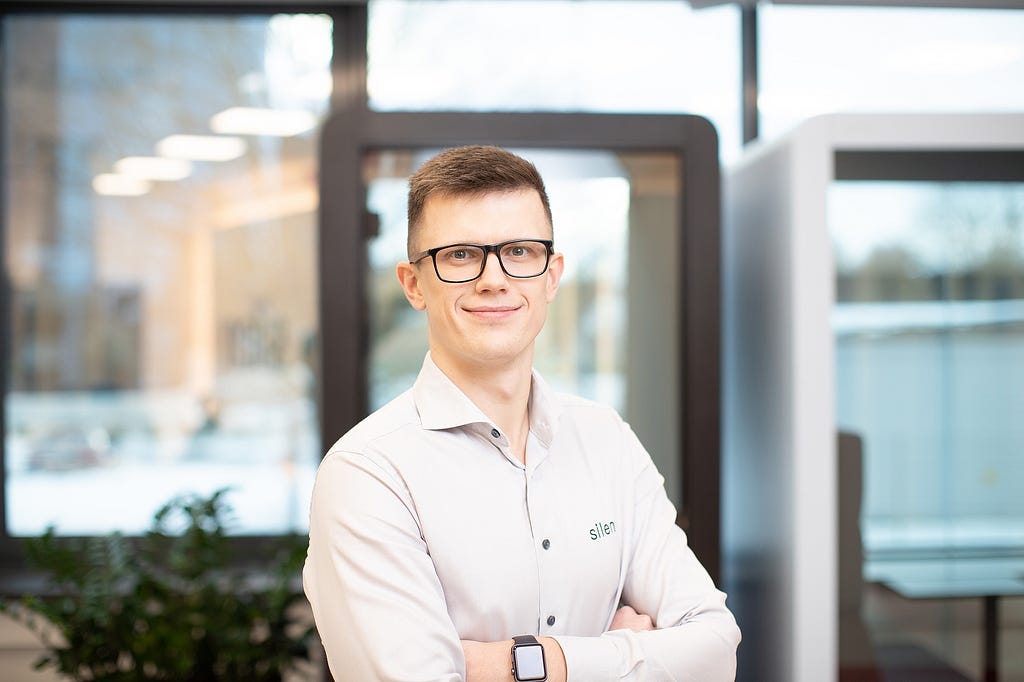

Erik Silas Of Silen On Five Things You Need To Create A Highly Successful Career As A Commercial Designer
An Interview With Athalia Monae
Failing is mandatory: Being open to failure means taking risks and sharing ideas. Criticism or praise gives direction. I still wish I were more open to failure, but every misstep has been a learning opportunity.
As a part of my series about the ‘Five Things You Need To Know To Create A Highly Successful Career As A Commercial Designer,’ I had the pleasure of interviewing Erik Silas
Erik Silas is the Head of Engineering at Silen OÜ, where he develops innovative, user-centered workspaces that combine functionality with sleek aesthetics. With a background in product design and a passion for improving how people interact with their environments, he specializes in creating modular and efficient solutions. Outside of work, Erik enjoys exploring creative projects that merge design, technology, and everyday life.
Thank you for joining us today! Can you share the story of what led you to pursue a career in commercial design?
I’m not sure I would call myself a commercial designer, but I’ve always been passionate about engineering and creating physical things with my hands. I started out designing projects in CAD and building them myself, but eventually I began outsourcing many of the parts. When I joined Silen, I gained the structure and learning environment I needed. I tried to make every part not just functional but also elegant, while ensuring costs stayed reasonable. I also quickly realized I was too much of a perfectionist — products need to be finished and launched, not endlessly perfected. At Silen, the team also helped me understand the business side of design, since our products are always based on actual client needs.
What’s the most interesting or amusing experience you’ve had in your career so far, and what lesson did you learn from it?
A while back, I arranged to meet a potential supplier at what I thought was their office in the city center. I arrived early but couldn’t find their name in the building directory. After a few confusing calls, we discovered that the address was correct — but the city wasn’t. We had a good laugh and rescheduled. The lesson? Always double-check the details. A quick Google search would have saved us both time.
Do you have a favorite life lesson quote? Can you share a story about how it has been relevant in your life?
Before Silen, I worked at Wallenium — the company that eventually spun off Silen. On the kitchen wall there was a quote: “Unstoppable is the team whose members’ ambitions move in the same direction as the team’s goals.” I read it about eight years ago and still think about it often. It reminds me to surround myself with a team that shares the same values and goals. Sometimes that means passionately explaining what we’re trying to achieve, but passion inspires passion, and this mindset has definitely helped us reach the level we are at today
As a successful business leader, which three character traits have been most crucial to your success? Can you share a story or example for each?
Resilience: In the early days of developing new product concepts at Silen, many prototypes didn’t perform as expected — from unexpected acoustic issues to assembly problems. Instead of treating them as failures, I saw them as steps toward refinement. That resilience not only helped us find better solutions but also set the tone for the team: challenges are part of the process, not the end of it.
Vision: Vision isn’t just about seeing the future clearly, it’s about helping others see it too. When we redesigned part of the Silen Space series, I made sure the team understood not only the technical goals but also why the product mattered for the future of work. That shared sense of purpose kept everyone motivated through tough development stages and made the final launch far more impactful.
Adaptability: When supply chain issues threatened to halt our production, we quickly redesigned product components to keep manufacturing going. It’s happened more than once, and each time we’ve found ways to make the process faster and more efficient. Adaptability turned potential setbacks into opportunities for improvement.
Can you describe a recent project you completed and what your specific contributions were?
Often, I start a project and hand it off once the idea is polished enough for the real work to begin. For example, we launched the Silen Care program, which extends the warranty period of our products and reduces mistakes during installation. My contribution was sparking the idea for such a system and identifying the key parameters we needed to collect to improve both products and services. From there, the team built it into a functioning program.
How do you approach balancing aesthetics and functionality in your designs?
I usually begin with aesthetics, staying within the look we want to achieve. When adding functionality, we follow a “less is more” mindset, though some features are, of course, mandatory. We often spend a lot of time finding ways to make the aesthetic functional. It doesn’t always work out exactly as planned, but sometimes the new, function-driven aesthetic ends up being even better.
What is your design philosophy when it comes to commercial spaces?
My philosophy centers on adaptability. If you build an office with permanent fixtures, you lock the company into the choices made at the time of design. Eventually, renovations create waste, cost, and extra work. But if a space is adaptable and built with high-quality (not necessarily expensive) materials, it can evolve with changing needs. This approach makes design sustainable, flexible, and less costly in the long run.
Where do you draw your inspiration for your designs?
I’ve always loved cars. As a kid, I drew them constantly, and later I began working on them physically. That’s when I realized why certain design and engineering decisions were made. I especially enjoy when engineering and design meet seamlessly, where nothing feels compromised. Beyond that, I also like walking or running in new cities to observe architectural and engineering transitions. It clears my mind and gives me new perspectives.
What strategies do you use to ensure your designs meet the needs of the end-users?
We use a variety of strategies: customer “safaris” to directly ask people what they like and need, surveys conducted with partners, published research, and competitor analysis. At trade shows, we sometimes test small design changes and new features before official launches. We also take on custom projects for clients, and often their ideas influence what eventually becomes part of our standard product line.
How do you approach sustainability in your commercial projects?
For me, sustainability must be real — not greenwashing or slogans. We design our products from the ground up to be sustainable. Material selection is the first step, but longevity is just as important. A product should feel premium, look good, and last for years. We design our products so they can be upgraded or refinished rather than discarded, but also ensure they can be recycled at the end of their lifespan. The less we throw away, the better.
What impact do you think remote work and digital transformation will have on the design of commercial spaces?
Commercial spaces need to offer something better than home if they’re going to draw people back. Offices must feel premium, adaptable, and mentally supportive rather than overwhelming. One Berlin project we supplied products that embraced this approach, and it set a strong example of how thoughtful design can make the office more appealing than staying at home.
What are the five things you believe are essential for creating a highly successful career in commercial design? Can you share a story or example for each?
- Keeping an open mind: Being ready for change and truly listening to feedback is the only way to create something meaningful.
- Failing is mandatory: Being open to failure means taking risks and sharing ideas. Criticism or praise gives direction. I still wish I were more open to failure, but every misstep has been a learning opportunity.
- Speed is everything: Getting to market quickly is critical. You’ll make mistakes, but speed allows you to gather feedback and iterate before competitors catch up.
- Fall in love with the customers problem: Instead of creating products and searching for reasons people might buy them, start with the customer’s pain point. From our earliest days, client feedback has shaped our designs, ensuring relevance and value.
- Time to recover: While speed is essential, recovery is equally important. I used to work nonstop, bringing my computer to gatherings and vacations. Triathlon training taught me the value of stepping away. Time off sparks random thoughts and new ideas. Without recovery, creativity suffers.
What role do you think commercial design plays in community building and social interaction?
Good commercial design brings people together while also providing opportunities for privacy. Open, flexible, and intuitive spaces encourage collaboration and informal interaction, while private areas give people a sense of safety and mental balance. Not everyone wants to be visible all the time. To me, commercial design solves this balance — open areas for sparking ideas, and private spaces for focused work or conversations.
Given your influence, if you could inspire a movement to bring the best results and solutions to the greatest number of people, what would it be? You never know what impact your idea might have!
I’d love to see more focus on quality products. When we buy high-quality items, they last longer, are better for the environment, can often be repaired, and usually come with proper manufacturer support. That reduces unnecessary consumption and waste, and ensures products don’t need to be replaced every few years.
How can our readers follow your work online?
I’m not very active online, but following me on LinkedIn — as well as following Silen on LinkedIn and Instagram — is a good start. I pop up in the feed occasionally too.
Thank you for your time and excellent insights! We wish you continued success.
Erik Silas Of Silen On Five Things You Need To Create A Highly Successful Career As A Commercial… was originally published in Authority Magazine on Medium, where people are continuing the conversation by highlighting and responding to this story.